Datos de instancia y de clase
Programación orientada a objetos en Python

Alex Yarosh
Content Quality Analyst @ DataCamp
Principios básicos de POO
Herencia:
- Extender la funcionalidad del código existente
Polimorfismo:
- Crear una interfaz unificada
Encapsulamiento:
- Agrupar datos y métodos
Datos a nivel de instancia
class Employee:
    def __init__(self, name, salary):
       self.name = name
       self.salary = salary

emp1 = Employee("Teo Mille", 50000)
emp2 = Employee("Marta Popov", 65000)
name,salaryson atributos de instanciaselfse vincula a una instancia
Datos a nivel de clase
- Datos compartidos entre todas las instancias de una clase
- Definir atributos de clase en el cuerpo de
class
class MyClass:
    # Definir un atributo de clase
    CLASS_ATTR_NAME = attr_value
- "Variable global" dentro de la clase
Datos a nivel de clase
class Employee: # Definir un atributo de clase MIN_SALARY = 30000 #<--- no self.def __init__(self, name, salary): self.name = name # Usar el nombre de la clase para acceder al atributo de clase if salary >= Employee.MIN_SALARY: self.salary = salary else: self.salary = Employee.MIN_SALARY
MIN_SALARYse comparte entre todas las instancias- No usar
selfpara definir un atributo de clase - usar
ClassName.ATTR_NAMEpara acceder al valor del atributo de clase
Datos a nivel de clase
class Employee: # Definir un atributo de clase MIN_SALARY = 30000def __init__(self, name, salary): self.name = name # Usar el nombre de la clase para acceder al atributo de clase if salary >= Employee.MIN_SALARY: self.salary = salary else: self.salary = Employee.MIN_SALARY
emp1 = Employee("TBD", 40000)
print(emp1.MIN_SALARY)
30000
emp2 = Employee("TBD", 60000)
print(emp2.MIN_SALARY)
30000
¿Por qué usar atributos de clase?
Constantes globales relacionadas con la clase
- valores mínimos/máximos para atributos
- valores y constantes comunes, ej.
pipara una claseCircle - ...
Métodos de clase
- Los métodos ya están "compartidos": mismo código para cada instancia
- Los métodos de clase no pueden usar datos a nivel de instancia
class MyClass: @classmethod # <---usar decorador para declarar un método de clasedef my_awesome_method(cls, args...): # <---el argumento cls se refiere a la clase # Hacer cosas aquí # No se pueden usar atributos de instancia :(
MyClass.my_awesome_method(args...)
Constructores alternativos
class Employee:
  MIN_SALARY = 30000
  def __init__(self, name, salary=30000):
      self.name = name
      if salary >= Employee.MIN_SALARY:
        self.salary = salary
      else:
        self.salary = Employee.MIN_SALARY
- Solo puede haber un
__init__()
  @classmethod
  def from_file(cls, filename):
      with open(filename, "r") as f:
          name = f.readline()
      return cls(name)
- Usar métodos de clase para crear objetos
- Usar
returnpara devolver un objeto cls(...)llamará a__init__(...)
Constructores alternativos
class Employee:
  MIN_SALARY = 30000
  def __init__(self, name, salary=30000):
      self.name = name
      if salary >= Employee.MIN_SALARY:
        self.salary = salary
      else:
        self.salary = Employee.MIN_SALARY

  @classmethod
  def from_file(cls, filename):
      with open(filename, "r") as f:
          name = f.readline()
      return cls(name)
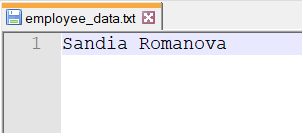
# Crear un empleado sin llamar a Employee()
emp = Employee.from_file("employee_data.txt")
type(emp)
__main__.Employee
¡Vamos a practicar!
Programación orientada a objetos en Python

