Python intermediário
Hugo Bowne-Anderson
Data Scientist at DataCamp
Muitas opções
Diferentes tipos de gráficos
Muitas personalizações
A escolha depende de
Dados
História que você quer contar
population.py
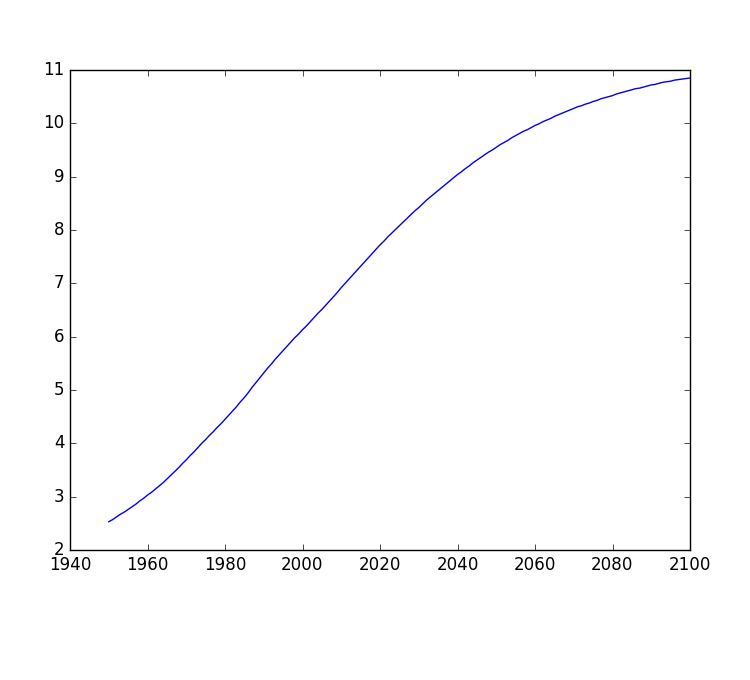
import matplotlib.pyplot as plt
year = [1950, 1951, 1952, ..., 2100]
pop = [2.538, 2.57, 2.62, ..., 10.85]
plt.plot(year, pop)
plt.show()

population.py
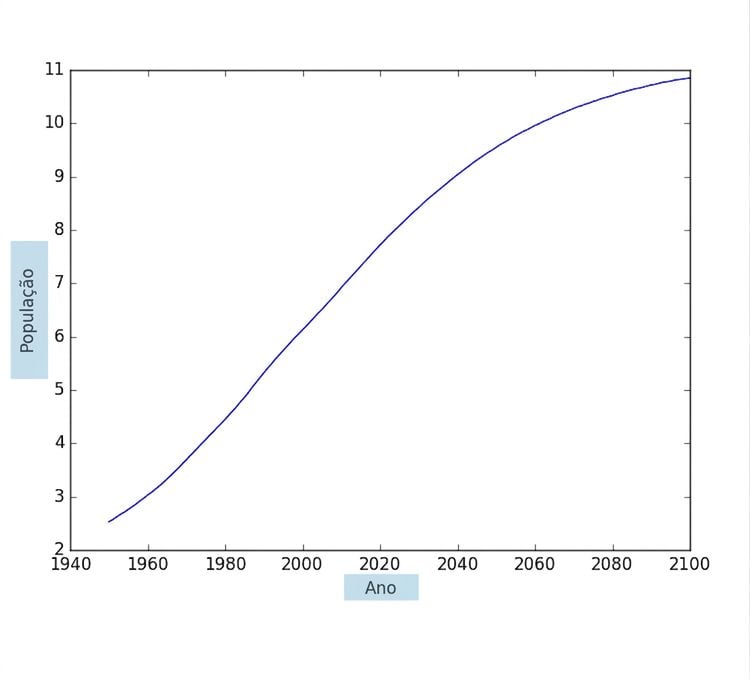
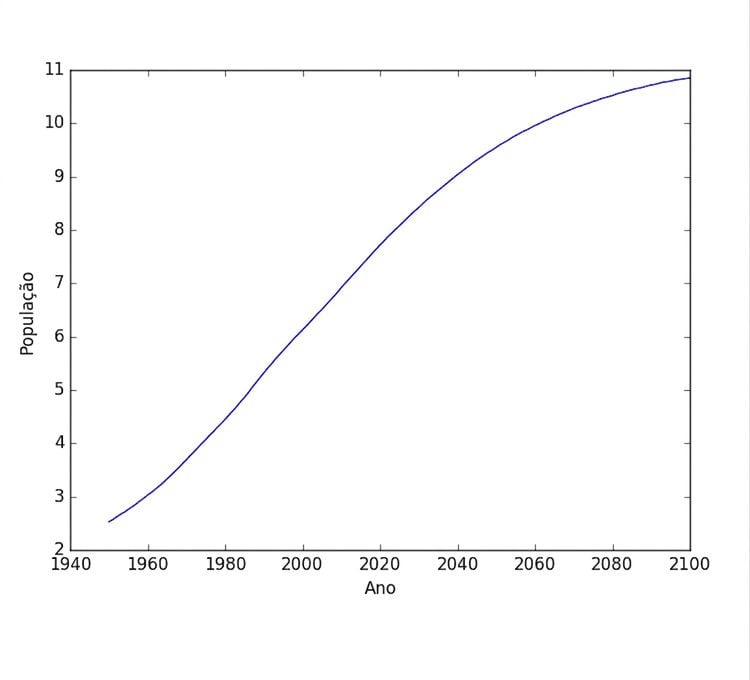
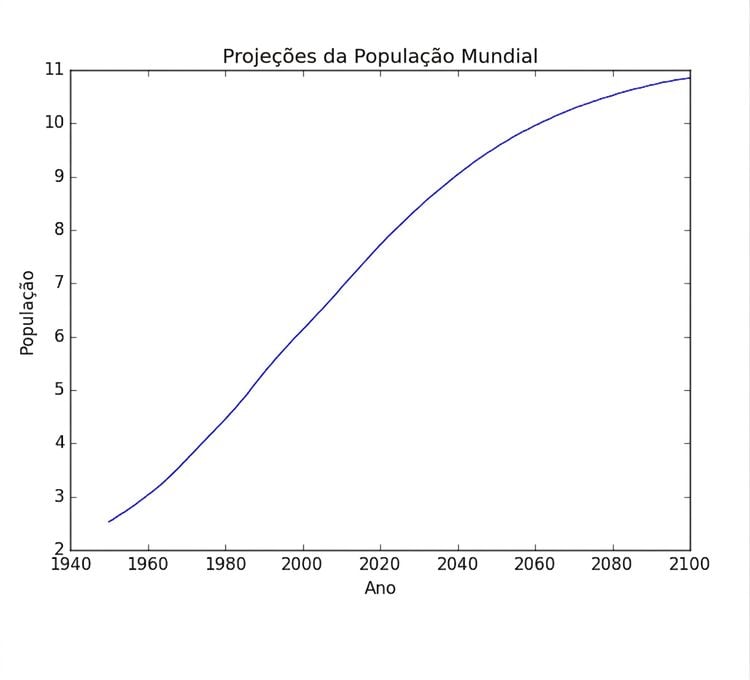
import matplotlib.pyplot as plt year = [1950, 1951, 1952, ..., 2100] pop = [2.538, 2.57, 2.62, ..., 10.85] plt.plot(year, pop)plt.xlabel('Year') plt.ylabel('Population')plt.show()

population.py
import matplotlib.pyplot as plt year = [1950, 1951, 1952, ..., 2100] pop = [2.538, 2.57, 2.62, ..., 10.85] plt.plot(year, pop)plt.xlabel('Year') plt.ylabel('Population')plt.show()

population.py
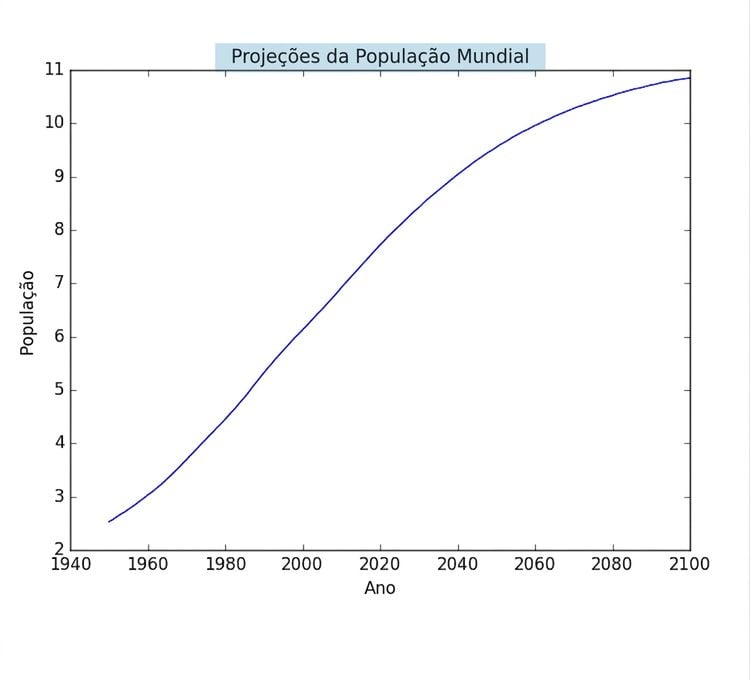
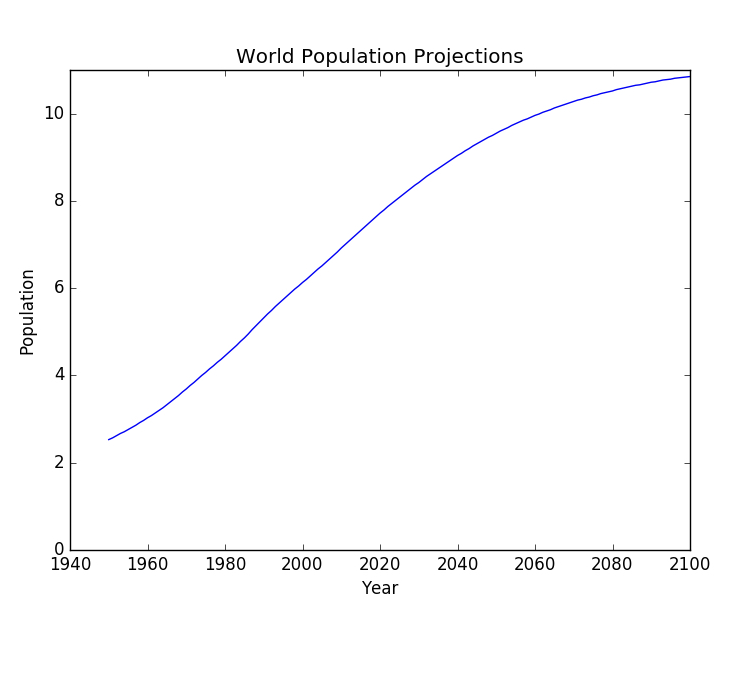
import matplotlib.pyplot as plt year = [1950, 1951, 1952, ..., 2100] pop = [2.538, 2.57, 2.62, ..., 10.85] plt.plot(year, pop)plt.xlabel('Year') plt.ylabel('Population')plt.title('World Population Projections')plt.show()

population.py
import matplotlib.pyplot as plt year = [1950, 1951, 1952, ..., 2100] pop = [2.538, 2.57, 2.62, ..., 10.85] plt.plot(year, pop)plt.xlabel('Year') plt.ylabel('Population')plt.title('World Population Projections')plt.show()

population.py
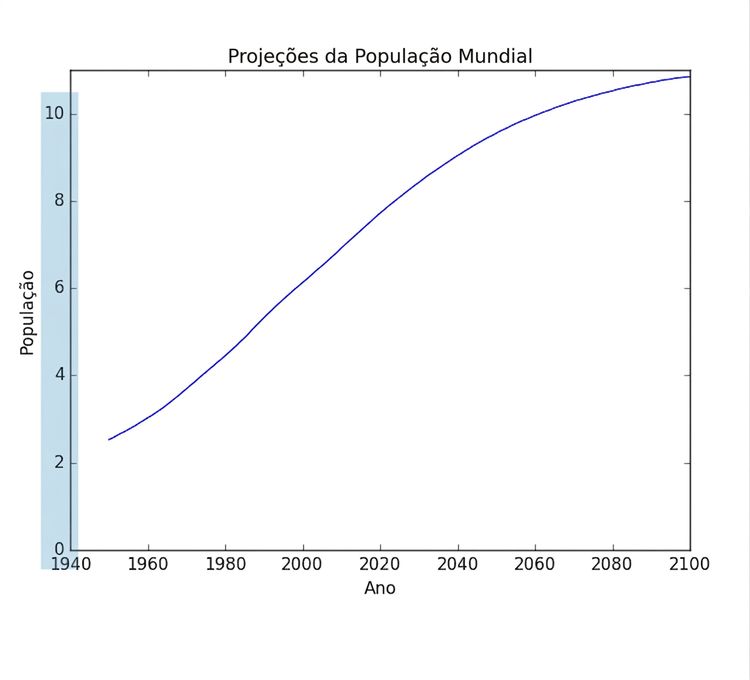
import matplotlib.pyplot as plt year = [1950, 1951, 1952, ..., 2100] pop = [2.538, 2.57, 2.62, ..., 10.85] plt.plot(year, pop)plt.xlabel('Year') plt.ylabel('Population')plt.title('World Population Projections')plt.yticks([0, 2, 4, 6, 8, 10])plt.show()

population.py
import matplotlib.pyplot as plt year = [1950, 1951, 1952, ..., 2100] pop = [2.538, 2.57, 2.62, ..., 10.85] plt.plot(year, pop)plt.xlabel('Year') plt.ylabel('Population')plt.title('World Population Projections')plt.yticks([0, 2, 4, 6, 8, 10])plt.show()

population.py
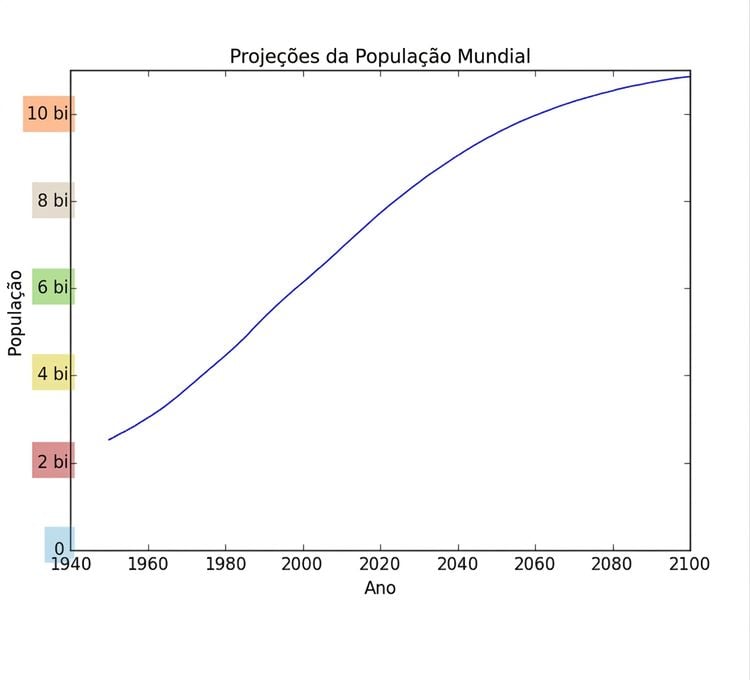
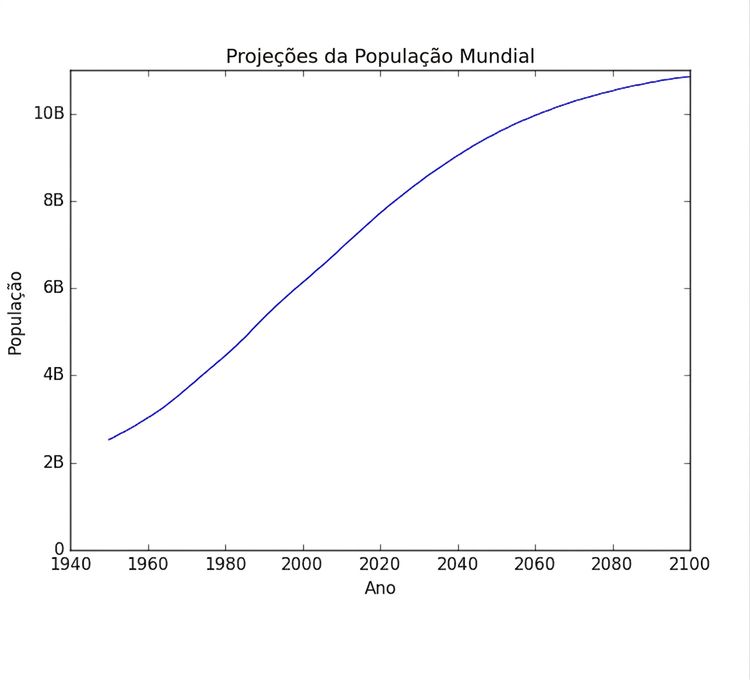
import matplotlib.pyplot as plt year = [1950, 1951, 1952, ..., 2100] pop = [2.538, 2.57, 2.62, ..., 10.85] plt.plot(year, pop)plt.xlabel('Year') plt.ylabel('Population')plt.title('World Population Projections')plt.yticks([0, 2, 4, 6, 8, 10],['0', '2B', '4B', '6B', '8B', '10B'])plt.show()

population.py
import matplotlib.pyplot as plt year = [1950, 1951, 1952, ..., 2100] pop = [2.538, 2.57, 2.62, ..., 10.85] plt.plot(year, pop)plt.xlabel('Year') plt.ylabel('Population')plt.title('World Population Projections')plt.yticks([0, 2, 4, 6, 8, 10],['0', '2B', '4B', '6B', '8B', '10B'])plt.show()

population.py
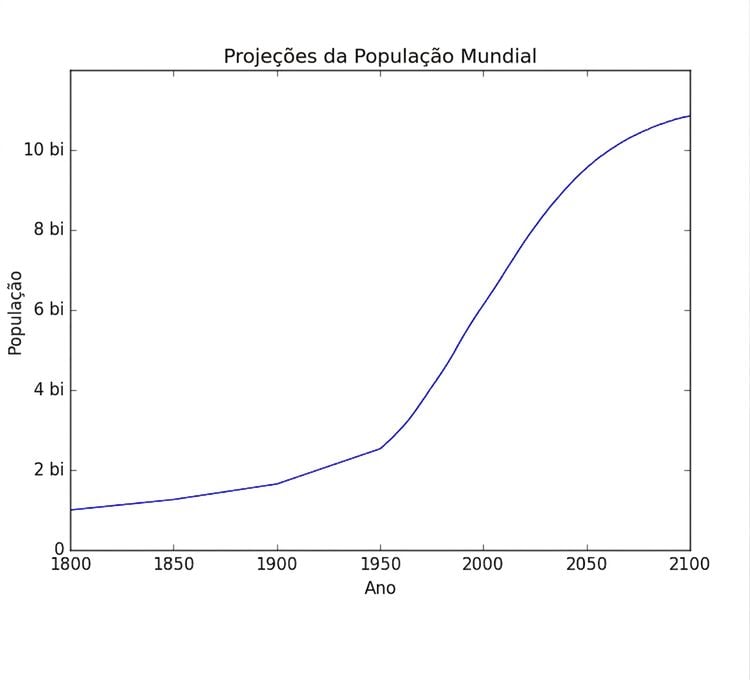
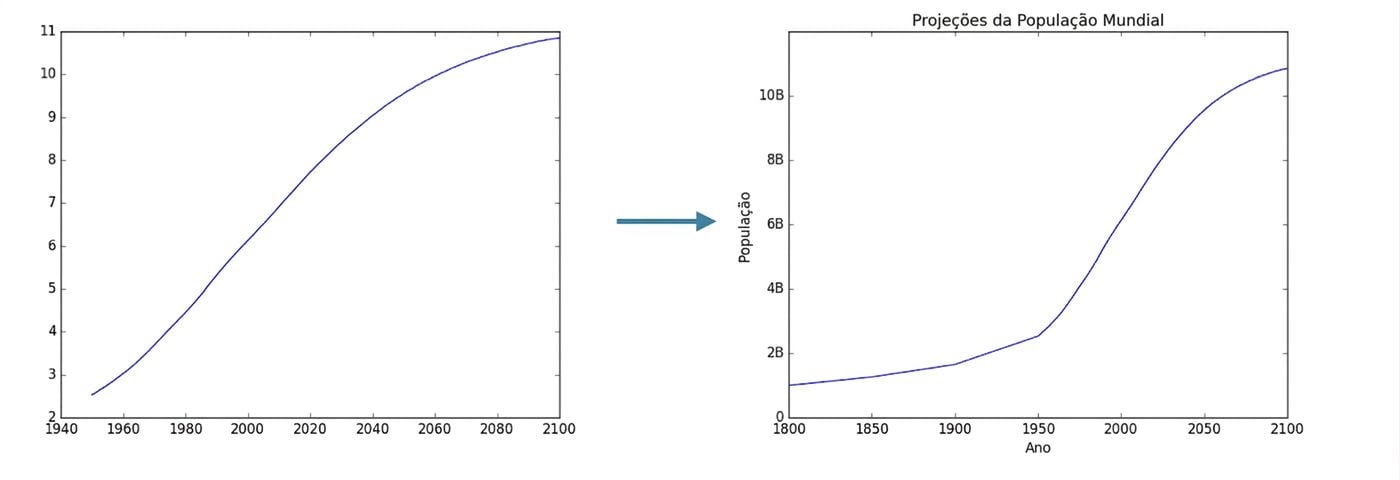
import matplotlib.pyplot as plt year = [1950, 1951, 1952, ..., 2100] pop = [2.538, 2.57, 2.62, ..., 10.85]# Add more data year = [1800, 1850, 1900] + year pop = [1.0, 1.262, 1.650] + popplt.plot(year, pop)plt.xlabel('Year') plt.ylabel('Population')plt.title('World Population Projections')plt.yticks([0, 2, 4, 6, 8, 10],['0', '2B', '4B', '6B', '8B', '10B'])plt.show()

population.py
import matplotlib.pyplot as plt year = [1950, 1951, 1952, ..., 2100] pop = [2.538, 2.57, 2.62, ..., 10.85]# Add more data year = [1800, 1850, 1900] + year pop = [1.0, 1.262, 1.650] + popplt.plot(year, pop)plt.xlabel('Year') plt.ylabel('Population')plt.title('World Population Projections')plt.yticks([0, 2, 4, 6, 8, 10],['0', '2B', '4B', '6B', '8B', '10B'])plt.show()


Python intermediário