Profiling de código para uso de memória
Escrevendo código Python eficiente

Logan Thomas
Scientific Software Technical Trainer, Enthought
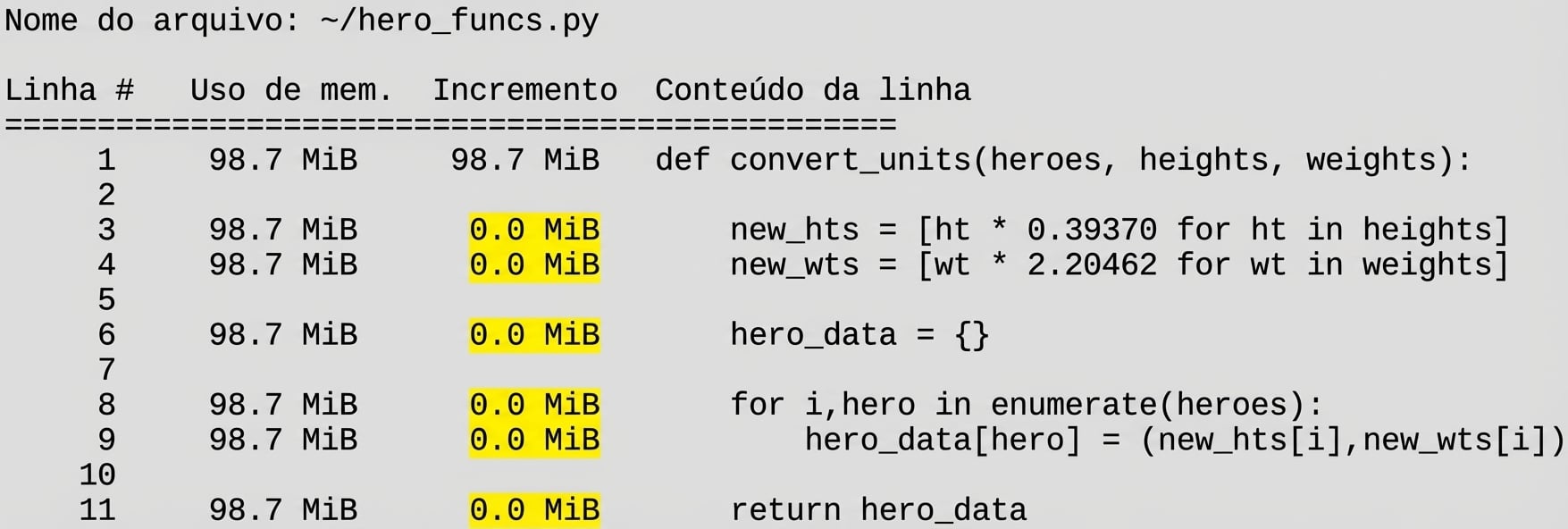
Saída do %mprun
%mprun -f convert_units convert_units(heroes, hts, wts)
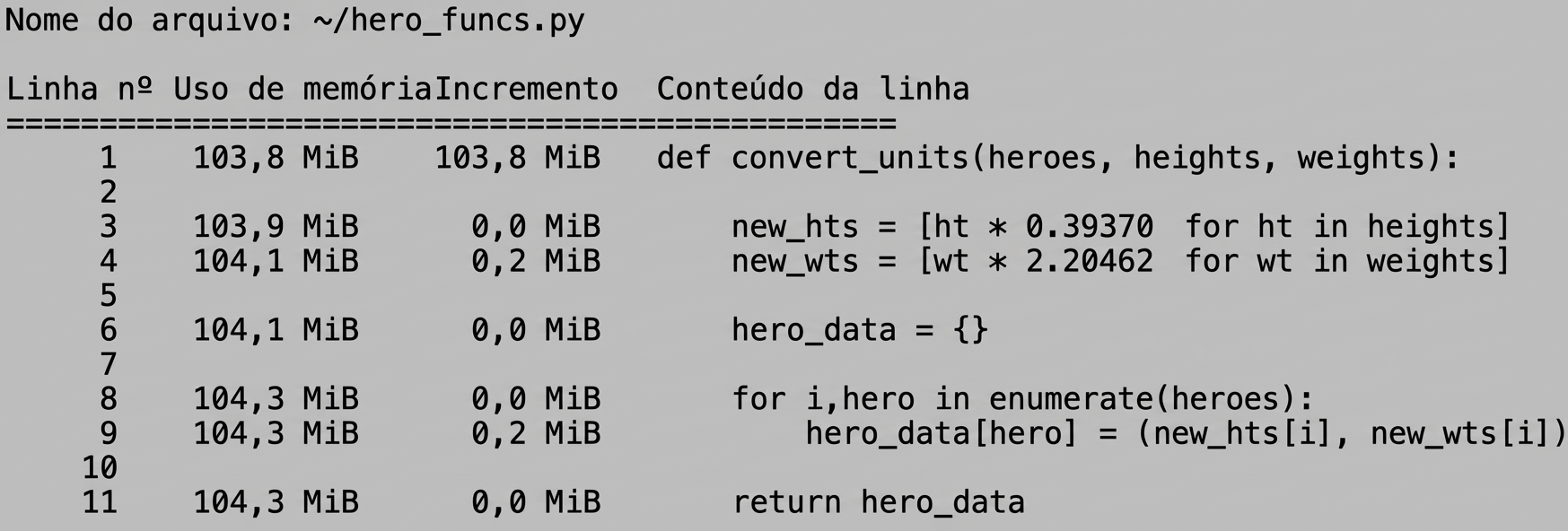
Saída do %mprun
%mprun -f convert_units convert_units(heroes, hts, wts)
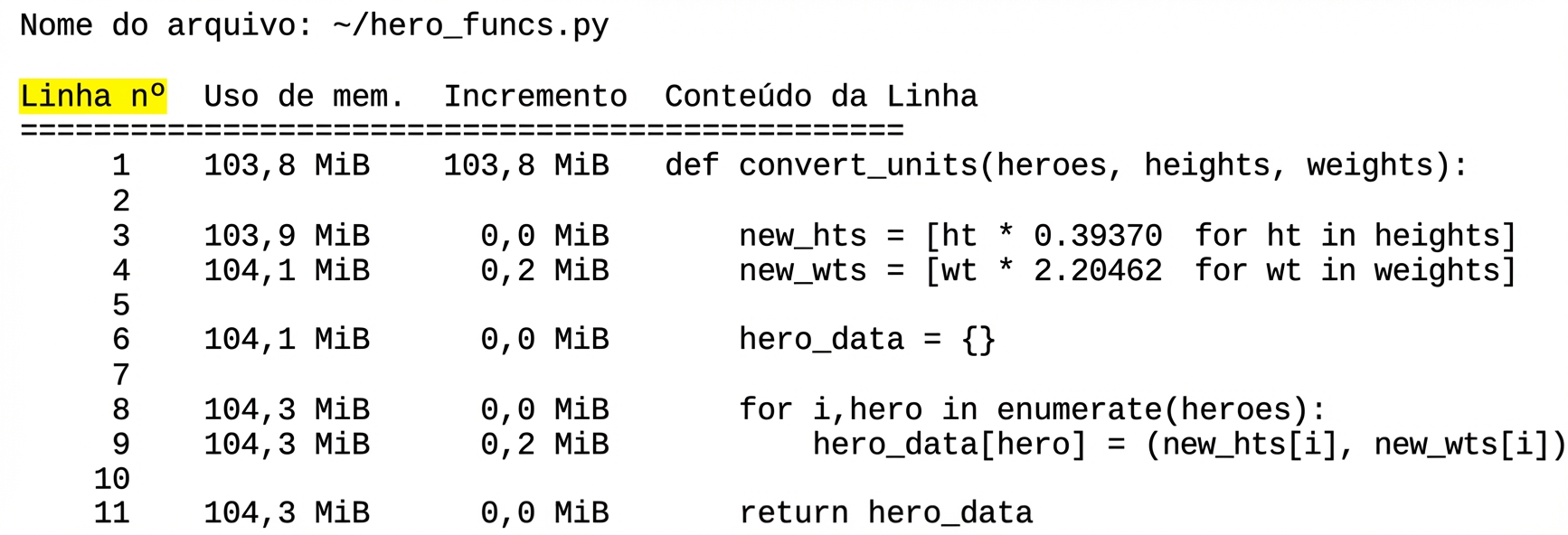
Saída do %mprun
%mprun -f convert_units convert_units(heroes, hts, wts)
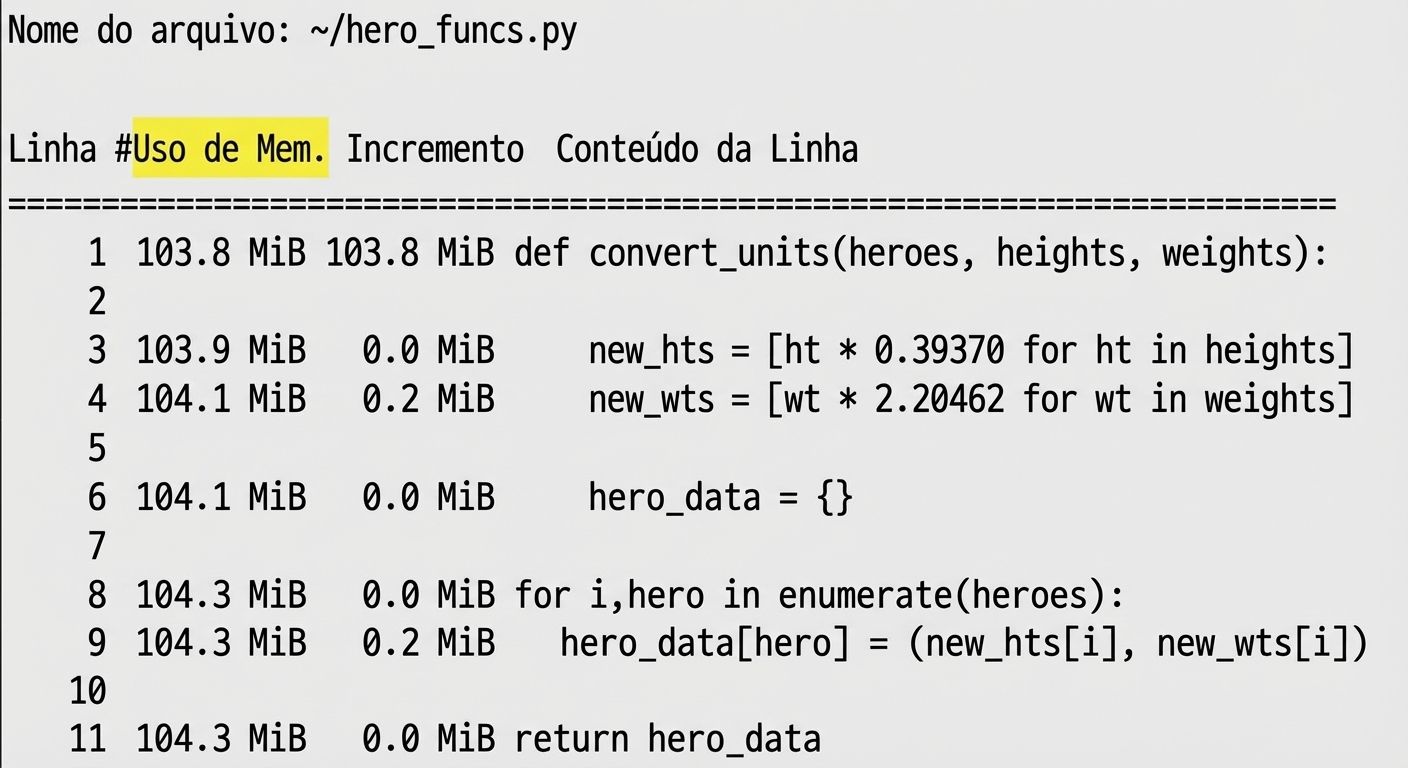
Saída do %mprun
%mprun -f convert_units convert_units(heroes, hts, wts)
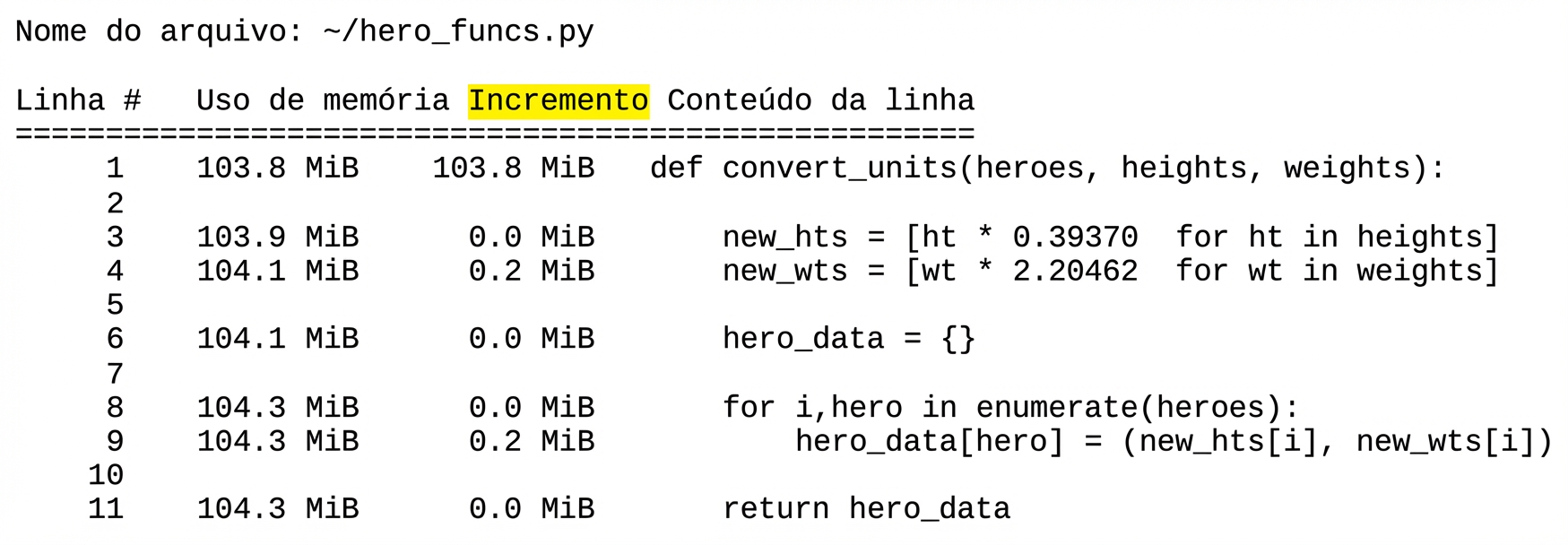
Saída do %mprun
%mprun -f convert_units convert_units(heroes, hts, wts)
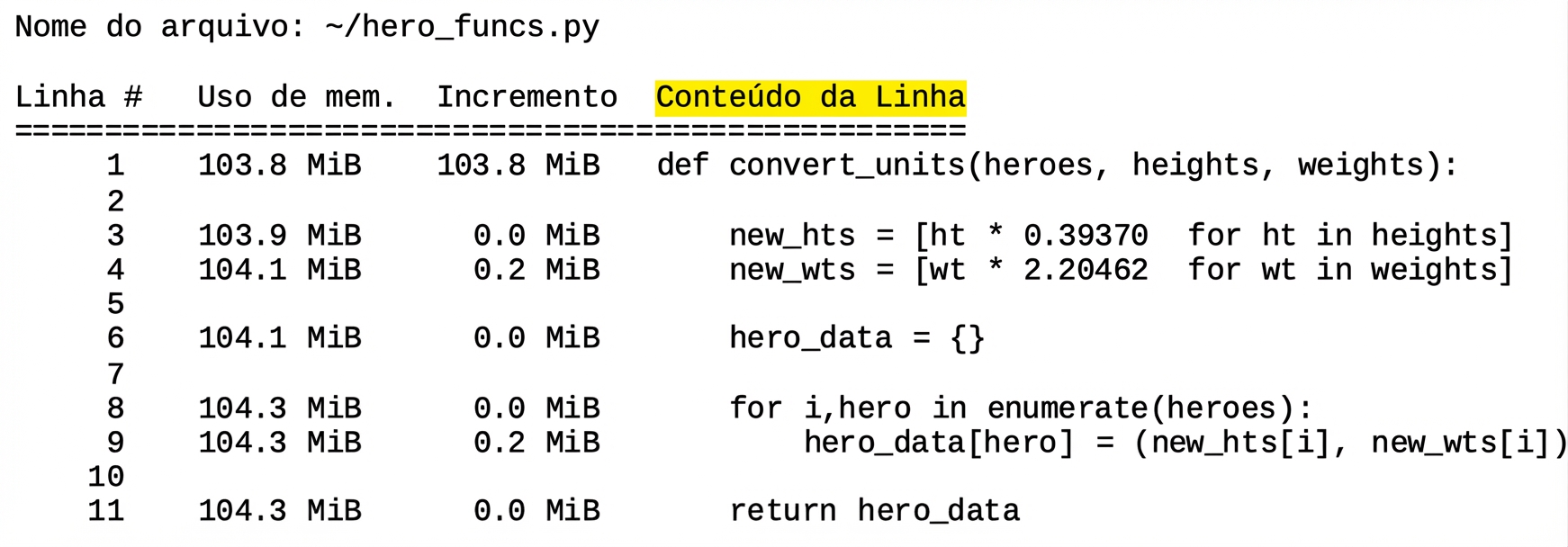
Saída do %mprun
%mprun -f convert_units convert_units(heroes, hts, wts)
Atenções na saída do %mprun
%mprun -f convert_units convert_units(heroes, hts, wts)
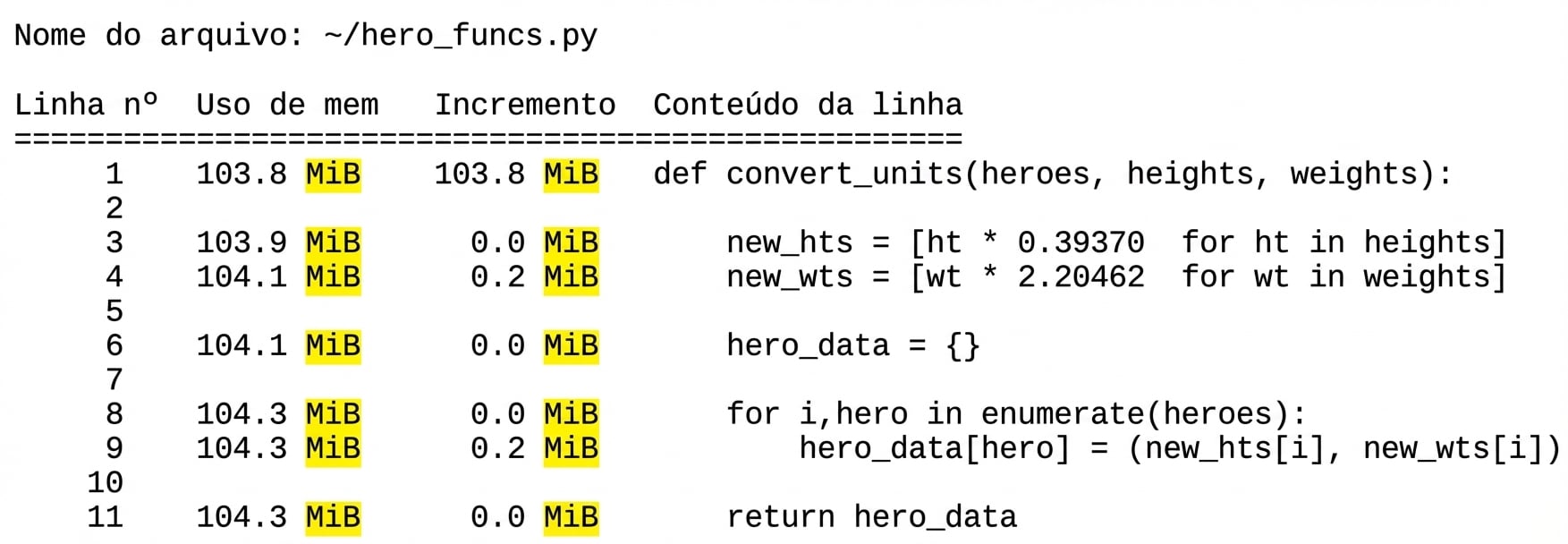
Atenções na saída do %mprun
Os dados deste exemplo são uma amostra aleatória de 35.000 heróis.
(não é o dataset original de 480 super-heróis)
%mprun -f convert_units convert_units(heroes, hts, wts)
Atenções na saída do %mprun
Alocações pequenas podem resultar em 0.0 MiB na saída.
(usando o dataset original de 480 super-heróis)
%mprun -f convert_units convert_units(heroes, hts, wts)