Should we parallelize?

Programación paralela en R

Nabeel Imam

Data Scientist

Let's construct a building

   

Building a floor on top of the last one: sequential


Installing windows to finished structure: parallel

A building is under construction. Floors can only be built in sequence, while windows can be installed in parallel.

Programación paralela en R

The sequential-parallel scale

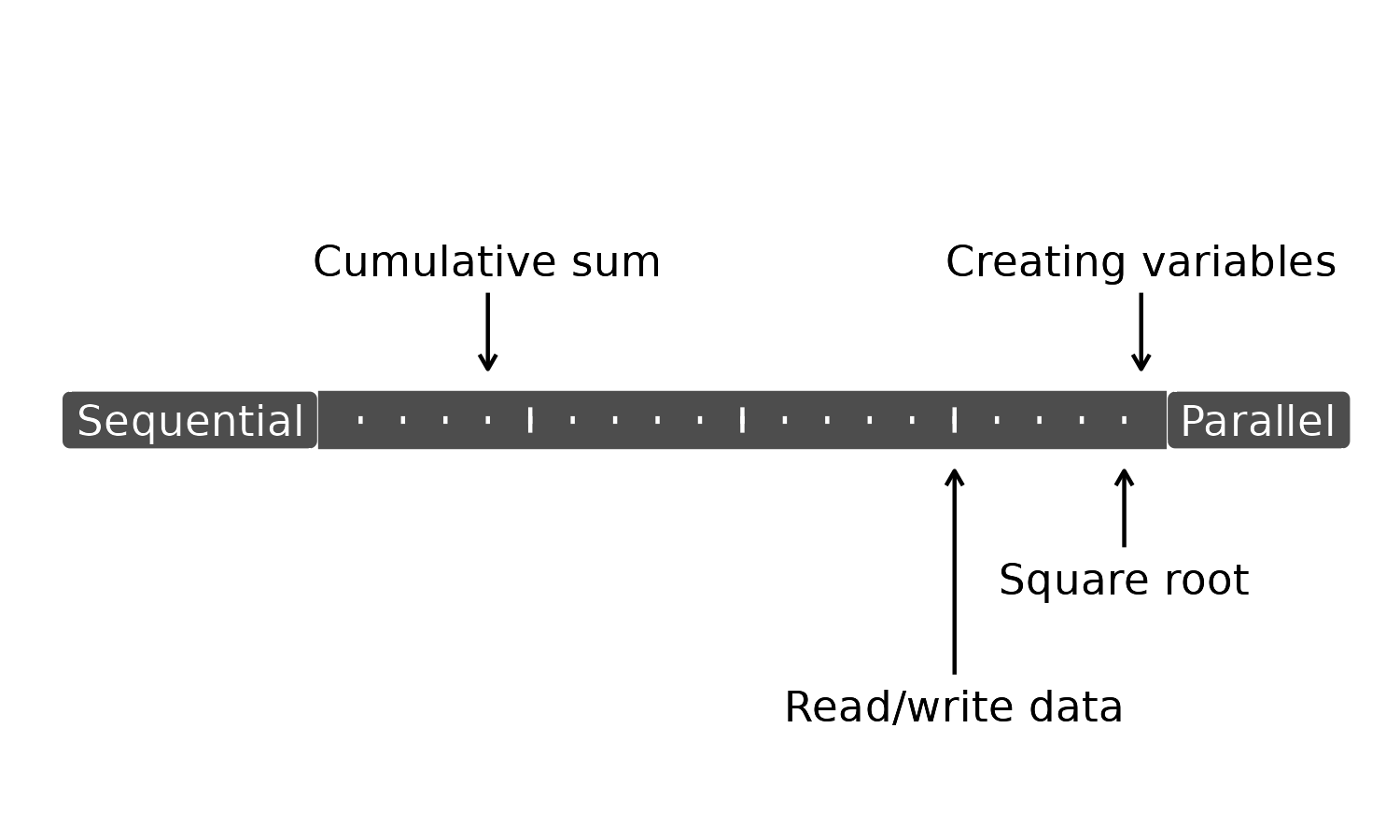
Common computational tasks are placed on a scale, ranging from sequential at one end and parallel on the other. Creating new variables is near the parallel end, while cumulative sum is near the sequential end.

Programación paralela en R

A classic numerical operation

Calculating the square roots of a million numbers

numbers <- 1:1000000


start <- Sys.time() sq_roots <- lapply(numbers, sqrt) end <- Sys.time()
end - start
Time difference of 1.044573 secs
Programación paralela en R

How could we parallelize the square root?
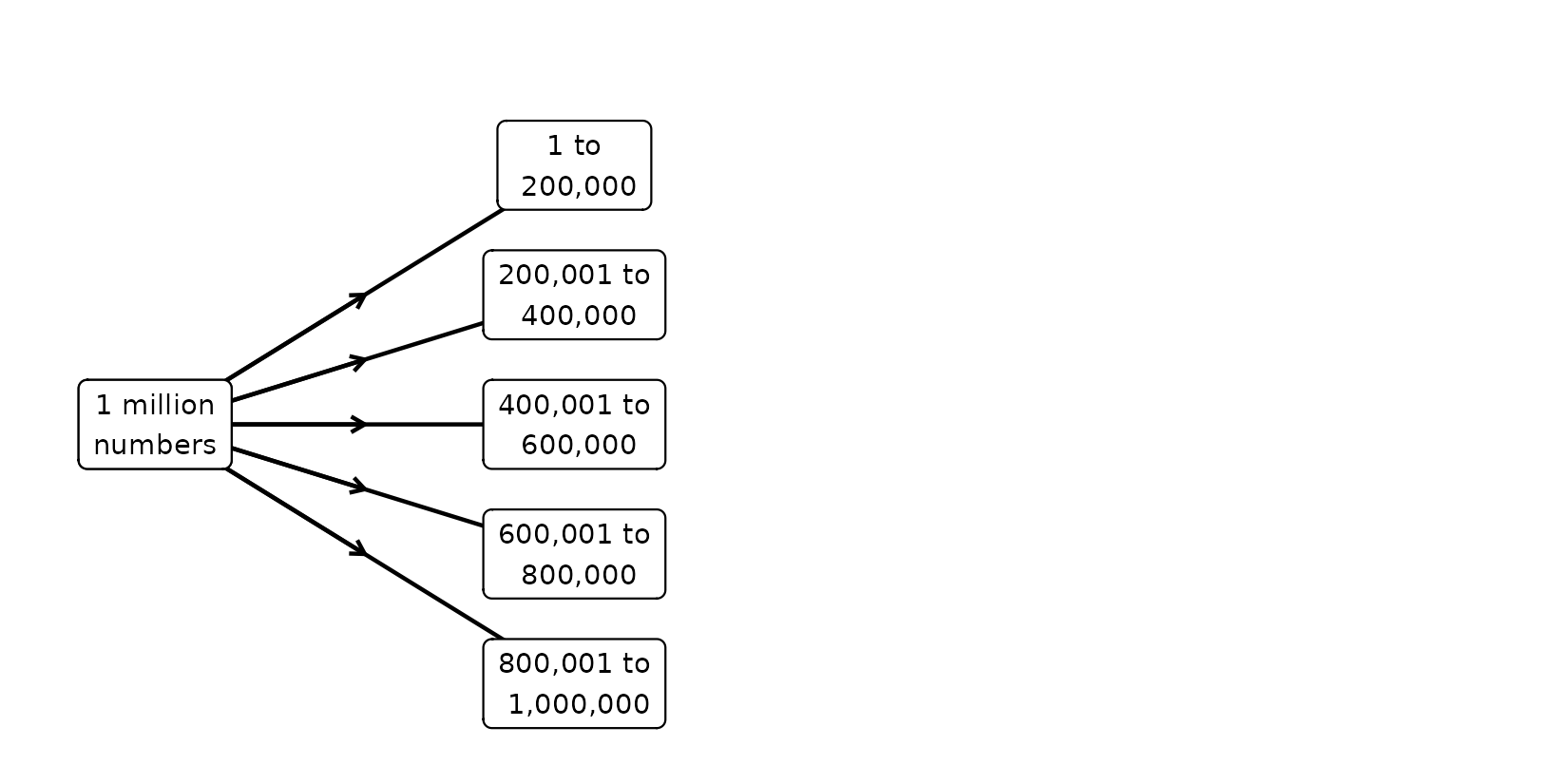
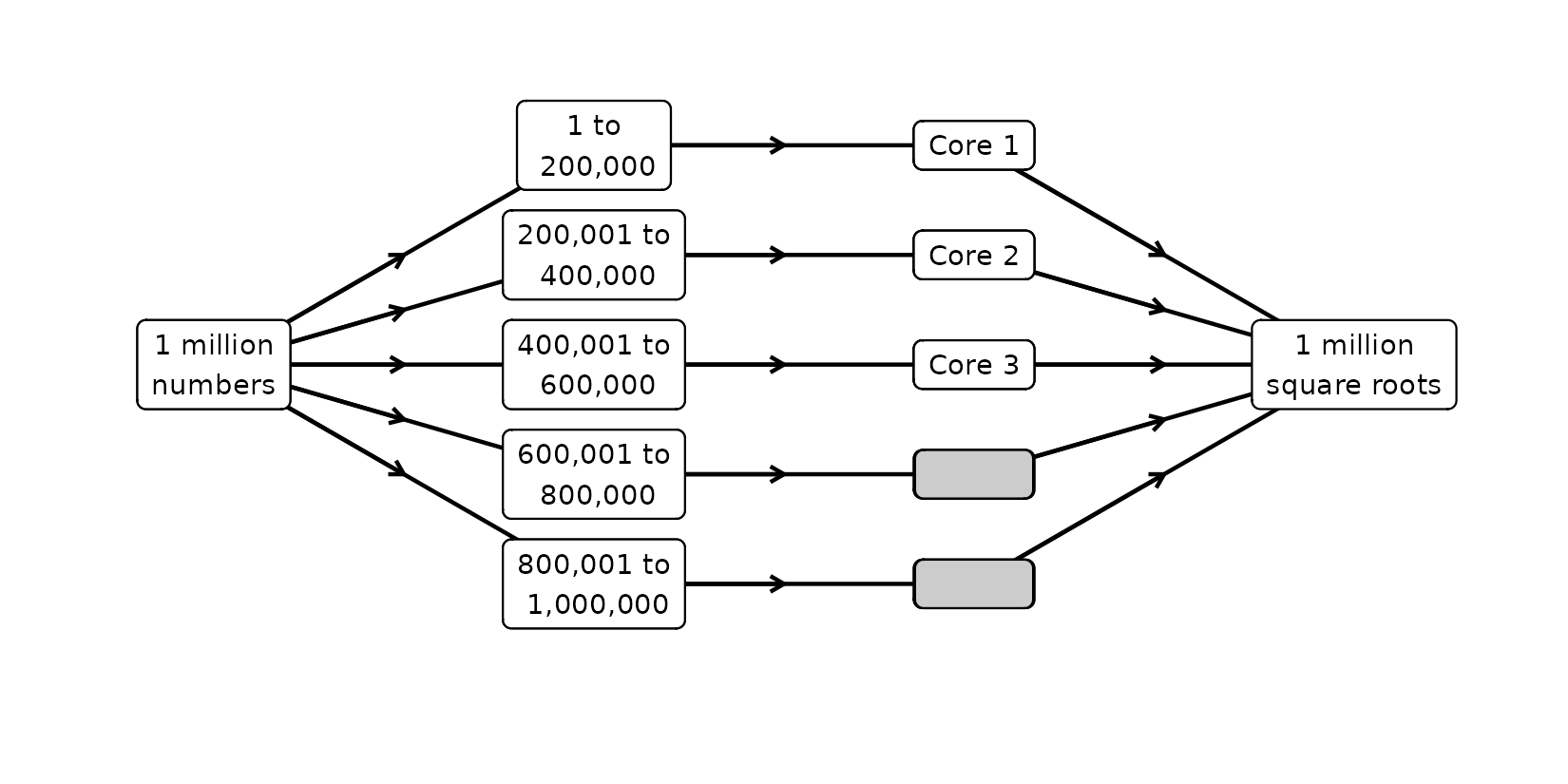
A flow chart for calculating square roots in parallel. Whole numbers from one to a million are divided into five groups, each of length 200,000.

Programación paralela en R

How could we parallelize the square root?
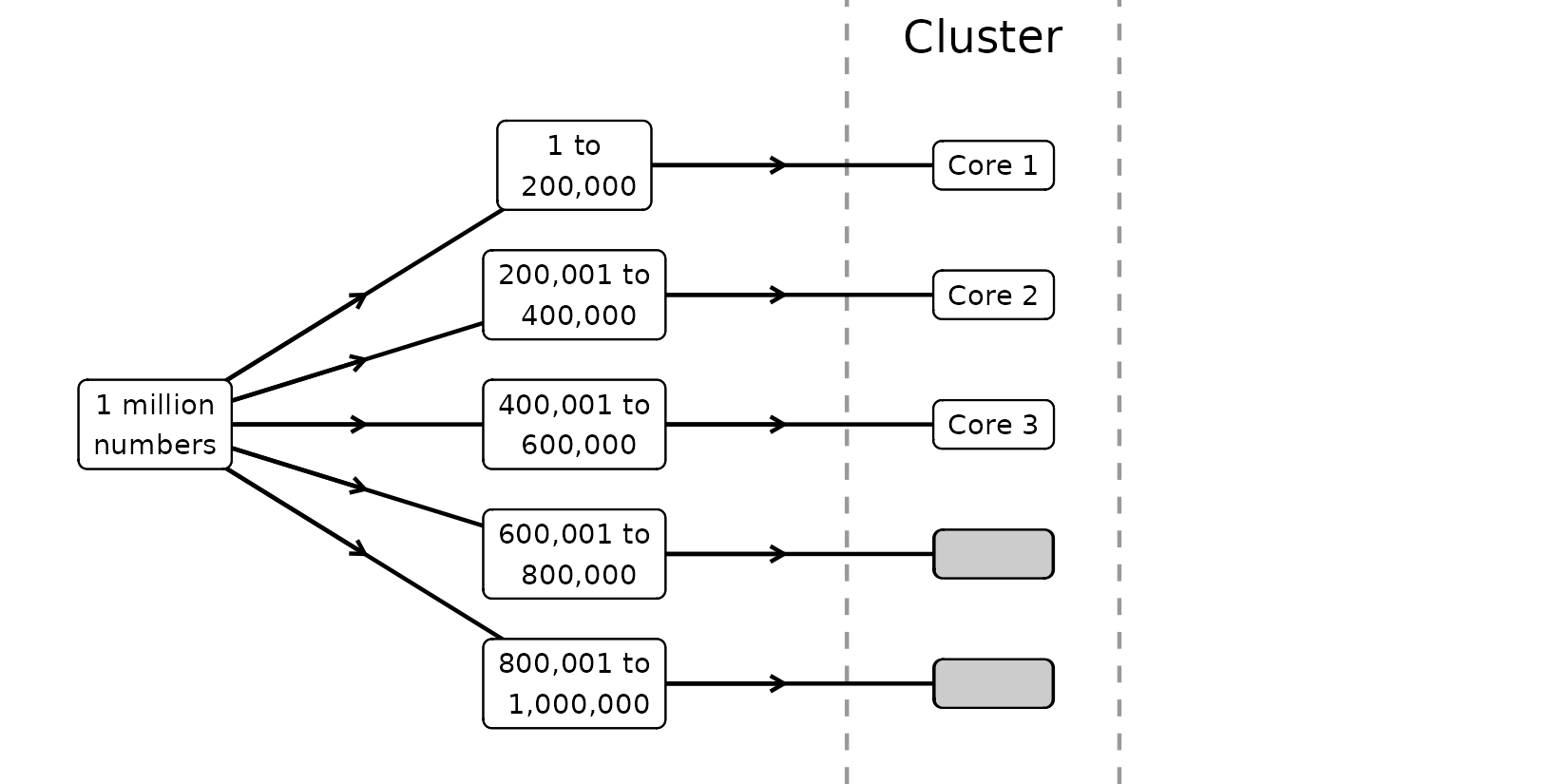
The split data is sent to a cluster, which is composed of more than one core. Each group of numbers is sent to one core for the square root calculation. If all available cores are busy, any new groups will wait for a core to be free.

Programación paralela en R

How could we parallelize the square root?
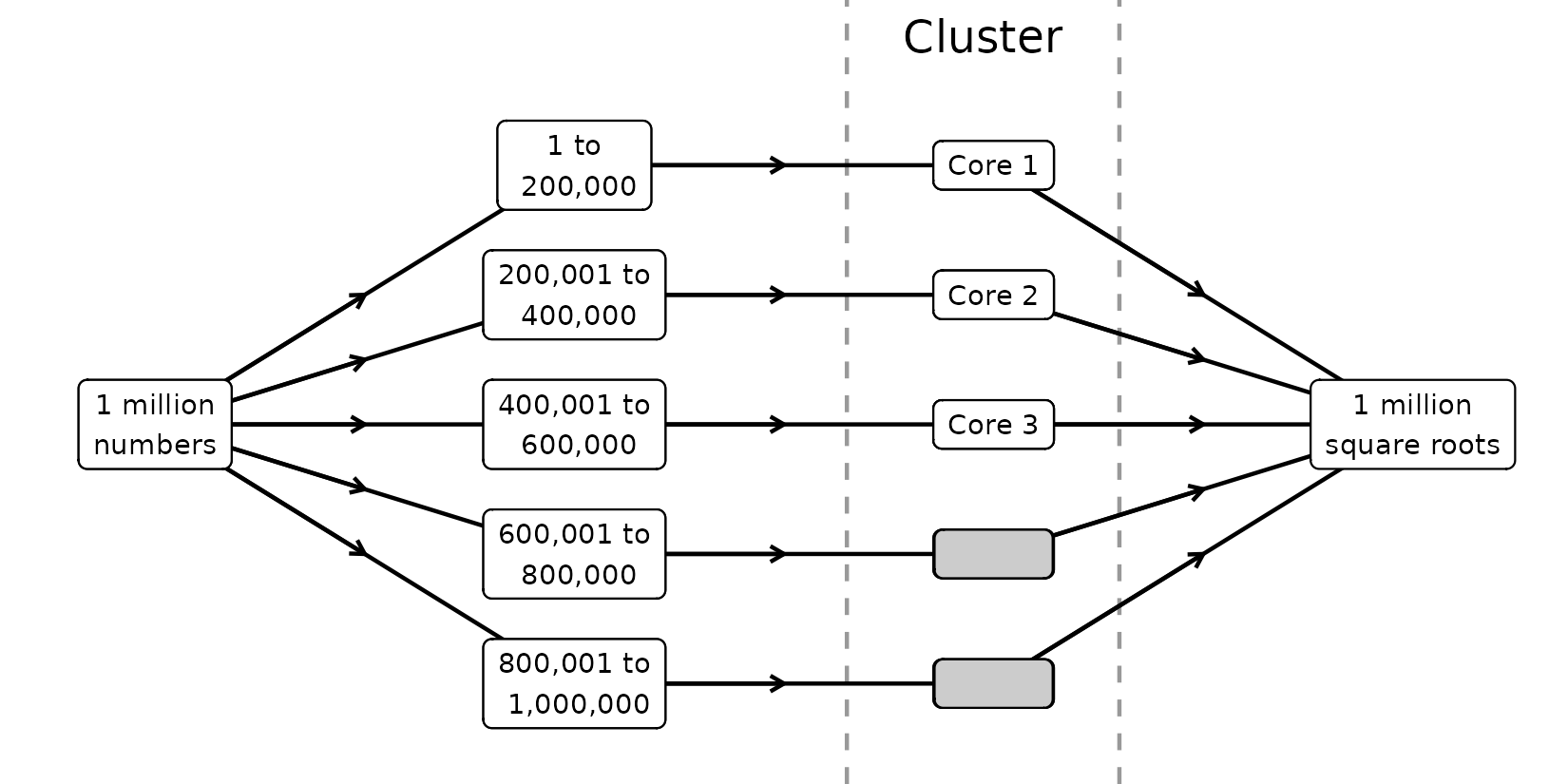
The square roots are collected from each core and combined to give a million square roots.

Programación paralela en R

A parallelized numerical operation

The square roots of a million numbers in parallel

library(parallel)


my_cluster <- makeCluster(3)
start <- Sys.time() sq_roots <- parLapply(my_cluster, numbers, sqrt) end <- Sys.time()
stopCluster(my_cluster)
end - start
Time difference of 0.8416824 secs
Programación paralela en R

Not as fast as we expected

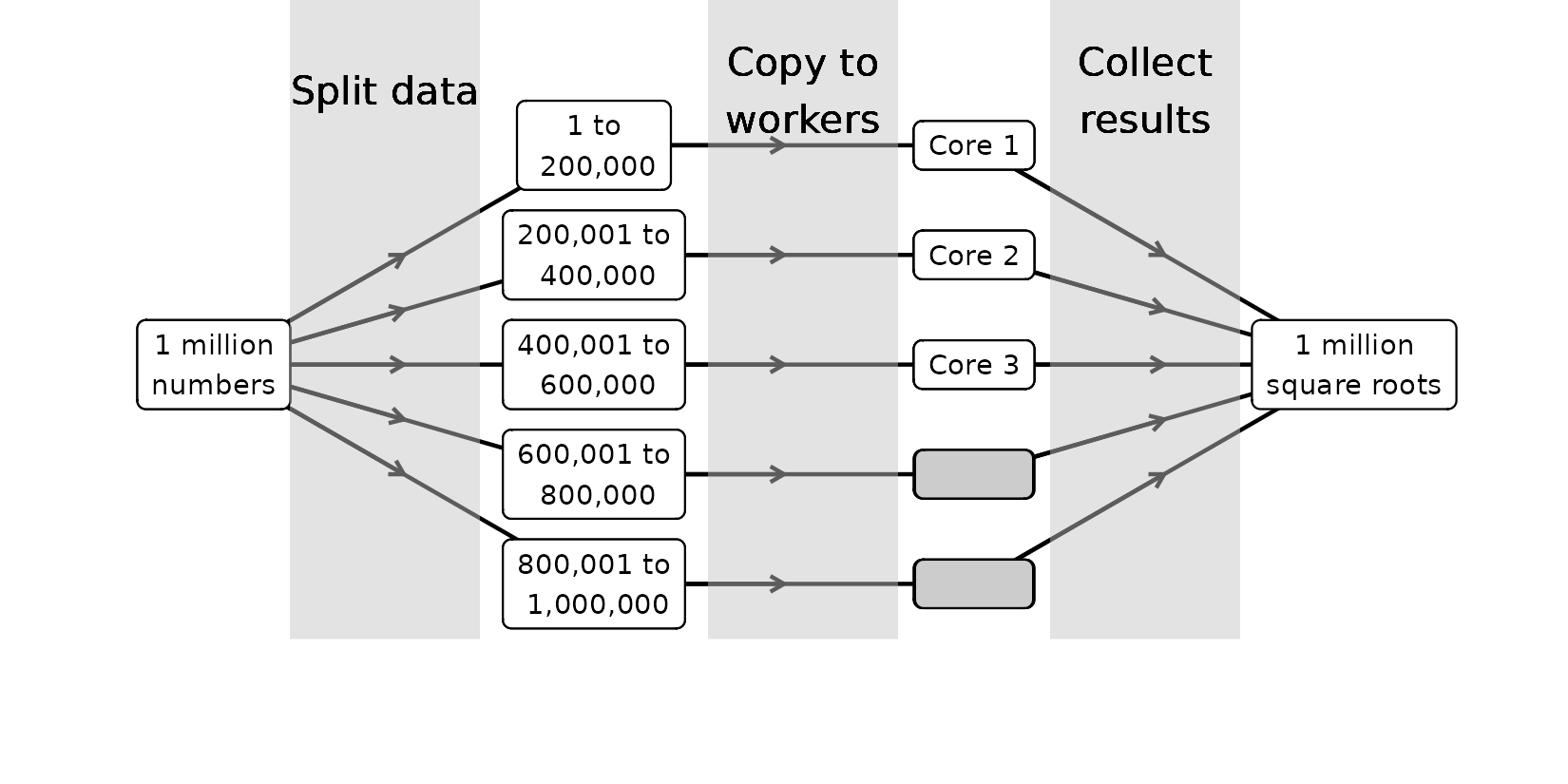
A flow chart for the parallel calculation of square roots of numbers one to a million.

Programación paralela en R

Not as fast as we expected

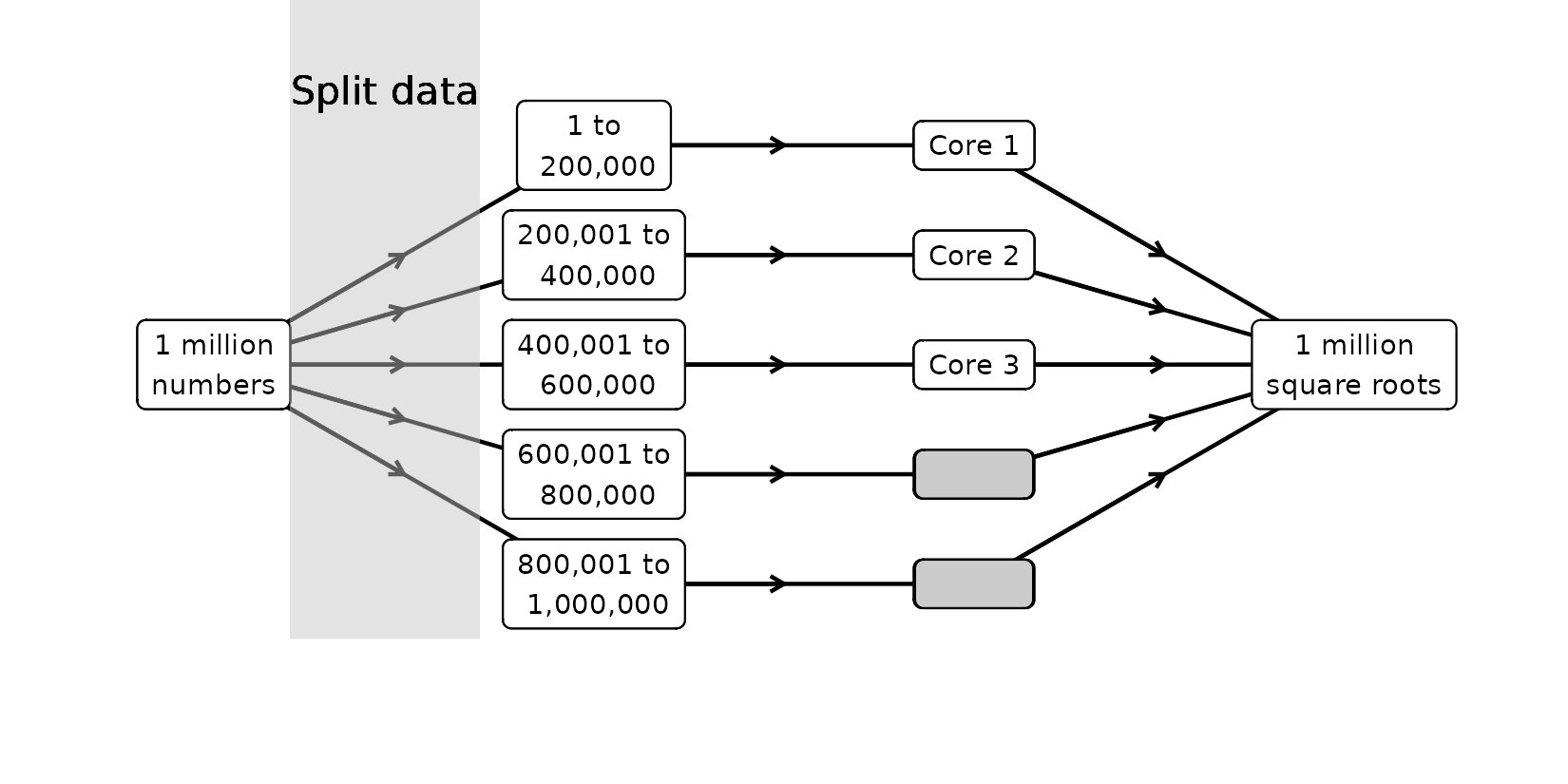
Parallel execution involves several extra tasks. The first is splitting the data.

Programación paralela en R

Not as fast as we expected

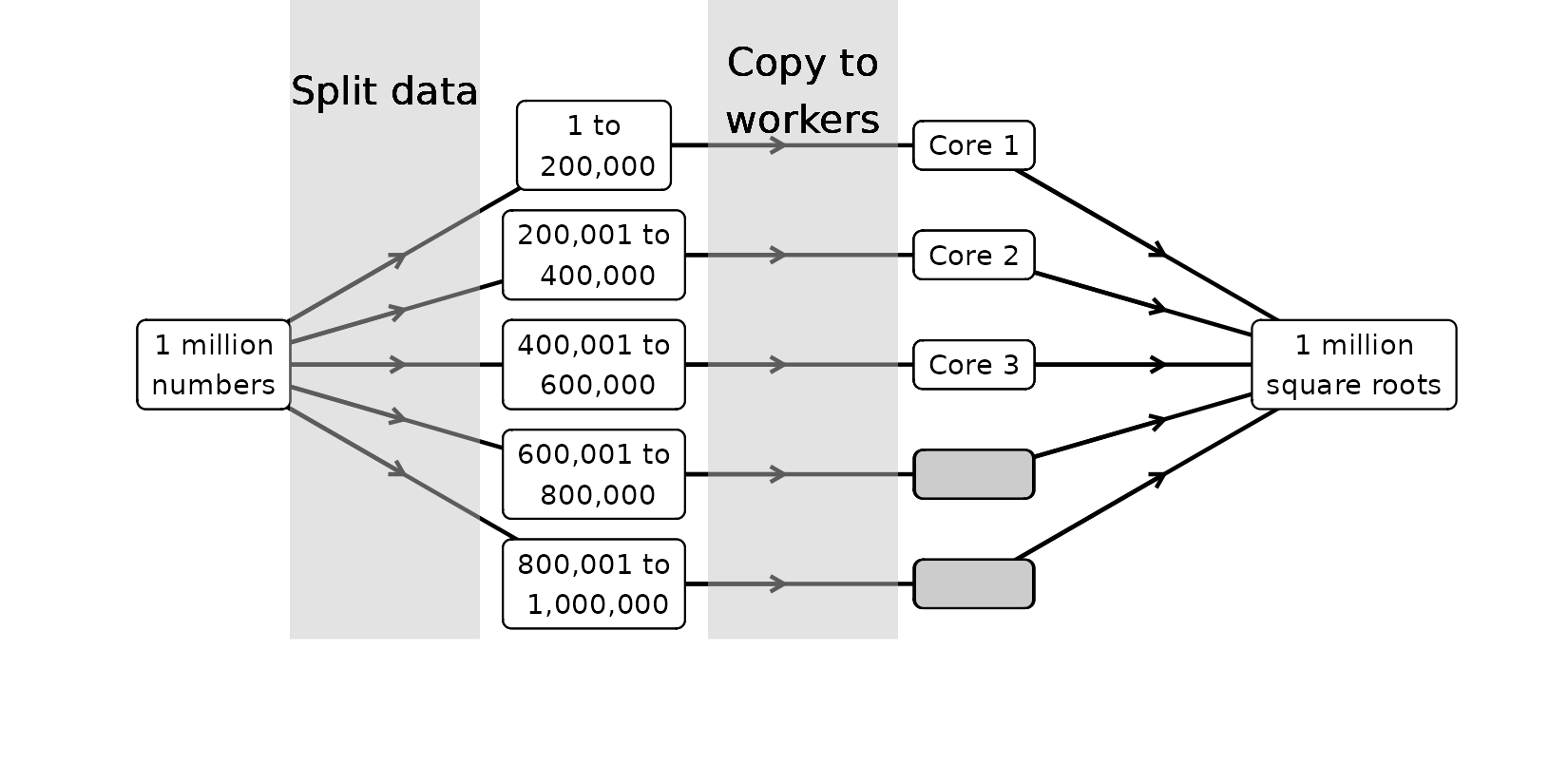
After splitting, each subgroup of the data needs to be copied to the cores in the cluster.

Programación paralela en R

Not as fast as we expected

After computation, output from each core needs to be collected to give the final result.

Programación paralela en R

Not as fast as we expected

Some computational resources are spend in orchestrating the whole process.

Programación paralela en R

So, should we parallelize?

For a sufficiently complex task, consider:

Pros

  • Faster than sequential
  • More cost-efficient in the long run


Cons

  • Requires special programming skills (but you are all set!)
  • High memory usage
Programación paralela en R

Let's practice!

Programación paralela en R

Preparing Video For Download...