Stichprobenziehung in Python
James Chapman
Curriculum Manager, DataCamp
Ziehen ohne Zurücklegen:

Ziehen mit Zurücklegen („Resampling“):

Population:

Stichprobe:

Population:

Resample:

coffee_ratings: Stichprobe aus der Gesamtpopulation aller Kaffeescoffee_focus = coffee_ratings[["variety", "country_of_origin", "flavor"]]
coffee_focus = coffee_focus.reset_index()
index variety country_of_origin flavor
0 0 None Ethiopia 8.83
1 1 Other Ethiopia 8.67
2 2 Bourbon Guatemala 8.50
3 3 None Ethiopia 8.58
4 4 Other Ethiopia 8.50
... ... ... ... ...
1333 1333 None Ecuador 7.58
1334 1334 None Ecuador 7.67
1335 1335 None United States 7.33
1336 1336 None India 6.83
1337 1337 None Vietnam 6.67
[1338 Zeilen x 4 Spalten]
coffee_resamp = coffee_focus.sample(frac=1, replace=True)
index variety country_of_origin flavor
1140 1140 Bourbon Guatemala 7.25
57 57 Bourbon Guatemala 8.00
1152 1152 Bourbon Mexico 7.08
621 621 Caturra Thailand 7.50
44 44 SL28 Kenya 8.08
... ... ... ... ...
996 996 Typica Mexico 7.33
1090 1090 Bourbon Guatemala 7.33
918 918 Other Guatemala 7.42
249 249 Caturra Colombia 7.67
467 467 Caturra Colombia 7.50
[1338 Zeilen x 4 Spalten]
coffee_resamp["index"].value_counts()
658 5
167 4
363 4
357 4
1047 4
..
771 1
770 1
766 1
764 1
0 1
Name: index, Length: 868, dtype: int64
num_unique_coffees = len(coffee_resamp.drop_duplicates(subset="index"))
868
len(coffee_ratings) - num_unique_coffees
470
Das Gegenteil vom Ziehen aus einer Population
Sampling: von der Population zur kleineren Stichprobe
Bootstrapping: aus der Stichprobe eine theoretische Population aufbauen
Anwendung von Bootstrapping:

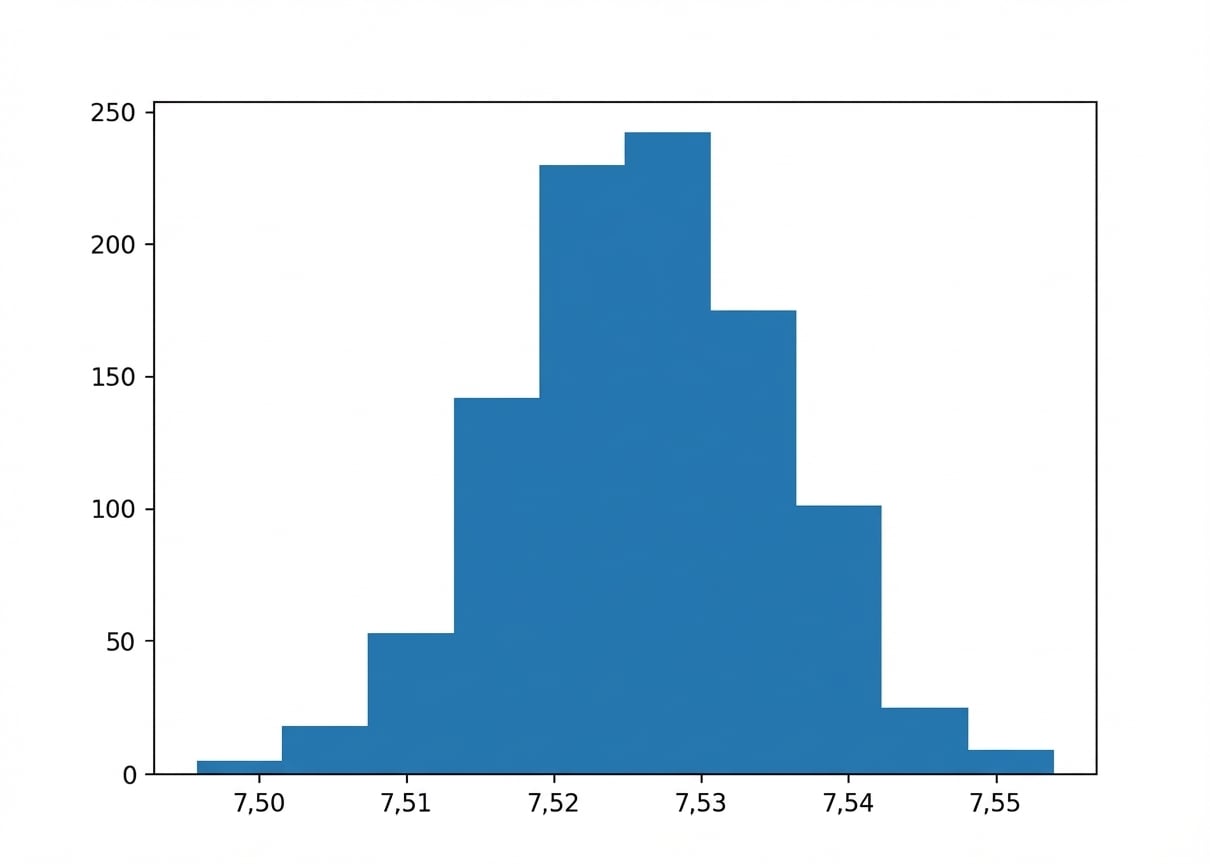
Die resultierenden Kennzahlen sind Bootstrap-Statistiken und bilden eine Bootstrap-Verteilung
import numpy as npmean_flavors_1000 = []for i in range(1000):mean_flavors_1000.append(np.mean(coffee_sample.sample(frac=1, replace=True)['flavor']))
import matplotlib.pyplot as plt
plt.hist(mean_flavors_1000)
plt.show()

Stichprobenziehung in Python