Personnaliser la fonctionnalité via l'héritage
Programmation orientée objet en Python

Alex Yarosh
Content Quality Analyst @ DataCamp
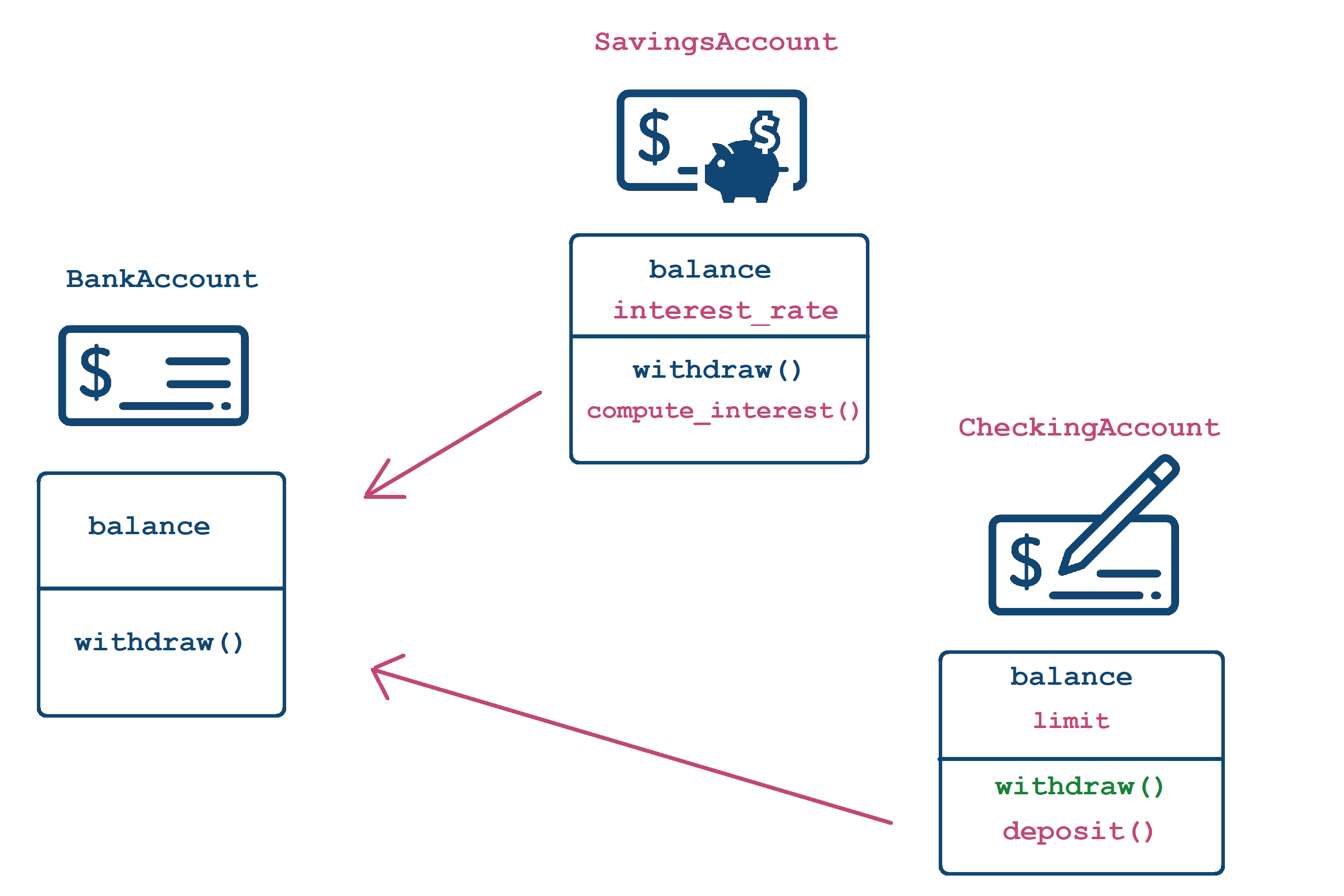
Ce que nous avons jusqu'à présent
class BankAccount:
    def __init__(self, balance):
       self.balance = balance

    def withdraw(self, amount):
       self.balance -=amount

# Classe vide héritée de BankAccount
class SavingsAccount(BankAccount):
    pass
Personnaliser les constructeurs
class SavingsAccount(BankAccount): # Constructeur spécifique pour SavingsAccount avec un paramètre supplémentaire def __init__(self, balance, interest_rate):# Appeler le constructeur parent en utilisant ClassName.__init__() BankAccount.__init__(self, balance) # <--- self est un SavingsAccount mais aussi un BankAccount# Ajouter plus de fonctionnalités self.interest_rate = interest_rate
- Peut exécuter d'abord le constructeur de la classe parente par
Parent.__init__(self, args...) - Ajouter plus de fonctionnalités
- Pas obligé d'appeler les constructeurs parents
Créer des objets avec un constructeur personnalisé
# Construire l'objet en utilisant le nouveau constructeur
acct = SavingsAccount(1000, 0.03)
acct.interest_rate
0.03
Ajouter des fonctionnalités
- Ajouter des méthodes comme d'habitude
- Peut utiliser les données de la classe parente et de la classe enfant
class SavingsAccount(BankAccount):

  def __init__(self, balance, interest_rate):
     BankAccount.__init__(self, balance)
     self.interest_rate = interest_rate

  # Nouvelle fonctionnalité
  def compute_interest(self, n_periods = 1):
     return self.balance * ( (1 + self.interest_rate) ** n_periods - 1)
Personnalisation des fonctionnalités
class CheckingAccount(BankAccount):def __init__(self, balance, limit): BankAccount.__init__(self, balance) self.limit = limitdef deposit(self, amount): self.balance += amountdef withdraw(self, amount, fee=0):if fee <= self.limit: BankAccount.withdraw(self, amount + fee) else: BankAccount.withdraw(self, amount + self.limit)
- Peut modifier la signature (ajouter des paramètres)
- Utiliser
Parent.method(self, args...)pour appeler une méthode de la classe parente
check_acct = CheckingAccount(1000, 25)

# Appellera withdraw de CheckingAccount
check_acct.withdraw(200)
# Appellera withdraw de CheckingAccount
check_acct.withdraw(200, fee=15)
bank_acct = BankAccount(1000)

# Appellera withdraw de BankAccount
bank_acct.withdraw(200)
# Provoquera une erreur
bank_acct.withdraw(200, fee=15)
TypeError: withdraw() a reçu un argument
 inattendu 'fee'
Passons à la pratique !
Programmation orientée objet en Python

