AI for Human Resources
Chris Klaus
Senior AI Architect, Chalice AI
$$
Rubrics
Define skills and criteria upfront
Ensure consistent evaluation across all interviewers
$$
AI assistance
Extract relevant skills and generate measurable criteria
Design fair, open-ended interview questions
$$
| Without Structure | With Structure |
|---|---|
| Vague impressions | Defined criteria |
| Subjective scoring | Ratings based on observable actions |
| Bias-prone outcomes | Consistent evaluations |
$$

$$

How AI Tools Work with Files
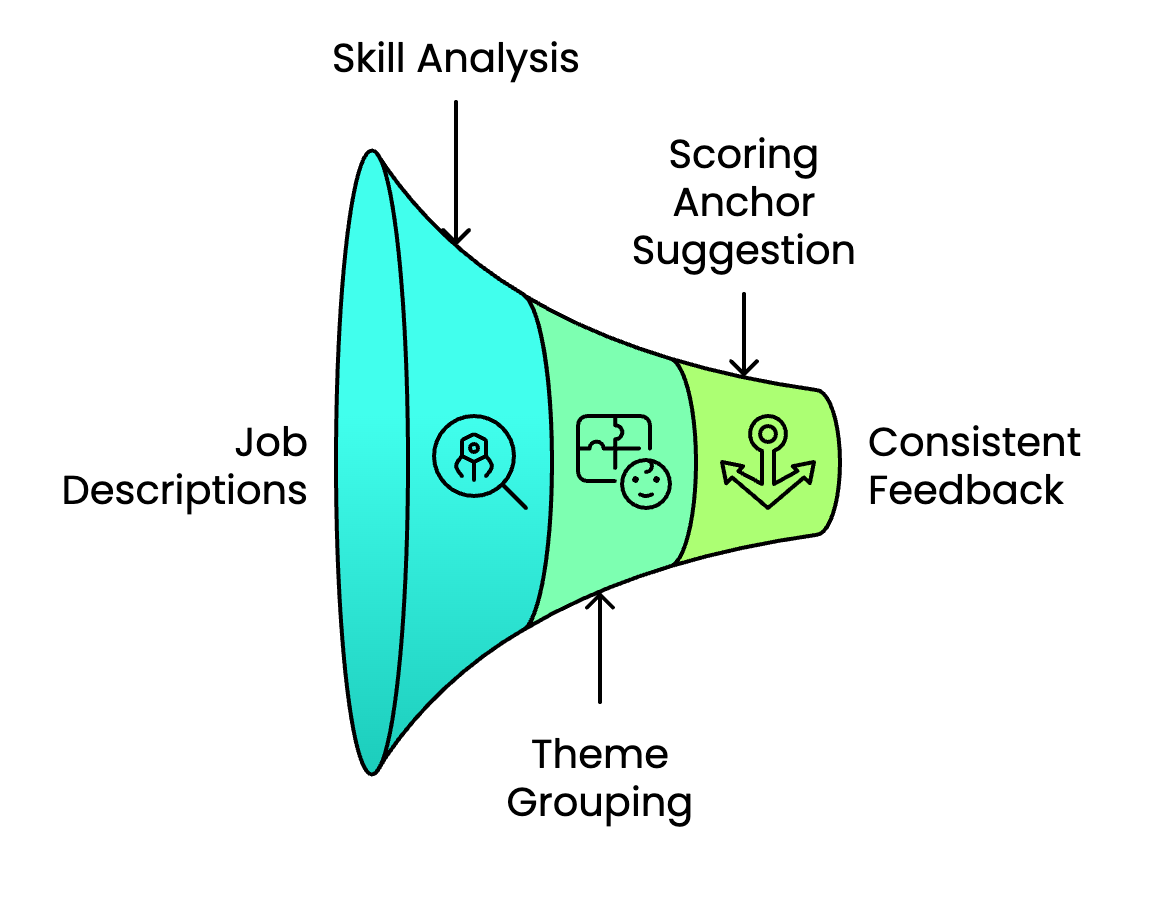
Upload or share files to give AI context (e.g., job descriptions, policies)
Generate structured outputs like Word docs or tables
Summarize, compare, or build from uploaded content
Export or reuse results across HR templates
$$
Create a five-criteria
hiring rubric scored 1-5
Add examples of behaviors
for each rating level
| Skill | Example Behavior | Strong Performance Looks Like |
|---|---|---|
| Collaboration | Sharing ideas and feedback | Leads effective teamwork |
| Analysis | Interpreting complex data | Draws clear, data-driven insights |
| Initiative | Identifying improvements | Proactively enhances processes |
$$
Generate open-ended interview
questions for each skill in
this rubric that avoid
assumptions about background
or personality
Rephrase these questions to
emphasize observable behaviors
$$
Use AI to create questions that are:
$$
For each question, outline
the difference between weak,
average, and strong answers
$$
| Rating | What It Sounds Like |
|---|---|
| Weak | Vague, general, no clear outcome |
| Adequate | Some relevant detail, moderate clarity |
| Strong | Specific, detailed, results-oriented |
$$

$$
Handle candidate information with care
Never include names or contact info in prompts
Avoid demographic or identity details
Use anonymized or placeholder data
AI for Human Resources