Modèles de mélange en R
Victor Medina
Researcher at The University of Edinburgh

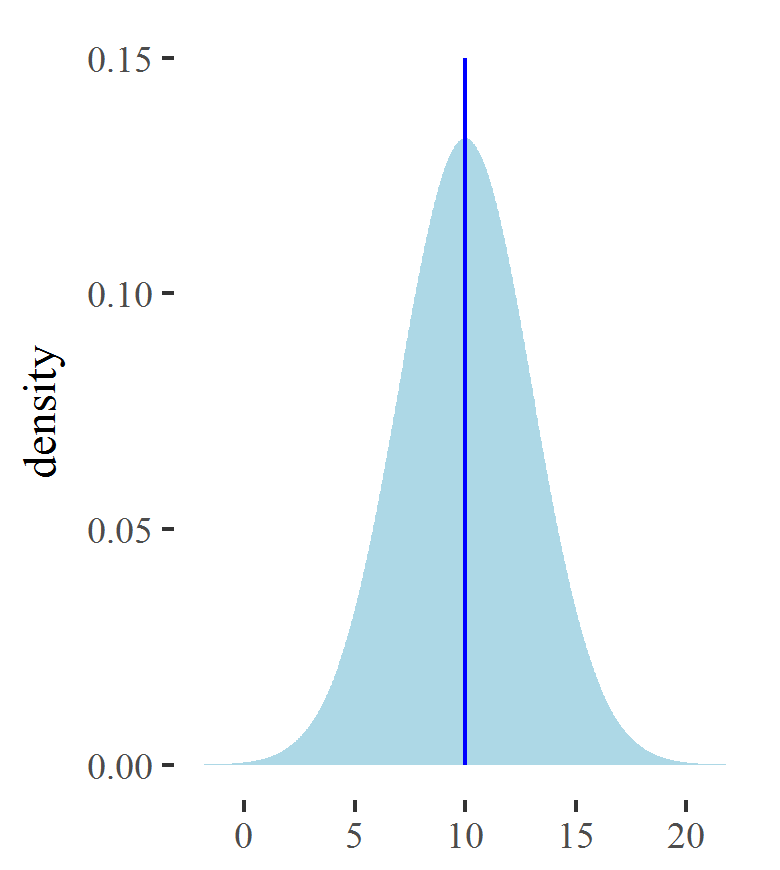
mixtoolsbayesmixEMClusterflexmixMoyenne

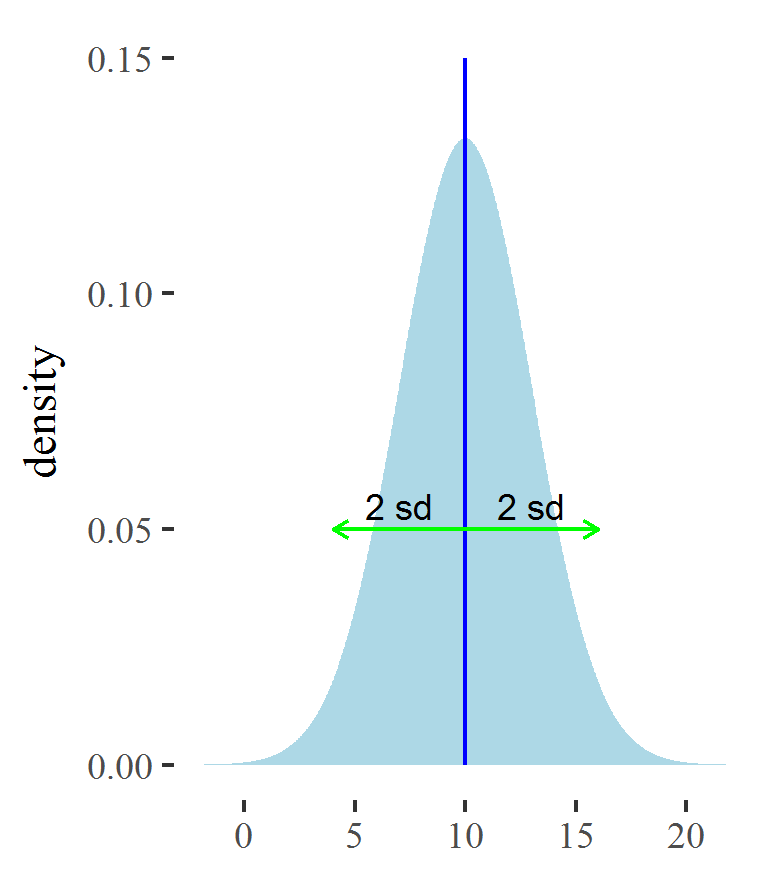
Écart type

Pour générer des valeurs selon une loi gaussienne :
rnorm(n, mean, sd)Exemple : générer 100 valeurs d'une loi gaussienne de moyenne 10 et d'écart type 5
> population_sample <- rnorm(n = 100, mean = 10, sd = 5)
> head(population_sample)
[1] 6.248874 9.564190 16.006521 9.139647 10.114969 16.423538
> mean_estimate <- mean(population_sample)
10.35759
Pour estimer sd, appliquez la procédure suivante
$$value_i\rightarrow (. -mean\_estimate)\rightarrow (.)^2\rightarrow mean (.)\rightarrow \sqrt{(.)}$$
> population_sample %>%
+ subtract(mean_estimate) %>%
+ raise_to_power(2) %>% mean() %>% sqrt()
5.318641
sd> standard_deviation_estimate <- sd(population_sample)
> standard_deviation_estimate
5.345435
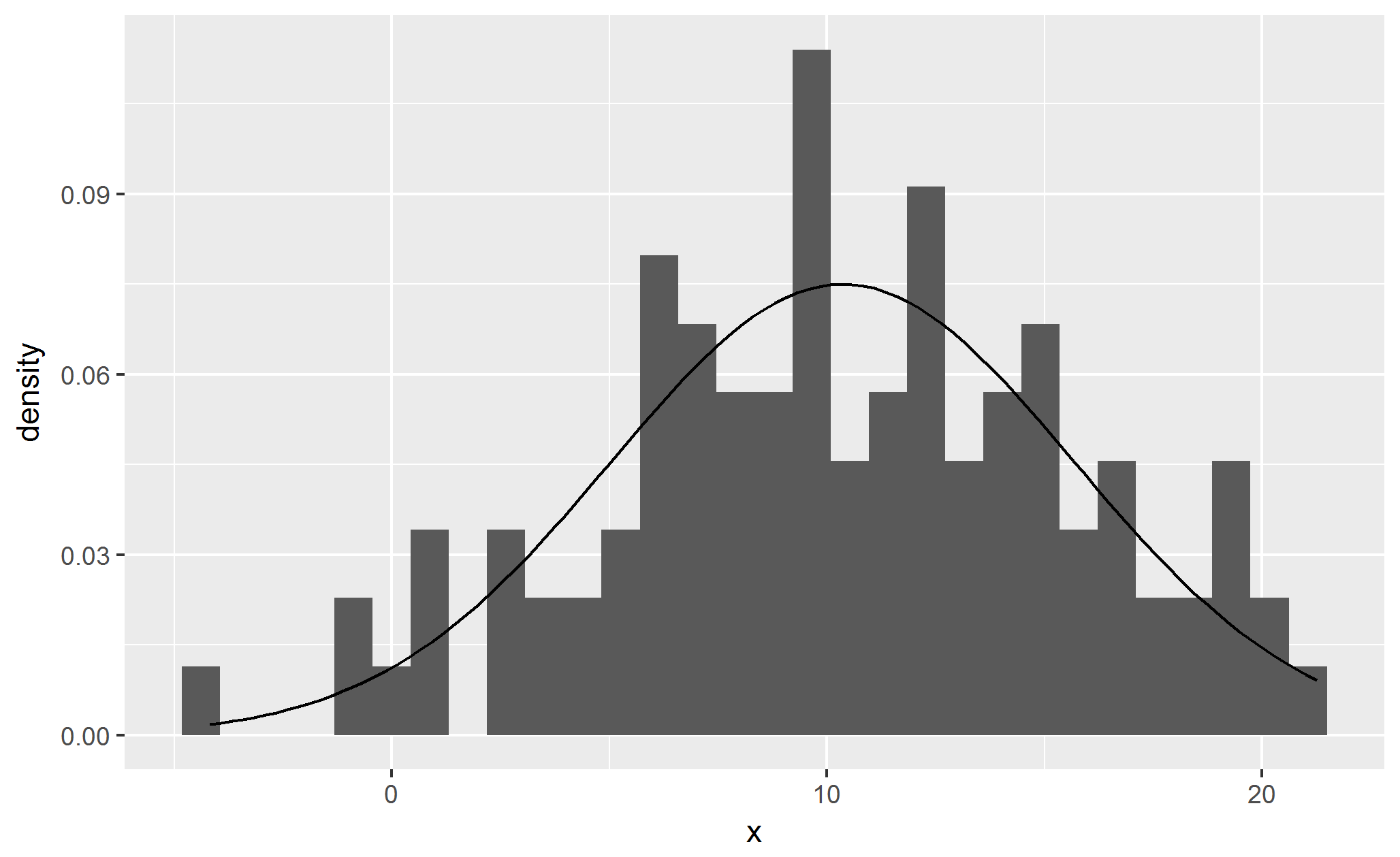
# Transform the sample into a data frame
population_sample <- data.frame(x = population_sample)
# Plot the histogram
ggplot(data = population_sample) +
geom_histogram(aes(x = x, y = ..density..)) +
stat_function(geom = "line",
fun = dnorm,
args = list(mean = mean_estimate,
sd = standard_deviation_estimate))

Modèles de mélange en R