Concevoir des pipelines de prévision pour la production
Rami Krispin
Senior Manager, Data Science and Engineering


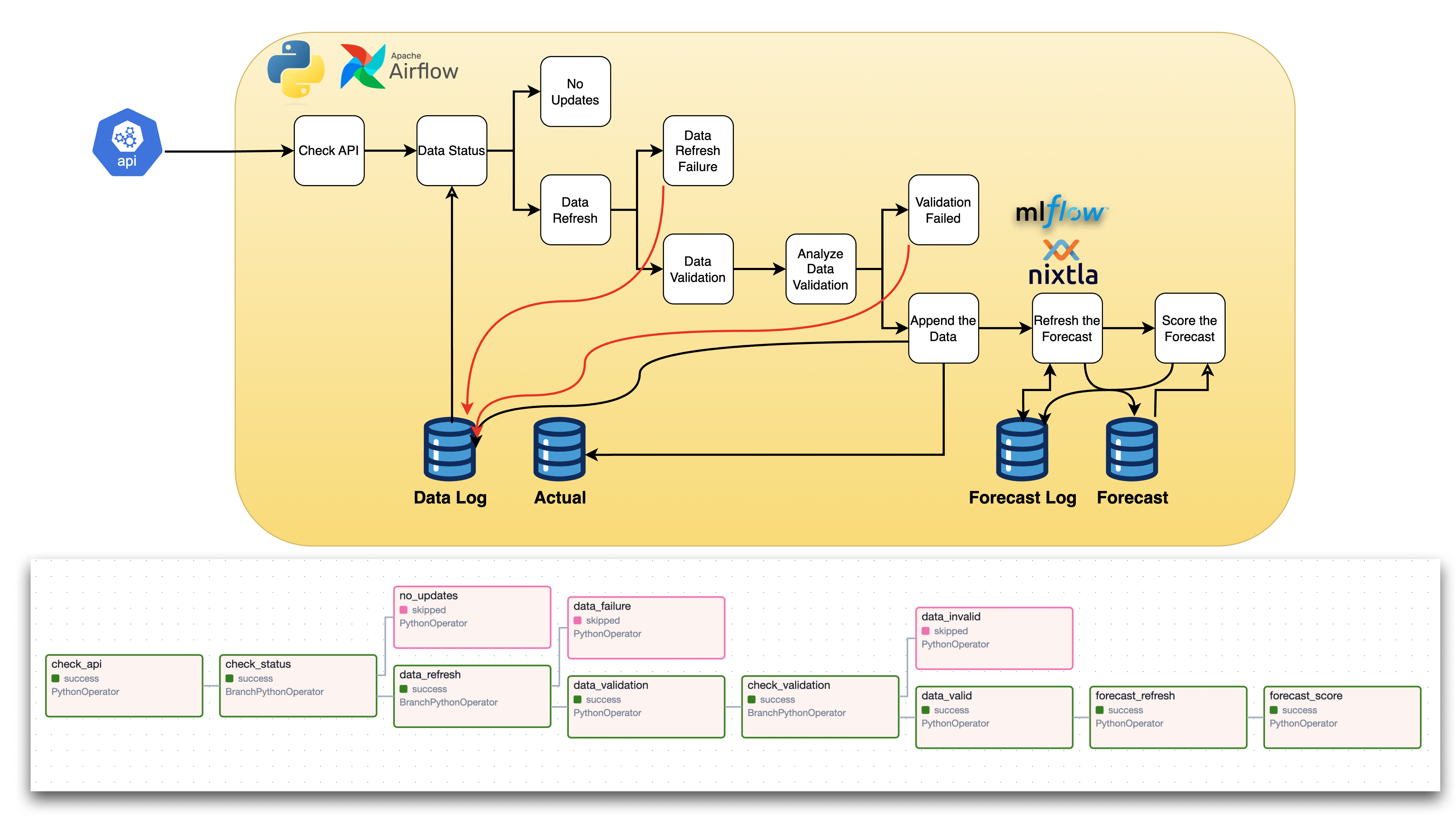
Ingestion des données
Actualisation des prévisions
Robuste


Approches
Prérequis
from lightgbm import LGBMRegressor from mlforecast import MLForecast import mlflow import mlforecast.flavorexperiment_name = "ml_forecast" mlflow_path = "file:///mlruns"meta = mlflow.get_experiment_by_name(experiment_name)
model = LGBMRegressor(n_estimators = 500, learning_rate= 0.05)params = { "freq": "h", "lags": list(range(1, 24)), "date_features": ["month", "day", "dayofweek", "week", "hour"] }
mlf = MLForecast(
models= model,
freq= params["freq"],
lags=params["lags"],
date_features=params["date_features"]
)
mlf.fit(ts)
run_time = datetime.datetime.now().strftime("%Y-%m-%d %H-%M-%S") run_name = f"lightGBM6_{run_time}"print(run_name)
'lightGBM6_2025-05-19 05-12-16'
with mlflow.start_run(experiment_id=meta.experiment_id,
run_name=run_name) as run:
mlforecast.flavor.log_model(model=mlf, artifact_path="prod_model")


Concevoir des pipelines de prévision pour la production