Kreditrisikomodellierung in Python
Michael Crabtree
Data Scientist, Ford Motor Company
loan_status sind die Klassen01y_train['loan_status'].value_counts()
| loan_status | Trainingsanzahl | Prozent vom Gesamt |
|---|---|---|
| 0 | 13,798 | 78% |
| 1 | 3,877 | 22% |
xgboost nutzen Log-Loss als Verlustfunktion| Wahrer Status | Vorhergesagte Wahrscheinlichkeit | Log-Loss |
|---|---|---|
| 1 | 0.1 | 2.3 |
| 0 | 0.9 | 2.3 |
| Person | Kredithöhe | Potenzieller Gewinn | Prognose | Tatsächlich | Verluste |
|---|---|---|---|---|---|
| A | $1,000 | $10 | Ausfall | Kein Ausfall | -$10 |
| B | $1,000 | $10 | Kein Ausfall | Ausfall | -$1,000 |
| Methode | Vorteile | Nachteile |
|---|---|---|
| Mehr Daten sammeln | Erhöht Anzahl der Ausfälle | Anteil der Ausfälle bleibt evtl. gleich |
| Modelle bestrafen | Erhöht Recall für Ausfälle | Mehr Tuning und Pflege nötig |
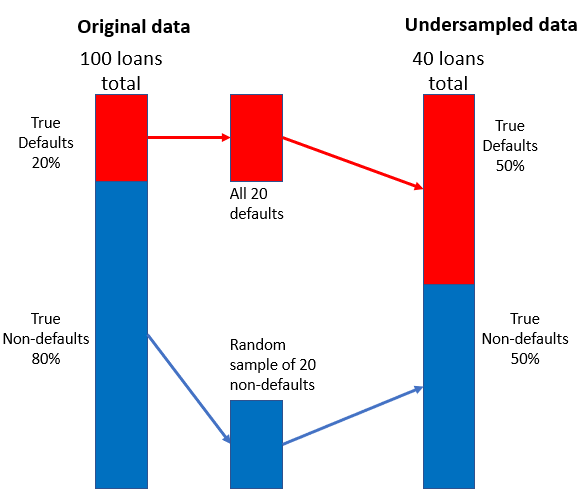
| Anders sampeln | Geringster technischer Aufwand | Weniger Ausfälle in den Daten |
loan_status bilden# Concat the training sets
X_y_train = pd.concat([X_train.reset_index(drop = True),
y_train.reset_index(drop = True)], axis = 1)
# Get the counts of defaults and non-defaults
count_nondefault, count_default = X_y_train['loan_status'].value_counts()
# Separate nondefaults and defaults
nondefaults = X_y_train[X_y_train['loan_status'] == 0]
defaults = X_y_train[X_y_train['loan_status'] == 1]
# Undersample the non-defaults using sample() in pandas
nondefaults_under = nondefaults.sample(count_default)
# Concat the undersampled non-defaults with the defaults
X_y_train_under = pd.concat([nondefaults_under.reset_index(drop = True),
defaults.reset_index(drop = True)], axis=0)
Kreditrisikomodellierung in Python