Data lifecycle management and caching strategies

Using Data Stores in AWS

Dunieski Otano

AWS Solutions Architect

The Cost of keeping everything forever
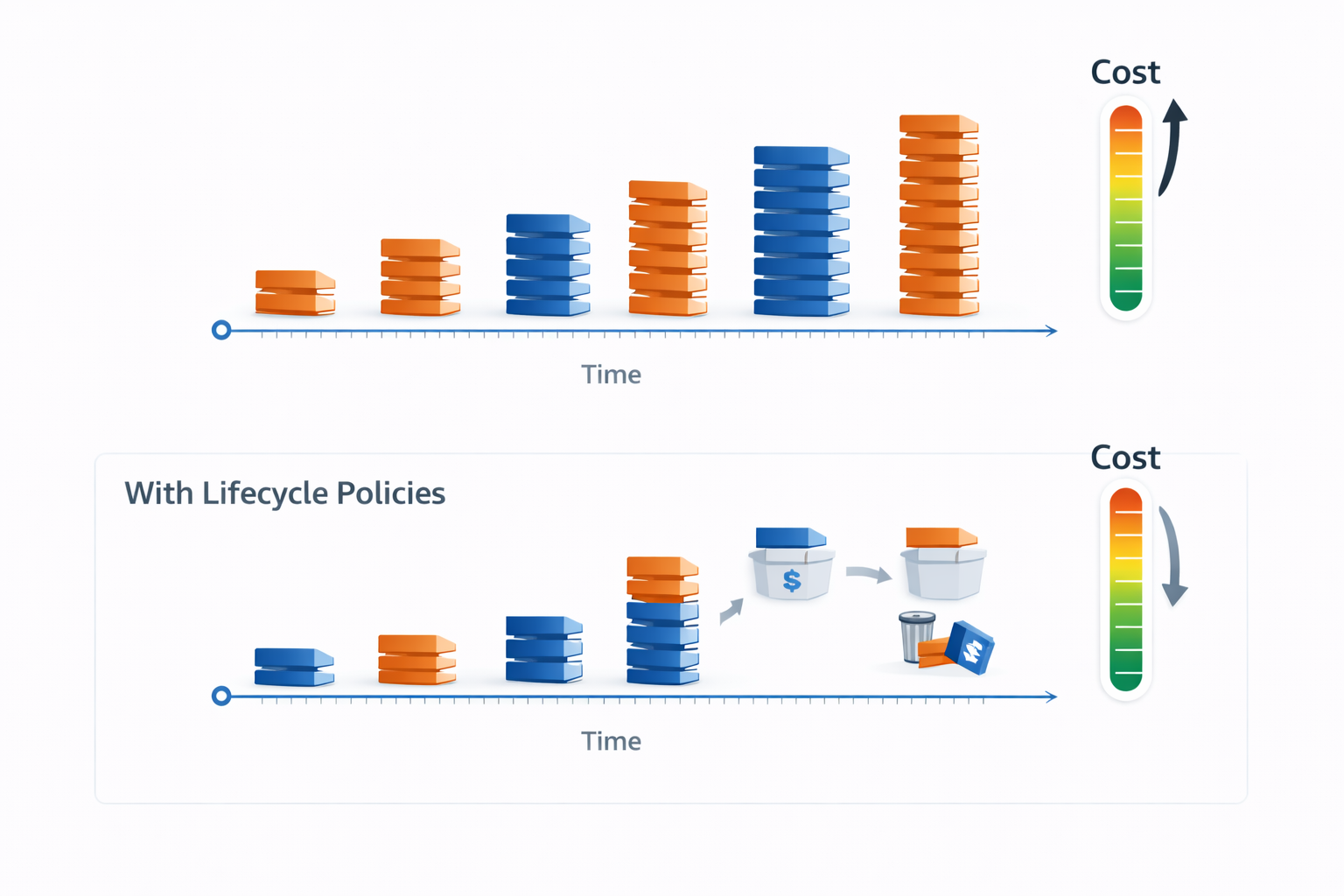
  • Data grows continuously
  • Storage costs add up over time
  • Not all data needs immediate access
  • Lifecycle management: automatically moving or deleting data based on age and access patterns

lc_policies

Using Data Stores in AWS

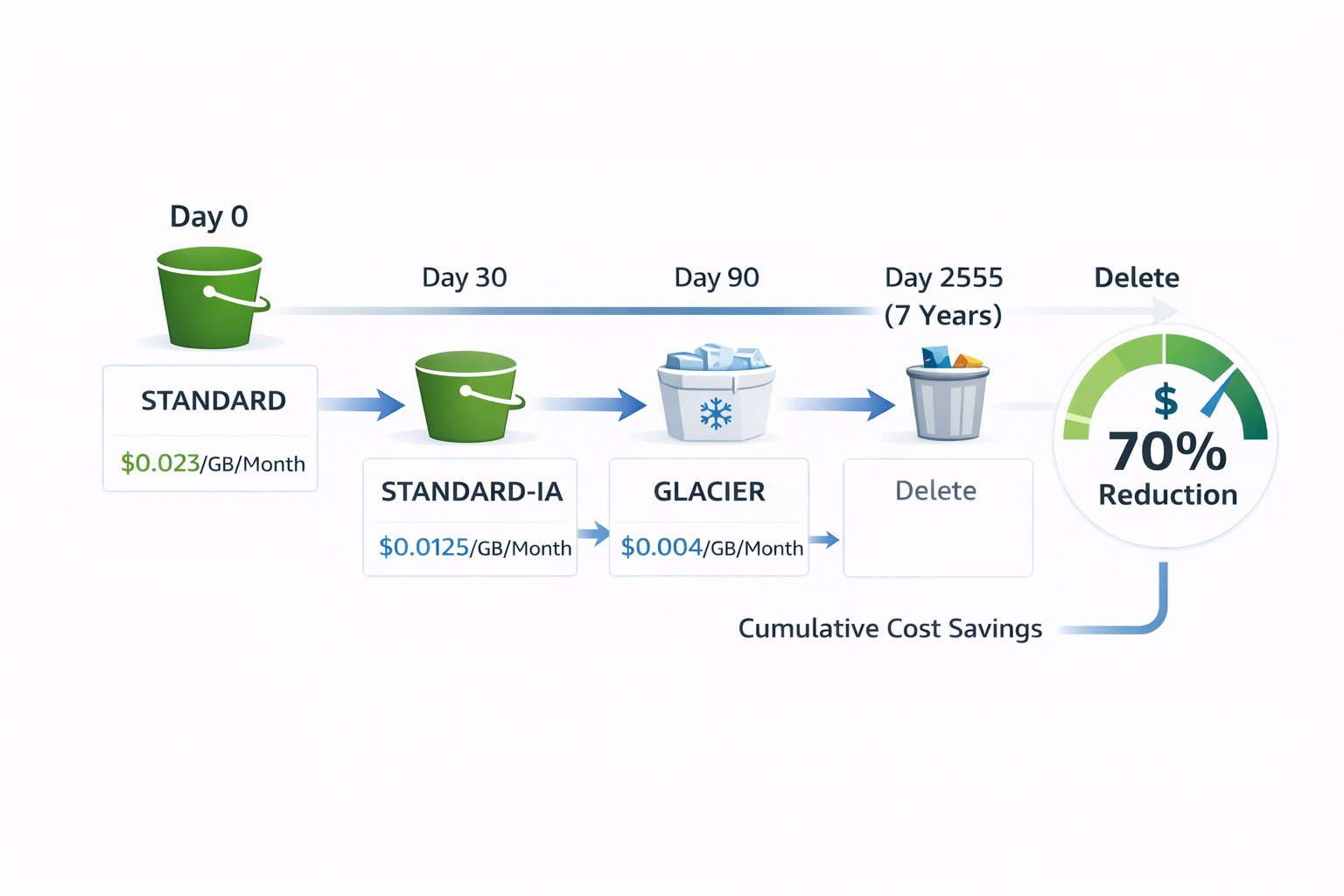
S3 lifecycle policies in detail

  • Standard: Frequent access, highest cost
  • Standard-IA: Infrequent access, 30-day minimum
  • Glacier: Archive storage, 90-day minimum
  • Automatic transitions: Based on object age
  • Reduces storage costs by 70% or more while meeting compliance requirements

cost_savings

Using Data Stores in AWS

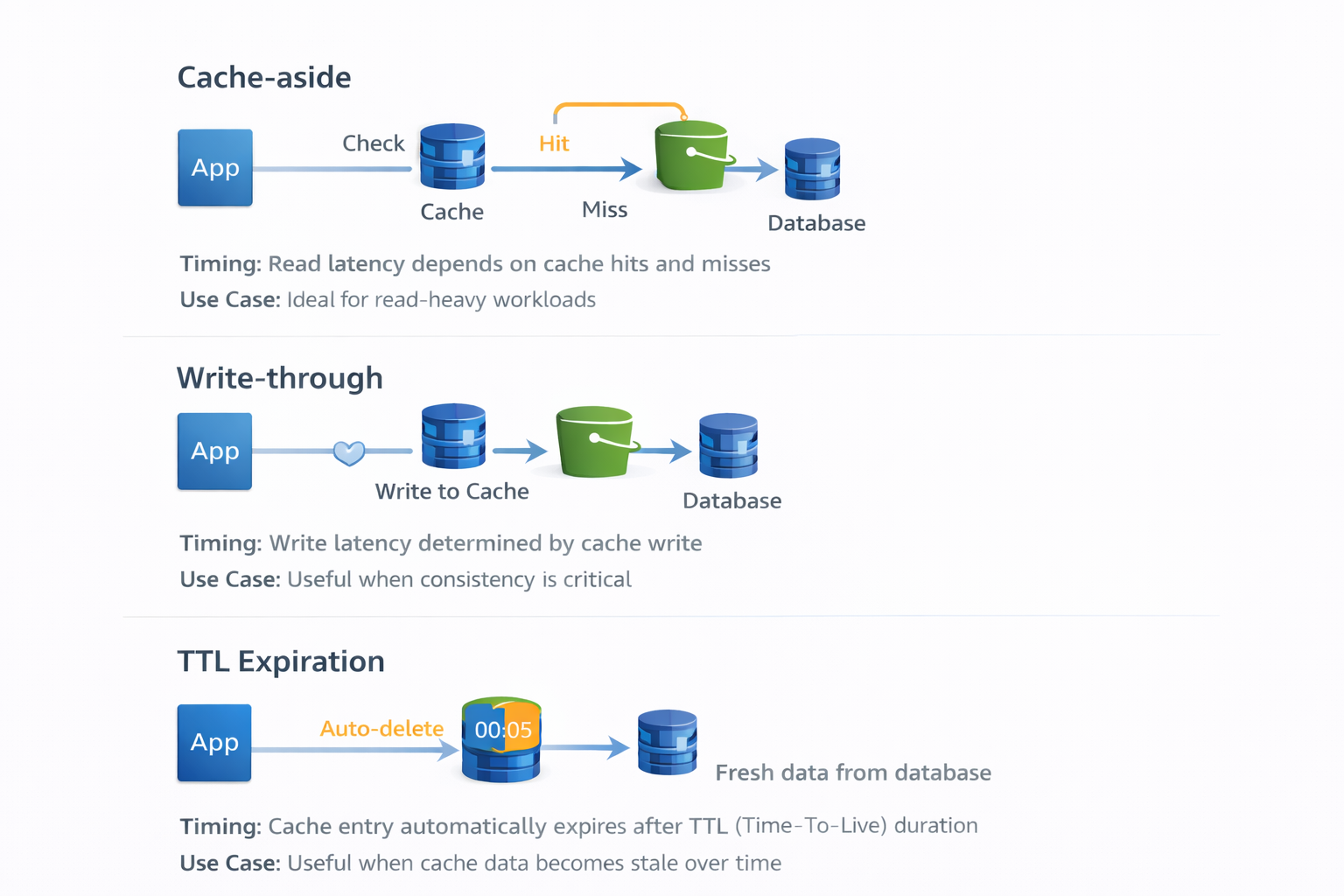
Advanced caching patterns

  • Cache-aside: Application manages cache
    • Best for: Read-heavy workloads
  • Write-through: Write to cache and database
    • Best for: Data consistency requirements
  • TTL (Time-to-Live): Automatic expiration

    • Prevents stale data issues
  • ElastiCache with Redis supports all these patterns and provides microsecond response times

cache

Using Data Stores in AWS

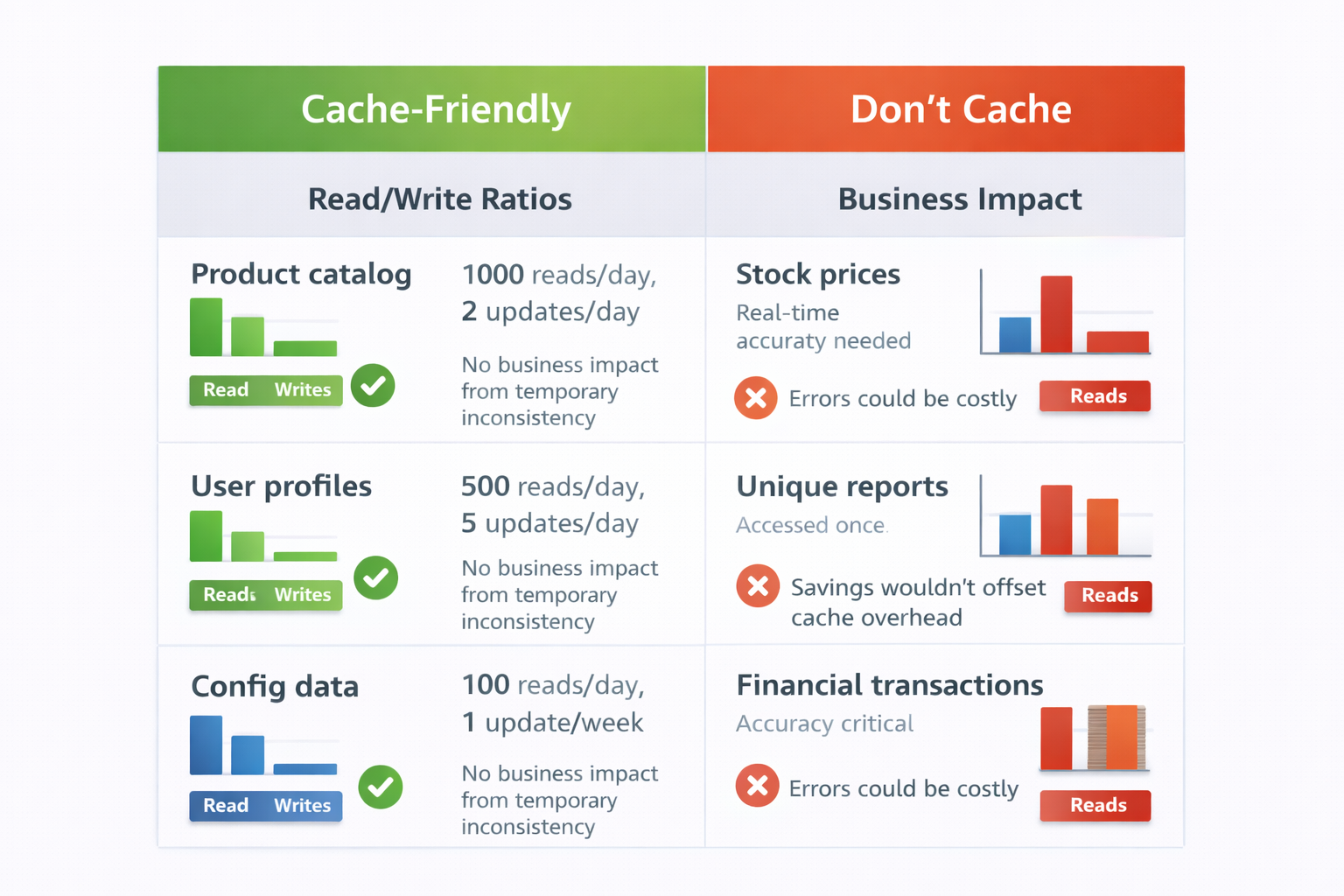
Caching decision framework

  • Cache when: High read frequency, low change rate
    • Product catalogs, user profiles, config data
  • Don't cache: Real-time data, one-time access
    • Stock prices, unique reports, financial transactions
  • Cache sizing: 20% of data = 80% of requests

caching_decision

Using Data Stores in AWS

Let's practice!

Using Data Stores in AWS

Preparing Video For Download...