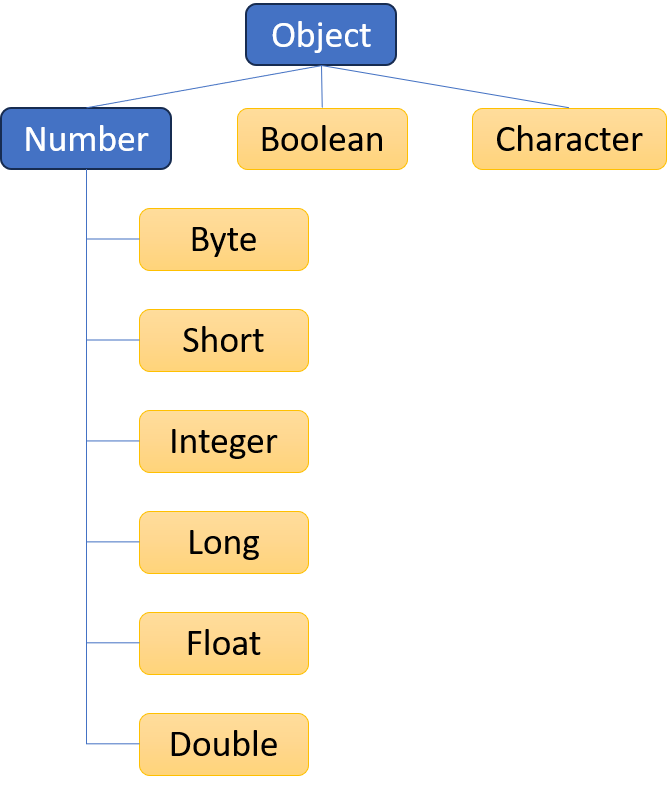
Cada tipo primitivo tiene una clase contenedora equivalente
primitivo
Clase contenedora
byte
Byte
short
Short
int
Integer
long
Long
float
Float
double
Double
boolean
Boolean
char
Character
Envolviendo primitivos
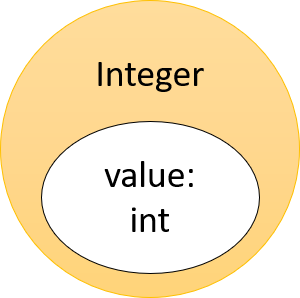
Las instancias de una clase contenedora guardan un solo primitivo
Ejemplo: Integer guarda un único valor primitivo int
Detalles de las contenedoras
Las clases contenedoras tienen campos y métodos extra
Campos (como el valor máximo) sobre el tipo
Métodos para trabajar con el tipo primitivo envuelto
Las clases contenedoras están en el lenguaje base
Úsalas sin import (veremos imports más adelante)
Crear objetos contenedores
Asigna un primitivo a una variable del tipo contenedor
Sintaxis: Wrapper-typevariable = primitive-value;
Integer age = 12;
Double cost = 150250.55;
Float interest = 5.5f;
Character grade = 'A';
Boolean isActive = true;
Los objetos contenedores también pueden no tener valor (null)
Integer age = null;
Usar objetos contenedores
Integer age = 12;
Imprímelos
System.out.println(age); // Muestra 12
Obtén su valor primitivo
int x = age.intValue(); // a x se le asigna 12
Realiza otras operaciones con ellos
double z = age.doubleValue();  // z es 12.0
String y = age.toString();  // a y se le asigna "12"
Integer teenAge = 16;
int smaller = age.compareTo(teenAge);  // smaller es -1 porque 12 < 16
Métodos estáticos de contenedoras
Las clases contenedoras traen métodos estáticos
Se usan para operar sobre los primitivos asociados
int x = Integer.sum(8,12);  // x es 20
int y = Integer.remainderUnsigned(102, 10);  // y es 2
Se usan para convertir entre String y primitivo
int z = Integer.parseInt("123");   // z es 123;
boolean ans = Boolean.parseBoolean("false");  // ans es false
1 See https://docs.oracle.com/javase/8/docs/api/java/lang/Integer.html for more on the Integer wrapper
Campos estáticos de contenedoras
Ejemplos de campos estáticos en clases contenedoras
System.out.println(Integer.MAX_VALUE); // Valor máximo que puede tener un int
System.out.println(Integer.MIN_VALUE); // Valor mínimo que puede tener un int
2147483647
-2147483648
System.out.println(Boolean.TRUE); // Corresponde al valor primitivo true
System.out.println(Boolean.FALSE); // Corresponde al valor primitivo false
true
false
Campos estáticos de contenedoras
Ejemplos de campos estáticos en clases contenedoras
System.out.println(Character.SPACE_SEPARATOR);  // Unicode del espacio normal como ' '
System.out.println(Character.LINE_SEPARATOR); // Unicode del salto de línea como '\n'
12
13
Métodos interesantes de contenedoras
Método de contenedora
Devuelve
Boolean.logicalAnd(boolean a, boolean b)
boolean
Boolean.logicalOr(boolean a, boolean b)
boolean
Boolean.parseBoolean(String s)
boolean
Character.getNumericValue(char ch)
valor int Unicode del char
Character.isDigit(char ch)
boolean
Character.isLowerCase(char ch)
boolean
Character.isWhitespace(char ch)
boolean
Double.parseDouble(String s)
double
Double.longValue()
el valor Double, redondeado hacia abajo, como Long
¿Por qué contenedoras?
Los primitivos no tienen métodos (solo operaciones)
Las contenedoras traen métodos útiles
int score = Integer.parseInt("8");
Permiten usar primitivos como objetos; por ejemplo, meterlos en una colección
Verás colecciones en el capítulo 2.
Las contenedoras pueden ser null
Las contenedoras permiten que variables de instancia o estáticas del tipo sean null
Las variables primitivas de instancia o estáticas tienen un valor por defecto si no se inicializan
int herAge; // age es 0 por defecto
Integer hisAge = null;
if (hisAge != null) {
  // haz algo cuando hisAge no esté establecido
}