Wahrscheinlichkeitsverteilungen und Geschichten: Die Binomialverteilung

Statistical Thinking in Python (Teil 1)

Justin Bois

Teaching Professor at the California Institute of Technology

Wahrscheinlichkeits-Massenfunktion (PMF)

  • Die Menge der Wahrscheinlichkeiten diskreter Ausgänge
Statistical Thinking in Python (Teil 1)

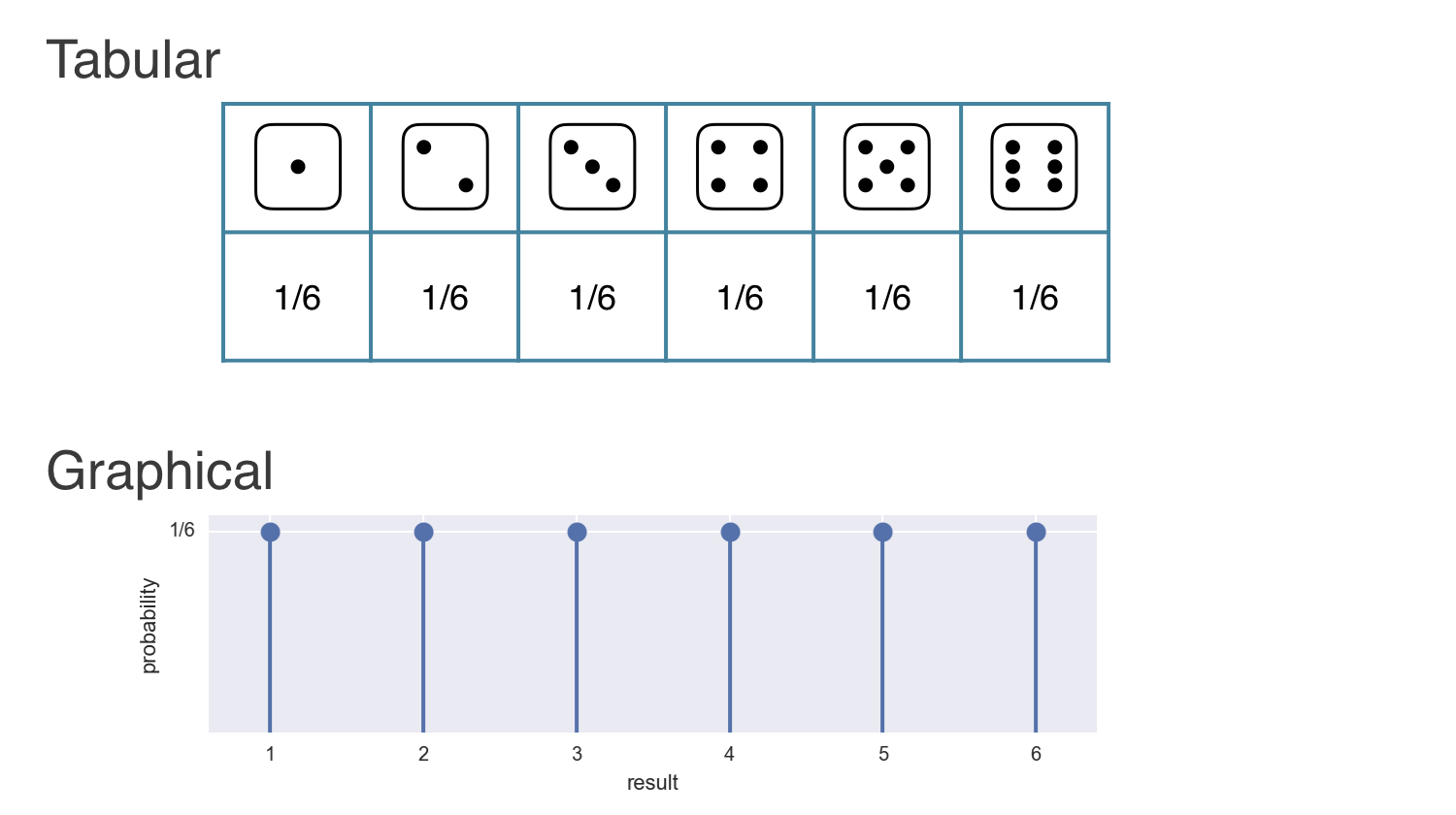
Diskrete uniforme PMF

ch3-3.004.png

Statistical Thinking in Python (Teil 1)

Wahrscheinlichkeitsverteilung

  • Eine mathematische Beschreibung von Ausgängen
Statistical Thinking in Python (Teil 1)

Diskrete uniforme Verteilung: die Geschichte

Das Ergebnis eines einzelnen fairen Würfels ist

  • diskret
  • gleichverteilt.
Statistical Thinking in Python (Teil 1)

Binomialverteilung: die Geschichte

  • Die Anzahl r der Erfolge in n Bernoulli-Versuchen mit Erfolgswahrscheinlichkeit p ist binomialverteilt
  • Die Anzahl r der Köpfe in 4 Münzwürfen mit Wahrscheinlichkeit 0,5 für Kopf ist binomialverteilt
Statistical Thinking in Python (Teil 1)

Stichproben aus der Binomialverteilung

rng.binomial(4, 0.5)
2
rng.binomial(4, 0.5, size=10)
array([4, 3, 2, 1, 1, 0, 3, 2, 3, 0])
Statistical Thinking in Python (Teil 1)

Die Binomial-PMF

samples = rng.binomial(60, 0.1, size=10000)
n = 60
p = 0.1
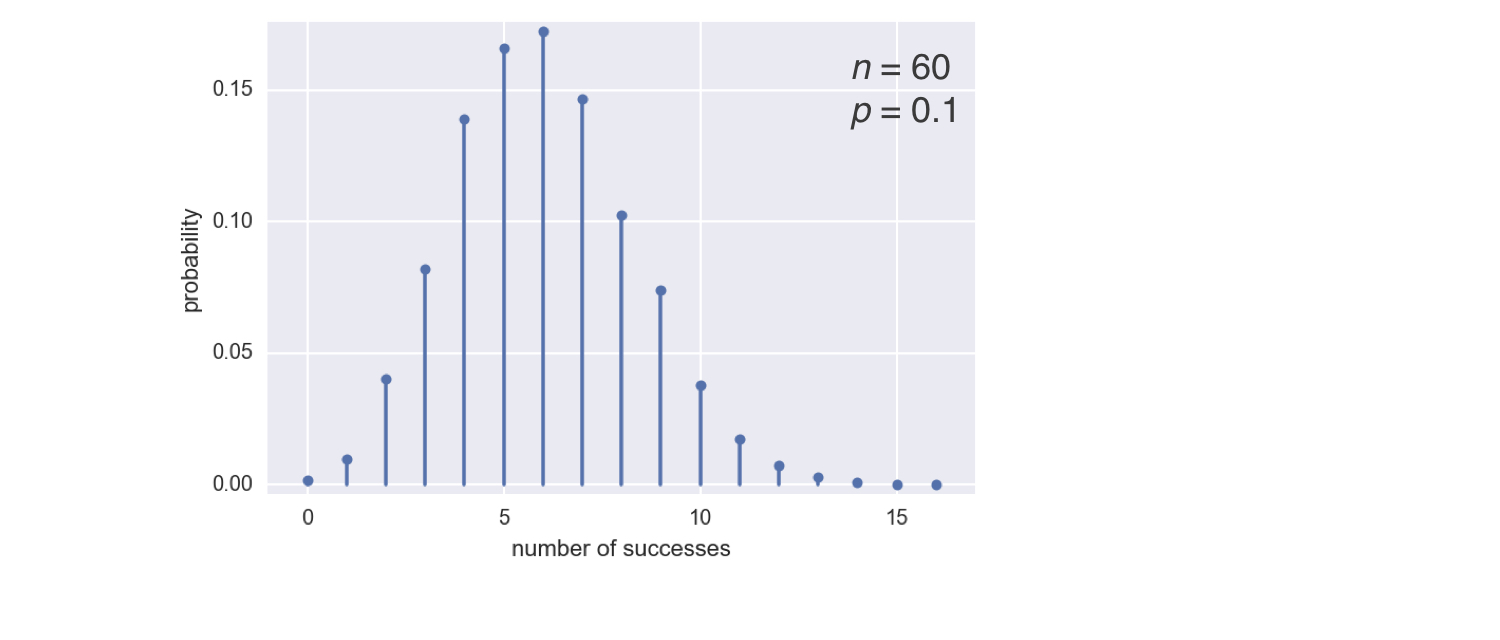
ch3-3.019.png

Statistical Thinking in Python (Teil 1)

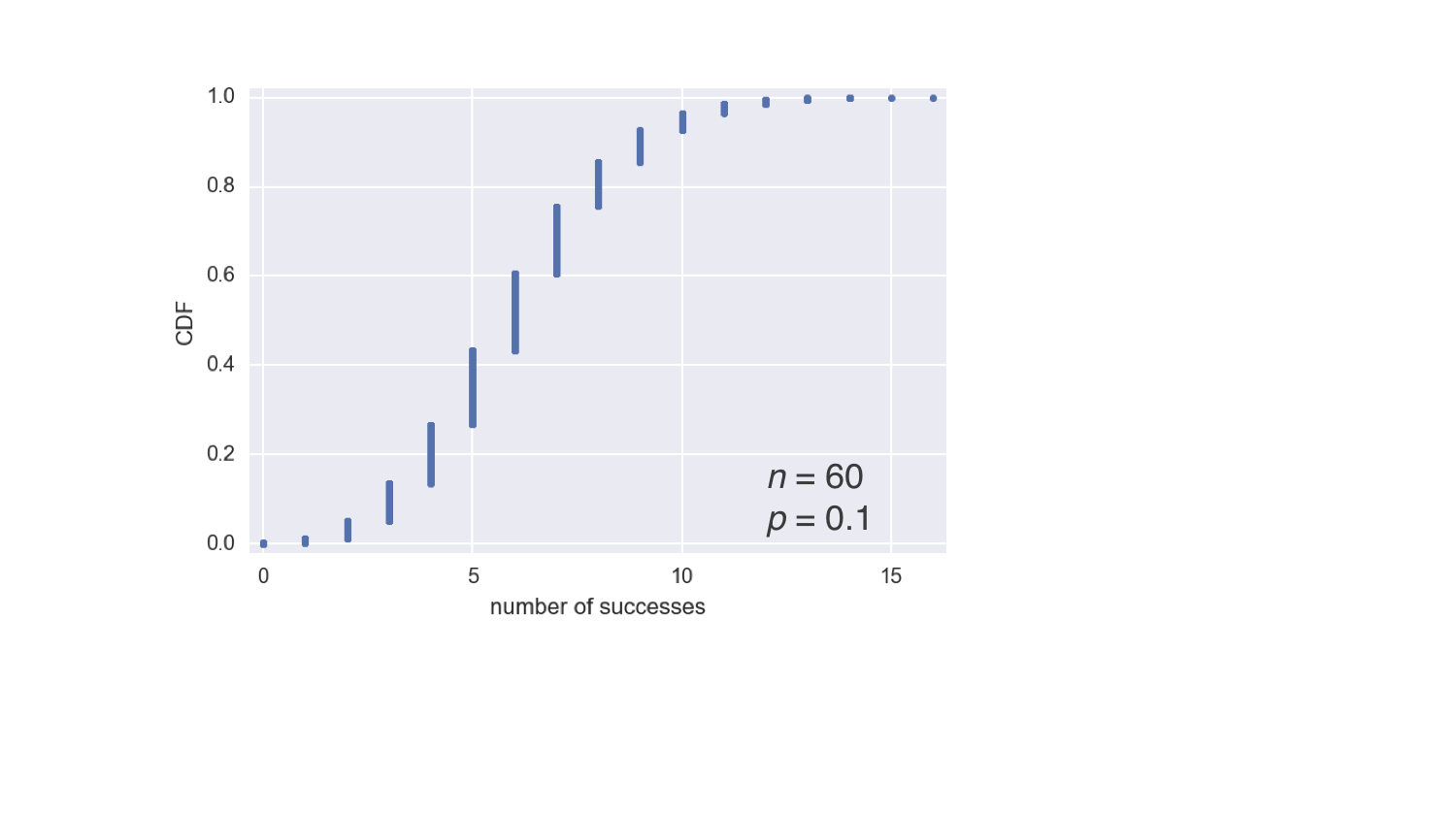
Die Binomial-CDF

import matplotlib.pyplot as plt
import seaborn as sns
sns.set()
x, y = ecdf(samples)
_ = plt.plot(x, y, marker='.', linestyle='none')
plt.margins(0.02)
_ = plt.xlabel('number of successes')
_ = plt.ylabel('CDF')
plt.show()
Statistical Thinking in Python (Teil 1)

Die Binomial-CDF

ch3-3.022.png

Statistical Thinking in Python (Teil 1)

Lass uns üben!

Statistical Thinking in Python (Teil 1)

Preparing Video For Download...