Overfitting and ensembling

Machine Learning para finanzas con Python

Nathan George

Data Science Professor

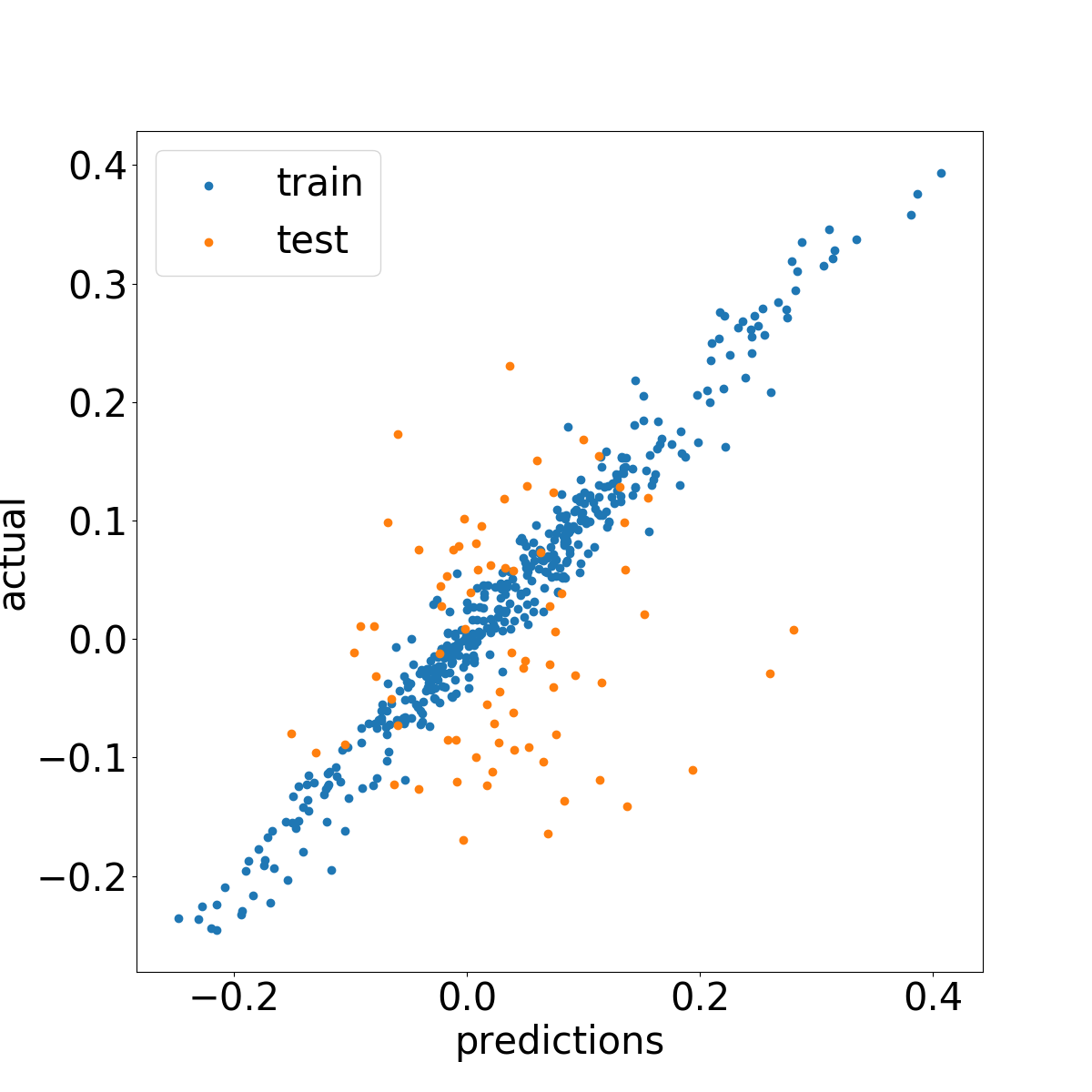
overfitting

Machine Learning para finanzas con Python

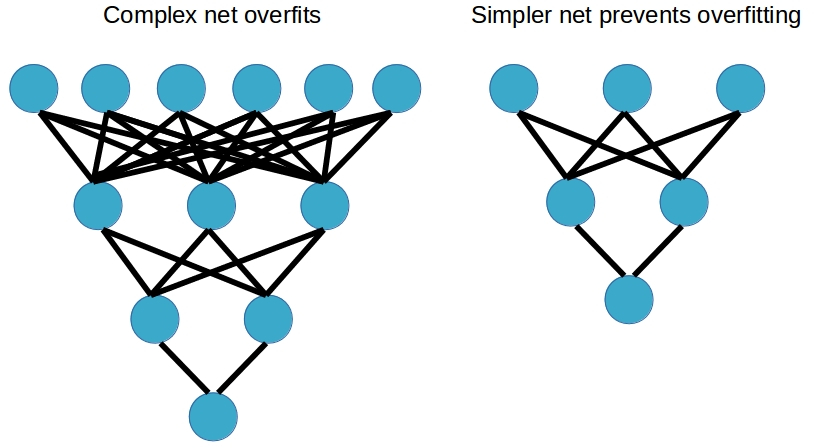
Simplify your model

limited net

Machine Learning para finanzas con Python

Neural network options

Options to combat overfitting:

  • Decrease number of nodes
  • Use L1/L2 regulariation
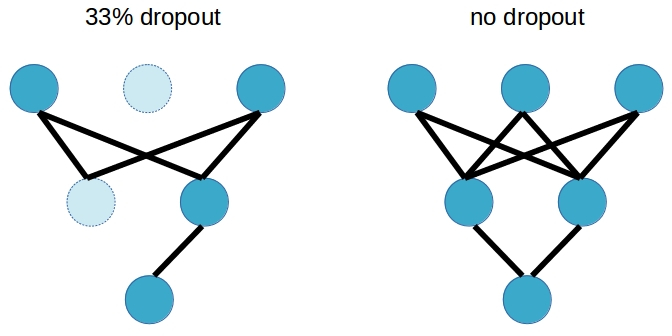
  • Dropout
  • Autoencoder architecture
  • Early stopping
  • Adding noise to data
  • Max norm constraints
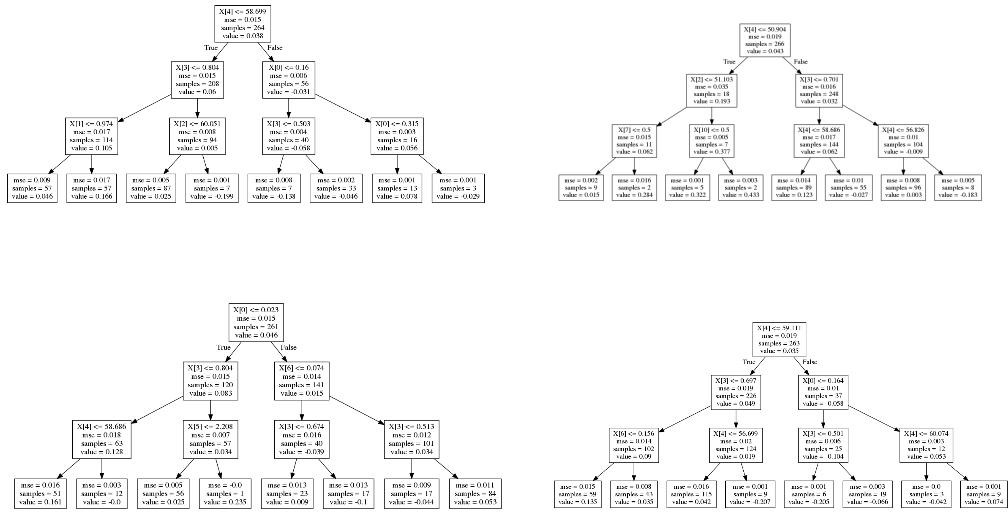
  • Ensembling
Machine Learning para finanzas con Python

Dropout

dropout

Machine Learning para finanzas con Python

Dropout in keras

from keras.layers import Dense, Dropout

model = Sequential() model.add(Dense(500, input_dim=scaled_train_features.shape[1], activation='relu')) model.add(Dropout(0.5)) model.add(Dense(100, activation='relu')) model.add(Dense(1, activation='linear'))
Machine Learning para finanzas con Python

Test set comparison

R$^2$ values on AMD without dropout:

  • train: 0.91
  • test: -0.72

With dropout:

  • train: 0.46
  • test: -0.22
Machine Learning para finanzas con Python

Ensembling

random forest

Machine Learning para finanzas con Python

Implementing ensembling

# make predictions from 2 neural net models
test_pred1 = model_1.predict(scaled_test_features)
test_pred2 = model_2.predict(scaled_test_features)

# horizontally stack predictions and take the average across rows test_preds = np.mean(np.hstack((test_pred1, test_pred2)), axis=1)
Machine Learning para finanzas con Python

Comparing the ensemble

Model 1 R$^2$ score on test set:

  • -0.179

model 2:

  • -0.148

ensemble (averaged predictions):

  • -0.146
Machine Learning para finanzas con Python

Dropout and ensemble!

Machine Learning para finanzas con Python

Preparing Video For Download...