Credit Risk Modeling in Python
Michael Crabtree
Data Scientist, Ford Motor Company
loan_status sono le classi01y_train['loan_status'].value_counts()
| loan_status | Conteggio nel training set | Percentuale del totale |
|---|---|---|
| 0 | 13,798 | 78% |
| 1 | 3,877 | 22% |
xgboost usano la log-loss come funzione di perdita| Stato reale del prestito | Probabilità prevista | Log-loss |
|---|---|---|
| 1 | 0.1 | 2.3 |
| 0 | 0.9 | 2.3 |
| Persona | Importo prestito | Profitto potenziale | Stato previsto | Stato reale | Perdite |
|---|---|---|---|---|---|
| A | $1,000 | $10 | Insolvenza | Non insolvenza | -$10 |
| B | $1,000 | $10 | Non insolvenza | Insolvenza | -$1,000 |
| Metodo | Pro | Contro |
|---|---|---|
| Raccogliere più dati | Aumenta il numero di insolvenze | La percentuale può non cambiare |
| Penalizzare i modelli | Aumenta il recall delle insolvenze | Richiede più tuning e manutenzione |
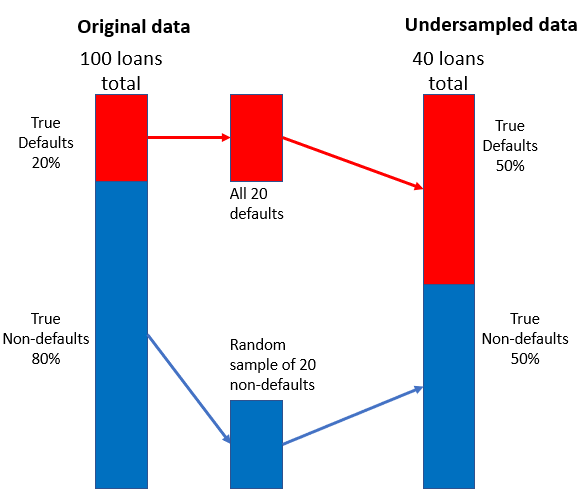
| Campionare i dati diversamente | Regolazione meno tecnica | Meno insolvenze nei dati |
loan_status reale# Concat the training sets
X_y_train = pd.concat([X_train.reset_index(drop = True),
y_train.reset_index(drop = True)], axis = 1)
# Get the counts of defaults and non-defaults
count_nondefault, count_default = X_y_train['loan_status'].value_counts()
# Separate nondefaults and defaults
nondefaults = X_y_train[X_y_train['loan_status'] == 0]
defaults = X_y_train[X_y_train['loan_status'] == 1]
# Undersample the non-defaults using sample() in pandas
nondefaults_under = nondefaults.sample(count_default)
# Concat the undersampled non-defaults with the defaults
X_y_train_under = pd.concat([nondefaults_under.reset_index(drop = True),
defaults.reset_index(drop = True)], axis=0)
Credit Risk Modeling in Python