Confronto con un benchmark

Introduzione all'analisi di portafoglio in Python

Charlotte Werger

Data Scientist

Investimento attivo vs benchmark
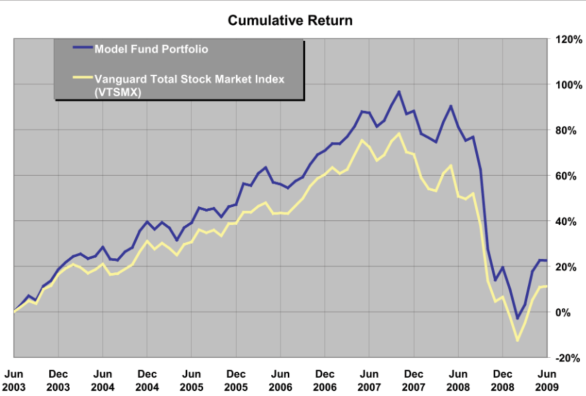
Rendimenti cumulati di un portafoglio vs benchmark

Introduzione all'analisi di portafoglio in Python

Rendimento attivo per un portafoglio attivo

$$

  • Il rendimento attivo è la performance di un investimento (attivo) rispetto al suo benchmark.
  • Si calcola come differenza tra benchmark e rendimento effettivo.
  • Si ottiene con gestione “attiva”, cioè prendendo posizioni overweight/underweight rispetto al benchmark.
Introduzione all'analisi di portafoglio in Python

Tracking error per un index tracker

$$

  • I fondi passivi, o index tracker, non usano il rendimento attivo per misurare la performance.
  • Tracking error è la differenza tra portafoglio e benchmark per un fondo passivo.
Introduzione all'analisi di portafoglio in Python

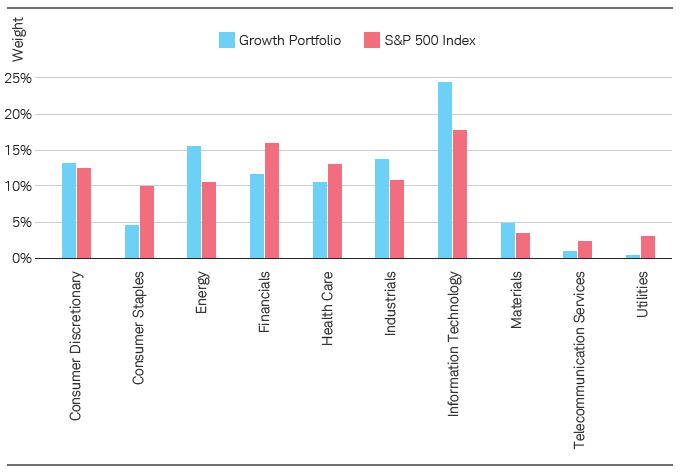
Pesi attivi

Grafico a barre dei pesi attivi per settore

1 Fonte: Schwab Center for Financial Research.
Introduzione all'analisi di portafoglio in Python

Rendimento attivo in Python

# Inspect the data 
portfolio_data.head()
      mean_ret    var     pf_w     bm_w     GICS Sector    
Ticker                            
A       0.146    0.035    0.002    0.005    Health Care    
AAL     0.444    0.094    0.214    0.189    Industrials    
AAP     0.242    0.029    0.000    0.000    Consumer Discretionary    
AAPL    0.225    0.027    0.324    0.459    Information Technology        
ABBV    0.182    0.029    0.026    0.010    Health Care
1 Global Industry Classification System (GICS)
Introduzione all'analisi di portafoglio in Python

Rendimento attivo in Python

# Calculate mean portfolio return
total_return_pf = (pf_w*mean_ret).sum()
# Calculate mean benchmark return
total_return_bm = (bm_w*mean_ret).sum()
# Calculate active return
active_return = total_return_pf - total_return_bm 
print ("Simple active return: ", active_return)
Simple active return: 6.5764
Introduzione all'analisi di portafoglio in Python

Pesi attivi in Python

# Group dataframe by GICS sectors 
grouped_df=portfolio_data.groupby('GICS Sector').sum()
# Calculate active weights of portfolio
grouped_df['active_weight']=grouped_df['pf_weights']-
                            grouped_df['bm_weights']

print (grouped_df['active_weight'])
GICS Sector
Consumer Discretionary         20.257
Financials                     -2.116
...etc
Introduzione all'analisi di portafoglio in Python

Ayo berlatih!

Introduzione all'analisi di portafoglio in Python

Preparing Video For Download...