Hash tables

Strutture dati e algoritmi in Python

Miriam Antona

Software engineer

Definition

  • Stores a collection of items
  • Key-value pairs

      lasagna: 14.75
      moussaka: 21.15
      sushi: 16.05
    
  • Almost every programming language has a built-in hash table:

    • hashes, hash maps, dictionaries, associative arrays
    • Python: dictionaries
Strutture dati e algoritmi in Python

Structure

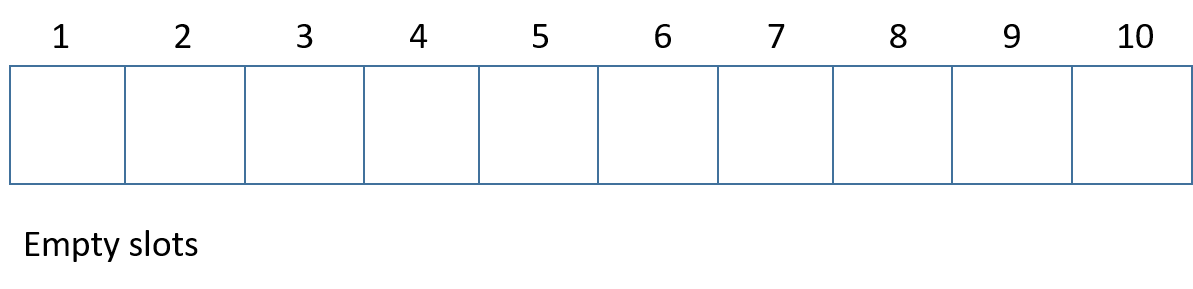
  • Each position: slot/bucket

Schematic representation of an empty hash table.

Strutture dati e algoritmi in Python

Hash functions

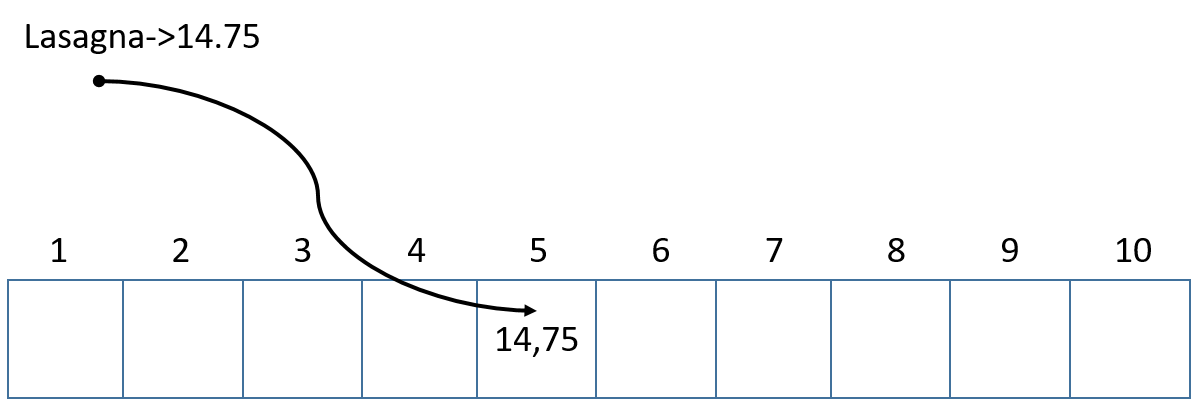
Schematic representation of an empty hash table. The price of the lasagna has been inserted on the fifth position.

Strutture dati e algoritmi in Python

Hash functions

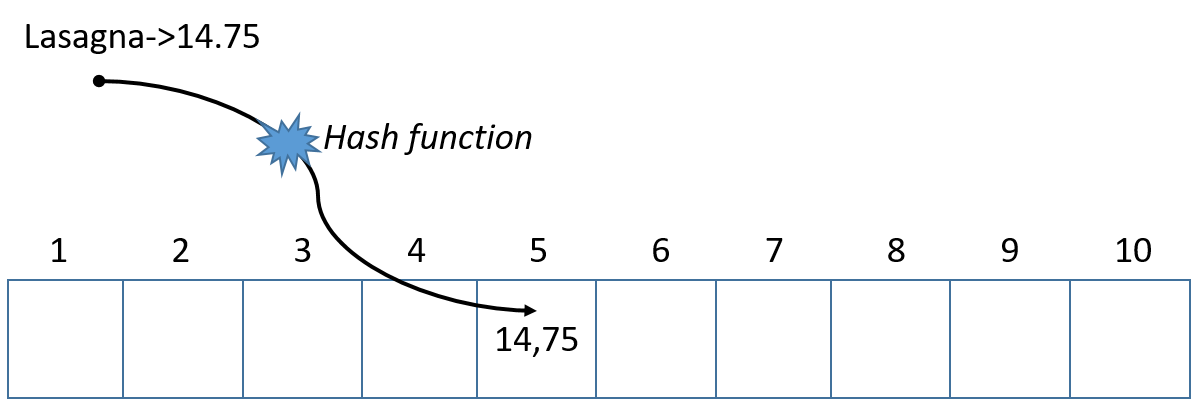
Schematic representation of a hash table with the words "Hash function" in the middle of an arrow that maps the word "Lasagna" with the value on the fifth position.

  • Every time a hash function is applied
    • must return the same value for the same input
Strutture dati e algoritmi in Python

Lookups

Schematic representation of a hash table with some values.

  • Find "lasagna"
    • hash("lasagna") -> 5
Strutture dati e algoritmi in Python

Lookups

Schematic representation of a hash table with some values. The value on the fifth position is colored green.

  • Find "lasagna"
    • hash("lasagna") -> 5
    • return 14,75
  • $O(1)$
Strutture dati e algoritmi in Python

Collisions

  • Hash functions can return same output for different inputs
  • hash("moussaka") -> 1

Schematic representation of a hash table with some values. The value on the first position is colored yellow.

  • insert: moussaka -> 21,15
  • Collision!
    • must be resolved
    • several techniques
Strutture dati e algoritmi in Python

Python dictionary

  • Empty dictionary
my_empty_dictionary = {}
  • Dictionary with items
my_menu = {
    'lasagna': 14.75,
    'moussaka': 21.15,
    'sushi': 16.05
}
Strutture dati e algoritmi in Python

Python dictionary - get

print(my_menu['sushi'])
16.05
print(my_menu['paella'])
Traceback (most recent call last):
  File "<stdin>", line 1, in <module>
KeyError: 'paella'
print(my_menu.get('paella'))
None
Strutture dati e algoritmi in Python

Python dictionary - items, keys & values

  • Get items
print(my_menu.items())
dict_items([('lasanga', 14.75), 
            ('moussaka', 21.15),
            ('sushi', 16.05)])
  • Get keys
print(my_menu.keys())
dict_keys(['lasanga', 'moussaka', 'sushi'])
  • Get values
print(my_menu.values())
dict_values([14.75, 21.15, 16.05])
Strutture dati e algoritmi in Python

Python dictionary - insert

my_menu['samosas'] = 13

print(my_menu.items())
dict_items([('lasanga', 14.75), ('moussaka', 21.15), ('sushi', 16.05), ('samosas', 13)])
Strutture dati e algoritmi in Python

Python dictionary - modify

print(my_menu.get('sushi'))
16.05
my_menu['sushi'] = 20

print(my_menu.get('sushi'))
20
Strutture dati e algoritmi in Python

Python dictionary - remove

  • Deletes a dictionary completely
del my_menu
  • Removes a key-value pair
del my_menu["sushi"]
  • Empties a dictionary
my_menu.clear()
Strutture dati e algoritmi in Python

Python dictionary - iterate

for key, value in my_menu.items():
  print(f"\nkey: {key}")
  print(f"value: {value}")
key: lasagna
value: 14.75

key: moussaka
value: 21.15

key: sushi
value: 16.05
Strutture dati e algoritmi in Python

Python dictionary - iterate

for dish in my_menu:
  print(dish)
lasagna
moussaka
sushi
for prices in my_menu.values():
  print(prices)
14.75
21.15
16.05
Strutture dati e algoritmi in Python

Python dictionary - nested dictionaries

  • Nested dictionary
my_menu = {
  'sushi' : {
    'price' : 19.25,
    'best_served' : 'cold'
  },
  'paella' : {
    'price' : 15,
    'best_served' : 'hot'
  }
}
Strutture dati e algoritmi in Python

Let's practice!

Strutture dati e algoritmi in Python

Preparing Video For Download...