Activatiefuncties ontdekken
Introductie tot Deep Learning met PyTorch

Jasmin Ludolf
Senior Data Science Content Developer, DataCamp
Activatiefuncties
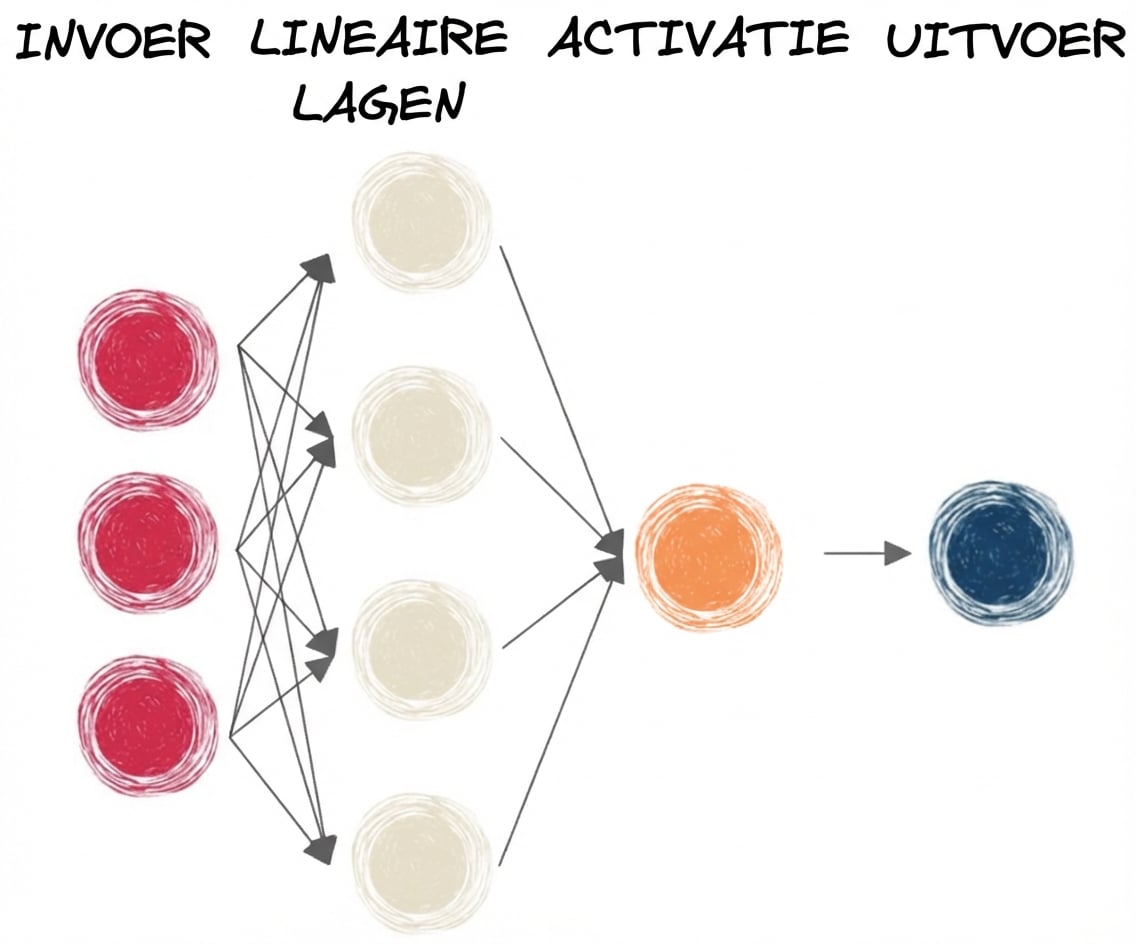
Maak kennis met de sigmoidfunctie

- Zoogdier of niet?

Maak kennis met de sigmoidfunctie

- Zoogdier of niet?
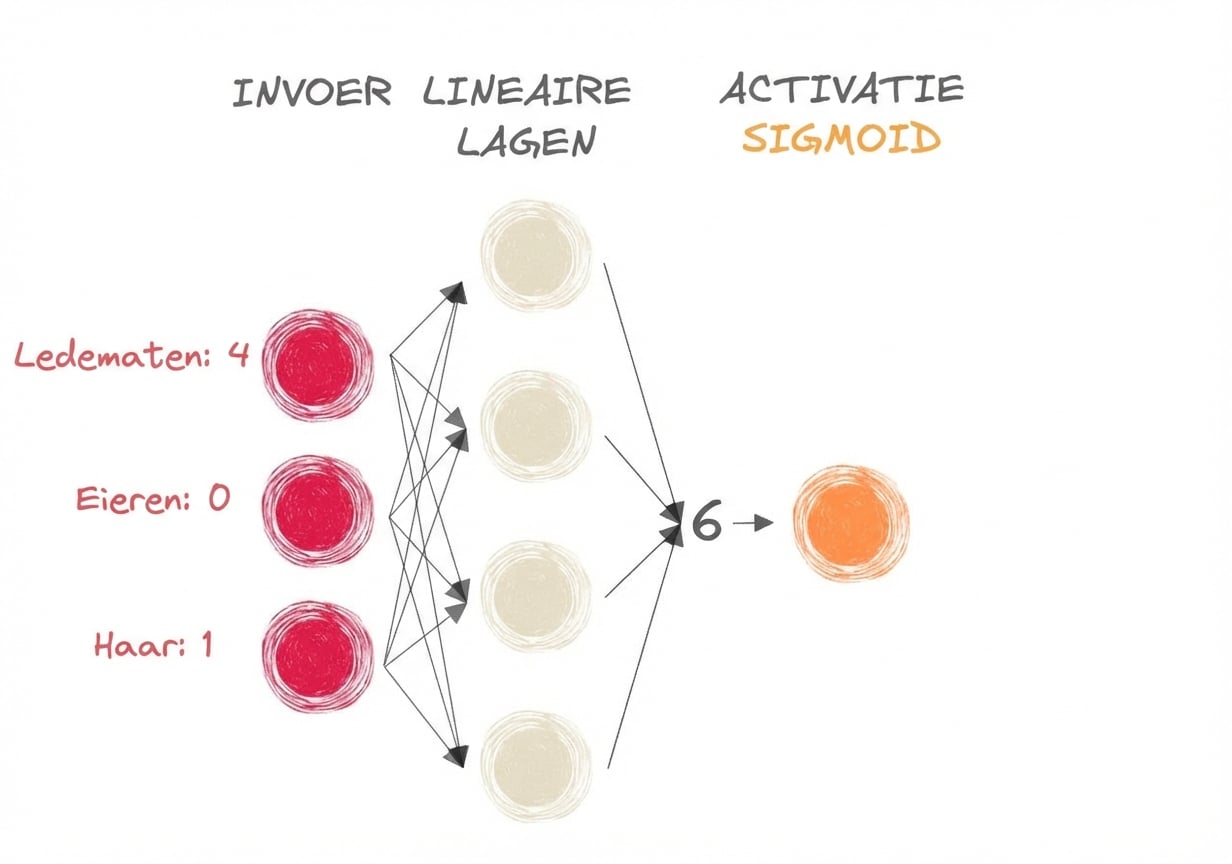
- Input:
- Ledematen: 4
- Eieren: 0
- Haar: 1
Maak kennis met de sigmoidfunctie

- Zoogdier of niet?
- Output naar de lineaire lagen is 6
Maak kennis met de sigmoidfunctie
- Zoogdier of niet?
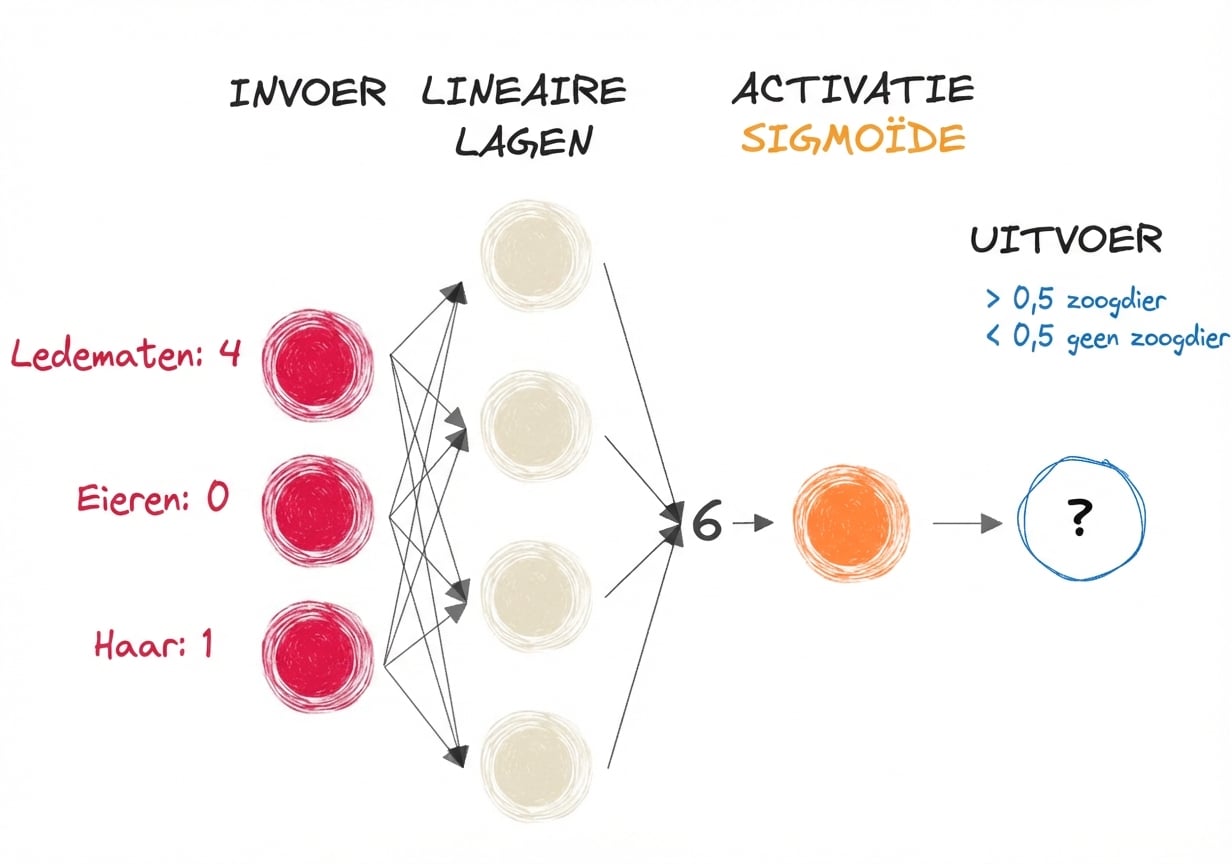
- We nemen de pre-activatie-output (6) en voeren die door de sigmoidfunctie
Maak kennis met de sigmoidfunctie
- Zoogdier of niet?
- We nemen de pre-activatie-output (6) en voeren die door de sigmoidfunctie
Geeft een waarde tussen 0 en 1
Als output > 0,5, klasselabel = 1 (zoogdier)
- Als output <= 0,5, klasselabel = 0 (geen zoogdier)
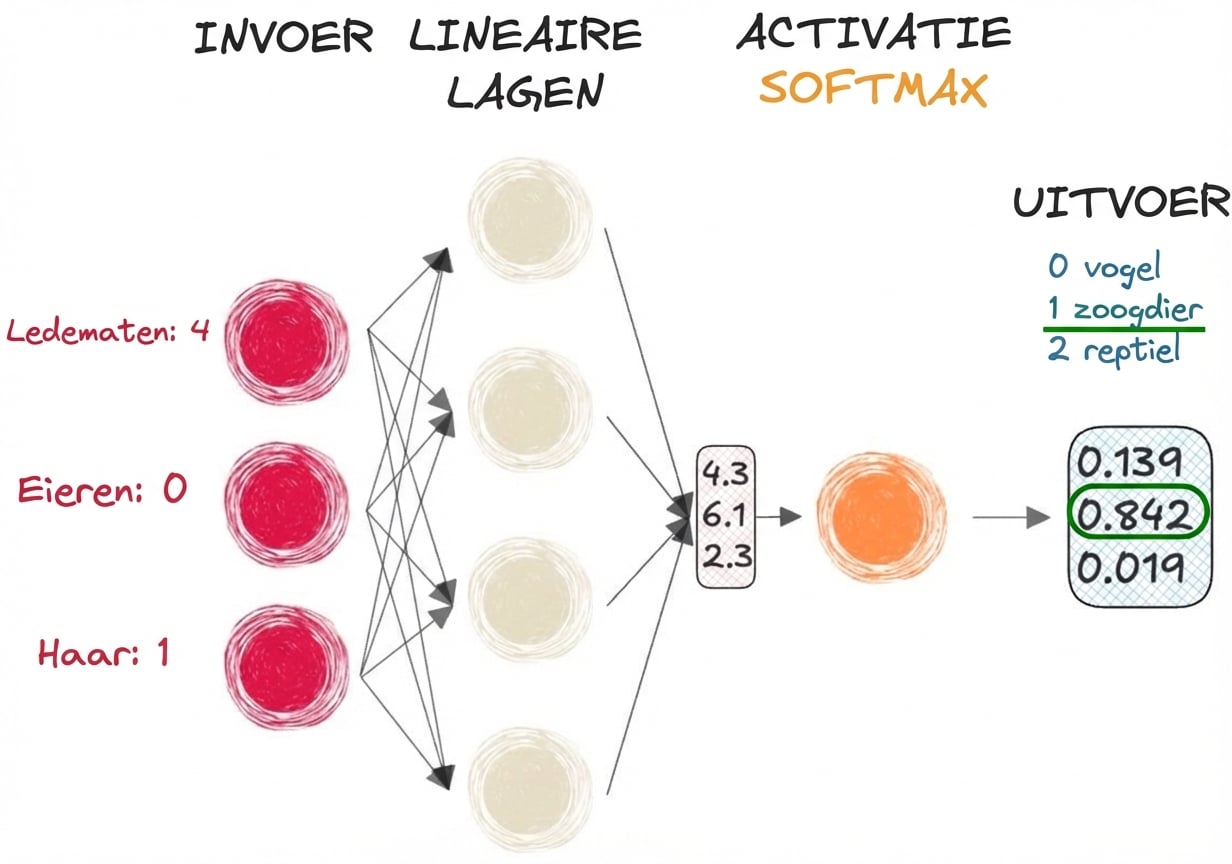
Kennismaken met softmax

Kennismaken met softmax
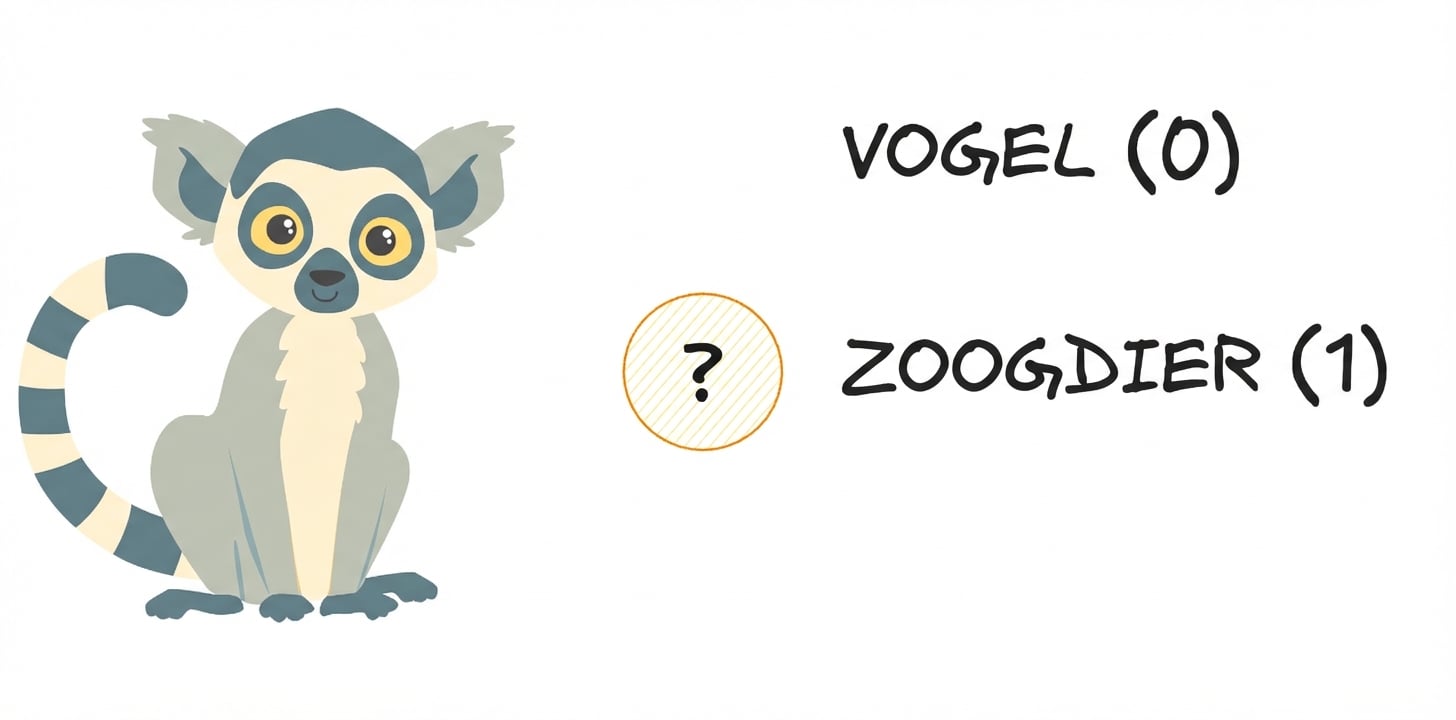
Kennismaken met softmax
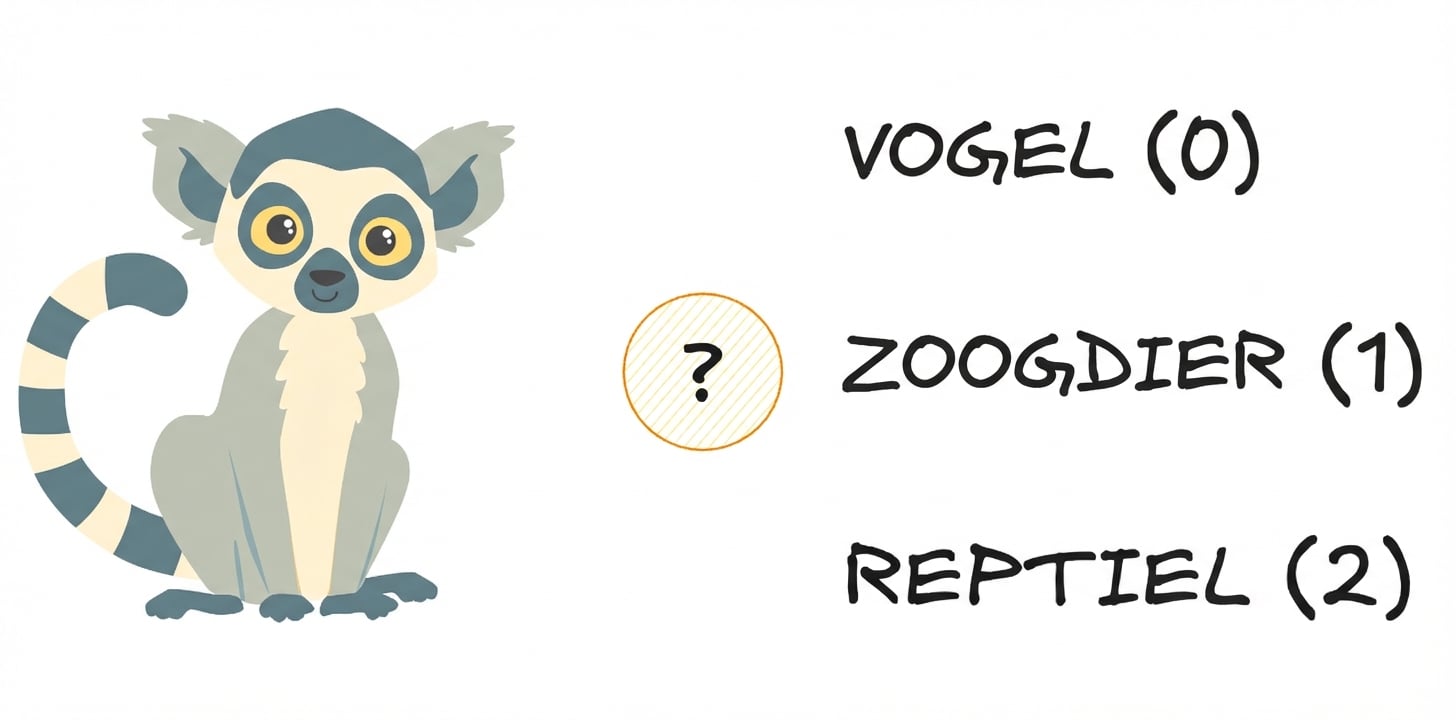
Kennismaken met softmax
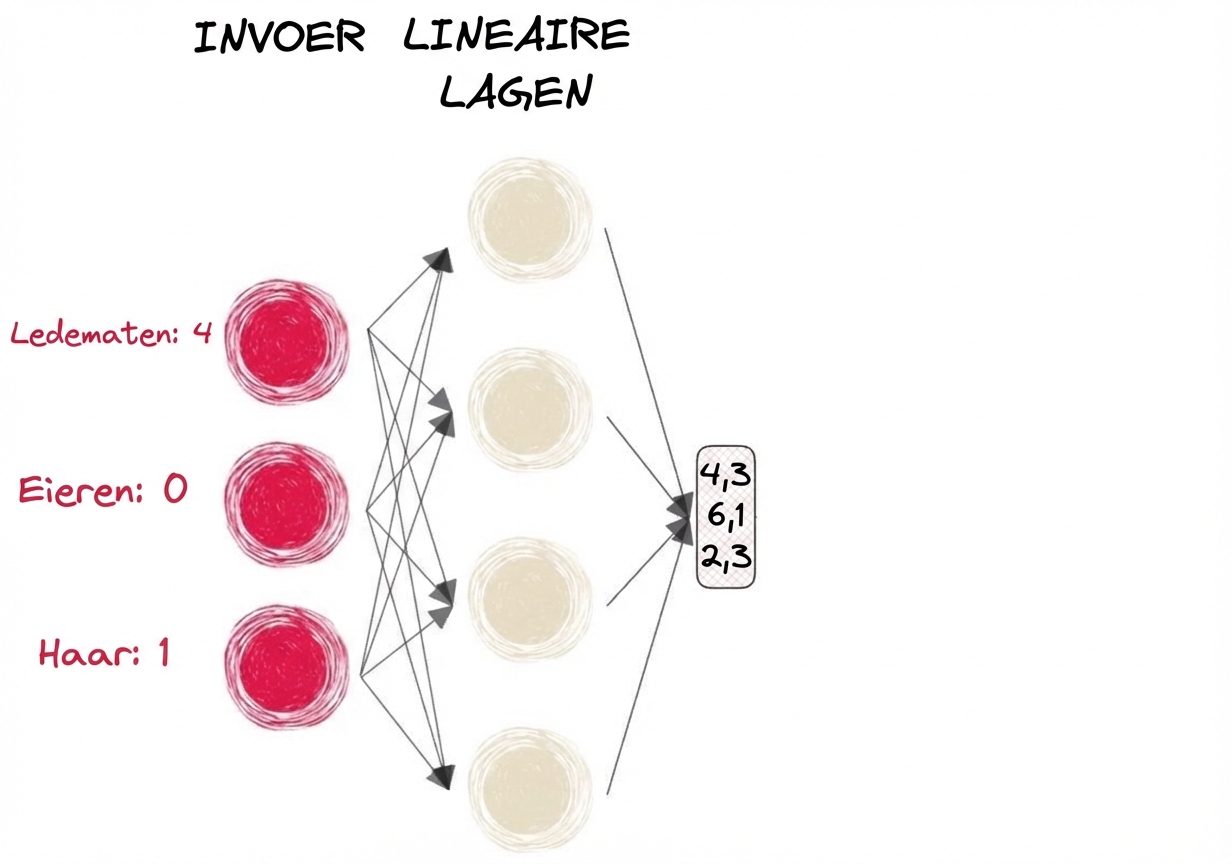
Kennismaken met softmax
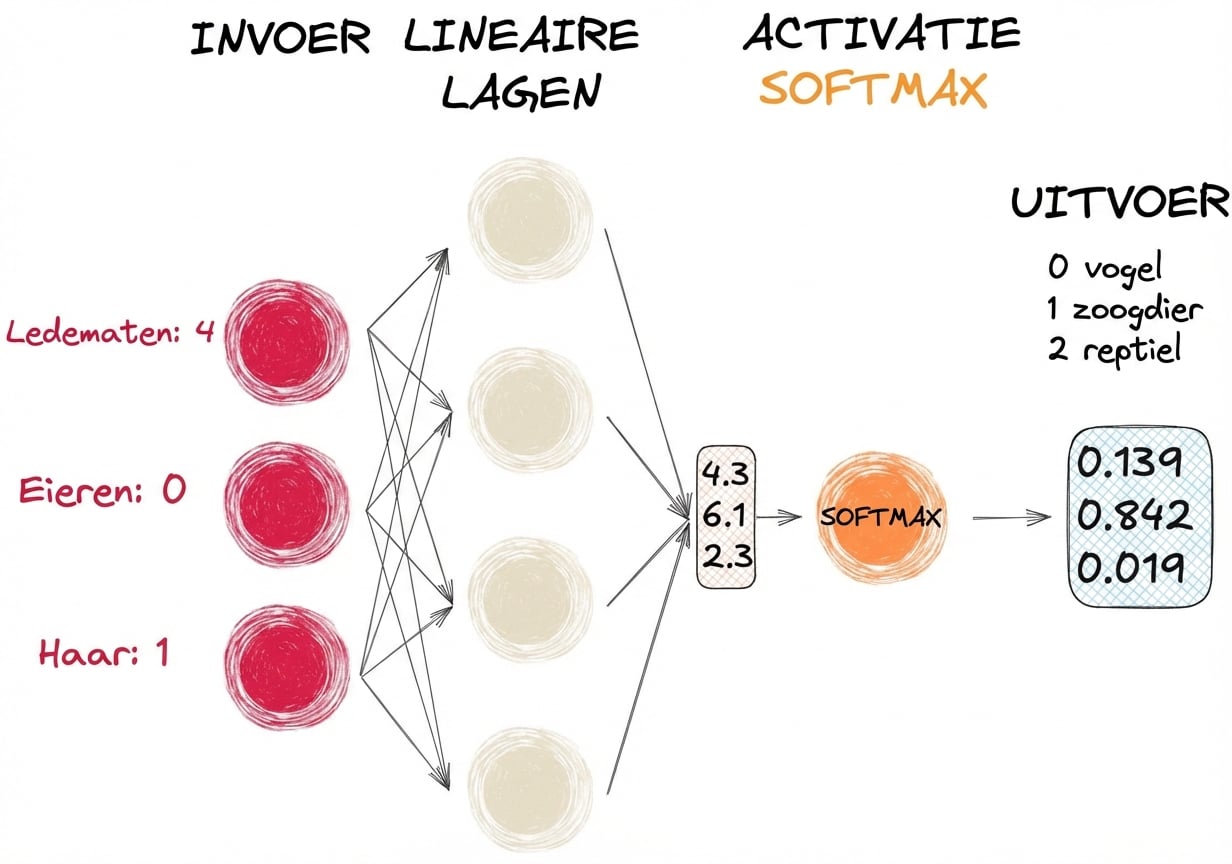
Kennismaken met softmax