Codeprofiling voor geheugengebruik
Efficiënte Python-code schrijven

Logan Thomas
Scientific Software Technical Trainer, Enthought
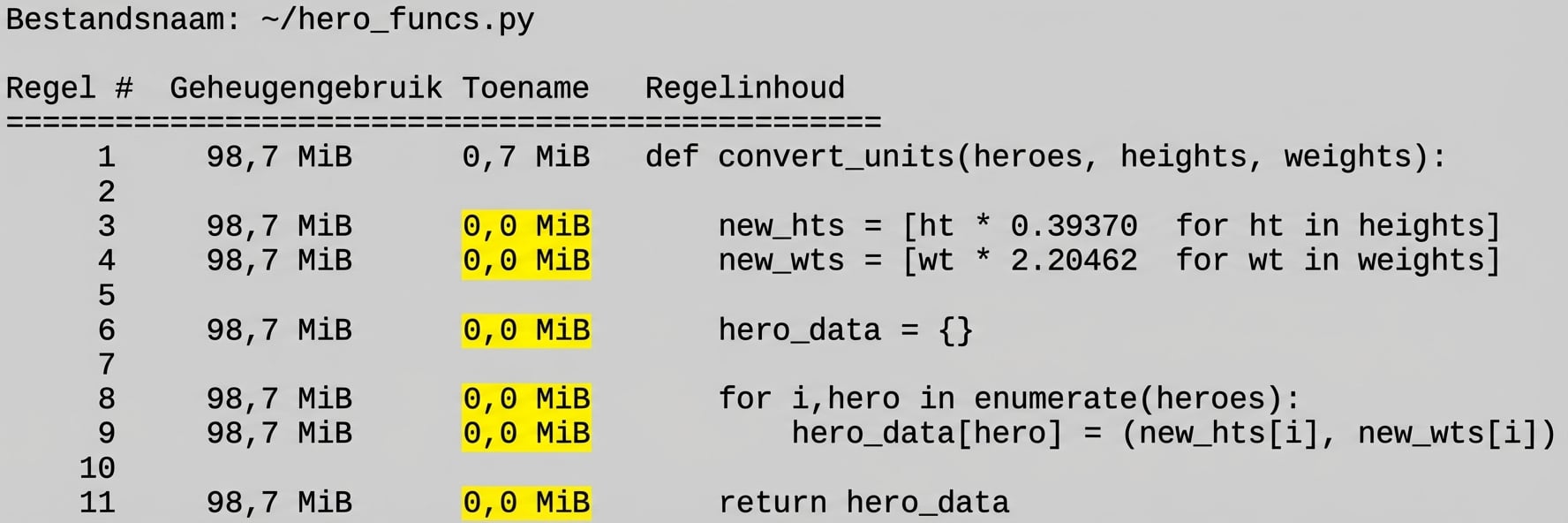
%mprun-uitvoer
%mprun -f convert_units convert_units(heroes, hts, wts)
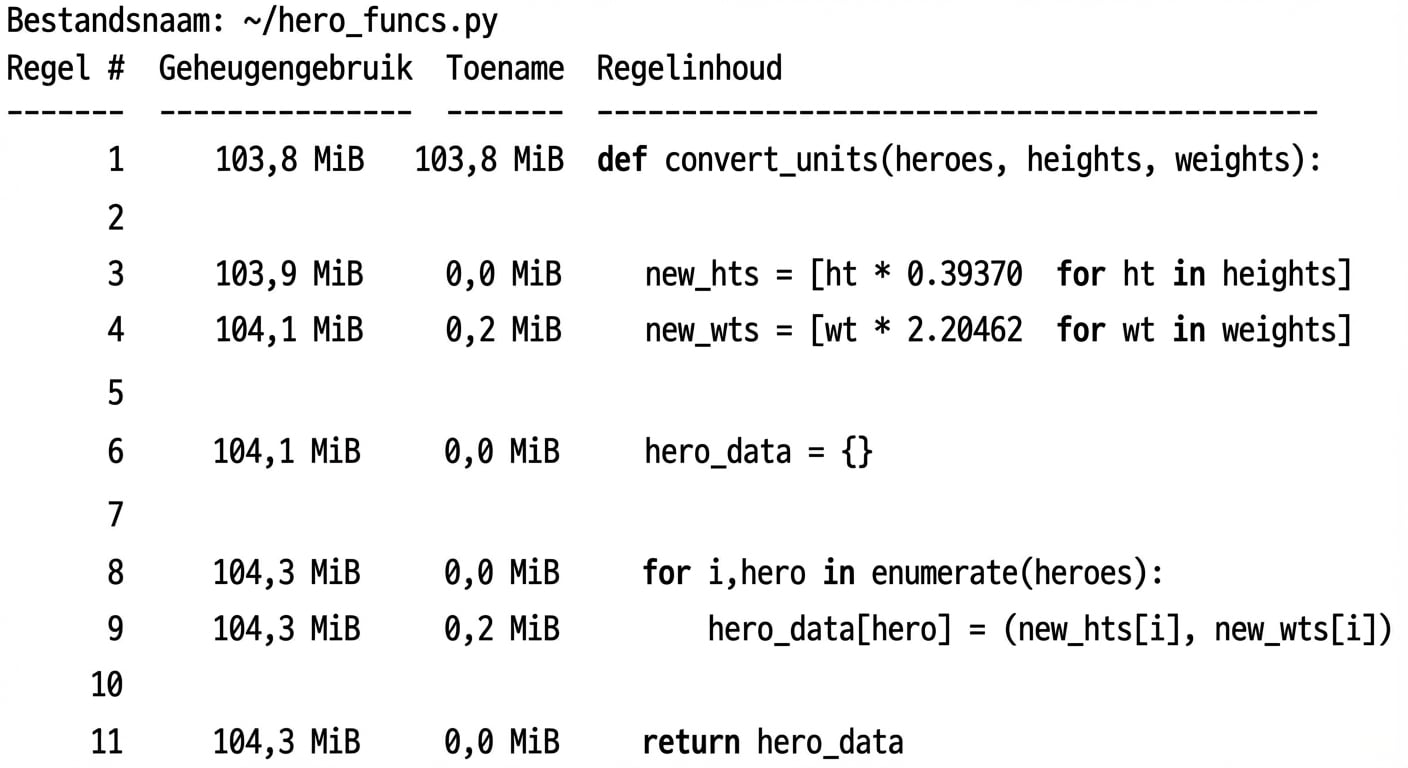
%mprun-uitvoer
%mprun -f convert_units convert_units(heroes, hts, wts)
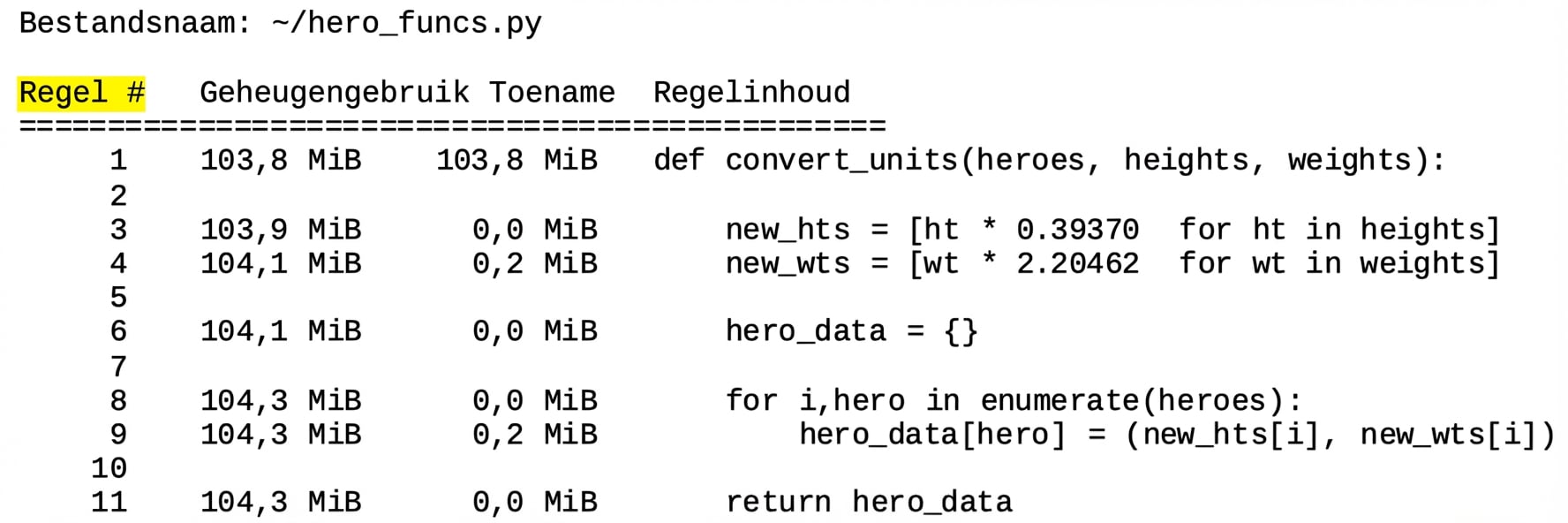
%mprun-uitvoer
%mprun -f convert_units convert_units(heroes, hts, wts)
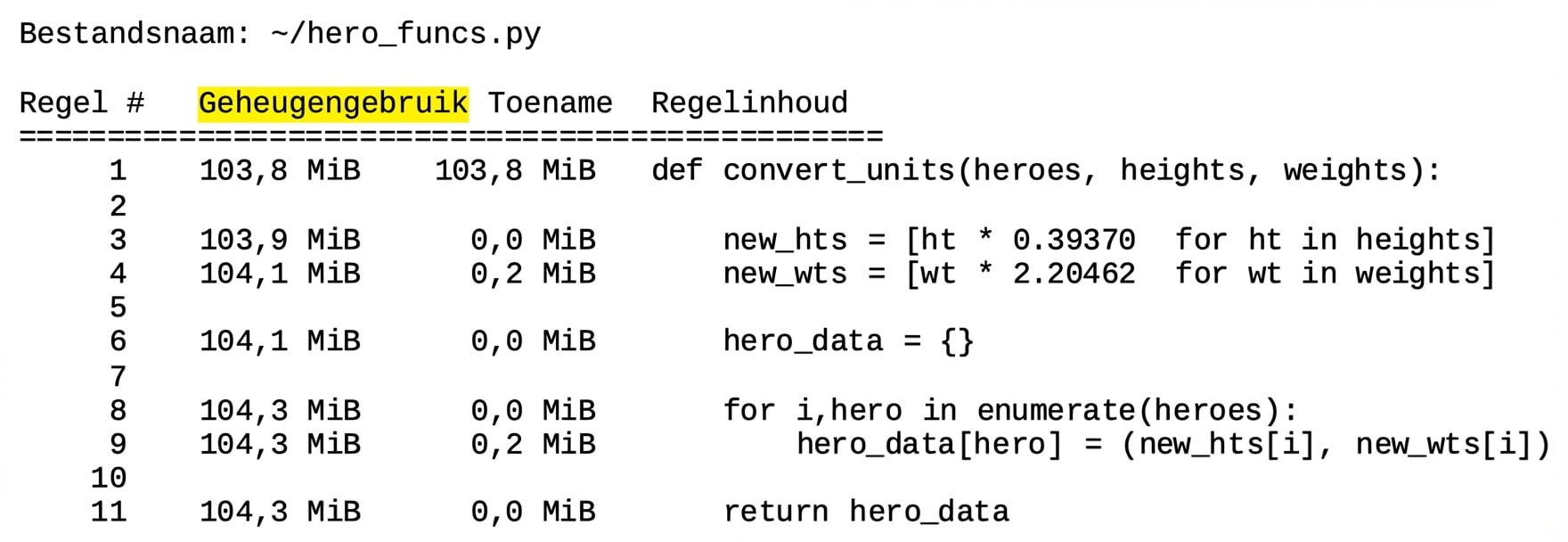
%mprun-uitvoer
%mprun -f convert_units convert_units(heroes, hts, wts)
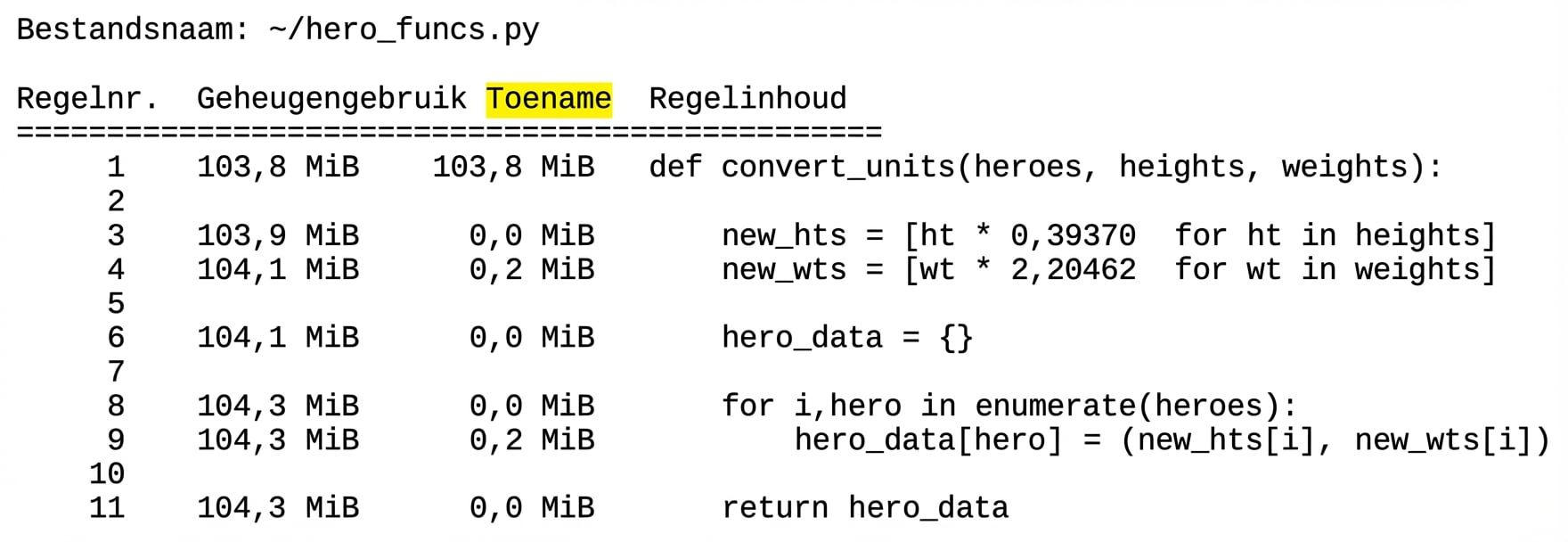
%mprun-uitvoer
%mprun -f convert_units convert_units(heroes, hts, wts)
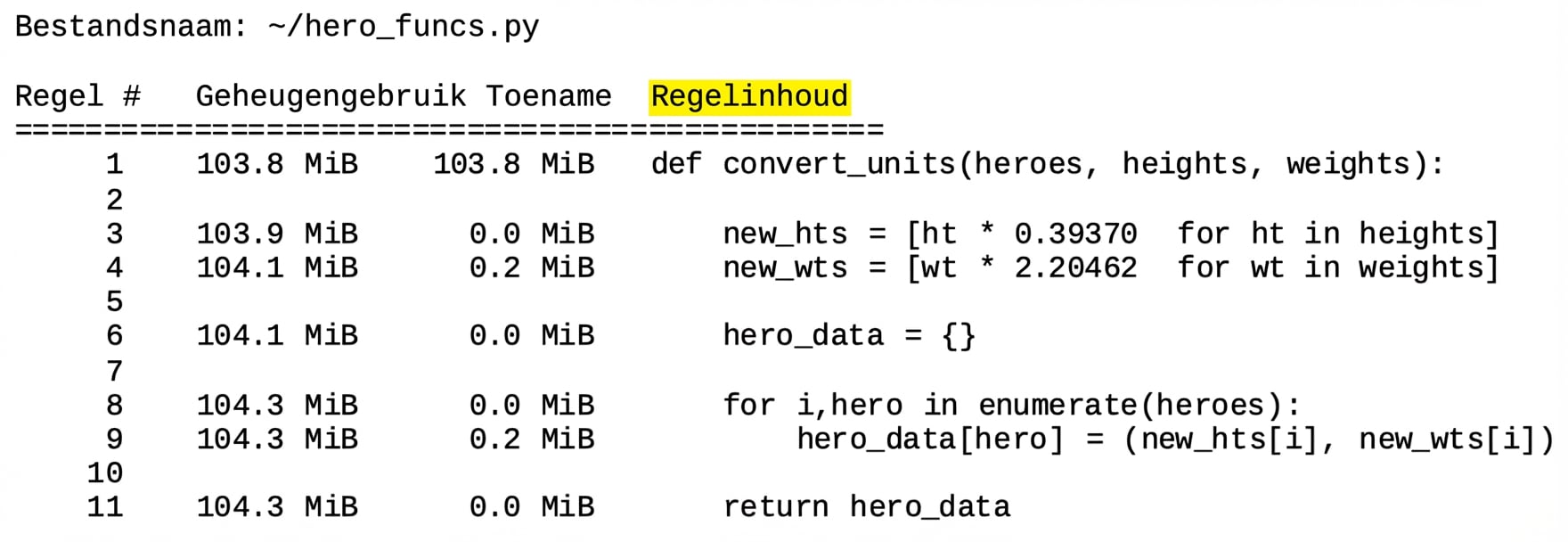
%mprun-uitvoer
%mprun -f convert_units convert_units(heroes, hts, wts)
Kanttekeningen bij %mprun-uitvoer
%mprun -f convert_units convert_units(heroes, hts, wts)
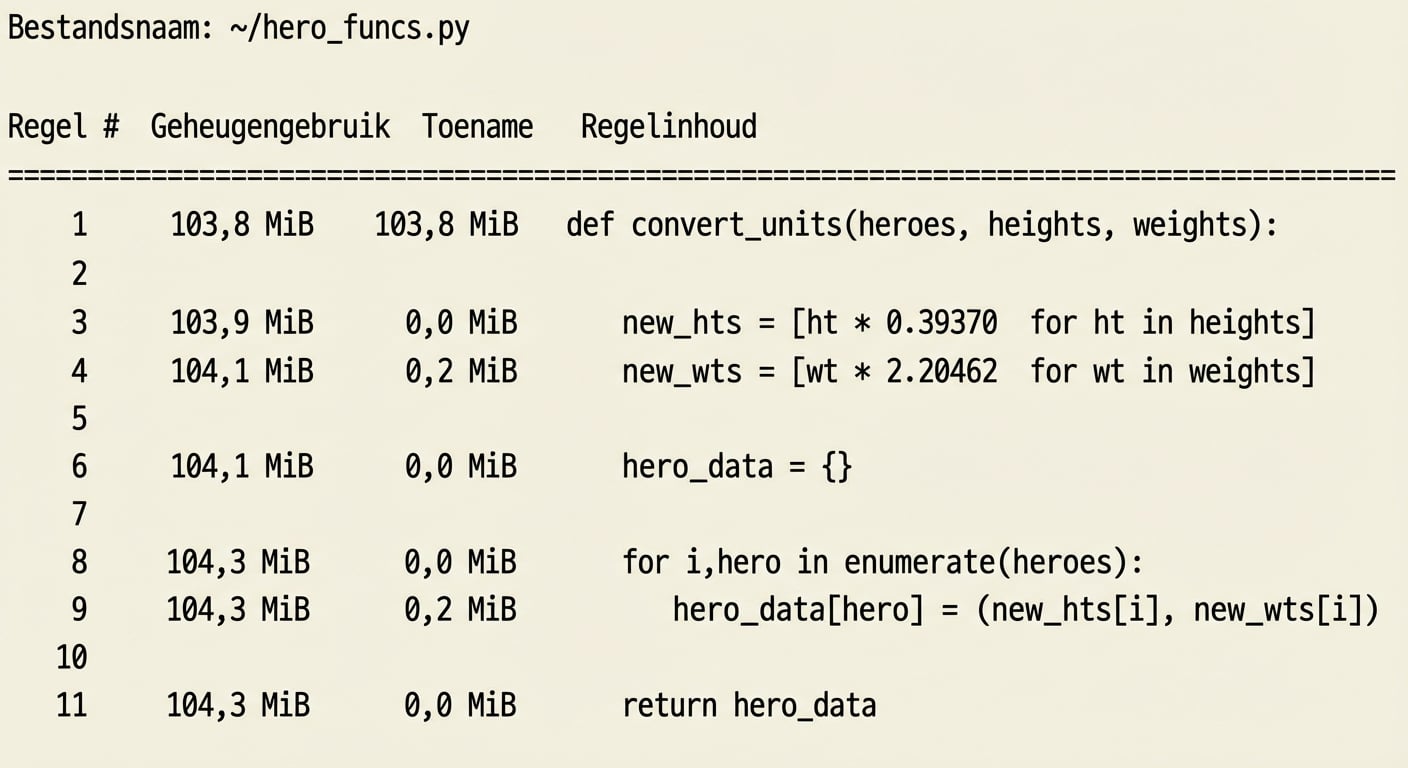
Kanttekeningen bij %mprun-uitvoer
De data in dit voorbeeld is een willekeurige steekproef van 35.000 helden.
(niet de oorspronkelijke dataset met 480 superhelden)
%mprun -f convert_units convert_units(heroes, hts, wts)
Kanttekeningen bij %mprun-uitvoer
Kleine geheugenallocaties kunnen resulteren in 0.0 MiB in de uitvoer.
(op de oorspronkelijke dataset met 480 superhelden)
%mprun -f convert_units convert_units(heroes, hts, wts)