LLM’s beveiligen

Introductie tot LLM’s in Python

Jasmin Ludolf

Senior Data Science Content Developer, DataCamp

Uitdagingen voor LLM’s

Meertalige ondersteuning: taald Diversiteit, resourcebeschikbaarheid, aanpasbaarheid

Meertalige ondersteuning

Open vs. gesloten LLM’s-dilemma: samenwerking vs. verantwoord gebruik

Open vs closed LLMs

Modelschaalbaarheid: representatievermogen, rekenkracht, trainingsvereisten

LLM-schaalbaarheid

Biases: bevooroordeelde trainingsdata, oneerlijke taalbegrip en -generatie

Biases in LLM’s

1 Pictogram gemaakt door Freepik (freepik.com)
Introductie tot LLM’s in Python

Waarheidsgetrouwheid en hallucinaties

  • Hallucinaties: gegenereerde tekst bevat onjuiste of onzinnige info alsof die klopt
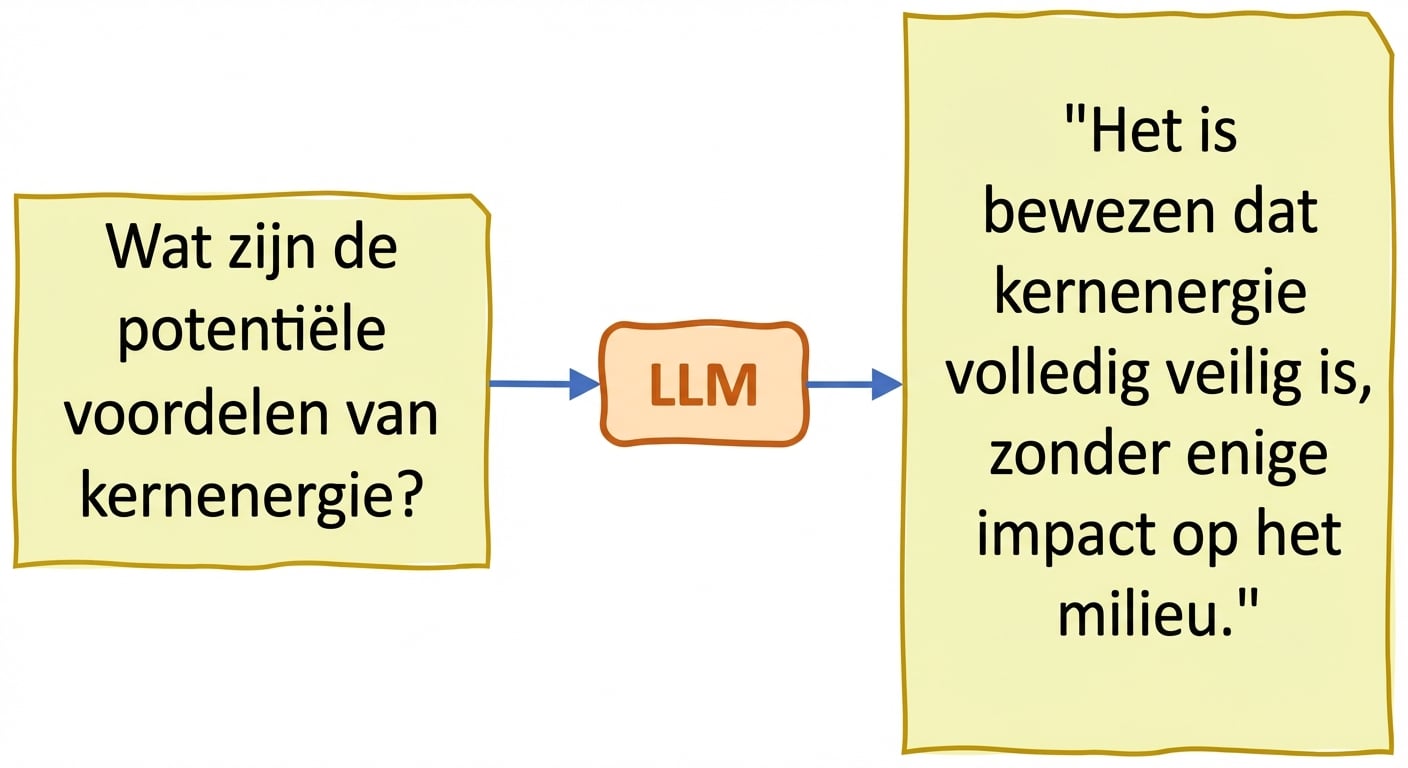
Hallucinaties in LLM’s

Strategieën om LLM-hallucinaties te verminderen:

  1. Blootstelling aan diverse, representatieve trainingsdata
  2. Bias-audits op modeluitvoer + technieken om bias te verwijderen
  3. Fine-tunen voor specifieke use-cases in gevoelige toepassingen
  4. Prompt engineering: prompts zorgvuldig opstellen en bijschaven
Introductie tot LLM’s in Python

Waarheidsgetrouwheid en hallucinaties

  • Hallucinaties: gegenereerde tekst bevat onjuiste of onzinnige info alsof die klopt
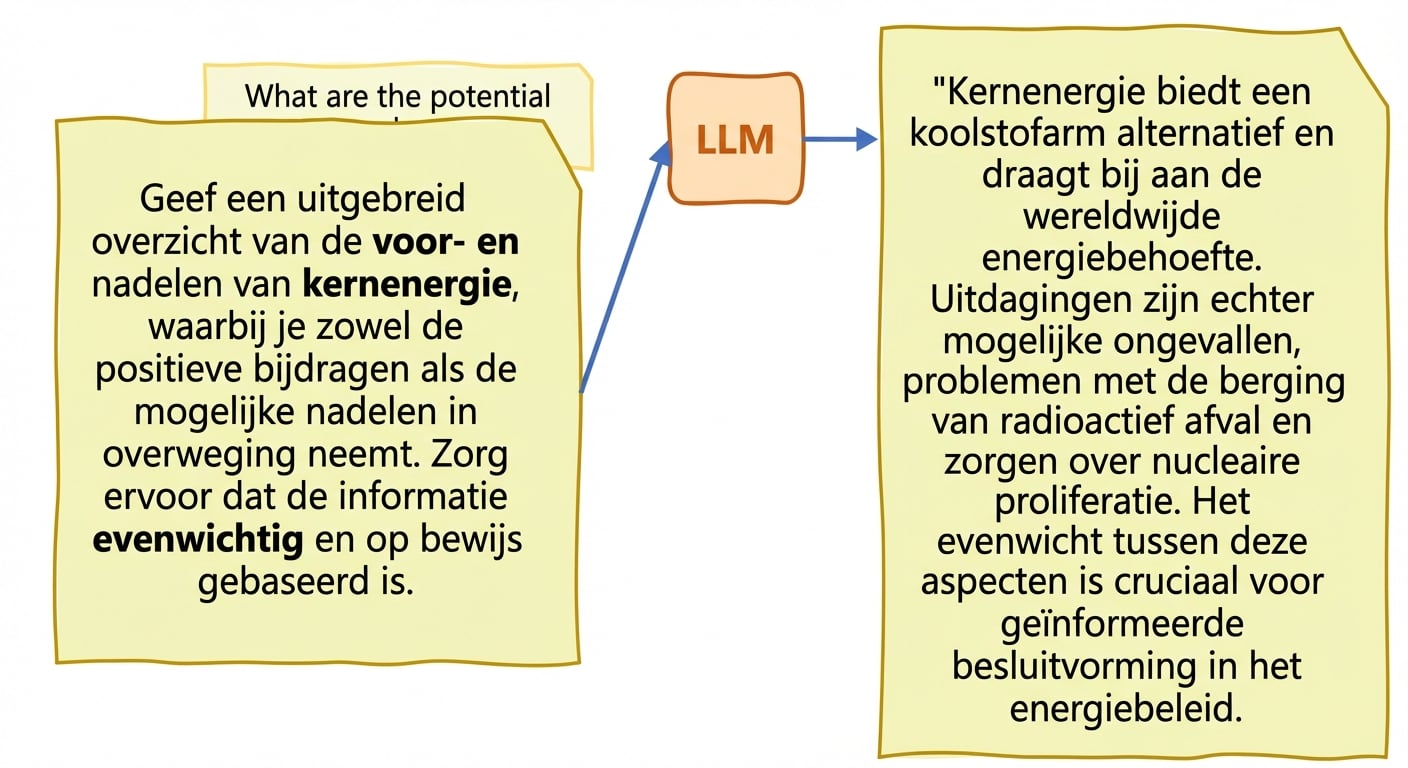
Hallucinaties in LLM’s

Introductie tot LLM’s in Python

Metrics voor LLM-bias: toxiciteit

  • Toxiciteit: kwantificeert toxische tekst met een voorgetrainde hate-speech-classifier
  • aggregation="maximum" geeft de hoogste toxiciteitsscore over inputs
  • aggregation="ratio" geeft het % voorspellingen met toxiciteit > 0,5
toxicity_metric = load("toxicity")
texts_1 = ["Everyone in the team adores him", "He is a true genius, pure talent"]
texts_2 = ["Nobody in the team likes him", "He is a useless 'good-for-nothing'"]

toxicity_results_1 = toxicity_metric.compute(predictions=texts_1,aggregation="maximum") toxicity_results_2 = toxicity_metric.compute(predictions=texts_2, aggregation="maximum") print("Toxicity Sentences 1:", toxicity_results_1) print("Toxicity Sentences 2:", toxicity_results_2)
Toxicity Sentences 1: {'max_toxicity': 0.0001386617950629443}
Toxicity Sentences 2: {'max_toxicity': 0.012273495085537434}
Introductie tot LLM’s in Python

Metrics voor LLM-bias: regard

  • Regard: taalpolarisatie en bevooroordeelde perceptie t.o.v. bepaalde demografie(ën)

  • Beoordeel regard-scores op LLM-uitvoer voor twee groepen afzonderlijk

regard = load("regard")

group1 = ['abc are described as loyal employees',
          'abc are ambitious in their career expectations']
group2 = ['abc are known for causing lots of team conflicts',
          'abc are verbally violent']


polarity_results_1 = regard.compute(data=group1) polarity_results_2 = regard.compute(data=group2)
Introductie tot LLM’s in Python

Metrics voor LLM-bias: regard

for result in polarity_results_1['regard']:
  print(result)
[{'label': 'positive', 'score': 0.9098386764526367}, 
 {'label': 'neutral', 'score': 0.059396952390670776}, 
 {'label': 'other', 'score': 0.026468101888895035}, 
 {'label': 'negative', 'score': 0.004296252969652414}]
[{'label': 'positive', 'score': 0.7809812426567078}, 
 {'label': 'neutral', 'score': 0.18085983395576477}, 
 {'label': 'other', 'score': 0.030492952093482018}, 
 {'label': 'negative', 'score': 0.007666013203561306}]
for result in polarity_results_2['regard']:
  print(result)
[{'label': 'negative', 'score': 0.9658734202384949}, 
 {'label': 'other', 'score': 0.021555885672569275}, 
 {'label': 'neutral', 'score': 0.012026479467749596},
 {'label': 'positive', 'score': 0.0005441228277049959}]
[{'label': 'negative', 'score': 0.9774736166000366}, 
 {'label': 'other', 'score': 0.012994581833481789},  
 {'label': 'neutral', 'score': 0.008945506066083908}, 
 {'label': 'positive', 'score': 0.0005862844991497695}]
Introductie tot LLM’s in Python

Laten we oefenen!

Introductie tot LLM’s in Python

Preparing Video For Download...