Introductie tot regressie in R
Richie Cotton
Data Evangelist at DataCamp
| n_claims | total_payment_sek |
|---|---|
| 108 | 392.5 |
| 19 | 46.2 |
| 13 | 15.7 |
| 124 | 422.2 |
| 40 | 119.4 |
| ... | ... |
library(dplyr)
swedish_motor_insurance %>%
summarize_all(mean)
# A tibble: 1 x 2
n_claims total_payment_sek
<dbl> <dbl>
1 22.9 98.2
swedish_motor_insurance %>%
summarize(
correlation = cor(n_claims, total_payment_sek)
)
# A tibble: 1 x 1
correlation
<dbl>
1 0.881
| n_claims | total_payment_sek |
|---|---|
| 108 | 392.5 |
| 19 | 46.2 |
| 13 | 15.7 |
| 124 | 422.2 |
| 40 | 119.4 |
| 200 | ??? |
De variabele die je wilt voorspellen.
De variabelen die verklaren hoe de responsvariabele verandert.
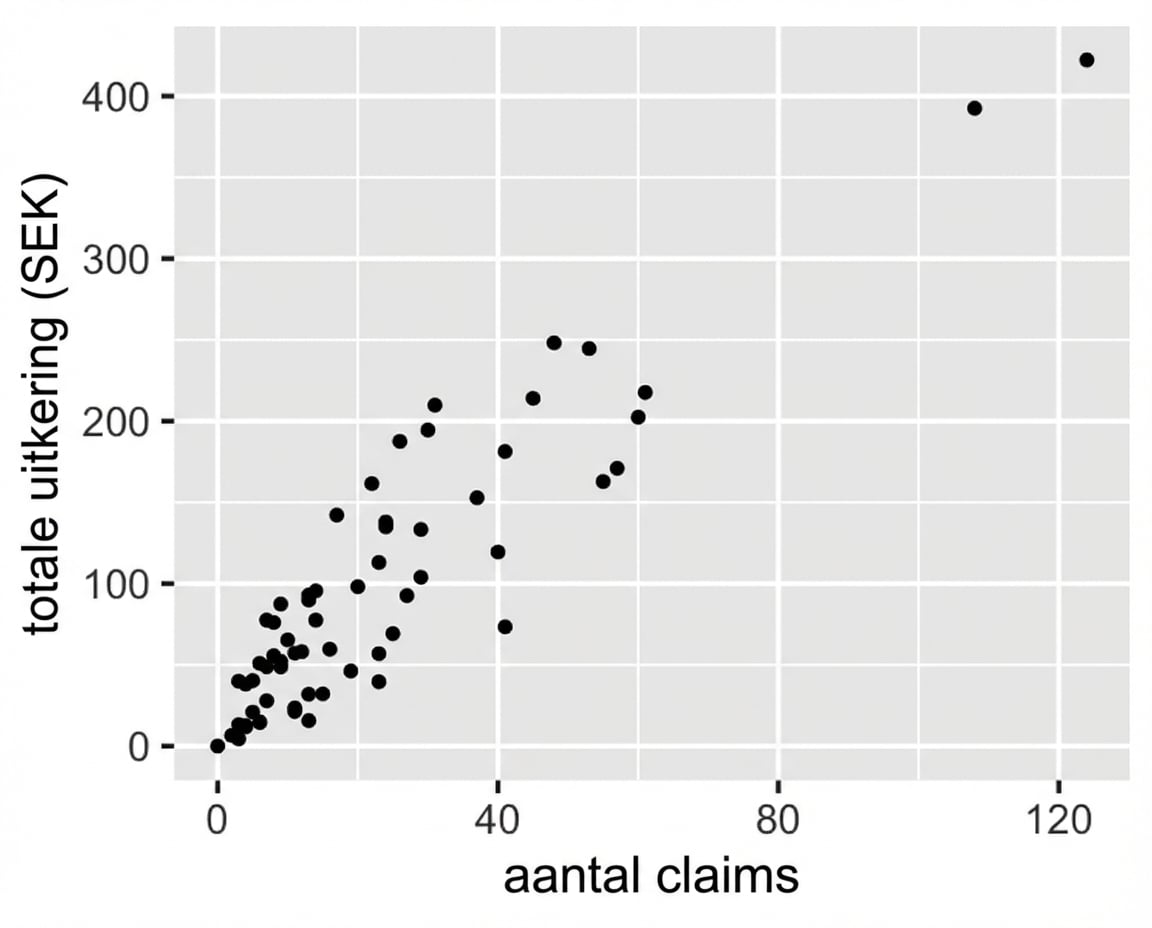
library(ggplot2)
ggplot(
swedish_motor_insurance,
aes(n_claims, total_payment_sek)
) +
geom_point()

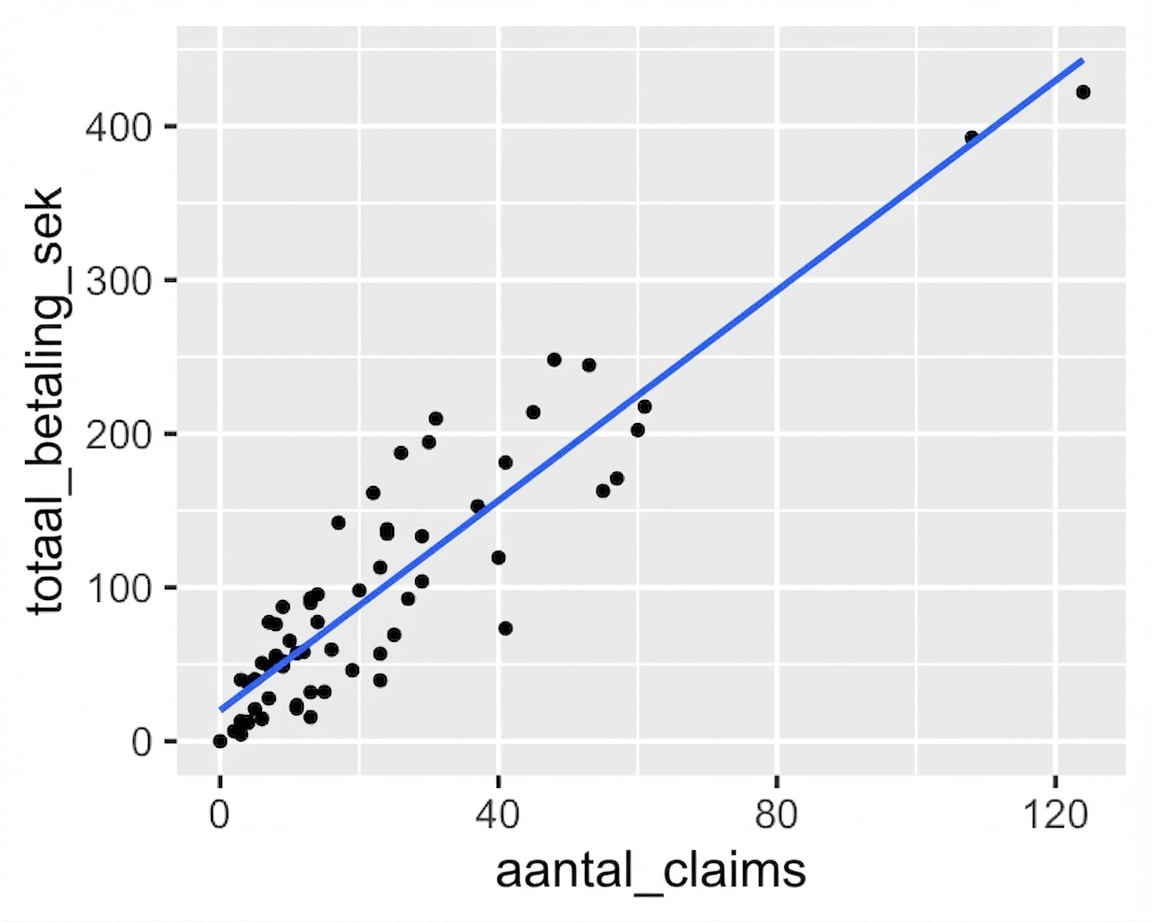
library(ggplot2)
ggplot(
swedish_motor_insurance,
aes(n_claims, total_payment_sek)
) +
geom_point() +
geom_smooth(
method = "lm",
se = FALSE
)

Lineaire regressiemodellen visualiseren en fitten.
Voorspellen met lineaire modellen en modelcoëfficiënten begrijpen.
De kwaliteit van het lineaire regressiemodel beoordelen.
Hetzelfde, maar met logistische regressiemodellen.
Introductie tot regressie in R