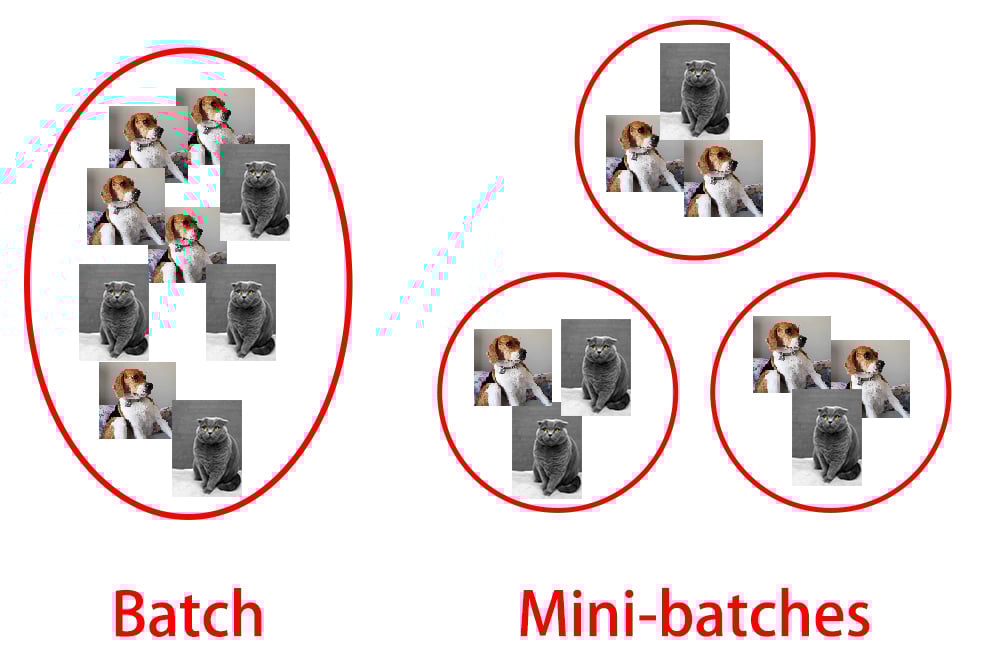
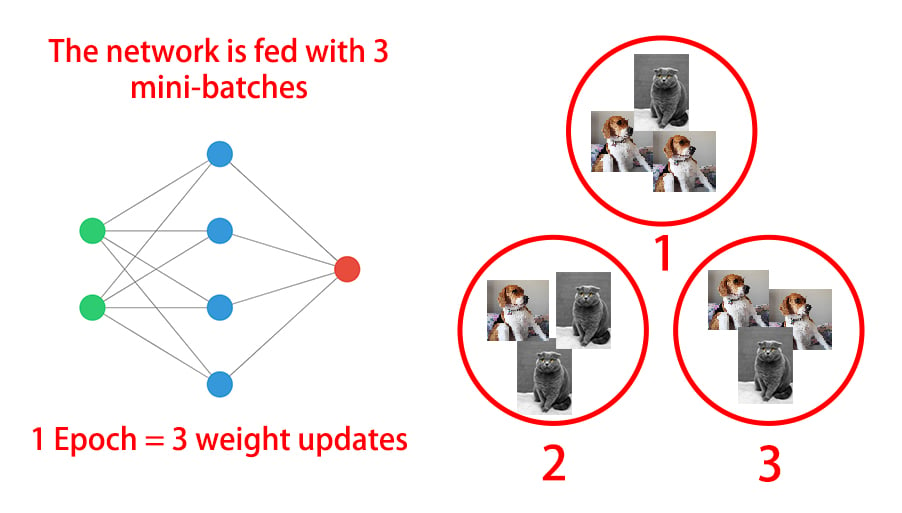
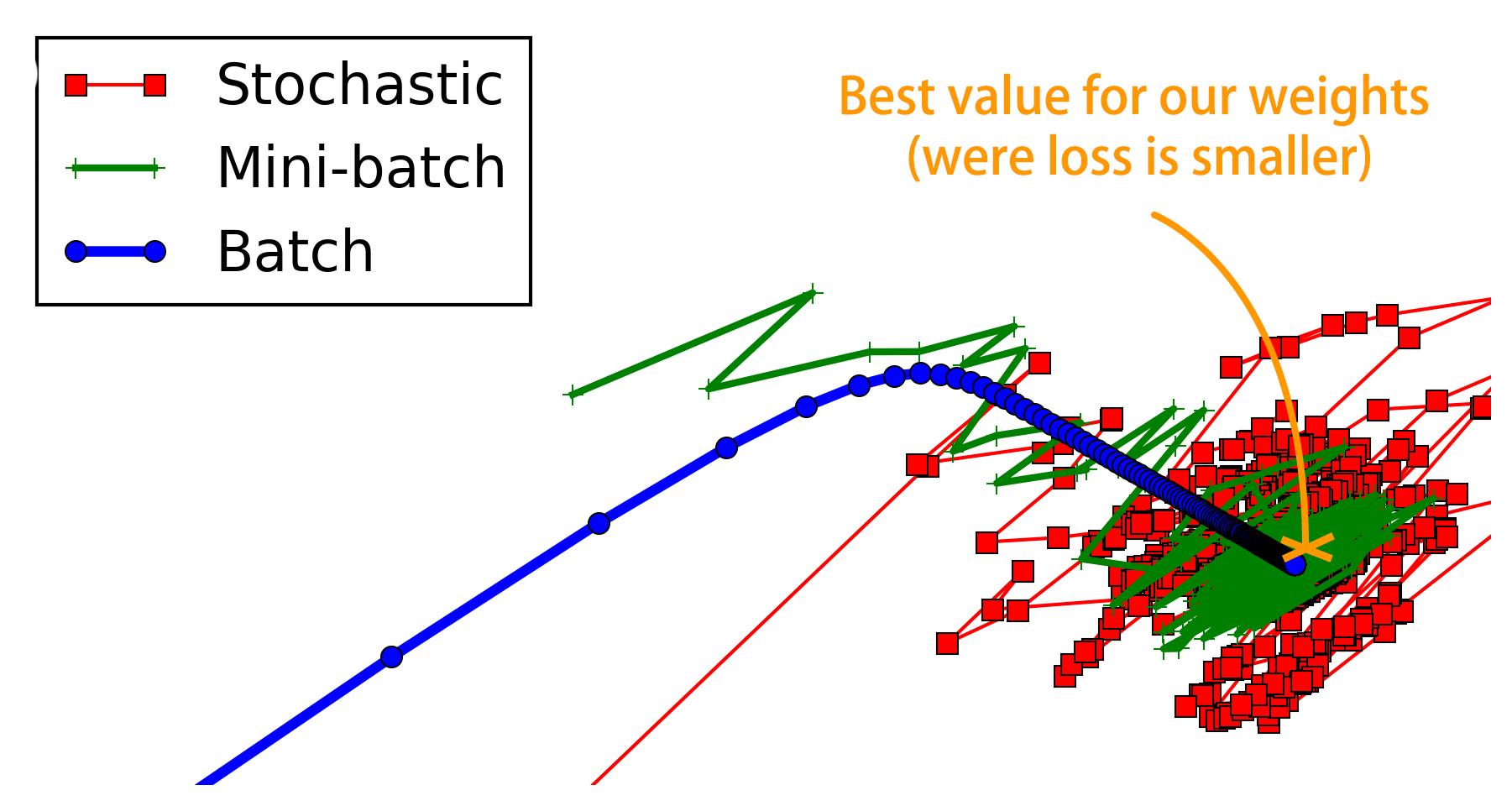
Snellere training (meer gewichtsupdates in dezelfde tijd)
Minder RAM nodig, trainen op enorme datasets
Ruis kan helpen een lagere fout te bereiken, ontsnapt lokale minima
Nadelen
Meer iteraties nodig
Moet worden afgesteld; geschikte batchgrootte vinden
1 Stack Exchange
Batchgrootte in Keras
# Een al gebouwd en gecompileerd model trainen
model.fit(X_train, y_train, epochs=100, batch_size=128)
                                        ^^^^^^^^^^^^^^
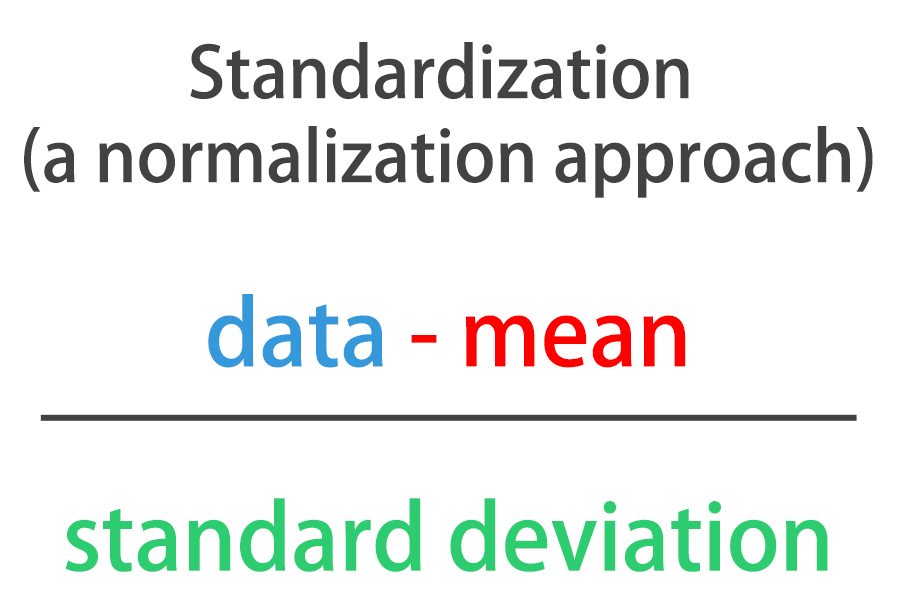
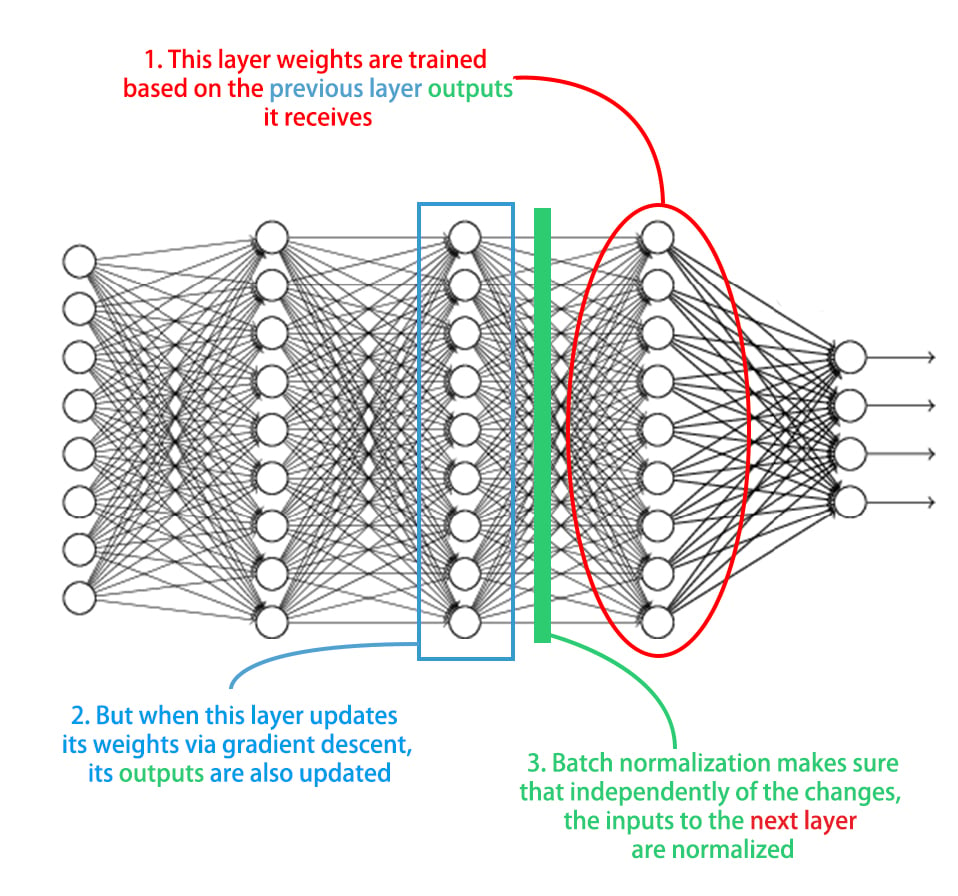
Voordelen van batchnormalisatie
Verbetert de gradiëntenstroom
Maakt hogere learning rates mogelijk
Minder afhankelijk van gewichtsinitialisatie
Werkt onbedoeld als regularisatie
Beperkt interne covariateshift
Batchnormalisatie in Keras
# BatchNormalization importeren uit keras.layers
from tensorflow.keras.layers import BatchNormalization

# Een Sequential-model aanmaken
model = Sequential()

# Een invoerlaag toevoegen
model.add(Dense(3, input_shape=(2,), activation = 'relu'))

# Batchnormalisatie toevoegen voor de outputs van de bovenstaande laag
model.add(BatchNormalization())

# Een uitvoerlaag toevoegen
model.add(Dense(1, activation='sigmoid'))