Hypothesetoetsen
Casestudies in statistisch denken

Justin Bois
Lecturer, Caltech
Effect van mutatie op activiteit
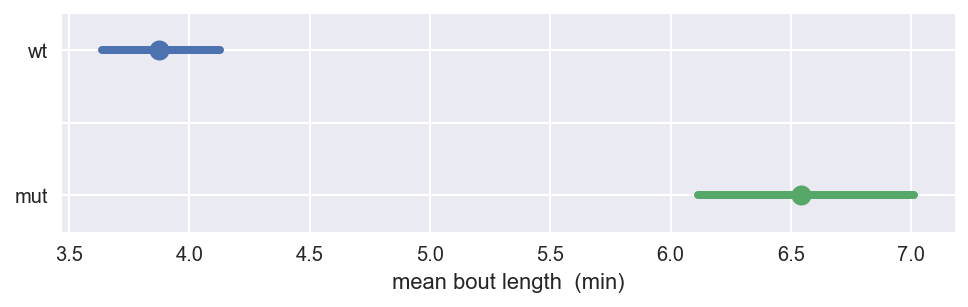
Genotypedefinities
- Wild type: Geen mutaties
- Heterozygoot: Mutatie op één van de twee chromosomen
- Mutant: Mutatie op beide chromosomen
Effect van mutatie op activiteit
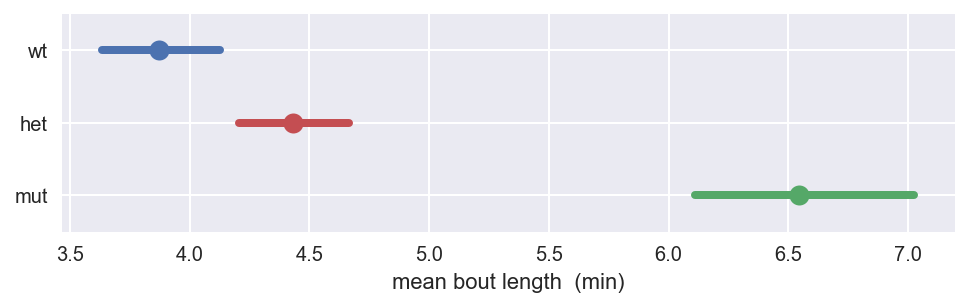
Effect van mutatie op activiteit
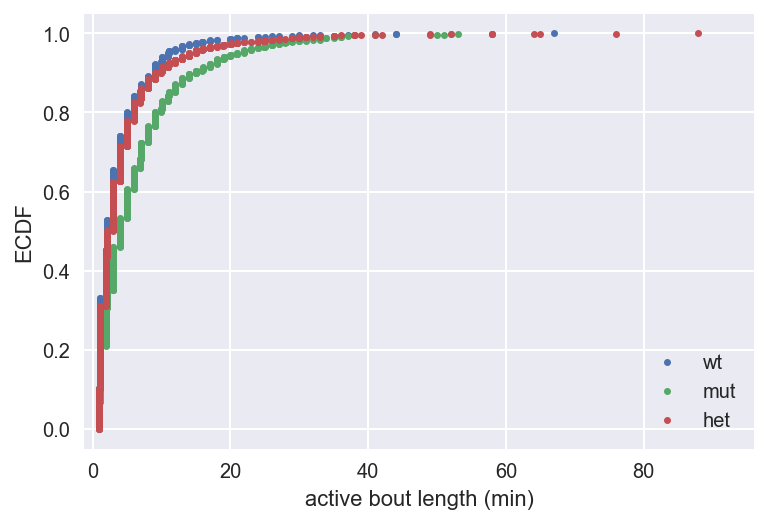
Hypothesetoets
Beoordeling hoe aannemelijk de geobserveerde data zijn als een hypothese waar is
p-waarde
De kans om een waarde van je toetsingsgrootheid te krijgen die minstens zo extreem is als wat is geobserveerd, onder de aanname dat de nulhypothese waar is
Toetsingsgrootheid
- Eén getal berekend uit geobserveerde data en uit data die je simuleert onder de nulhypothese
- Dient als vergelijkingsbasis
p-waarde
De kans om een waarde van je toetsingsgrootheid te krijgen die minstens zo extreem is als wat is geobserveerd, onder de aanname dat de nulhypothese waar is
Vereist een duidelijke specificatie van:
- Nulhypothese die gesimuleerd kan worden
- Toetsingsgrootheid die uit geobserveerde en gesimuleerde data kan worden berekend
- Definitie van minstens zo extreem als
Stappenplan voor toetsen
- Formuleer de nulhypothese duidelijk
- Definieer je toetsingsgrootheid
- Genereer veel gesimuleerde datasets onder de aanname dat de nulhypothese waar is
- Bereken de toetsingsgrootheid voor elke gesimuleerde dataset
- De p-waarde is het aandeel gesimuleerde datasets waarvoor de toetsingsgrootheid minstens zo extreem is als voor de echte data
De toets specificeren
Nulhypothese: de lengtes van actieve uitbarstingen van wild type en heterozygote vissen zijn identiek verdeeld
Toetsingsgrootheid: Verschil in gemiddelde lengte van actieve uitbarstingen tussen heterozygoten en wild type
Minstens zo extreem als: Toetsingsgrootheid is groter dan of gelijk aan wat is geobserveerd

