Introductie tot statistische seismologie
Casestudies in statistisch denken

Justin Bois
Lecturer, Caltech
Californië schuift en beeft
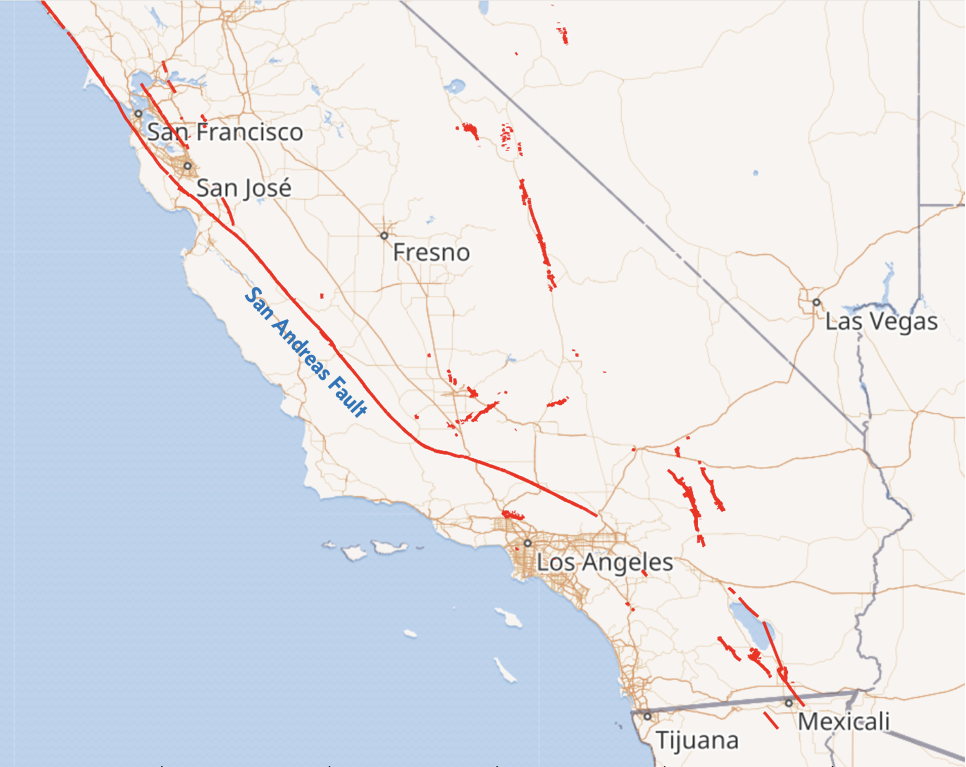
1 Foutgegevens: USGS Quaternary Fault and Fold Database of the United States
De Parkfield-regio
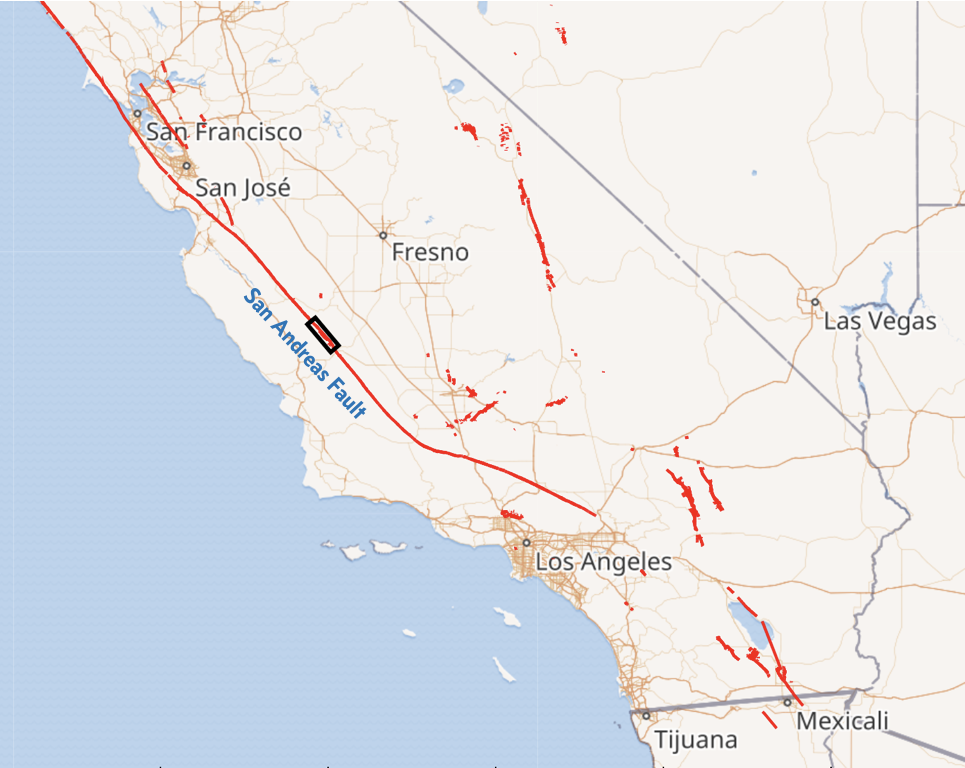
1 Foutgegevens: USGS Quaternary Fault and Fold Database of the United States
De Parkfield-regio
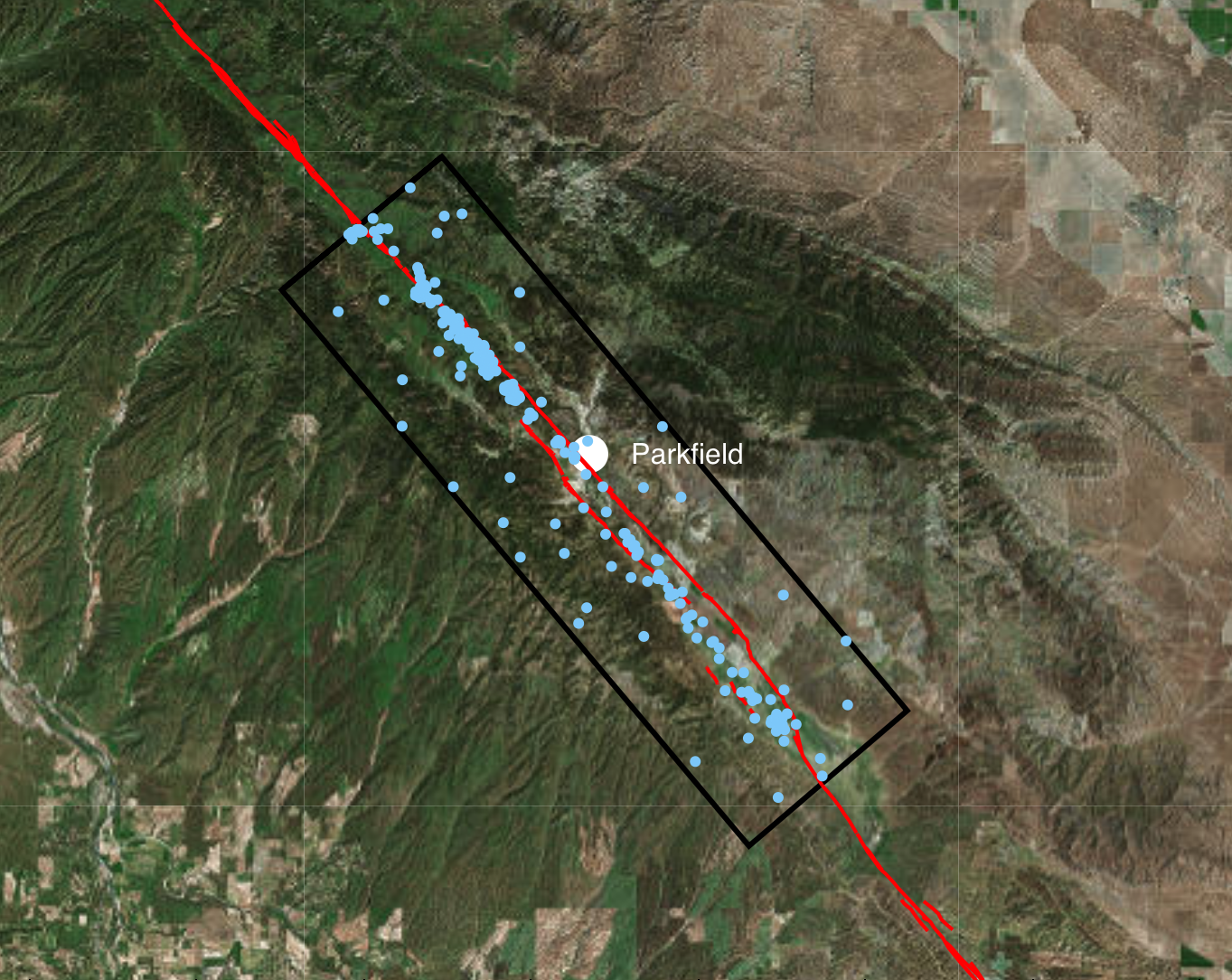
1 Foutgegevens: USGS Quaternary Fault Fault and Fold Database of the United States 2 Aardbevingsgegevens: USGS ANSS Comprehensive Earthquake Catalog (ComCat)
De Parkfield-regio

1 Afbeelding: Linda Tanner, CC-BY-2.0
Seismisch Japan
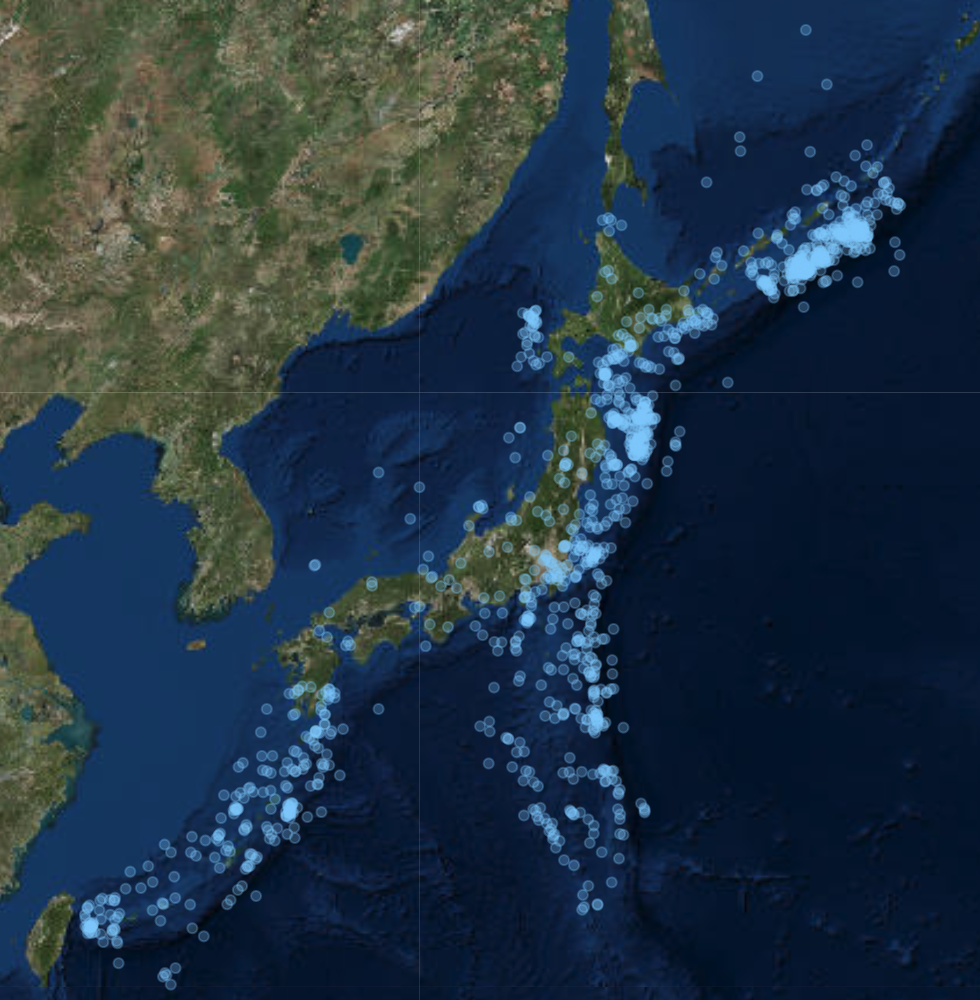
1 Gegevensbron: USGS ANSS Comprehensive Earthquake Catalog (ComCat)
ECDF van magnitudes, Japan, 1990-1999
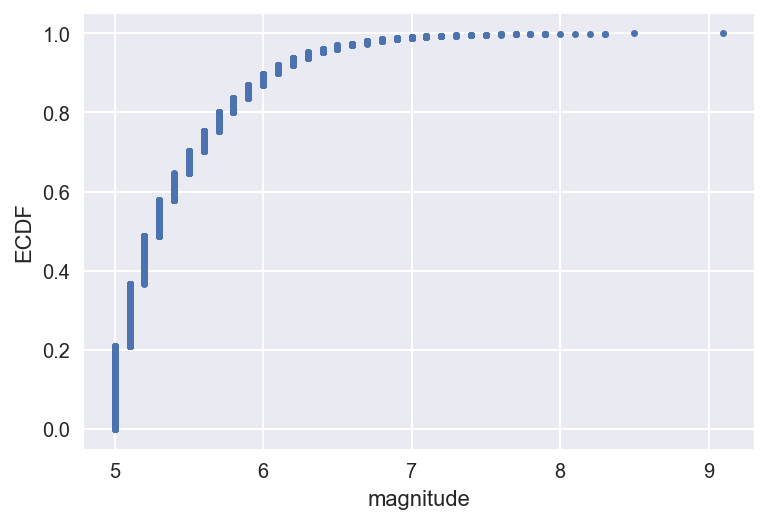
1 Gegevensbron: USGS ANSS Comprehensive Earthquake Catalog (ComCat)
Locatieparameters
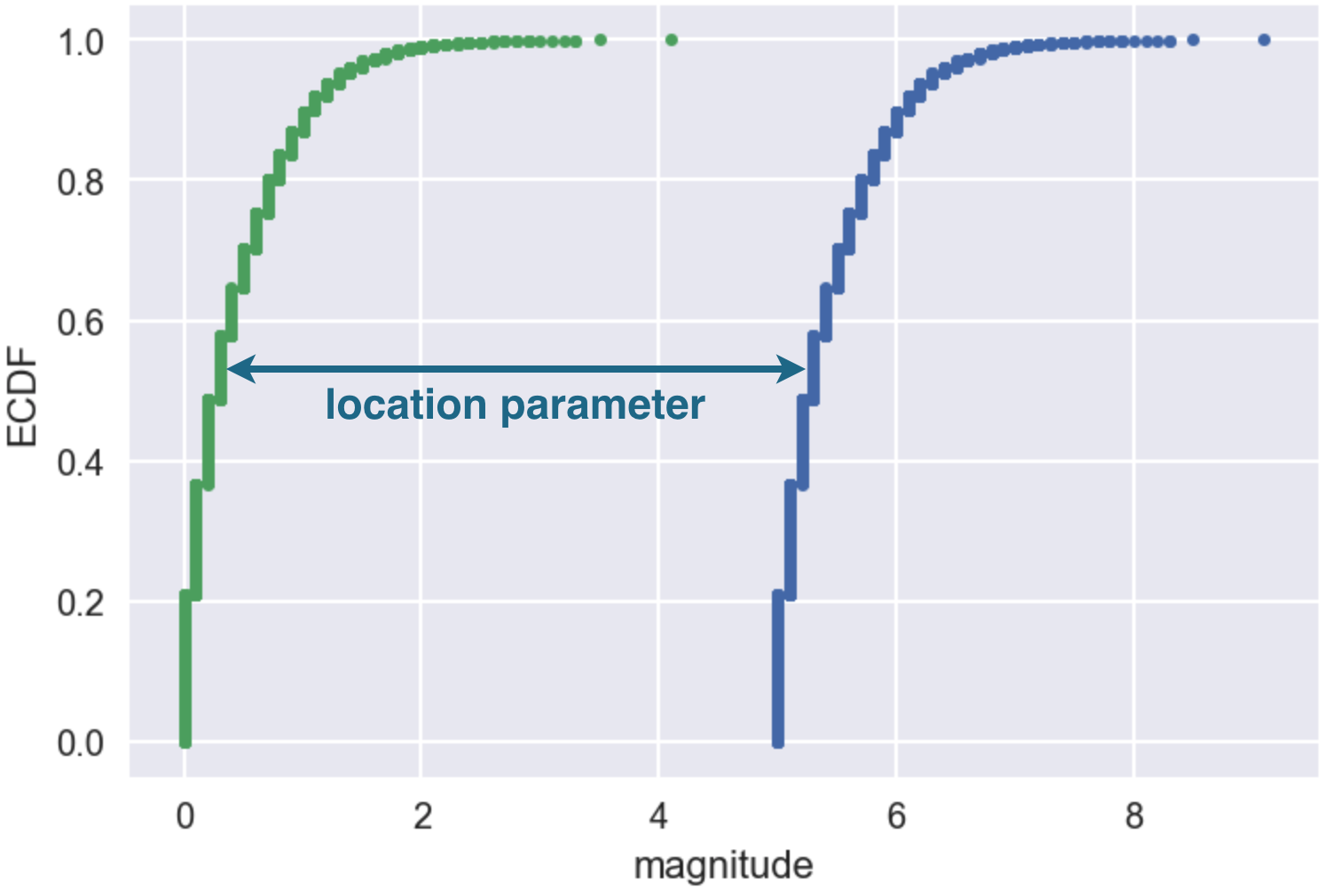
$$m' \equiv m - 5 \sim \text{Exponential}$$
$$m' \equiv m - m_t \sim \text{Exponential}$$
De wet van Gutenberg-Richter
De magnitudes van aardbevingen in een regio en periode volgen een Exponential-verdeling
Eén parameter, gegeven door $\overline{m} - m_t$, beschrijft de magnitudes in een regio
De b-waarde
$$b = (\overline{m}-m_t) \cdot \ln 10$$
# Compleetheidsdrempel
mt = 5

# b-waarde
b = (np.mean(magnitudes) - mt) * np.log(10)

print(b)
0.9729214742632566
ECDF van alle magnitudes
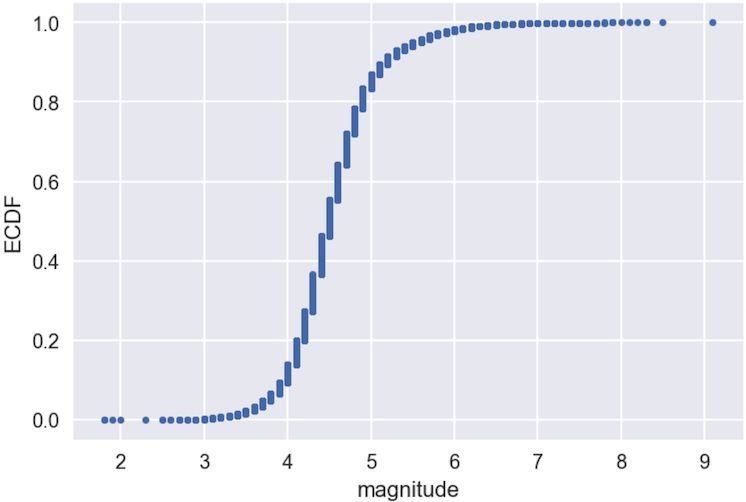
1 Gegevensbron: USGS ANSS Comprehensive Earthquake Catalog (ComCat)
ECDF van alle magnitudes
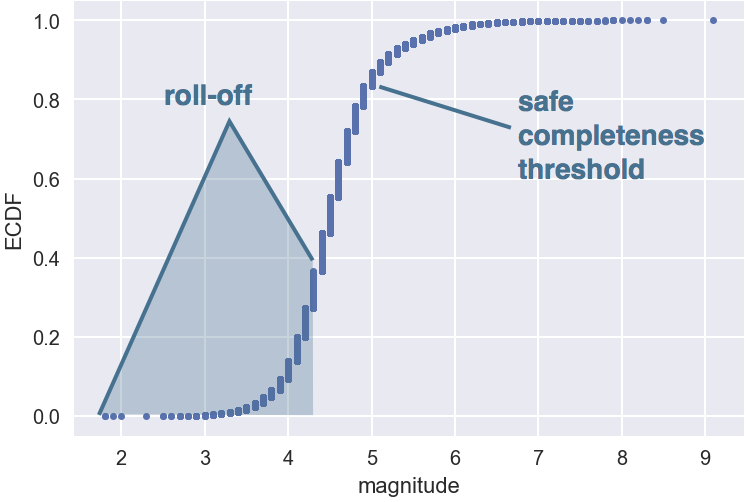
1 Gegevensbron: USGS ANSS Comprehensive Earthquake Catalog (ComCat)
Compleetheidsdrempel
De magnitude, $m_t$, waarboven alle bevingen in een regio detecteerbaar zijn

