Segmentasi semantik dengan U-Net

Deep Learning untuk Gambar dengan PyTorch

Michal Oleszak

Machine Learning Engineer

Segmentasi semantik

  • Tidak membedakan instance berbeda dari kelas yang sama
  • Berguna untuk citra medis atau analisis citra satelit
  • Arsitektur populer: U-Net
Deep Learning untuk Gambar dengan PyTorch

Arsitektur U-Net

Diagram arsitektur U-Net

Encoder:

  • Lapisan konvolusi dan pooling
  • Downsampling: mengurangi dimensi spasial sambil menambah kedalaman
Deep Learning untuk Gambar dengan PyTorch

Arsitektur U-Net

Diagram arsitektur U-Net

Decoder:

  • Simetris terhadap encoder
  • Meng-upsample feature map dengan konvolusi tertransposisi
Deep Learning untuk Gambar dengan PyTorch

Arsitektur U-Net

Diagram arsitektur U-Net

Skip connection:

  • Tautan dari encoder ke decoder
  • Mempertahankan detail yang hilang saat downsampling
Deep Learning untuk Gambar dengan PyTorch

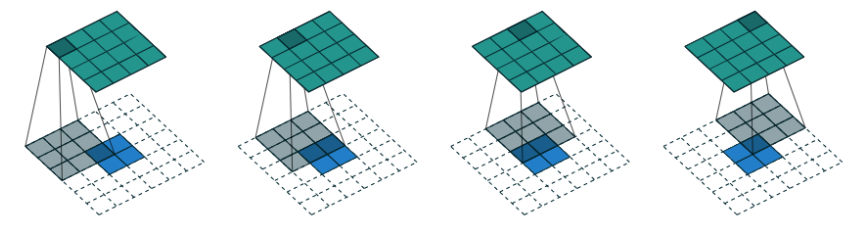
Konvolusi tertransposisi

Diagram konvolusi tertransposisi

  • Meng-upsample feature map di decoder: menambah tinggi dan lebar sambil mengurangi kedalaman
  • Proses konvolusi tertransposisi:
    1. Sisipkan nol di antara atau di sekitar feature map input
    2. Lakukan konvolusi biasa pada input yang dipadding nol
Deep Learning untuk Gambar dengan PyTorch

Konvolusi tertransposisi di PyTorch

import torch.nn as nn

upsample = nn.ConvTranspose2d(
    in_channels=in_channels,
    out_channels=out_channels,
    kernel_size=2,
    stride=2,
)
Deep Learning untuk Gambar dengan PyTorch

U-Net: definisi lapisan

class UNet(nn.Module):
    def __init__(self, in_channels, out_channels):
        super(UNet, self).__init__()


self.enc1 = self.conv_block(in_channels, 64) self.enc2 = self.conv_block(64, 128) self.enc3 = self.conv_block(128, 256) self.enc4 = self.conv_block(256, 512) self.pool = nn.MaxPool2d(kernel_size=2, stride=2)
self.upconv3 = nn.ConvTranspose2d(512, 256, kernel_size=2, stride=2) self.upconv2 = nn.ConvTranspose2d(256, 128, kernel_size=2, stride=2) self.upconv1 = nn.ConvTranspose2d(128, 64, kernel_size=2, stride=2)
self.dec1 = self.conv_block(512, 256) self.dec2 = self.conv_block(256, 128) self.dec3 = self.conv_block(128, 64) self.out = nn.Conv2d(64, out_channels, kernel_size=1)
  • Encoder:
    • Blok konvolusi
      def conv_block(self, in_channels, out_channels):
      return nn.Sequential(
        nn.Conv2d(in_channels, out_channels),
        nn.ReLU(inplace=True),
        nn.Conv2d(out_channels, out_channels),
        nn.ReLU(inplace=True)
      )
      
    • Lapisan pooling
  • Decoder:
    • Konvolusi tertransposisi
    • Blok konvolusi
Deep Learning untuk Gambar dengan PyTorch

U-Net: metode forward

def forward(self, x):

x1 = self.enc1(x) x2 = self.enc2(self.pool(x1)) x3 = self.enc3(self.pool(x2)) x4 = self.enc4(self.pool(x3))
x = self.upconv3(x4)
x = torch.cat([x, x3], dim=1)
x = self.dec1(x)
x = self.upconv2(x) x = torch.cat([x, x2], dim=1) x = self.dec2(x) x = self.upconv1(x) x = torch.cat([x, x1], dim=1) x = self.dec3(x)
return self.out(x)
  • Umpankan input melalui blok konvolusi encoder dan lapisan pooling
  • Decoder dan skip connection:
    • Lewatkan representasi melalui konvolusi tertransposisi
    • Konkatenasi dengan keluaran encoder terkait
    • Lewatkan melalui blok konvolusi
    • Ulangi untuk semua langkah decoder
  • Kembalikan keluaran langkah decoder terakhir
Deep Learning untuk Gambar dengan PyTorch

Menjalankan inferensi

model = UNet()
model.eval()


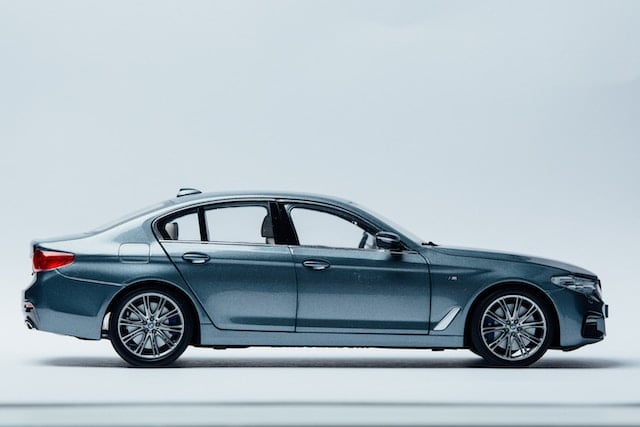
image = Image.open("car.jpg") transform = transforms.Compose([transforms.ToTensor()]) image_tensor = transform(image).unsqueeze(0)
with torch.no_grad(): prediction = model(image_tensor).squeeze(0)
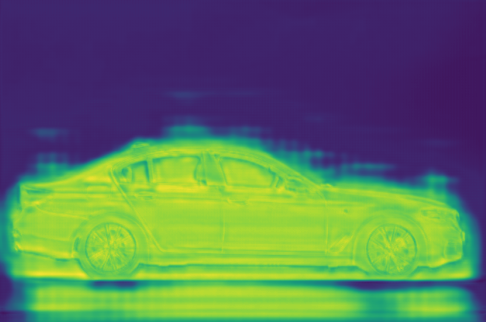
plt.imshow(prediction[1, :, :]) plt.show()

Gambar mobil asli

Mask semantik ditumpuk di atas gambar mobil

Deep Learning untuk Gambar dengan PyTorch

Ayo berlatih!

Deep Learning untuk Gambar dengan PyTorch

Preparing Video For Download...