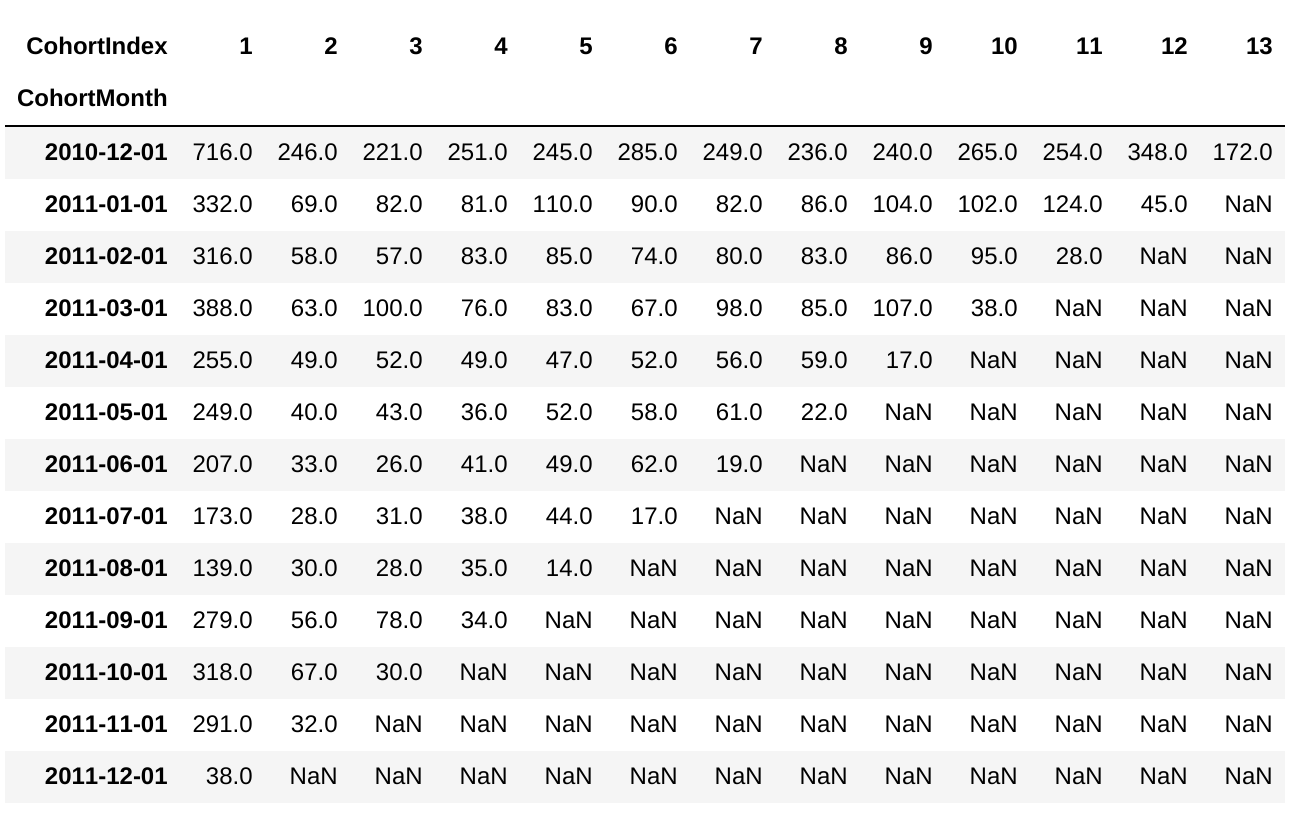
Analisi delle coorti
Customer Segmentation in Python

Karolis Urbonas
Head of Data Science, Amazon
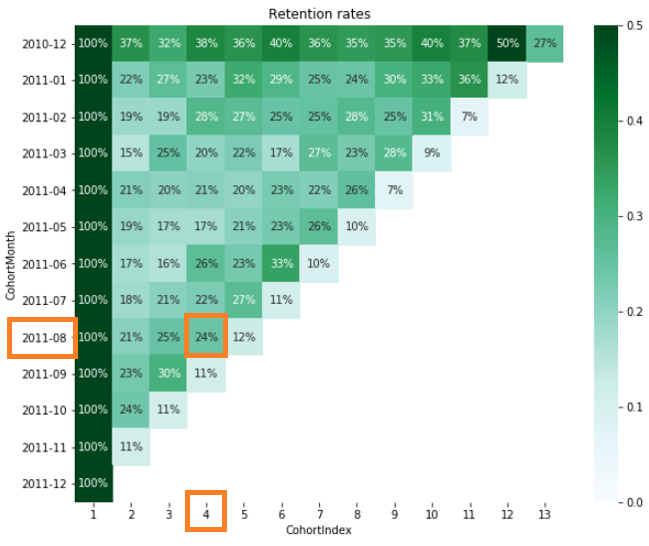
Heatmap analisi coorti
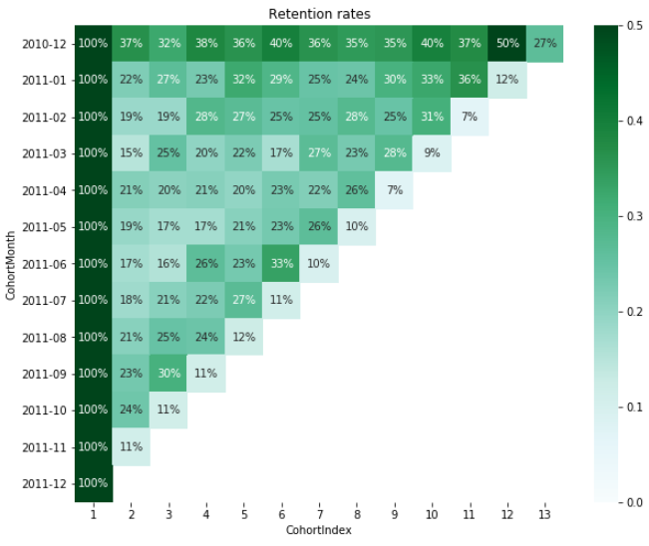
Heatmap analisi coorti
Dati di retail online
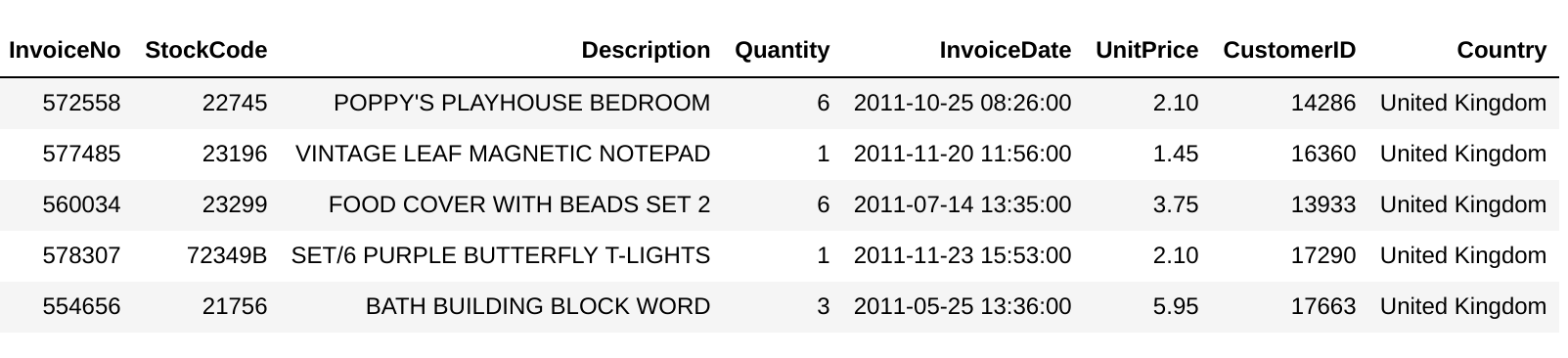
Prime 5 righe dei dati
online.head()
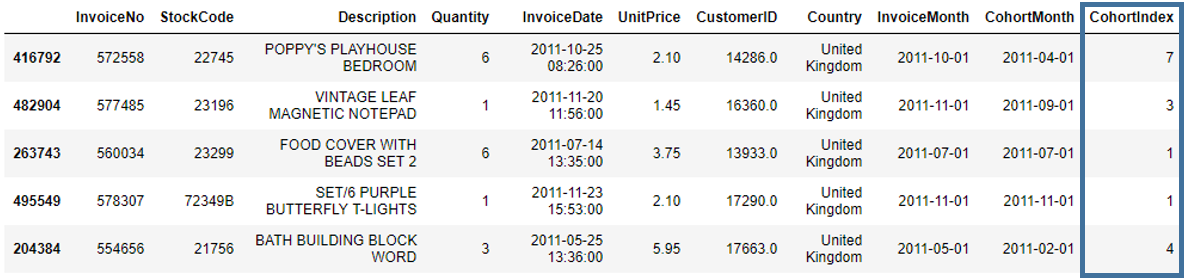
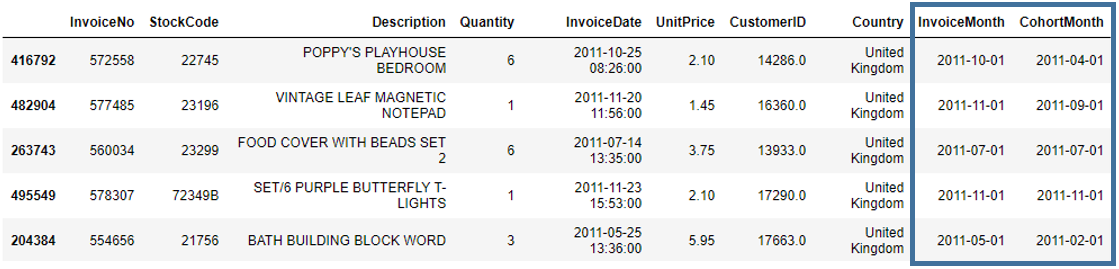
Assegna mese di acquisizione alla coorte
def get_month(x): return dt.datetime(x.year, x.month, 1)online['InvoiceMonth'] = online['InvoiceDate'].apply(get_month)grouping = online.groupby('CustomerID')['InvoiceMonth']online['CohortMonth'] = grouping.transform('min')online.head()
Assegna valore di scostamento temporale
invoice_year, invoice_month, _ = get_date_int(online, 'InvoiceMonth') cohort_year, cohort_month, _ = get_date_int(online, 'CohortMonth')years_diff = invoice_year - cohort_year months_diff = invoice_month - cohort_monthonline['CohortIndex'] = years_diff * 12 + months_diff + 1 online.head()