Traduzione automatica con Keras
Thushan Ganegedara
Data Scientist and Author


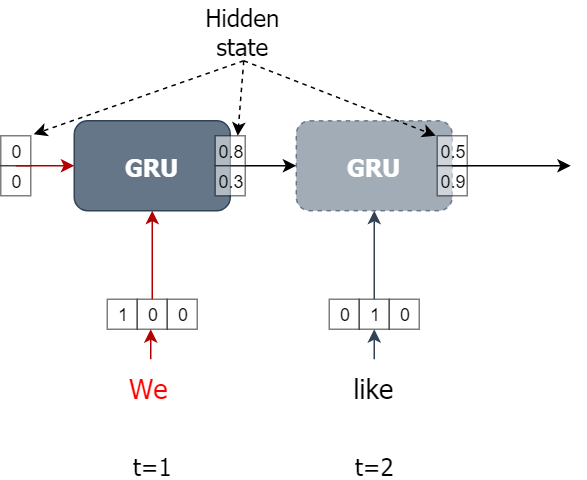
Al passo temporale 1, il livello GRU,

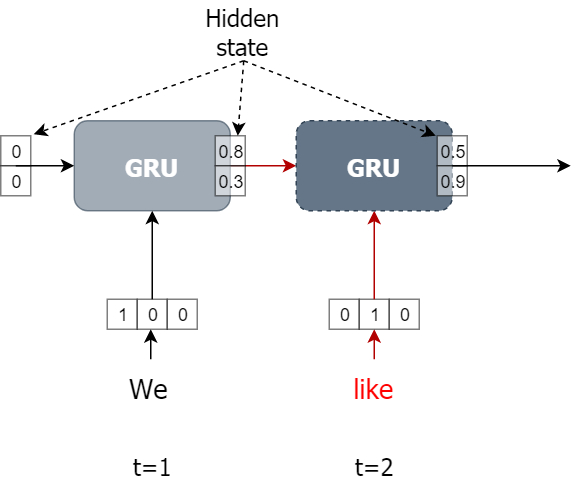
Al passo temporale 2, il livello GRU,
Lo stato nascosto rappresenta la "memoria" di ciò che il modello ha visto

Layer e Model.inp = keras.layers.Input(shape=(...))layer = keras.layers.GRU(...)out = layer(inp)model = Model(inputs=inp, outputs=out)
Definire i livelli Keras
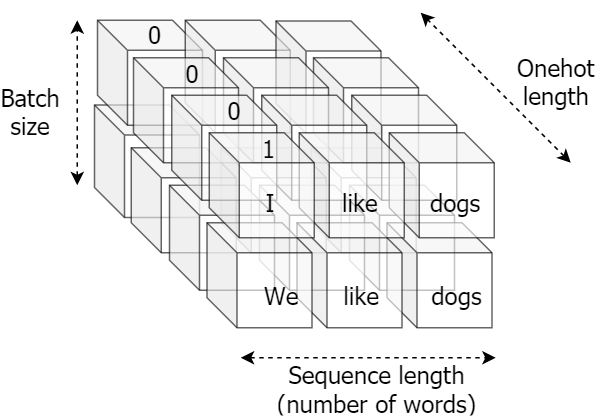
inp = keras.layers.Input(batch_shape=(2,3,4))
gru_out = keras.layers.GRU(10)(inp)
Definire un modello Keras
model = keras.models.Model(inputs=inp, outputs=gru_out)
Predire con il modello Keras
x = np.random.normal(size=(2,3,4))
y = model.predict(x)
print("shape (y) =", y.shape, "\ny = \n", y)
shape (y) = (2, 10)
y =
[[ 0.2576233 0.01215531 ... -0.32517594 0.4483121 ],
[ 0.54189587 -0.63834655 ... -0.4339783 0.4043917 ]]
Una GRU che accetta un numero arbitrario di campioni nel batch
inp = keras.layers.Input(shape=(3,4))
gru_out = keras.layers.GRU(10)(inp)
model = keras.models.Model(inputs=inp, outputs=gru_out)
x = np.random.normal(size=(5,3,4))
y = model.predict(x)
print("y = \n", y)
y =
[[-1.3941444e-02 -3.3123985e-02 ... 6.5081201e-02 1.1245312e-01]
[ 1.1409521e-03 3.6983326e-01 ... -3.4610277e-01 -3.4792548e-01]
[ 2.5911796e-01 -3.9517123e-01 ... 5.8505309e-01 3.6908010e-01]
[-2.8727052e-01 -5.1150680e-02 ... -1.9637148e-01 -1.5587148e-01]
[ 3.1303680e-01 2.3338445e-01 ... 9.1499090e-04 -2.0590121e-01]]
inp = keras.layers.Input(batch_shape=(2,3,4))
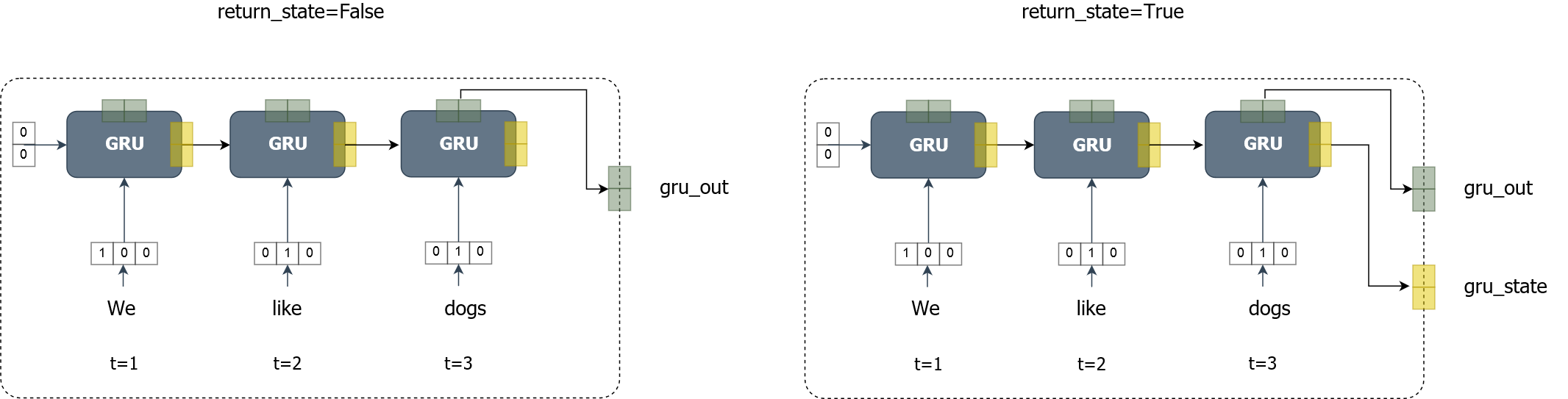
gru_out2, gru_state = keras.layers.GRU(10, return_state=True)(inp)
print("gru_out2.shape = ", gru_out2.shape)
print("gru_state.shape = ", gru_state.shape)
gru_out2.shape = (2, 10)
gru_state.shape = (2, 10)
inp = keras.layers.Input(batch_shape=(2,3,4))
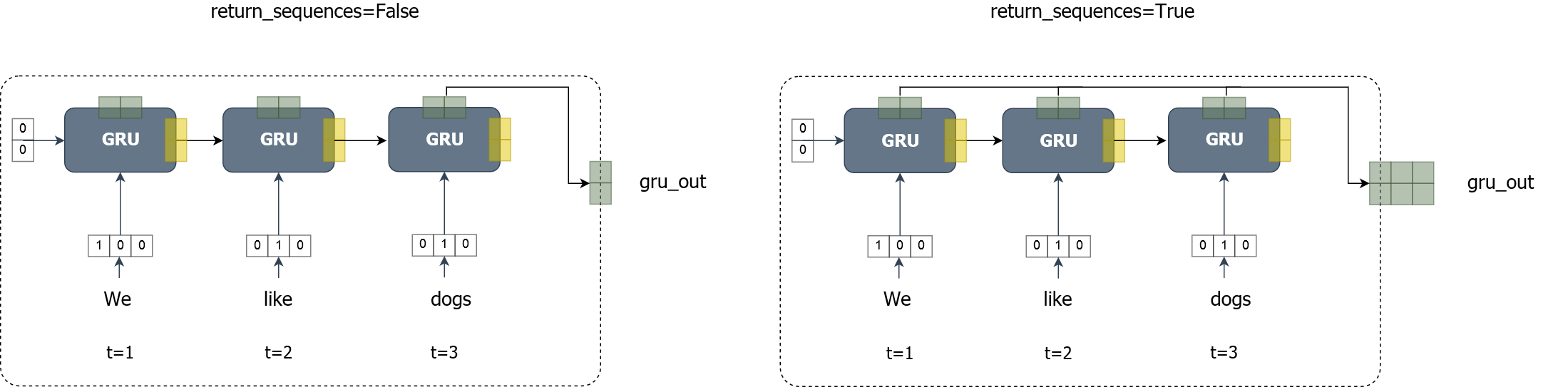
gru_out3 = keras.layers.GRU(10, return_sequences=True)(inp)
print("gru_out3.shape = ", gru_out2.shape)
gru_out3.shape = (2, 3, 10)
Traduzione automatica con Keras