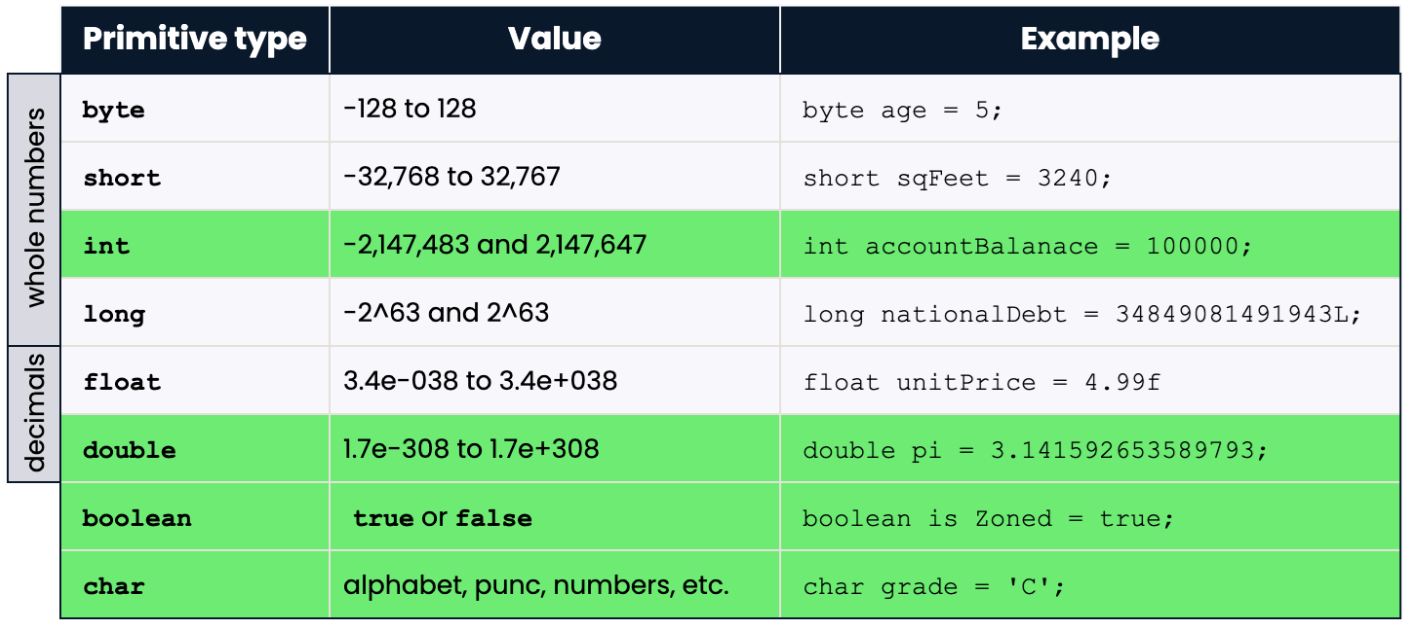
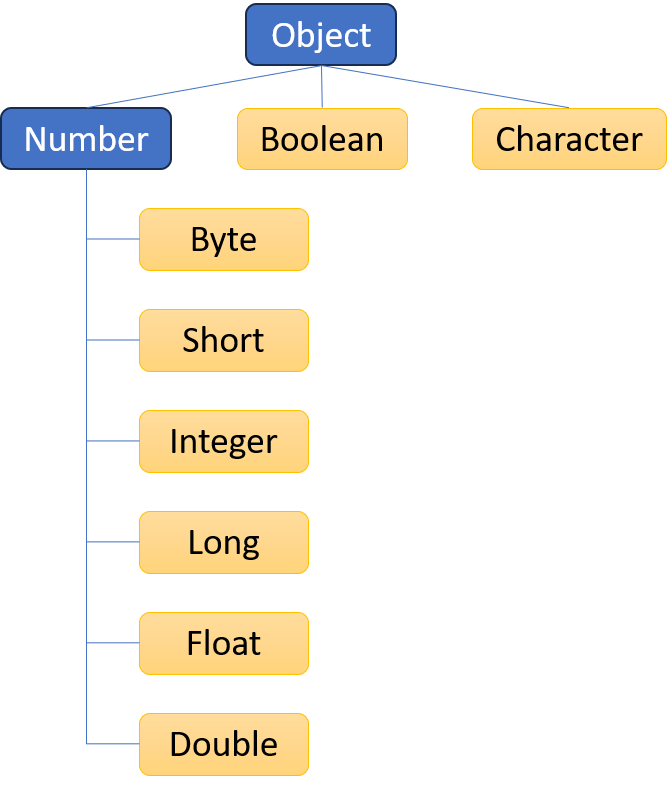
Ogni tipo primitivo ha una classe wrapper equivalente
primitivo
Classe wrapper
byte
Byte
short
Short
int
Integer
long
Long
float
Float
double
Double
boolean
Boolean
char
Character
Wrappare i primitivi
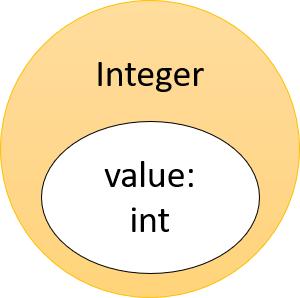
Le istanze di una classe wrapper contengono un singolo primitivo
Esempio: Integer contiene un singolo valore primitivo int
Dettagli sui wrapper
Le classi wrapper hanno campi e metodi aggiuntivi
Campi (come il valore max) sul tipo
Metodi per lavorare con il tipo primitivo incapsulato
Le classi wrapper sono nella libreria base
Usale senza import (più avanti sugli import)
Creare oggetti wrapper
Assegna un primitivo a una variabile del tipo wrapper
Sintassi: Wrapper-typevariable = primitive-value;
Integer age = 12;
Double cost = 150250.55;
Float interest = 5.5f;
Character grade = 'A';
Boolean isActive = true;
Gli oggetti wrapper possono anche non avere valore (null)
Integer age = null;
Usare gli oggetti wrapper
Integer age = 12;
Stampali
System.out.println(age); // Mostra 12
Ottieni il valore primitivo
int x = age.intValue(); // x vale 12
Esegui altre operazioni
double z = age.doubleValue();  // z è 12.0
String y = age.toString();  // y diventa "12"
Integer teenAge = 16;
int smaller = age.compareTo(teenAge);  // smaller è -1 poiché 12 < 16
Metodi statici dei wrapper
Le classi wrapper hanno metodi statici
Usati per operare sui primitivi associati
int x = Integer.sum(8,12);  // x è 20
int y = Integer.remainderUnsigned(102, 10);  // y è 2
Usati per convertire tra String e primitivo
int z = Integer.parseInt("123");   // z è 123
boolean ans = Boolean.parseBoolean("false");  // ans è false
1 Vedi https://docs.oracle.com/javase/8/docs/api/java/lang/Integer.html per saperne di più sul wrapper Integer
Campi statici dei wrapper
Esempi di campi statici nelle classi wrapper
System.out.println(Integer.MAX_VALUE); // Valore massimo di un int
System.out.println(Integer.MIN_VALUE); // Valore minimo di un int
2147483647
-2147483648
System.out.println(Boolean.TRUE); // Corrisponde al valore primitivo true
System.out.println(Boolean.FALSE); // Corrisponde al valore primitivo false
true
false
Campi statici dei wrapper
Esempi di campi statici nelle classi wrapper
System.out.println(Character.SPACE_SEPARATOR);  // Unicode per lo spazio normale come ' '
System.out.println(Character.LINE_SEPARATOR); // Unicode per il ritorno a capo come '\n'
12
13
Metodi wrapper interessanti
Metodo wrapper
Restituisce
Boolean.logicalAnd(boolean a, boolean b)
boolean
Boolean.logicalOr(boolean a, boolean b)
boolean
Boolean.parseBoolean(String s)
boolean
Character.getNumericValue(char ch)
valore int Unicode del char
Character.isDigit(char ch)
boolean
Character.isLowerCase(char ch)
boolean
Character.isWhitespace(char ch)
boolean
Double.parseDouble(String s)
double
Double.longValue()
il valore Double, arrotondato per difetto, come Long
Perché i wrapper?
I primitivi non hanno metodi (solo operatori)
Le classi wrapper offrono metodi utili
int score = Integer.parseInt("8");
I wrapper permettono di usare i primitivi come oggetti; ad esempio nelle collection
Le collection si vedono nel Capitolo 2.
I wrapper possono essere null
I wrapper permettono a variabili di istanza o statiche del tipo di essere null
Le variabili primitive di istanza o statiche hanno un valore di default se non inizializzate
int herAge; // age è 0 di default
Integer hisAge = null;
if (hisAge != null) {
  // fai qualcosa quando hisAge non è impostata
}