Diagnostica delle catene di Markov e riproducibilità
Modeling bayesiano con RJAGS

Alicia Johnson
Associate Professor, Macalester College
Output della catena di Markov
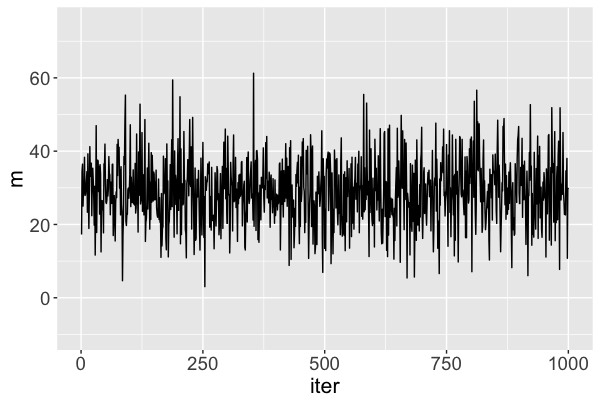
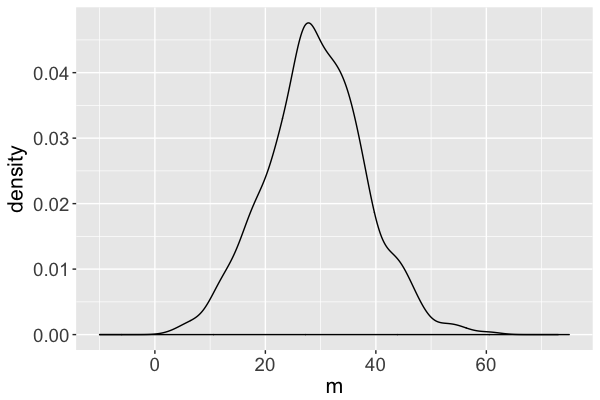
Diagnostica: trace plot
Diagnostica: trace plot
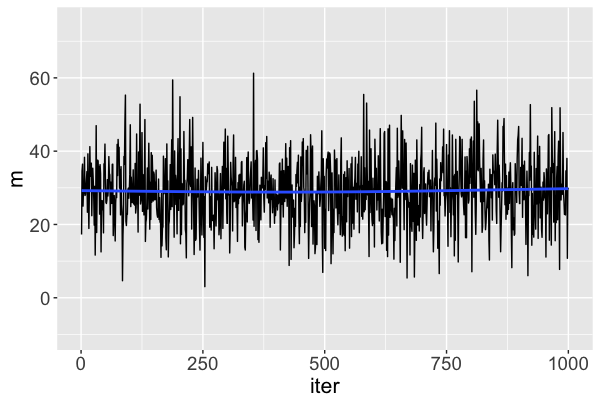
Buono: stabilità!
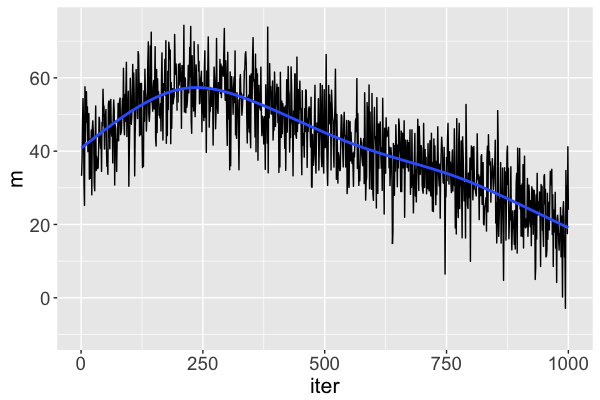
Cattivo: instabilità
Diagnostica: catene multiple
# COMPILE the model
sleep_jags <- jags.model(..., n.chains = 1)
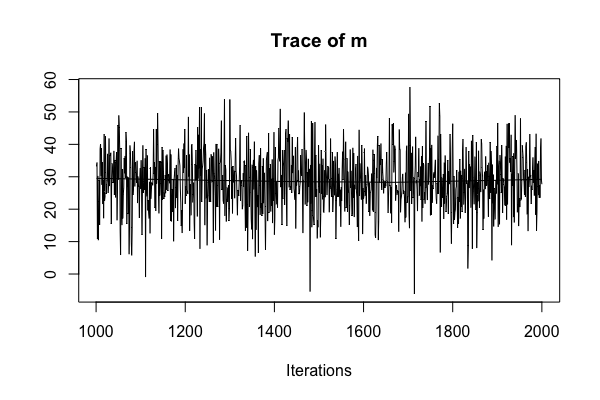
Diagnostica: catene multiple
# COMPILE the model
sleep_jags <- jags.model(..., n.chains = 2)
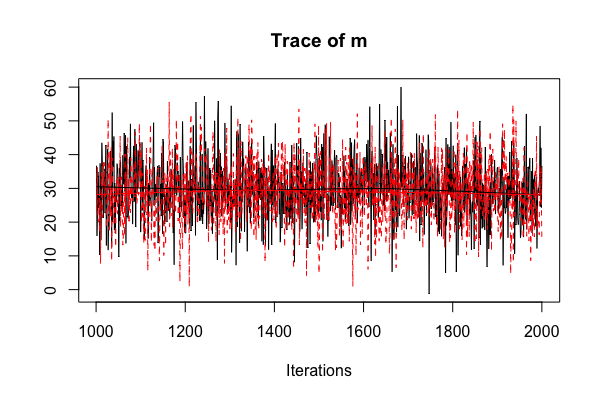
Diagnostica: catene multiple
# COMPILE the model
sleep_jags <- jags.model(..., n.chains = 4)
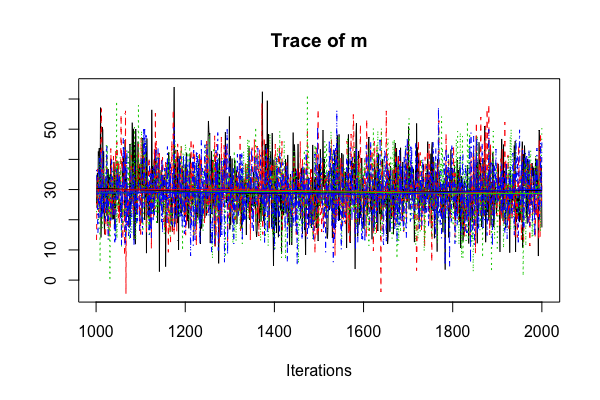
Diagnostica: catene multiple
# COMPILE the model
sleep_jags <- jags.model(..., n.chains = 4)

Diagnostica: errore standard
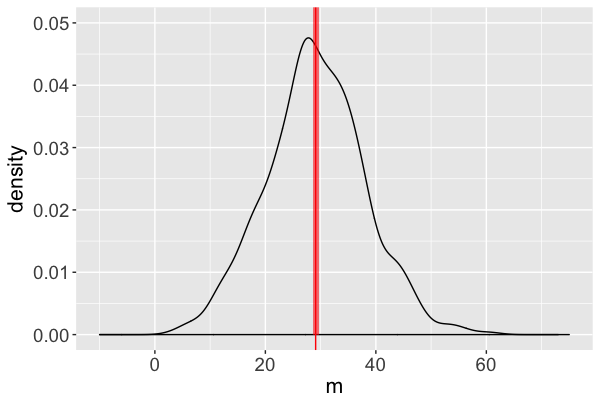
Media stimata = 29.10 ms
Errore standard (naive) = 0.2836 ms
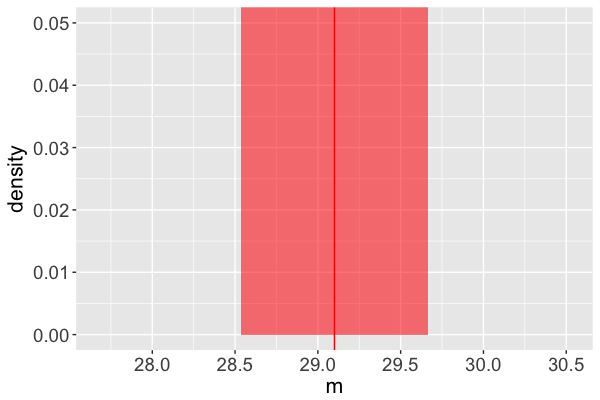
- $29.10 \pm 2*0.2836$

