Vettorizzazione TF-IDF

Natural Language Processing (NLP) in Python

Fouad Trad

Machine Learning Engineer

Da BoW a TF-IDF

  • BoW tratta tutte le parole come uguali
  • TF-IDF risolve così:
    • quante volte una parola appare in un documento
    • quanto è informativa su tutta la collezione

 

Immagine che mostra la rappresentazione BoW di due frasi: 'I love this NLP course' e 'I enjoyed this project.'

Natural Language Processing (NLP) in Python

TF-IDF

Immagine che mostra che TF-IDF è il prodotto di TF e IDF.

Natural Language Processing (NLP) in Python

TF-IDF

Immagine che mostra che TF-IDF è il prodotto di TF e IDF.

  • TF: Term Frequency
    • Quante volte una parola appare in un documento
Natural Language Processing (NLP) in Python

TF-IDF

Immagine che mostra che TF-IDF è il prodotto di TF e IDF.

  • TF: Term Frequency
    • Quante volte una parola appare in un documento
  • IDF: Inverse Document Frequency
    • Quanto è rara quella parola in tutti i documenti


  • Parola presente in un documento, assente negli altri → punteggio alto
  • Parola presente in tutti i documenti → punteggio basso
Natural Language Processing (NLP) in Python

TF-IDF con codice

reviews = [
    "I loved the movie. It was amazing!",
    "The movie was okay.",
    "I hated the movie. It was boring."
]

cleaned_reviews = [preprocess(review) for review in reviews] print(cleaned_reviews)
['i loved the movie it was amazing', 
 'the movie was okay', 
 'i hated the movie it was boring']
Natural Language Processing (NLP) in Python

TF-IDF con codice

from sklearn.feature_extraction.text import TfidfVectorizer

vectorizer = TfidfVectorizer()
tfidf_matrix = vectorizer.fit_transform(cleaned_reviews)
print(tfidf_matrix)
<Compressed Sparse Row sparse matrix of dtype 'float64'
    with 16 stored elements and shape (3, 9)>
Natural Language Processing (NLP) in Python

Output TF-IDF

print(tfidf_matrix.toarray())
[[0.52523431 0.         0.         0.39945423 0.52523431 0.31021184   0.         0.31021184 0.31021184]
 [0.         0.         0.         0.         0.         0.41285857   0.69903033 0.41285857 0.41285857]
 [0.         0.52523431 0.52523431 0.39945423 0.         0.31021184   0.         0.31021184 0.31021184]]
vectorizer.get_feature_names_out()
['amazing' 'boring' 'hated' 'it' 'loved' 'movie' 'okay' 'the' 'was']
Natural Language Processing (NLP) in Python

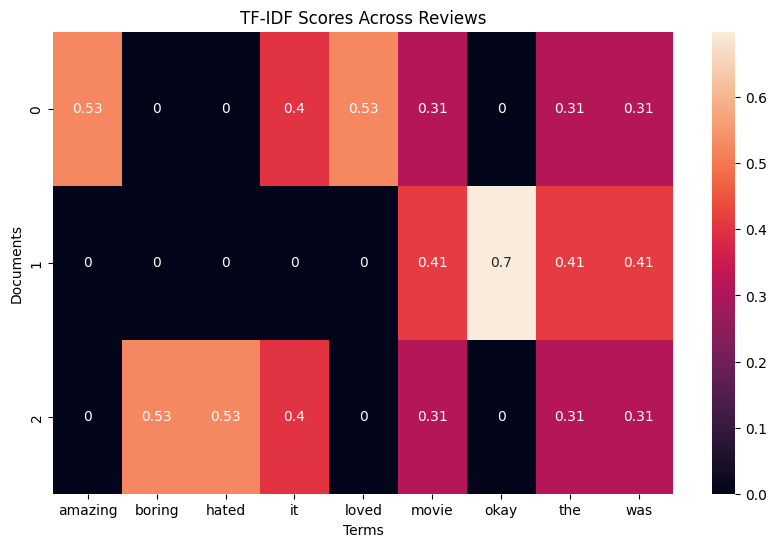
Visualizzare i punteggi come heatmap

import pandas as pd

df_tfidf = pd.DataFrame(

tfidf_matrix.toarray(),
columns=vectorizer.get_feature_names_out() )
import seaborn as sns
import matplotlib.pyplot as plt

sns.heatmap(df_tfidf, annot=True)
plt.title("Punteggi TF-IDF tra le recensioni") plt.xlabel("Termini") plt.ylabel("Documenti") plt.show()


Heatmap della rappresentazione TF-IDF del dataset.

Natural Language Processing (NLP) in Python

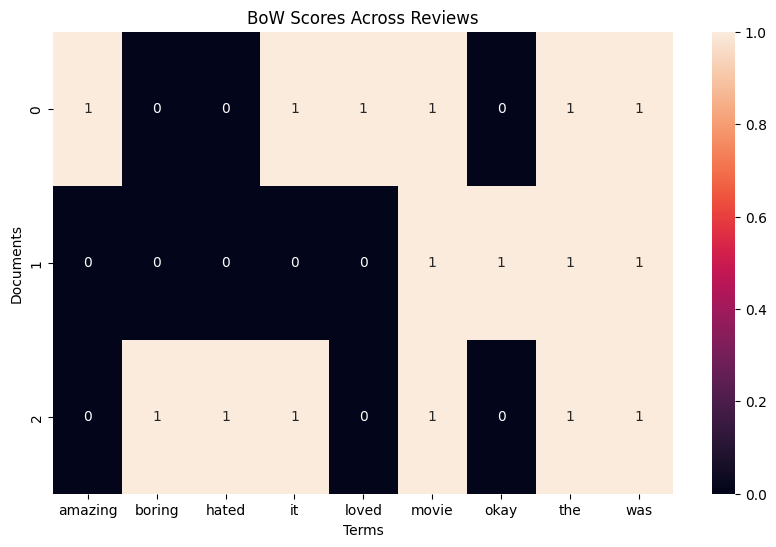
Confronto con BoW


Heatmap della rappresentazione BoW del dataset.


Heatmap della rappresentazione TF-IDF del dataset.

Natural Language Processing (NLP) in Python

Ayo berlatih!

Natural Language Processing (NLP) in Python

Preparing Video For Download...