Kỹ thuật đặc trưng (Feature Engineering) với R
Jorge Zazueta
Research Professor and Head of the Modeling Group at the School of Economics, UASLP
Hiểu biết miền giúp xác định và tạo các đặc trưng phù hợp cho mô hình hay tác vụ.
Kỹ thuật đặc trưng là tạo đặc trưng đầu vào mới từ dữ liệu sẵn có.
Ví dụ về hiểu biết miền:
Ta muốn dự đoán hủy đặt phòng dựa trên vector đặc trưng sau:
features <-
c("IsCanceled", "LeadTime",
"arrival_date",
"StaysInWeekendNights",
"StaysInWeekNights",
"PreviousCancellations",
"PreviousBookingsNotCanceled",
"ReservedRoomType",
"AssignedRoomType","BookingChanges",
"DepositType","CustomerType",
"ADR","TotalOfSpecialRequests")
Đặc trưng từ dữ liệu thô
Ta có thể tạo đặc trưng hữu ích từ arrival_date.

Nhưng làm thủ công sẽ nhanh chóng tẻ nhạt. Cần tự động hóa!
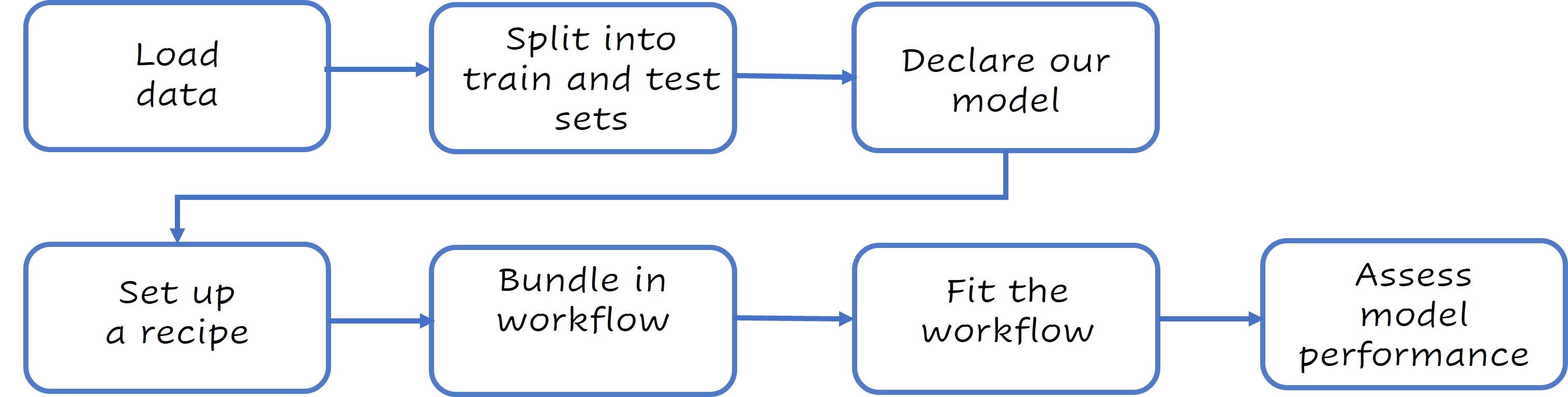
Chúng ta sẽ dùng workflow dựa trên tidymodels, bộ gói cho mô hình và ML theo nguyên tắc tidyverse (1), nhấn mạnh vào kỹ thuật đặc trưng.

Tìm hiểu thêm tại www.tidymodels.org
Hãy bắt đầu chuẩn bị dữ liệu.
cancelations <-
cancelations %>%
mutate(across(where(is_character),as.factor))
set.seed(123)
split <- cancellations %>%
initial_split(
strata = "IsCanceled")
train <- training(split)
test <- testing(split)
Tham số prop dùng để đổi tỷ lệ train/test (mặc định 3/4).
initial_split(data, prop = 3/4, strata = NULL)
Xác minh rằng các tập train và test có tỷ lệ hủy đặt phòng tương tự.
train %>%
select(IsCanceled) %>% table() %>%
prop.table()
IsCanceled
0 1
0.5826946 0.4173054
test %>%
select(IsCanceled) %>% table() %>%
prop.table()
IsCanceled
0 1
0.5827788 0.4172212
Khai báo mô hình
lr_model <- logistic_reg()
Xây dựng recipe
lr_recipe <-
recipe(IsCanceled ~., data = train) %>%
update_role(Agent, new_role = "ID" ) %>%
step_date(arrival_date,
features = c("dow", "week", "month")) %>%
step_holiday(arrival_date,
holidays = timeDate::listHolidays("US")) %>%
step_rm(arrival_date) %>%
step_dummy(all_nominal_predictors())
In lr_recipe
Recipe
Inputs:
role #variables
ID 1
outcome 1
predictor 13
Operations:
Date features from arrival_date
Holiday features from arrival_date
Variables removed arrival_date
Dummy variables from all_nominal_predictors()
Gộp mô hình và recipe vào đối tượng workflow.
lr_workflow <-
workflow()%>%
add_model(lr_model)%>%
add_recipe(lr_recipe)
Fit workflow
lr_fit <-
lr_workflow %>%
fit(data = train)
Dùng tidy(lr_fit) để tóm tắt mô hình.
# A tibble: 65 × 5
term estimate std.error statistic p.value
<chr> <dbl> <dbl> <dbl> <dbl>
1 (Intercept) -1.92 0.228 -8.43 3.57e- 17
2 LeadTime 0.00414 0.000268 15.4 1.16e- 53
3 StaysInWeekendNights 0.0860 0.0382 2.25 2.45e- 2
4 StaysInWeekNights 0.0804 0.0185 4.34 1.40e- 5
5 PreviousCancellations 2.39 0.147 16.2 2.45e- 59
6 PreviousBookingsNotCanceled -0.440 0.0450 -9.77 1.45e- 22
7 BookingChanges -0.449 0.0463 -9.69 3.18e- 22
8 ADR 0.0104 0.000782 13.2 4.85e- 40
9 TotalOfSpecialRequests -0.727 0.0316 -23.0 5.29e-117
10 arrival_date_week 0.0245 0.0171 1.43 1.53e- 1
# … with 55 more rows
# ℹ Use `print(n = ...)` to see more rows
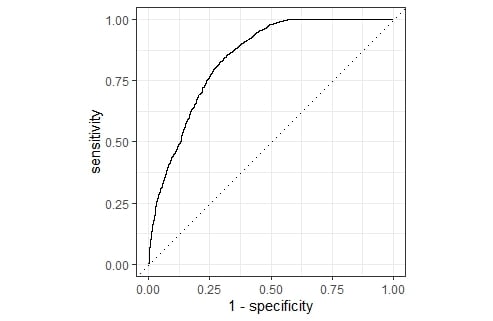
Giờ hãy đánh giá hiệu năng mô hình.
lr_aug <- lr_fit %>% augment(test)
bind_rows(
lr_aug %>%
roc_auc(truth = IsCanceled,.pred_0),
lr_aug %>%
accuracy(truth = IsCanceled,.pred_class))
# A tibble: 2 × 3
.metric .estimator .estimate
<chr> <chr> <dbl>
1 roc_auc binary 0.842
2 accuracy binary 0.782
lr_aug %>%
roc_curve(truth = IsCanceled, .pred_0) %>%
autoplot()
Kỹ thuật đặc trưng (Feature Engineering) với R