Adding aggregated variables
Phân tích dự đoán nâng cao với Python

Nele Verbiest
Senior Data Scientist @PythonPredictions
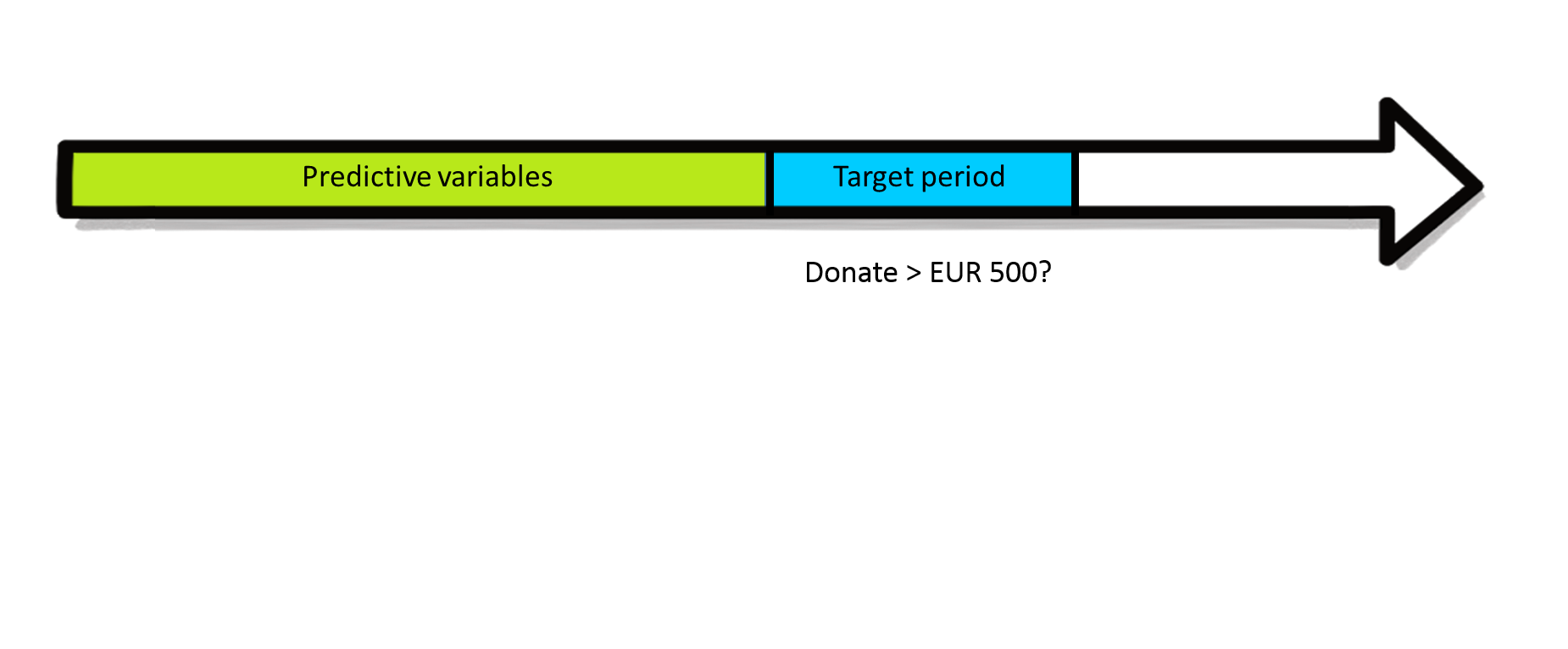
Motivation for aggregated variables (1)
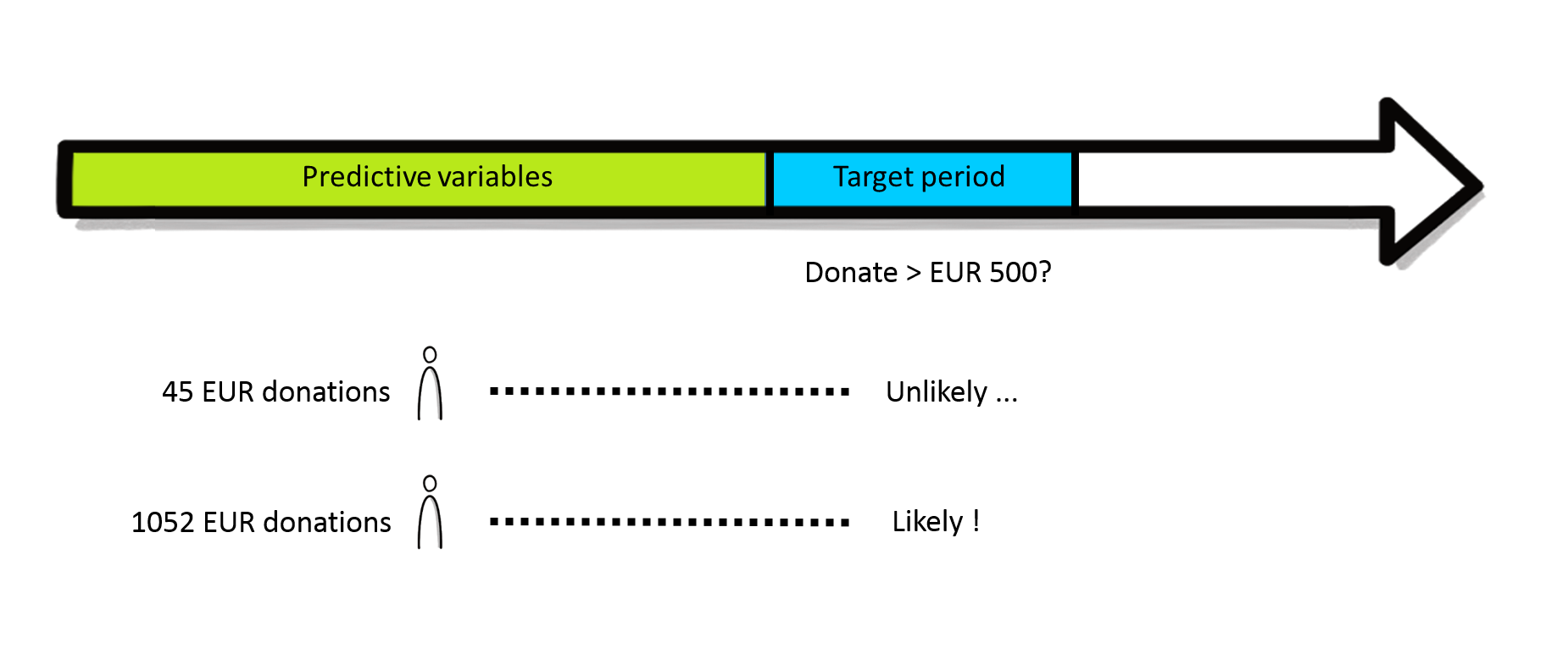
Motivation for aggregated variables (2)
Adding total value last year (1)

id    date        amount
1    2015-10-16    75
1    2014-02-11    111
2    2012-03-28    93
# Start and end date of the aggregation period start_date = datetime.date(2016,1,1) end_date = datetime.date(2017,1,1)# Select gifts made in 2016 gifts_2016 = gifts[(gifts["date"] >= start_date) & (gifts["date"] <= end_date)]
Adding total value last year (2)
# Sum of gifts per donor in 2016 gifts_2016_bydonor = gifts_2016.groupby(["id"])["amount"].sum().reset_index() gifts_2016_bydonor.columns = ["donor_ID","sum_2016"]# Add sum of gifts to the basetable basetable = pd.merge(basetable, gifts_2016_bydonor, how = "left", on = "donor_ID") print(basetable.head())
donor_id sum_2016
1        837
2        29
3        682

