Kiểu dữ liệu và Exceptions trong Java
Jim White
Java Developer
Exception và viết mã khắc phụcthrows trên bất kỳ phương thức nào để trả ngoại lệ về cho phương thức gọithrowspublic static void someMethod() throws IndexOutOfBoundsException,
NegativeArraySizeException, NullPointerException {
// method code
}
Try-catch thông thường để xử lý Exception
public static void main(String[] args) {
someMethod();
}
public static void someMethod(){
try {
ArrayList<String> games
= new ArrayList<String>();
games.add("Monopoly");
games.add("Chess");
games.get(3);
} catch (IndexOutOfBoundsException e) {
System.out.println(
"Oops - trying to get non-existent item");
}
}
Dùng throws để xử lý Exception
public static void main(String[] args) {
try {
someMethod();
} catch (IndexOutOfBoundsException e) {
System.out.println(
"someMethod tried to get non-existent item");
}
}
public static void someMethod()
throws IndexOutOfBoundsException {
ArrayList<String> games
= new ArrayList<String>();
games.add("Monopoly");
games.add("Chess");
games.get(3);
}

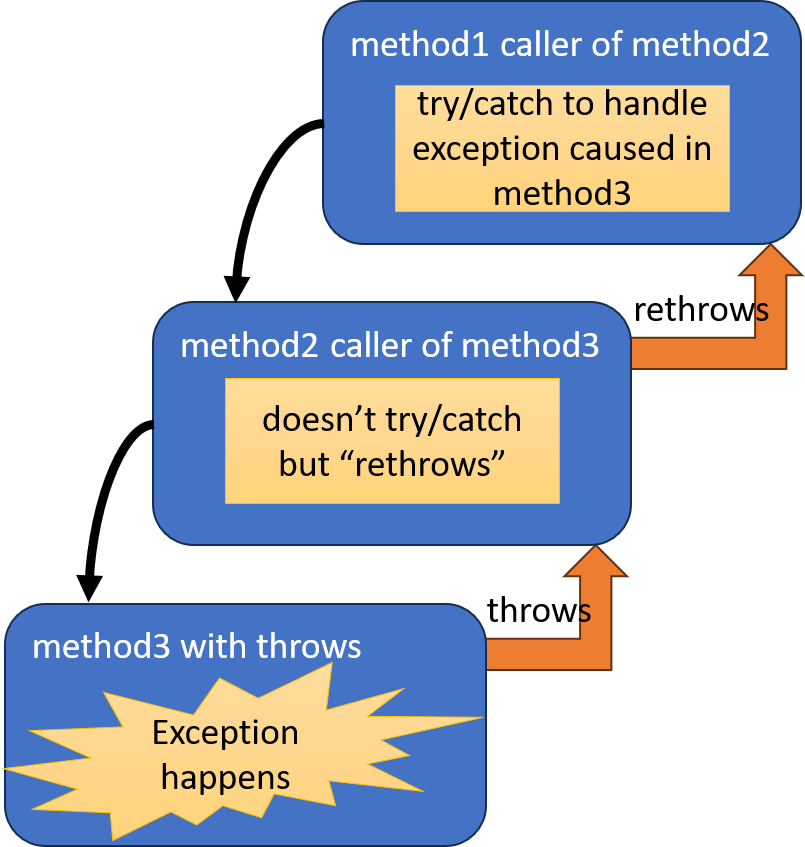
Exceptionmain sẽ làm ứng dụng dừng
public class RethrowExample {
public static void main(String[] args) {
try {
method1(0);
} catch (ArithmeticException e) {
System.out.println("Oops - tried a bad quotient");
}
}
public static void method1(int divisor) throws ArithmeticException {
method2(divisor);
}
public static void method2 (int divisor) throws ArithmeticException {
int z = 5/divisor;
System.out.println(z);
}
}
Kiểu dữ liệu và Exceptions trong Java