Đóng gói mô hình ML

Phát triển mô hình Machine Learning cho môi trường sản xuất

Sinan Ozdemir

Data Scientist, Entrepreneur, and Author

Vì sao đóng gói quan trọng

  • Tối ưu hiệu năng
  • Đảm bảo tương thích
  • Dễ triển khai mô hình hơn

Phương pháp đóng gói

  • Tuần tự hóa: đơn giản, nhẹ, độc lập ngôn ngữ
  • Đóng gói môi trường: lưu toàn bộ môi trường phần mềm
  • Container hóa: môi trường di động, tái lập, cách ly
Phát triển mô hình Machine Learning cho môi trường sản xuất

Cách đóng gói mô hình ML

  • Tuần tự hóa - lưu và tải mô hình ML

  • Đóng gói môi trường - môi trường nhất quán, tái lập cho mô hình ML

  • Container hóa - đóng gói mô hình, phụ thuộc và môi trường trong một “container”

Phát triển mô hình Machine Learning cho môi trường sản xuất

Tuần tự hóa mô hình scikit-learn

Tuần tự hóa mô hình sklearn bằng pickle:

import pickle

model = ...  # Train the scikit-learn model

# Serialize the model to a file
with open('model.pkl', 'wb') as f:
    pickle.dump(model, f)

# Load the serialized model from the file
with open('model.pkl', 'rb') as f:
    model = pickle.load(f)

Tuần tự hóa mô hình sklearn ở định dạng HDF5:

import h5py
import numpy as np
from sklearn.externals import joblib

model = ...  # Train the scikit-learn model

# Serialize the model to an HDF5 file
with h5py.File('model.h5', 'w') as f:
    f.create_dataset('model_weights',
    data=joblib.dump(model))

# Load the serialized model from the HDF5 file
with h5py.File('model.h5', 'r') as f:
    model = joblib.load(f['model_weights'][:])
Phát triển mô hình Machine Learning cho môi trường sản xuất

Tuần tự hóa mô hình PyTorch và Tensorflow

Tuần tự hóa mô hình PyTorch:

import torch

# Train a PyTorch model and store it in a variable
trained_model = ...

# Serialize the trained model to a file
serialized_model_path = 'model.pt'
torch.save(trained_model.state_dict(), serialized_model_path)

# Load the serialized model from a file
loaded_model = ... # Initialize the model
loaded_model.load_state_dict(
    torch.load(serialized_model_path))

Tuần tự hóa mô hình Tensorflow:

import tensorflow as tf

# Train a Tensorflow model
trained_model = ...

# Save the trained model to a directory 
saved_model_directory = 'model/'
tf.saved_model.save
    (trained_model, saved_model_directory)

# Load the saved model from the directory 
loaded_model = tf.saved_model.load(
    saved_model_directory)
Phát triển mô hình Machine Learning cho môi trường sản xuất

Đóng gói môi trường ML với Docker

  • Bảo đảm môi trường cho phép mô hình chạy
  • virtualenv… tạo môi trường nhất quán, có thể tái lập
  • Docker là đơn vị tự chứa, dễ triển khai

docker

Phát triển mô hình Machine Learning cho môi trường sản xuất

Ví dụ Dockerfile

# Use an existing image as the base image
FROM python:3.8-slim

# Set the working directory
WORKDIR /app

# Copy the requirements file to the image
COPY requirements.txt .

# Install the required dependencies
RUN pip install -r requirements.txt

# Copy the ML model and its dependencies to the image
COPY model/ .

# Set the entrypoint to run the model
ENTRYPOINT ["python", "run_model.py"]

<---- Dùng image Python 3.8 làm base


<---- Đặt thư mục làm việc


<---- Sao chép tệp requirements.txt


<---- Cài các gói phụ thuộc của mô hình


<---- Sao chép mô hình vào container


<---- Chỉ định cách khởi động container
Phát triển mô hình Machine Learning cho môi trường sản xuất

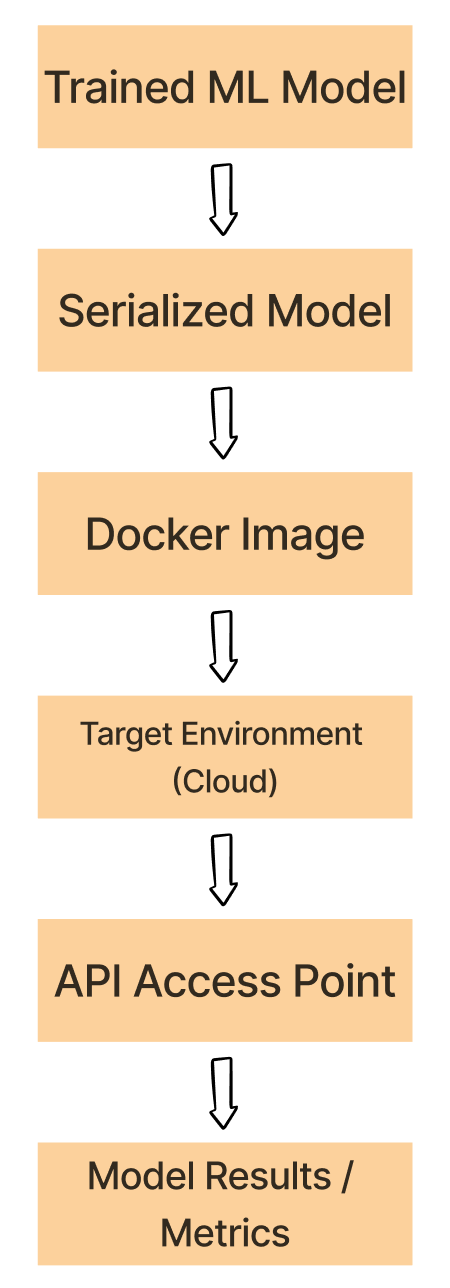
Thử nghiệm -> quy trình Docker

  1. Tuần tự hóa mô hình đã huấn luyện bằng pickle, HDF5, hoặc PyTorch.

  2. Đóng gói trong container mô hình đã tuần tự hóa, phụ thuộc và môi trường

  3. Triển khai image Docker lên môi trường đích như đám mây

  4. Chạy container từ image đã triển khai và chạy mô hình ML.

  5. Sử dụng mô hình trong container qua API hoặc điểm truy cập khác.

Quy trình Docker

Phát triển mô hình Machine Learning cho môi trường sản xuất

Hãy thực hành!

Phát triển mô hình Machine Learning cho môi trường sản xuất

Preparing Video For Download...