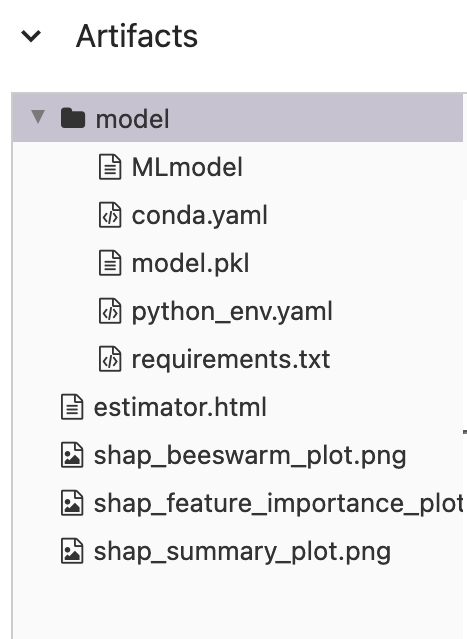
load_context() - mlflow.pyfunc.load_model() 호출 시 아티팩트 로드
predict() - 모델 입력을 받아 사용자 정의 평가 수행
Python 클래스
# Class
class MyPythonClass:

    # Function that prints Hello!
    def my_func():
        print("Hello!")
# Create a new Object
x = MyPythonClass()

# Excute my_func function
x.my_func()
"Hello!"
커스텀 클래스 예시
import mlflow.pyfunc

# Define the model class
class CustomPredict(mlflow.pyfunc.PythonModel):

    # Load artifacts
    def load_context(self, context):
        self.model = mlflow.sklearn.load_model(context.artifacts["custom_model"])

    # Evaluate input using custom_function()
    def predict(self, context, model_input):
        prediction = self.model.predict(model_input)
        return custom_function(prediction)
커스텀 모델 저장 및 로깅
# Save model to local filesystem
mlflow.pyfunc.save_model(path="custom_model", python_model=CustomPredict())
# Log model to MLflow Tracking
mlflow.pyfunc.log_model(artifact_path="custom_model", python_model=CustomPredict())
커스텀 모델 로드
# Load model from local filesystem
mlflow.pyfunc.load_model("local")
# Load model from MLflow Tracking
mlflow.pyfunc.load_model("runs:/run_id/tracking_path")
모델 평가
mlflow.evaluate() - 데이터셋 기반 성능 평가
회귀 및 분류 모델
평가 예시
# Training Data
X_train, X_test, y_train, y_test = \
    train_test_split(X, y,
    train_size=0.7,random_state=0)


# Linear Regression model
lr = LinearRegression()
lr.fit(X_train, y_train)
# Dataset
eval_data = X_test
eval_data["test_label"] = y_test


# Evaluate model with Dataset
mlflow.evaluate(
    "runs:/run_id/model",
    eval_data,
    targets="test_label",
    model_type="regressor"
)