신용 위험을 위한 열 선택
Python을 활용한 신용 위험 모델링

Michael Crabtree
Data Scientist, Ford Motor Company
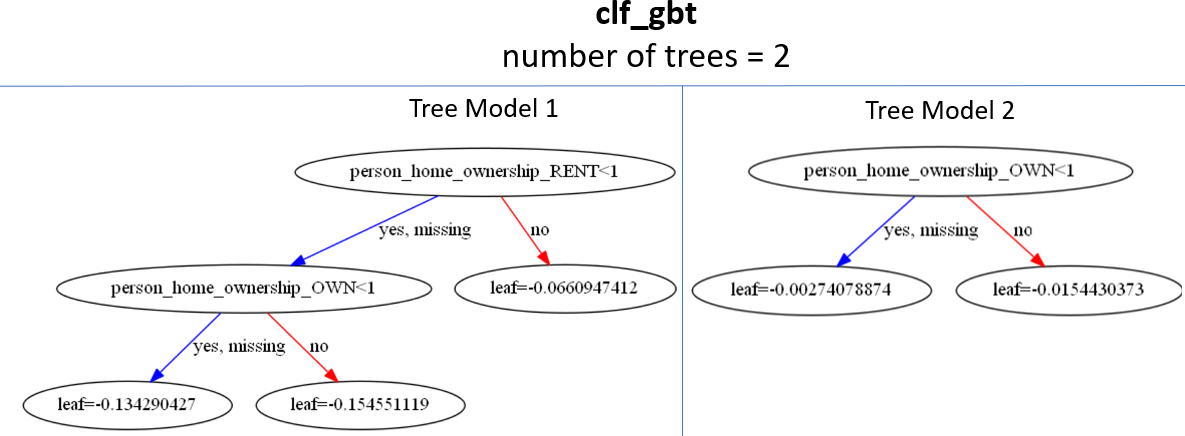
열 중요도 해석
# Column importances from importance_type = 'weight'
{'person_home_ownership_RENT': 1, 'person_home_ownership_OWN': 2}
열 중요도 시각화
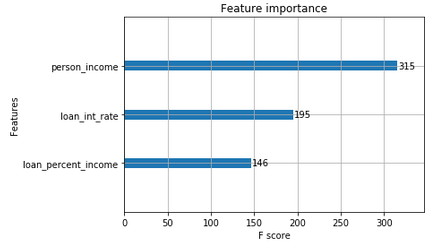
plot_importance()함수를 사용합니다
xgb.plot_importance(clf_gbt, importance_type = 'weight')
{'person_income': 315, 'loan_int_rate': 195, 'loan_percent_income': 146}
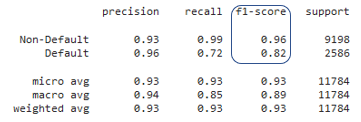
모델의 F1 점수
- 다양한 열 조합에 대해 정확도와 재현율을 각각 고려하는 것은 시간이 많이 걸립니다
- F1 점수는 정확도와 재현율을 동시에 확인할 수 있는 단일 지표입니다

classification_report()의 일부로 표시됩니다