Python으로 배우는 Sentiment Analysis
Violeta Misheva
Data Scientist
문서 또는 문서 집합(코퍼스)에서 단어 출현을 기술합니다
단어 사전과 존재 여부 측정값을 만듭니다
This is the best book ever. I loved the book and highly recommend it!!!
{'This': 1, 'is': 1, 'the': 2 , 'best': 1 , 'book': 2,
'ever': 1, 'I':1 , 'loved':1 , 'and': 1  , 'highly': 1,
'recommend': 1 , 'it': 1 }
import pandas as pd
from sklearn.feature_extraction.text import CountVectorizer
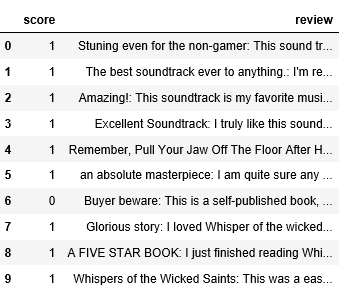
vect = CountVectorizer(max_features=1000)
vect.fit(data.review)
X = vect.transform(data.review)
X
<10000x1000 sparse matrix of type '<class 'numpy.int64'>'
  with 406668 stored elements in Compressed Sparse Row format>
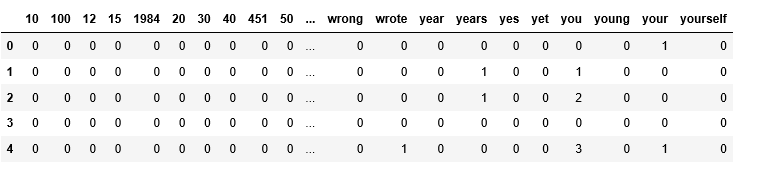
# 배열로 변환
my_array = X.toarray()
# DataFrame으로 되돌리고, 열 이름 지정
X_df = pd.DataFrame(my_array, columns=vect.get_feature_names())