pandas로 재무 비율 계산하기
Python으로 재무제표 분석하기

Rohan Chatterjee
Risk Modeler
대차대조표 데이터 구조
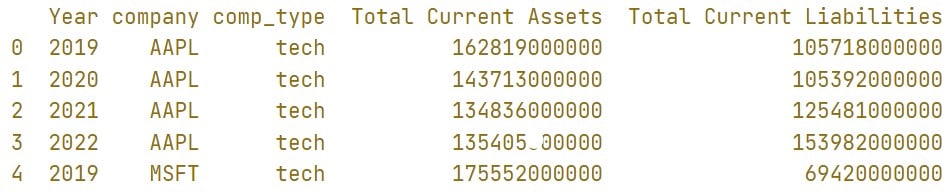
- 대차대조표 데이터는
pandasDataFramebalance_sheet에 로드되었습니다.
print(balance_sheet.head())
유동비율 계산하기
balance_sheet["current_ratio"] = balance_sheet["Total Current Assets"] /
                                 balance_sheet["Total Current Liabilities"]
print(balance_sheet.head())

.groupby()로 그룹별 결과 구하기
- 업계별 평균 유동비율 구하기:
balance_sheet.groupby("comp_type")["current_ratio"].mean()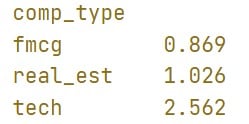
.groupby()로 그룹별 결과 구하기
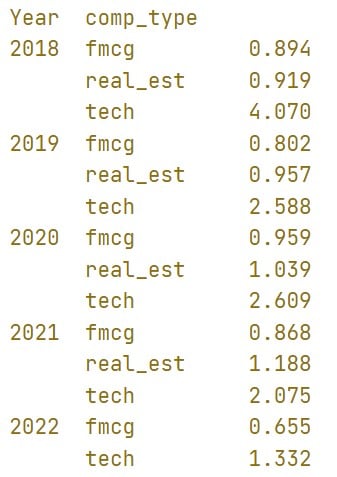
balance_sheet.groupby(["Year","comp_type"])["current_ratio"].mean()
groupby().transform() 사용하기
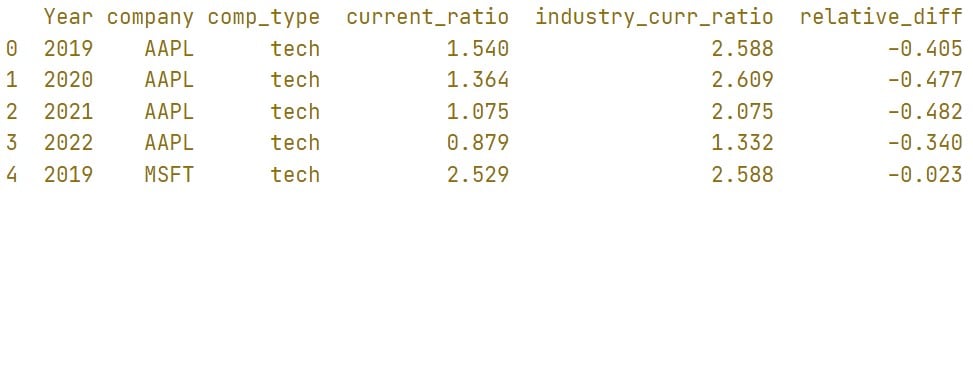
.groupby()후.transform()을 사용하면 각 행이 속한 그룹의 결과를 행에 추가할 수 있습니다.balance_sheet["industry_curr_ratio"] = balance_sheet.groupby([ "Year","comp_type"])["current_ratio"].transform("mean") print(balance_sheet.head())

.groupby().transform() 사용하기
balance_sheet["relative_diff"] =
                            (balance_sheet["current_ratio"] /
                             balance_sheet["industry_curr_ratio"]) - 1