농축도 평가

R에서 Bioconductor로 배우는 ChIP-seq

Peter Humburg

Statistician, Macquarie University

R에서 Bioconductor로 배우는 ChIP-seq

R에서 Bioconductor로 배우는 ChIP-seq

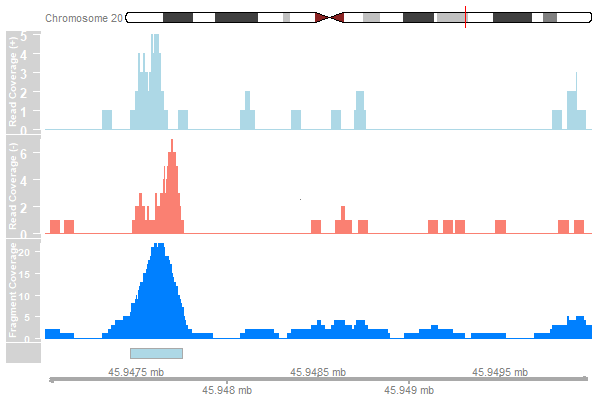
리드 확장

데이터 불러오기:

reads <- readGAlignments(bam)
reads_gr <- granges(reads[[1]])

평균 단편 길이 계산:

frag_length <- fragmentlength(qc_report)["GSM1598218"]

리드 확장 및 커버리지 계산:

reads_ext <- resize(reads_gr, width=frag_length)
cover_ext <- coverage(reads_ext)
R에서 Bioconductor로 배우는 ChIP-seq

R에서 Bioconductor로 배우는 ChIP-seq

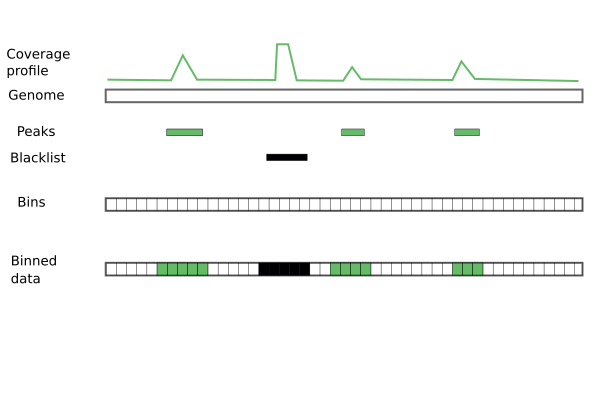
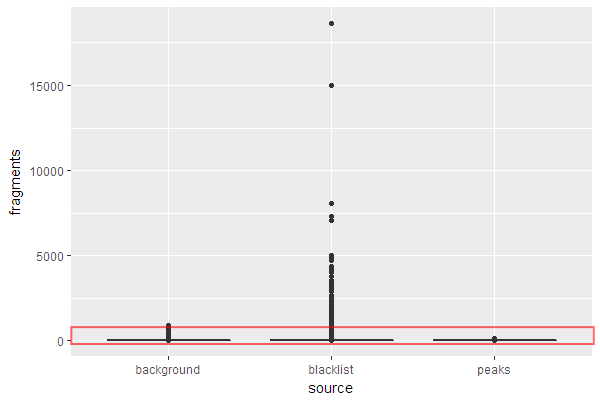
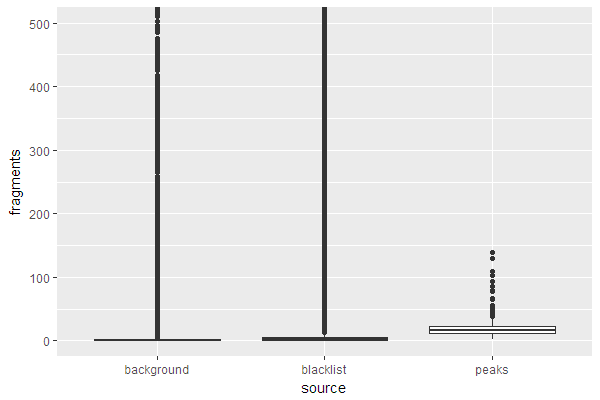
피크 커버리지

게놈을 따라 200 bp 빈을 생성합니다.

bins <- tileGenome(seqinfo(reads), tilewidth=200, 
                   cut.last.tile.in.chrom=TRUE)

피크와 겹치는 모든 빈을 찾습니다.

peak_bins_overlap <- findOverlaps(bins, peaks)
peak_bins <- bins[from(peak_bins_overlap), ]

각 피크 빈과 겹치는 리드 수를 계산합니다.

peak_bins$score <- countOverlaps(peak_bins, reads)
R에서 Bioconductor로 배우는 ChIP-seq

빈 커버리지 함수

count_bins <- function(reads, target, bins){
  # Find all bins overlapping peaks
  overlap <- from(findOverlaps(bins, target))
  target_bins <- bins[overlap, ]

  # Count the number of reads overlapping each peak bin
  target_bins$score <- countOverlaps(target_bins, reads)
  target_bins
}
R에서 Bioconductor로 배우는 ChIP-seq

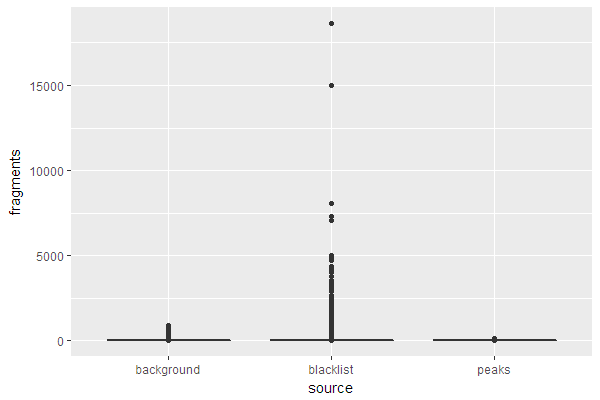
블랙리스트 영역 커버리지

peak_bins <- count_bins(reads_ext, peaks, bins)
bl_bins <- count_bins(reads_ext, blacklist.hg19, bins)
R에서 Bioconductor로 배우는 ChIP-seq

배경 커버리지

이미 처리된 빈을 모두 제거합니다.

bkg_bins <- subset(bins, !bins %in% peak_bins & !bins %in% bl_bins)

나머지 각 빈과 겹치는 리드 수를 계산합니다.

bkg_bins$score <- countOverlaps(bkg_bins, reads_ext)
R에서 Bioconductor로 배우는 ChIP-seq

R에서 Bioconductor로 배우는 ChIP-seq

R에서 Bioconductor로 배우는 ChIP-seq

R에서 Bioconductor로 배우는 ChIP-seq

연습해 봅시다!

R에서 Bioconductor로 배우는 ChIP-seq

Preparing Video For Download...