時系列のインデックス化とリサンプリング
Pythonでの時系列データ操作

Stefan Jansen
Founder & Lead Data Scientist at Applied Artificial Intelligence
時系列の変換
基本的な時系列変換:
文字列日付を解析し
datetime64に変換特定期間の選択・スライス
DateTimeIndexの頻度設定・変更- アップサンプリングとダウンサンプリング
GOOG株価の取得
google = pd.read_csv('google.csv') # import pandas as pdgoogle.info()
<class 'pandas.core.frame.DataFrame'>
RangeIndex: 504 entries, 0 to 503
Data columns (total 2 columns):
date     504 non-null object
price    504 non-null float64
dtypes: float64(1), object(1)
google.head()
         date   price
0  2015-01-02  524.81
1  2015-01-05  513.87
2  2015-01-06  501.96
3  2015-01-07  501.10
4  2015-01-08  502.68
文字列日付をdatetime64へ変換
pd.to_datetime():- 日付文字列を解析
datetime64に変換
google.date = pd.to_datetime(google.date)google.info()
<class 'pandas.core.frame.DataFrame'>
RangeIndex: 504 entries, 0 to 503
Data columns (total 2 columns):
date     504 non-null datetime64[ns]
price    504 non-null float64
dtypes: datetime64[ns](1), float64(1)
文字列日付をdatetime64へ変換
.set_index():- 日付をインデックスへ
inplace:- コピーを作らない
google.set_index('date', inplace=True)google.info()
<class 'pandas.core.frame.DataFrame'>
DatetimeIndex: 504 entries, 2015-01-02 to 2016-12-30
Data columns (total 1 columns):
price    504 non-null float64
dtypes: float64(1)
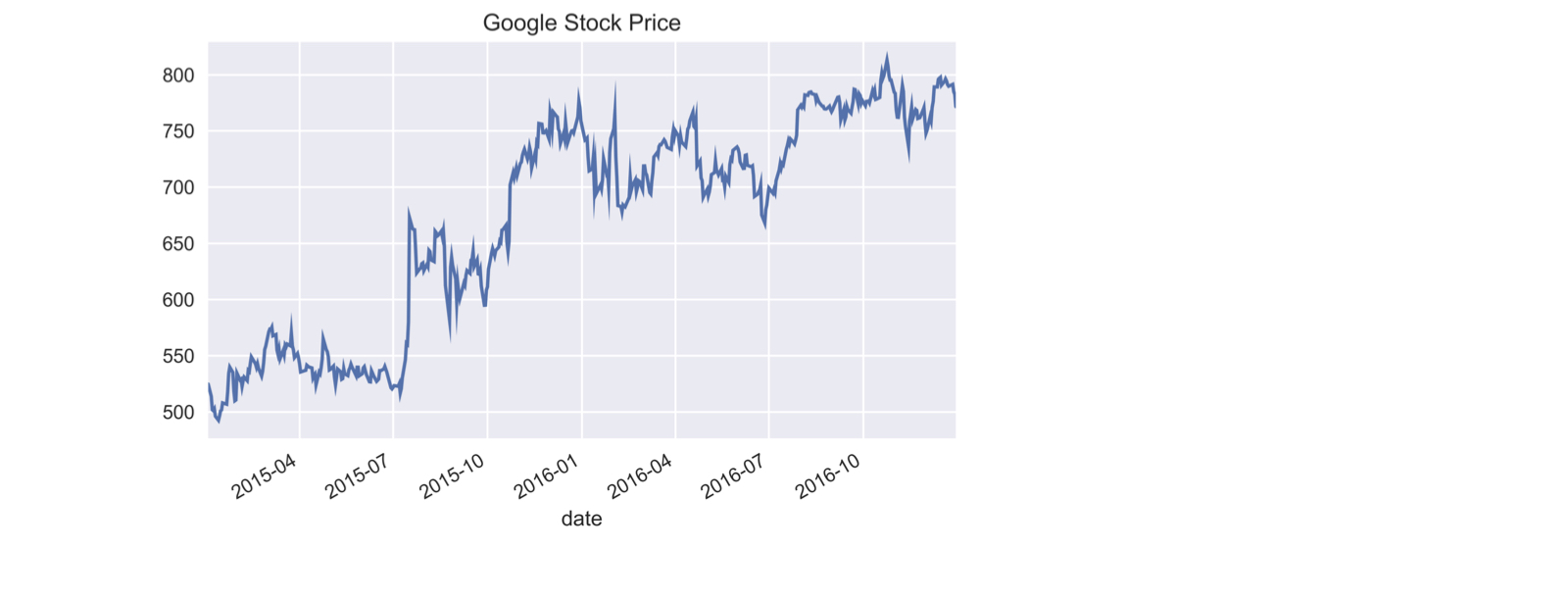
Google株の時系列をプロット
google.price.plot(title='Google Stock Price')plt.tight_layout(); plt.show()
部分文字列インデックス
- 文字列から日付に解釈して選択/インデックス化
google['2015'].info() # 年などの部分文字列を渡す
DatetimeIndex: 252 entries, 2015-01-02 to 2015-12-31
Data columns (total 1 columns):
price    252 non-null float64
dtypes: float64(1)
google['2015-3': '2016-2'].info() # スライスは末月を含む
DatetimeIndex: 252 entries, 2015-03-02 to 2016-02-29
Data columns (total 1 columns):
price    252 non-null float64
dtypes: float64(1)
memory usage: 3.9 KB
部分文字列インデックス
google.loc('2016-6-1', 'price') # .loc[] で完全な日付を指定
734.15
.asfreq(): 頻度を設定
.asfreq('D'):DateTimeIndexを暦日頻度に変換
google.asfreq('D').info() # 暦日頻度に設定
DatetimeIndex: 729 entries, 2015-01-02 to 2016-12-30
Freq: D
Data columns (total 1 columns):
price    504 non-null float64
dtypes: float64(1)
.asfreq(): 頻度を設定
- アップサンプリング:
- 高頻度は新しい日付を生み、欠損が発生
google.asfreq('D').head()
             price
date
2015-01-02  524.81
2015-01-03     NaN
2015-01-04     NaN
2015-01-05  513.87
2015-01-06  501.96
.asfreq(): 頻度をリセット
.asfreq('B'):DateTimeIndexを営業日頻度に変換
google = google.asfreq('B') # 暦日頻度に変更google.info()
DatetimeIndex: 521 entries, 2015-01-02 to 2016-12-30
Freq: B
Data columns (total 1 columns):
price    504 non-null float64
dtypes: float64(1)
.asfreq(): 頻度をリセット
google[google.price.isnull()] # 欠損の 'price' を抽出
            price
date
2015-01-19    NaN
2015-02-16    NaN
...
2016-11-24    NaN
2016-12-26    NaN
- 取引がなかった営業日
Passons à la pratique !
Pythonでの時系列データ操作

