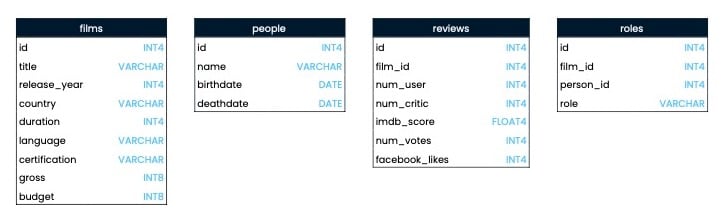
중급 SQL
Jasmin Ludolf
Data Science Content Developer, DataCamp
COUNT()
SELECT COUNT(birthdate) AS count_birthdates
FROM people;
|count_birthdates|
|----------------|
|6152            |
SELECT COUNT(name) AS count_names, COUNT(birthdate) AS count_birthdates
FROM people;
|count_names|count_birthdates|
|-----------|----------------|
|6397       |6152            |
COUNT(field_name)
COUNT(*)
*
SELECT COUNT(*) AS total_records
FROM people;
|total_records|
|-------------|
|8397         |
DISTINCT
SELECT language
FROM films;
|language |
|---------|
|Danish   |
|Danish   |
|Greek    |
|Greek    |
|Greek    |
films
SELECT DISTINCT language
FROM films;
|language |
|---------|
|Danish   |
|Greek    |
SELECT COUNT(DISTINCT birthdate) AS count_distinct_birthdates
FROM people;
|count_distinct_birthdates|
|-------------------------|
|5398                     |