상속 비교와 문자열 표현
Python 객체 지향 프로그래밍 입문

George Boorman
Curriculum Manager, DataCamp
서로 다른 클래스 객체 비교
class Customer:
    def __init__(self, acc_id, name):
        self.acc_id, self.name = acc_id, name

    def __eq__(self, other):
        # 동일 타입이고 속성이 같으면 True 반환
        # and are of the same type
        return (self.acc_id == other.acc_id) and (self.name == other.name)\
            and (type(self) == type(other))
상속이 있는 객체 비교
한 객체가 다른 객체의 클래스를 상속하면 어떻게 될까요?
은행 계좌와 예금 계좌
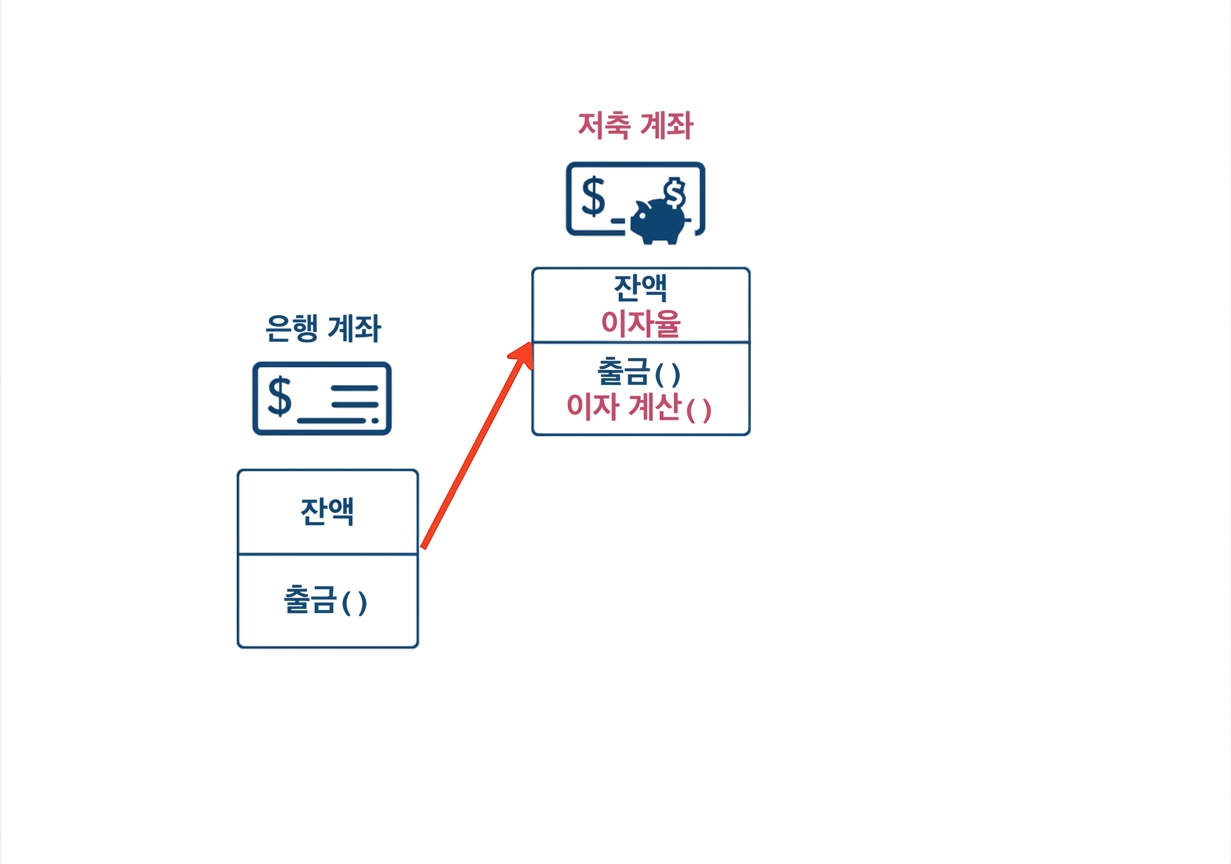
부모/자식 클래스의 __eq__
class BankAccount:
    def __init__(self, number, balance=0):
        self.balance = balance
        self.number = number

    def withdraw(self, amount):
        self.balance -= amount

    # number 속성이 같으면 True 반환
    def __eq__(self, other):
        print("BankAccount __eq__() called")
        return self.number == other.number
class SavingsAccount(BankAccount):
    def __init__(self, number, balance, interest_rate):
        BankAccount.__init__(self, number,
                             balance)
          self.interest_rate = interest_rate

    # number 속성이 같으면 True 반환
    def __eq__(self, other):
        print("SavingsAccount __eq__() called")
        return self.number == other.number
부모/자식 객체 비교
ba = BankAccount(123, 10000)
sa = SavingsAccount(456, 2000, 0.05)
# 두 객체를 비교
ba == sa
SavingsAccount __eq__() called
False
sa == ba
SavingsAccount __eq__() called
False
객체 출력하기
class Customer:
    def __init__(self, name, balance):
        self.name, self.balance = name, balance

cust = Customer("Maryam Azar", 3000)
print(cust)
<__main__.Customer at 0x1f8598e2240>
a_list = [1,2,3]
print(a_list)
[1, 2, 3]
__str__()
print(obj),str(obj)
print(np.array([1,2,3]))
[1 2 3]
str(np.array([1,2,3]))
'[1 2 3]'
- 사용자용, 비공식적
- 문자열 표현
__repr__()
repr(obj), 콘솔 출력
repr(np.array([1,2,3]))
'array([1,2,3])'
np.array([1,2,3])
array([1, 2, 3])
- 개발자용, 공식적
- 재현 가능한 표현
print()의 대체
구현: repr
class Customer: def __init__(self, name, balance): self.name = name self.balance = balance def __repr__(self):# name 주위의 '...'에 주의 return f"Customer('{self.name}', {self.balance})"cust = Customer("Maryam Azar", 3000) # 암묵적으로 __repr__() 호출 cust
Customer('Maryam Azar', 3000)
구현: str
class Customer:
    def __init__(self, name, balance):
        self.name = name
        self.balance = balance
    def __str__(self):
        cust_str = f"""
        Customer:
            name: {self.name}
            balance: {self.balance}
            """
        return cust_str
cust = Customer("Maryam Azar", 3000)

# 암묵적으로 __str__() 호출
print(cust)
Customer:
  name: Maryam Azar
  balance: 3000
Ayo berlatih!
Python 객체 지향 프로그래밍 입문

