Streaming data

Developing applications on AWS

Ricardo Sueiras

Principal Technologist

Streaming data fundamentals
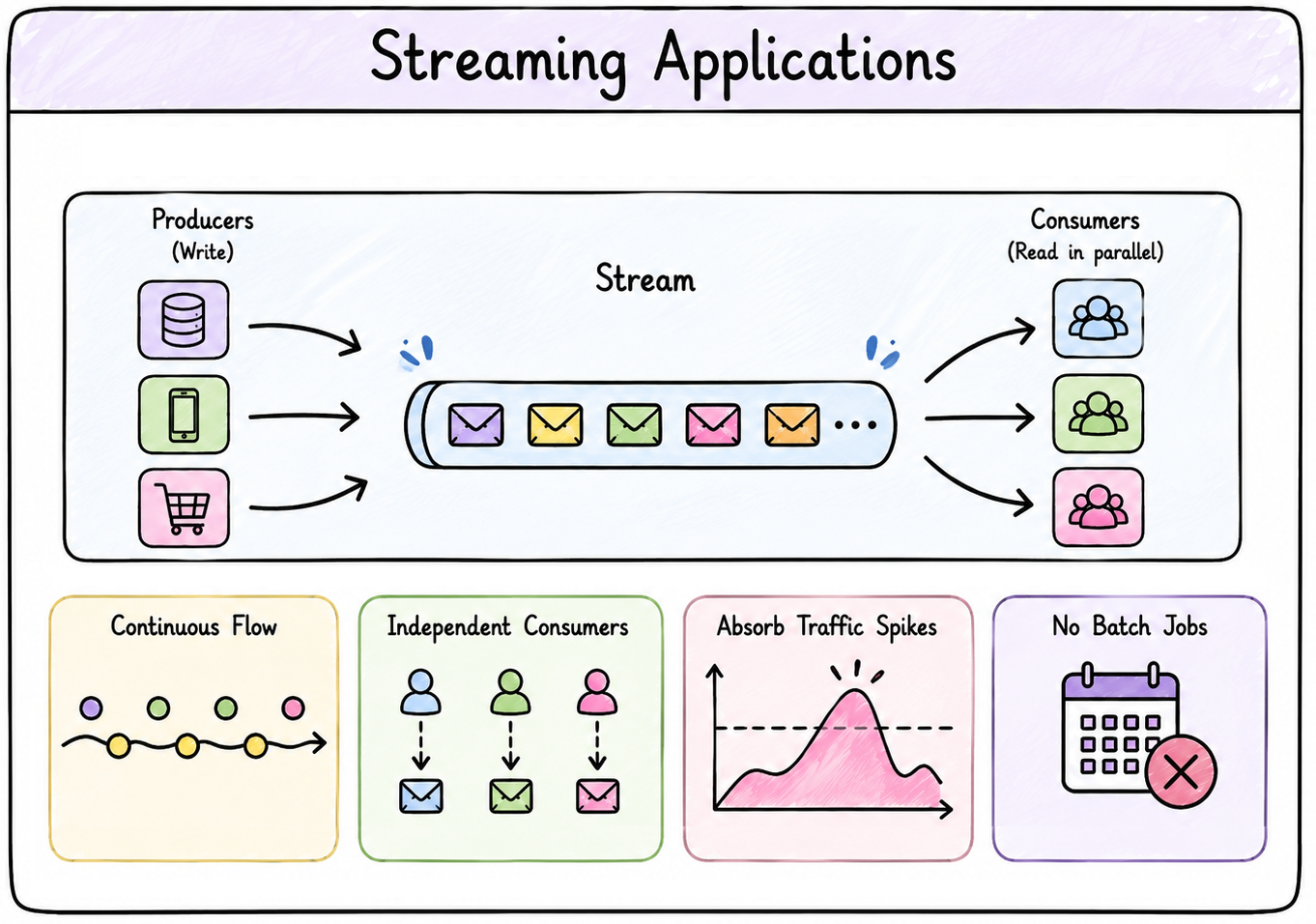
 

streaming-data

  • Records processed continuously as they arrive.
  • Producers write to a stream.
  • Consumers read independently and in parallel.
  • Absorbs traffic spikes without waiting for batch jobs.
Developing applications on AWS

What makes up streaming data?


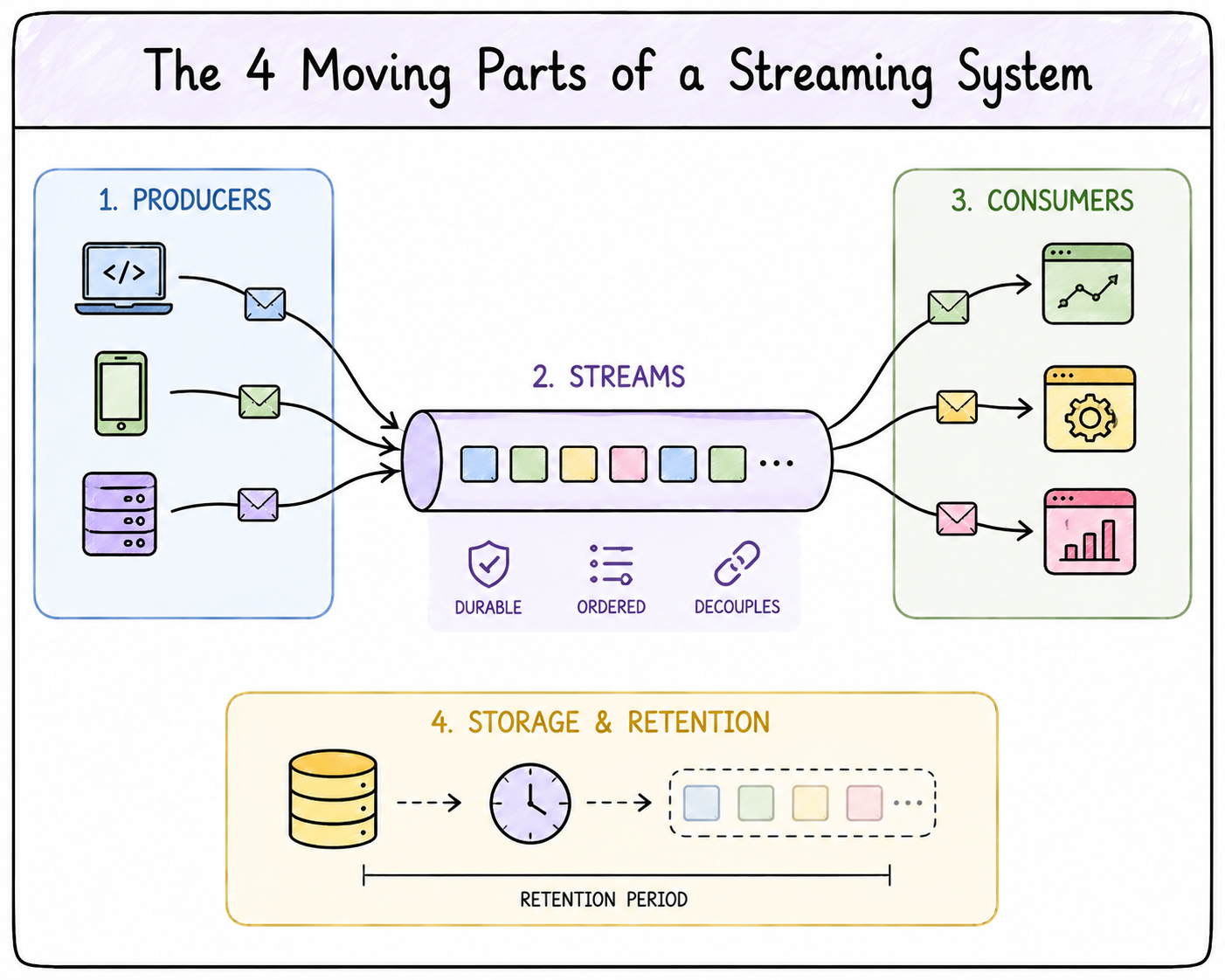
streaming system components

  • Producers: applications that emit records.
  • Streams: durable, ordered buffers that decouple producers from consumers.
  • Consumers: applications that read and process records.
  • Storage and Retention: defines how long records stay available for replay.
Developing applications on AWS

Shards


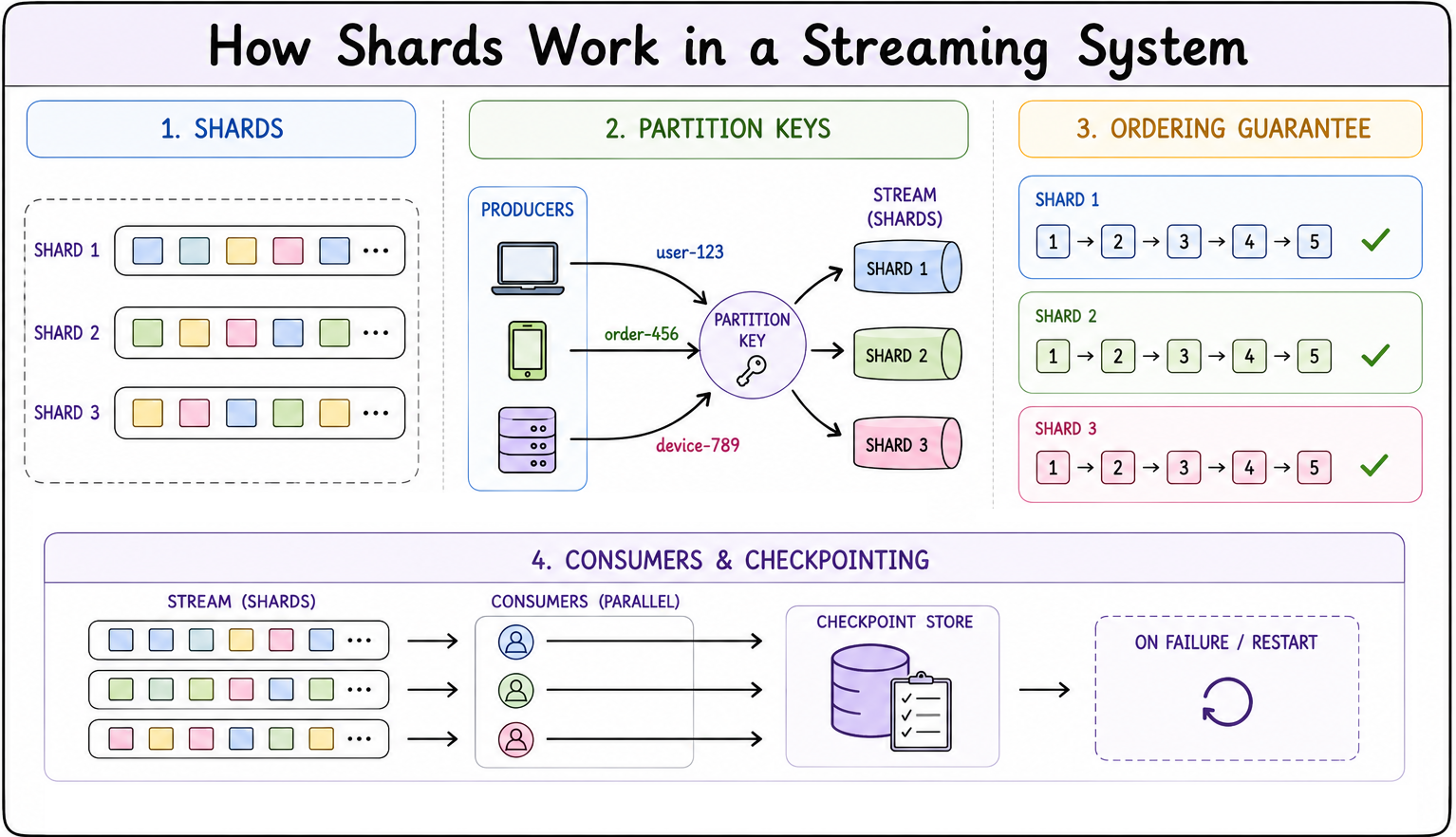
shards


  • Shards are units of throughput and parallel processing.
  • Partition keys distribute records across shards.
  • Ordering is guaranteed only within a shard.
  • Consumers use check-pointing to track progress and recover from failures.
Developing applications on AWS

AWS managed services for streaming data
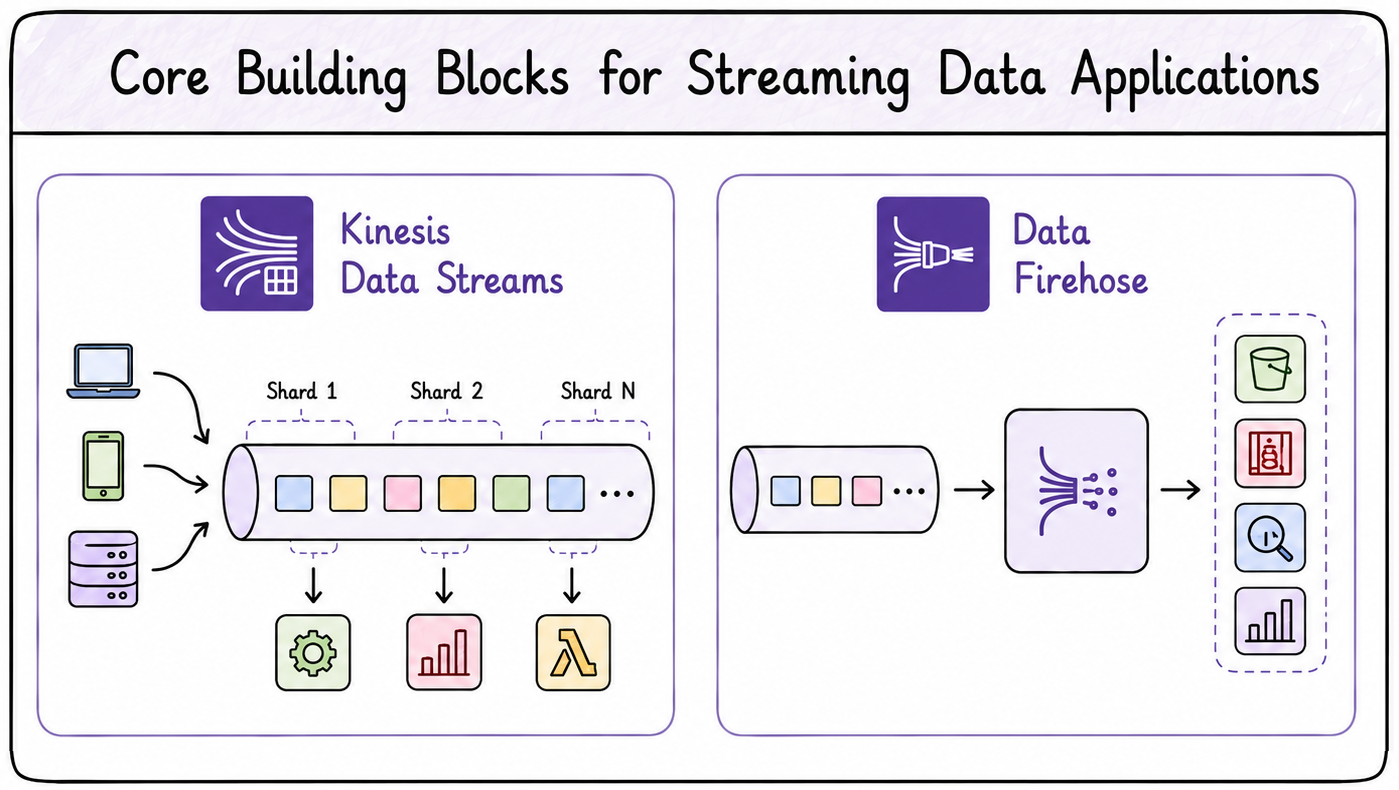
  • Amazon Kinesis Data Streams.
  • Amazon Data Firehose.
  • Core building blocks for streaming data applications.


aws services

Developing applications on AWS

Kinesis Data Streams

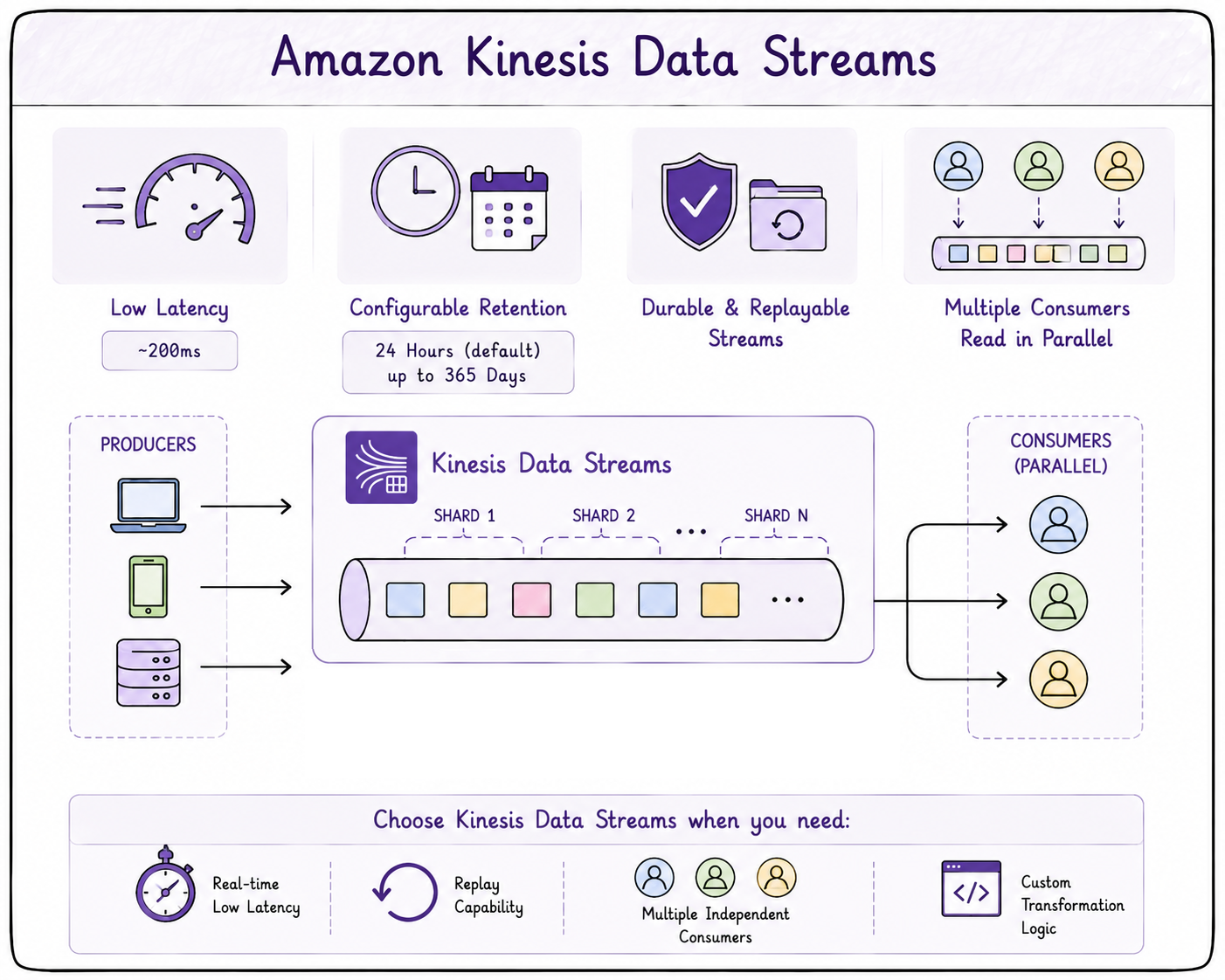
  • Low-latency streaming.
  • Configurable retention: 24 hours (default) up to 365 days.
  • Durable, replayable streams.
  • Multiple consumers can read in parallel.
  • Developers manage scaling using shards.


kinesis data streams

Developing applications on AWS

When to use Kinesis Data Streams

  • Choose it when you need real-time latency.
  • You require replay of records.
  • You have multiple independent consumers.
  • You need custom transformation logic.


kinesis data streams

Developing applications on AWS

Writing records


client libraries

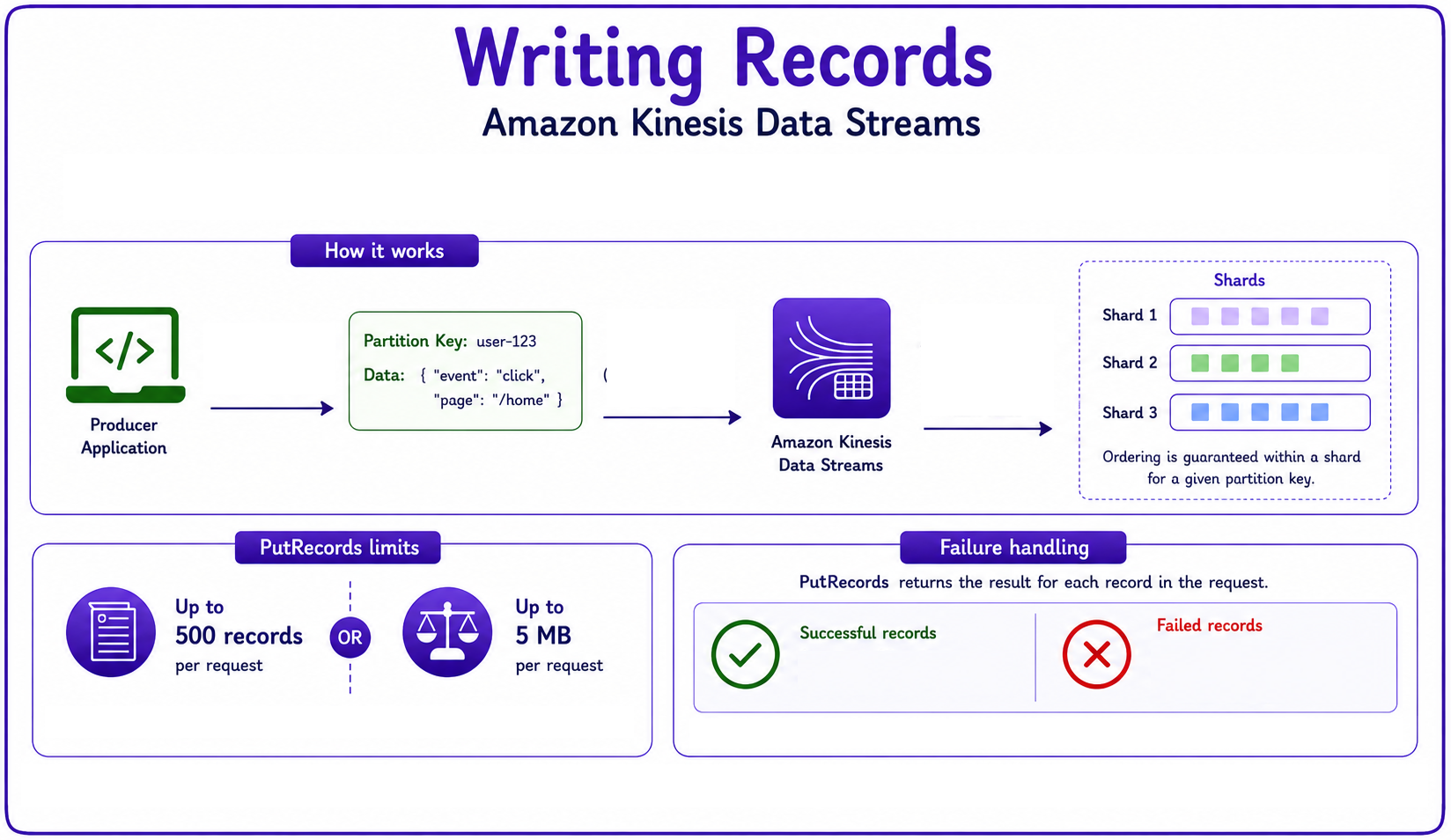
  • Partition keys control shard placement and ordering.
  • PutRecords batches up to 500 records or 5 MB per request.
  • Failures are reported per record.
  • FailedRecordCount helps you identify failed records.
Developing applications on AWS

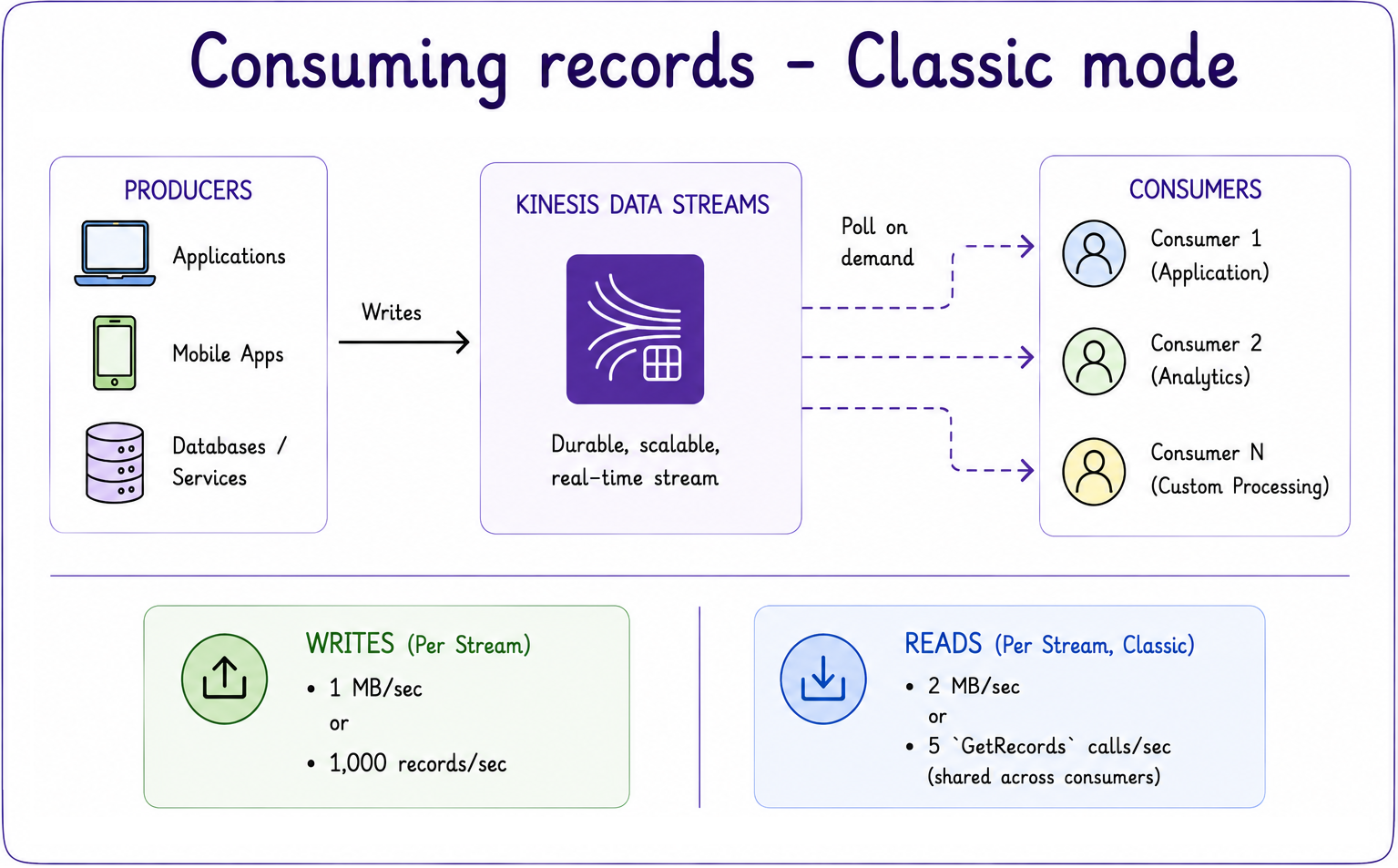
Consuming records: classic


classic


  • Consumers poll on demand against the Kinesis API.
  • Write limits: 1 MB/sec or 1,000 records/sec.
  • Read limits: 2 MB/sec or 5 GetRecords calls/sec.
Developing applications on AWS

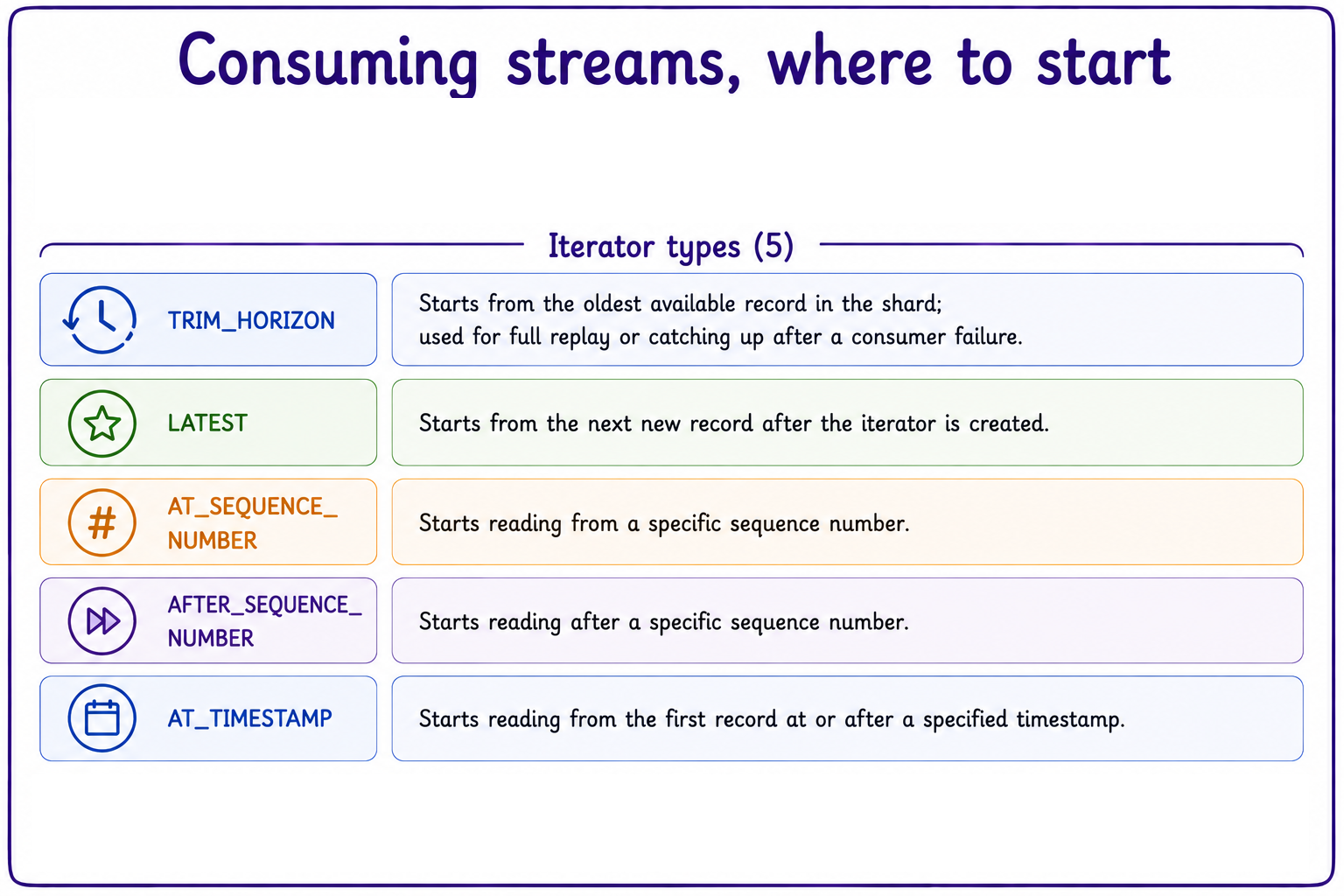
Consuming records: stream start


stream-start

  • Consumers specify where in the stream to begin reading.
  • TRIM_HORIZON: oldest available record in the shard.
  • LATEST: the next new record.
  • AT_SEQUENCE_NUMBER or AFTER_SEQUENCE_NUMBER: from a specific sequence number.
  • AT_TIMESTAMP: at or after a specified timestamp.
Developing applications on AWS

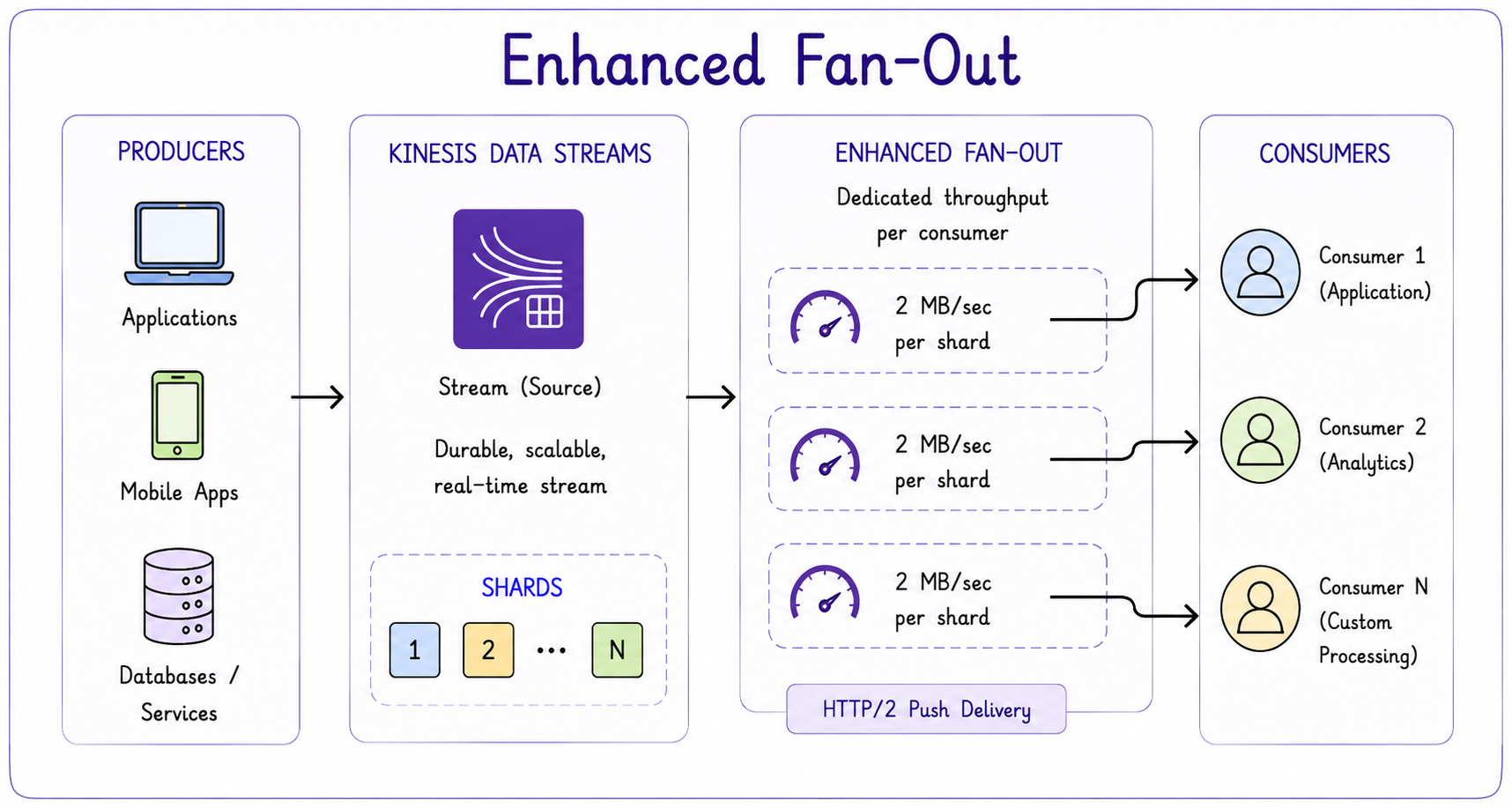
Consuming records: enhanced fan-out

  • Each registered consumer gets a dedicated 2 MB/sec per shard.
  • Records are delivered via HTTP/2 push.
  • Use it when multiple independent consumers need low latency.
  • They also need high throughput to the same stream.


pattern - enhanced fan-out

Developing applications on AWS

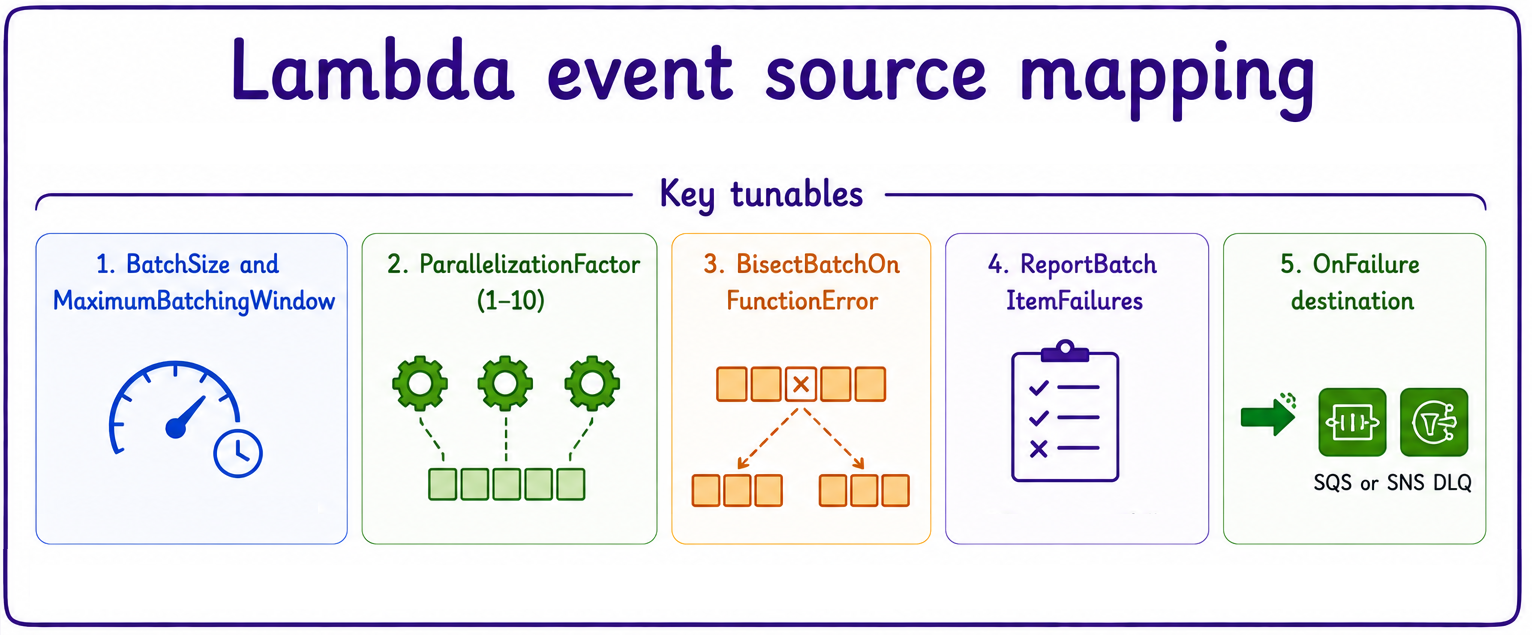
Lambda event source mapping

  • Lambda polls Kinesis and invokes in batches.
  • BatchSize and MaximumBatchingWindow control batch shape.
  • ParallelizationFactor: concurrent invocations per shard.
  • BisectBatchOnFunctionError: splits a failing batch to isolate poison pills.
  • ReportBatchItemFailures: avoids retrying records that already succeeded.
  • OnFailure: sends unprocessable batches to an SQS or SNS DLQ.


lambda event sourcing

Developing applications on AWS

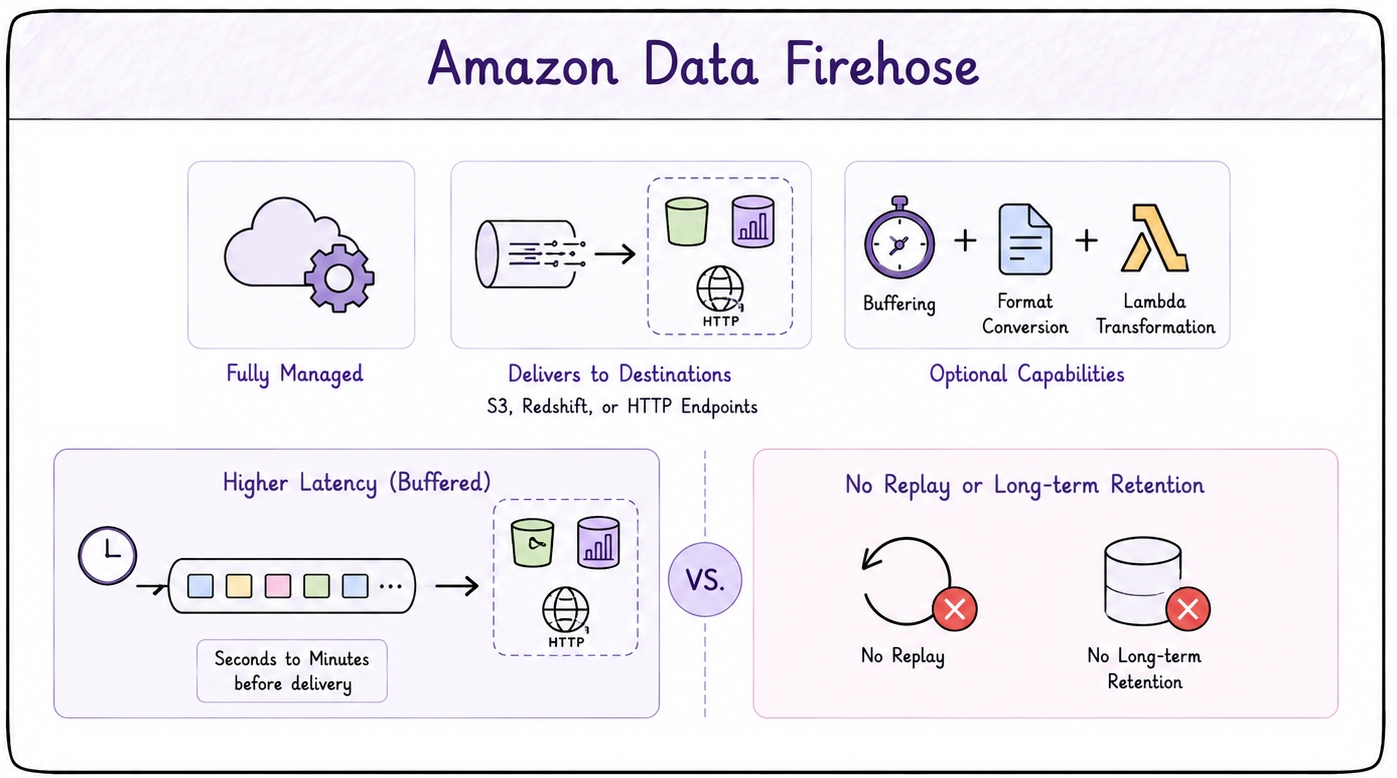
Data Firehose

  • Managed service that delivers streaming data to destinations.
  • Targets include Amazon S3, Redshift, and HTTP endpoints.
  • Supports buffering, format conversion, and Lambda transformations.
  • Higher latency, buffered for seconds to minutes.
  • No replay or long-term retention.
  • Great for simply getting data to a destination.


data firehose

Developing applications on AWS

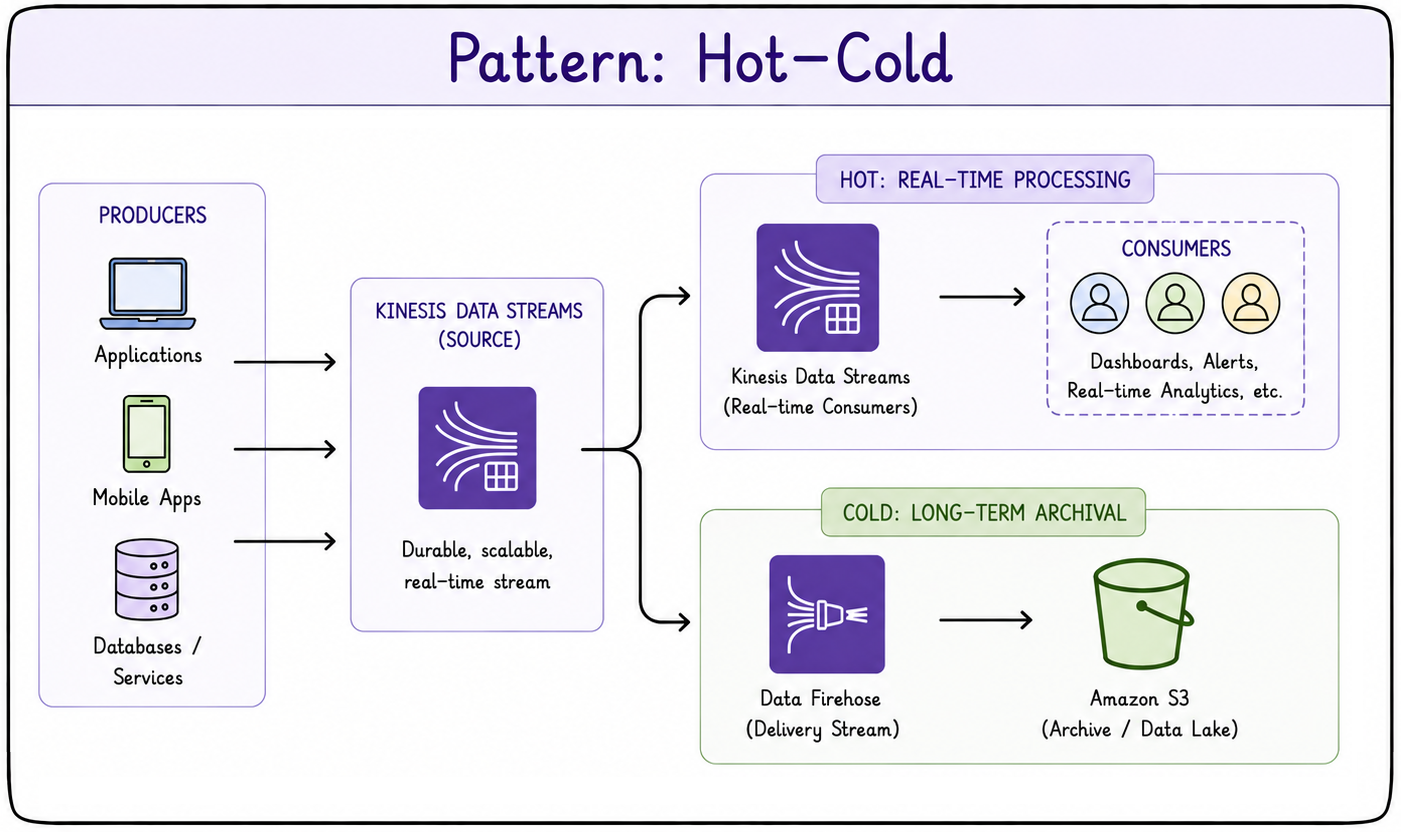
Pattern: hot-cold


pattern - hold/cold


  • Hot-cold pattern combines Data Streams and Data Firehose.
  • Data Streams enables real-time processing for producers.
  • Firehose archives records from the same source into S3.
Developing applications on AWS

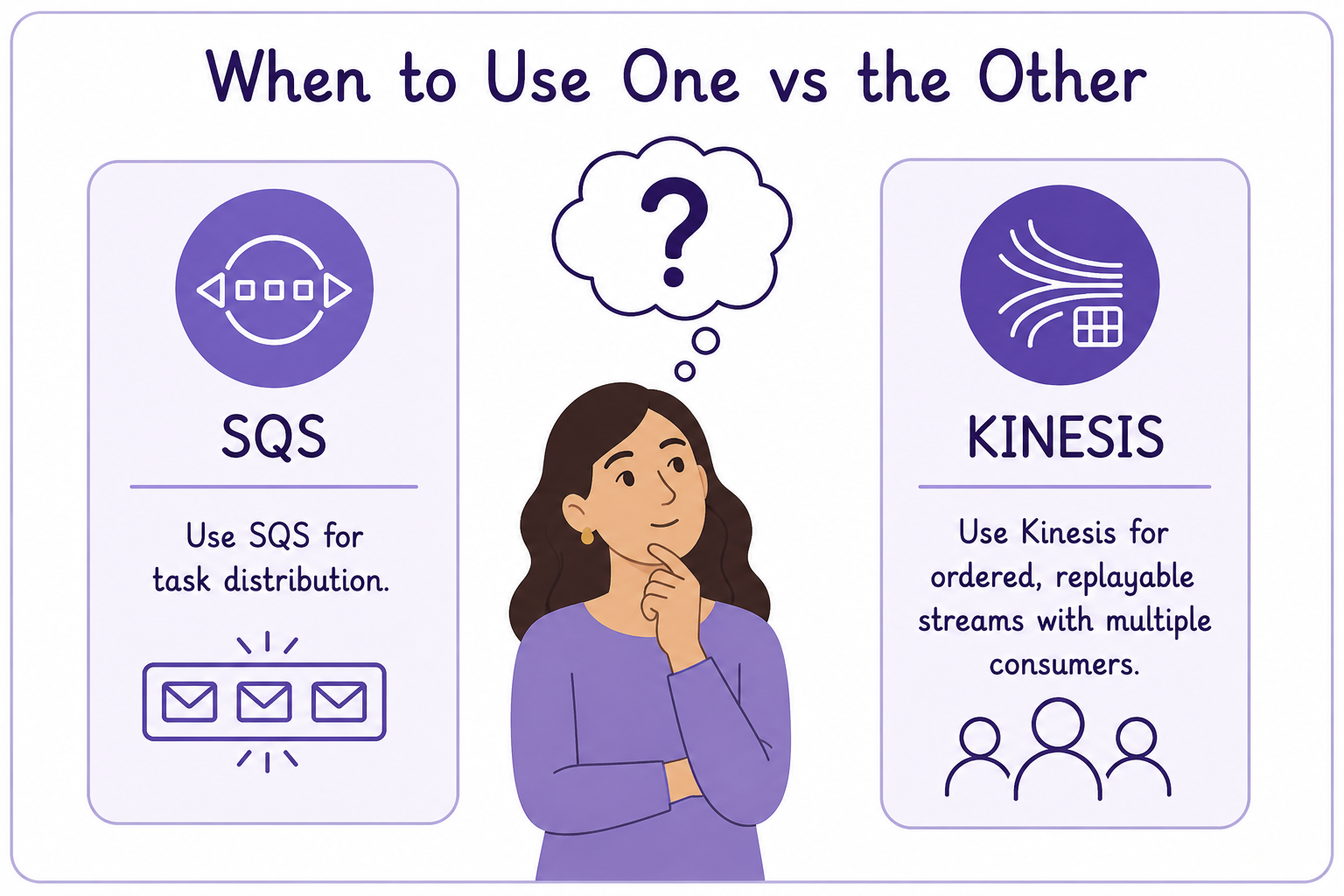
Kinesis vs SQS


sqs vs kinesis


  • Use Kinesis for ordered, replayable streams with multiple consumers.
  • Kinesis suits time-series and ordered data.
  • Use SQS for task distribution.
Developing applications on AWS

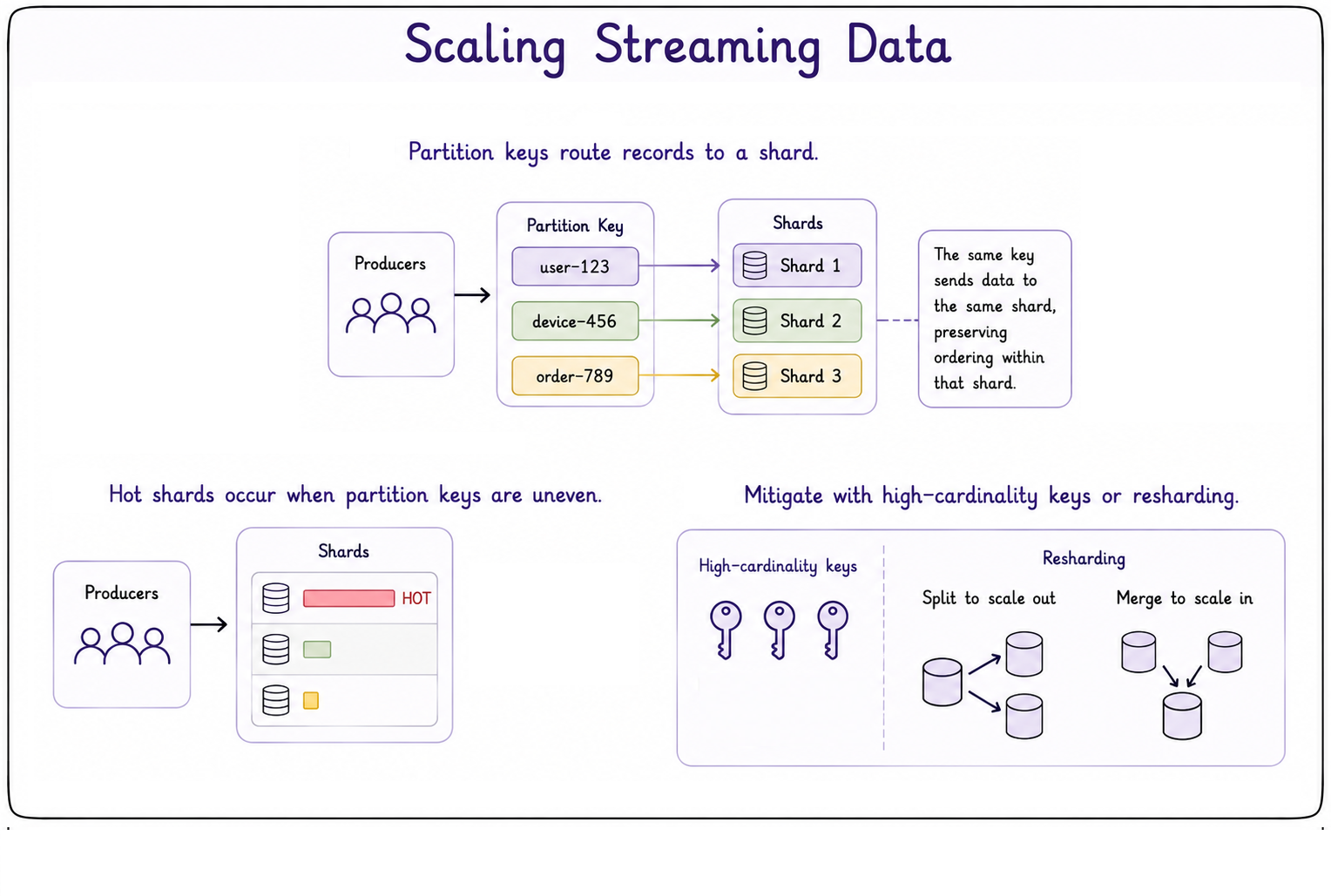
Scaling streaming data


scaling

  • Data streams are divided into shards.
  • Partition keys route records to a specific shard.
  • The same key always lands on the same shard, preserving order.
  • Uneven partition keys lead to hot shards.
  • Mitigate with high-cardinality keys.
  • Reshard to scale out or in.
Developing applications on AWS

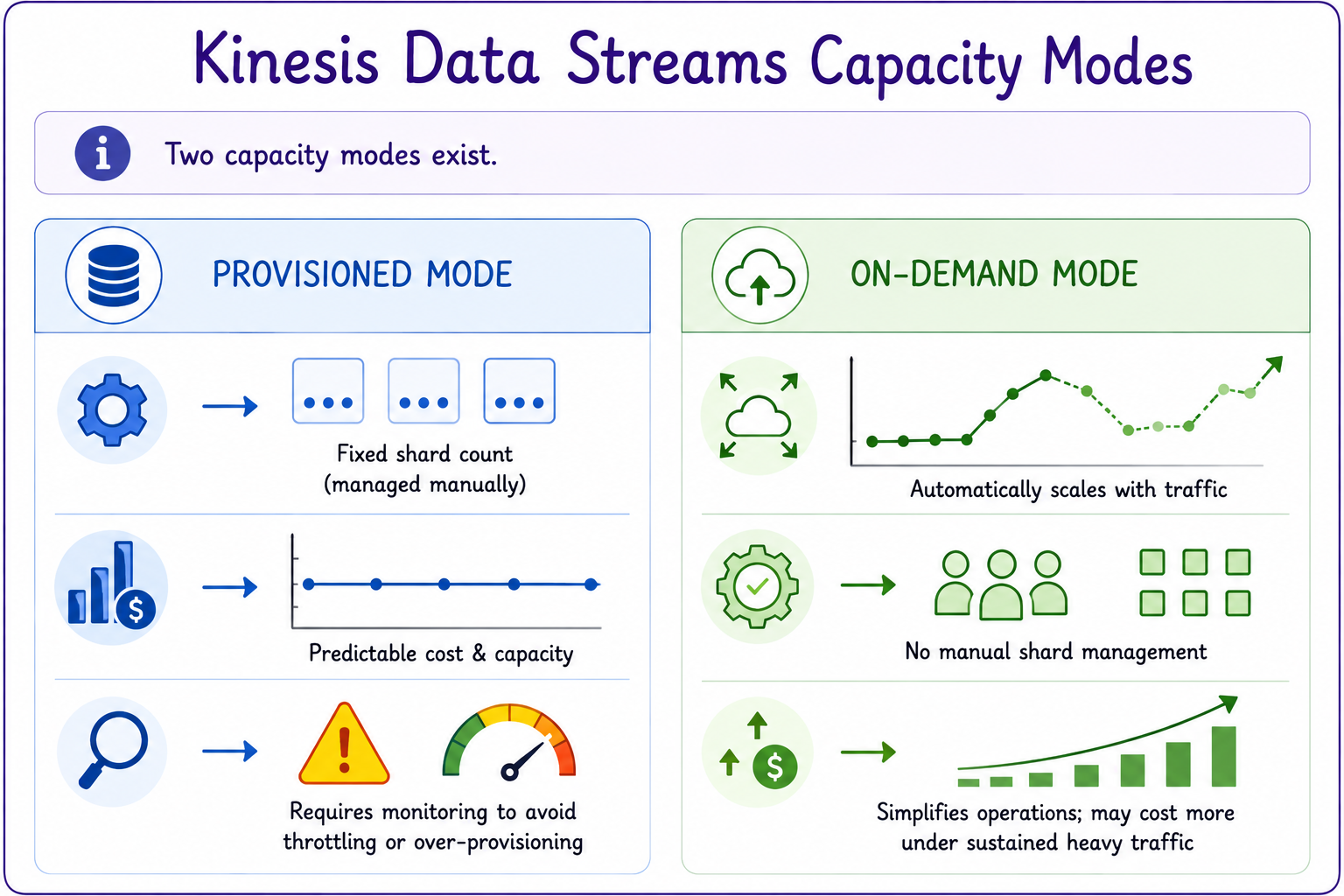
Capacity modes: provisioned

  • Two capacity modes are available.
  • Provisioned mode uses a fixed shard count, managed manually.
  • It provides predictable cost and capacity.
  • Requires monitoring to avoid throttling and over-provisioning.


capacity modes

Developing applications on AWS

Capacity modes: on-demand

  • On-demand mode scales automatically based on traffic.
  • No manual shard management.
  • Simplifies operations for unpredictable workloads.
  • Higher cost under sustained heavy traffic.


capacity modes

Developing applications on AWS

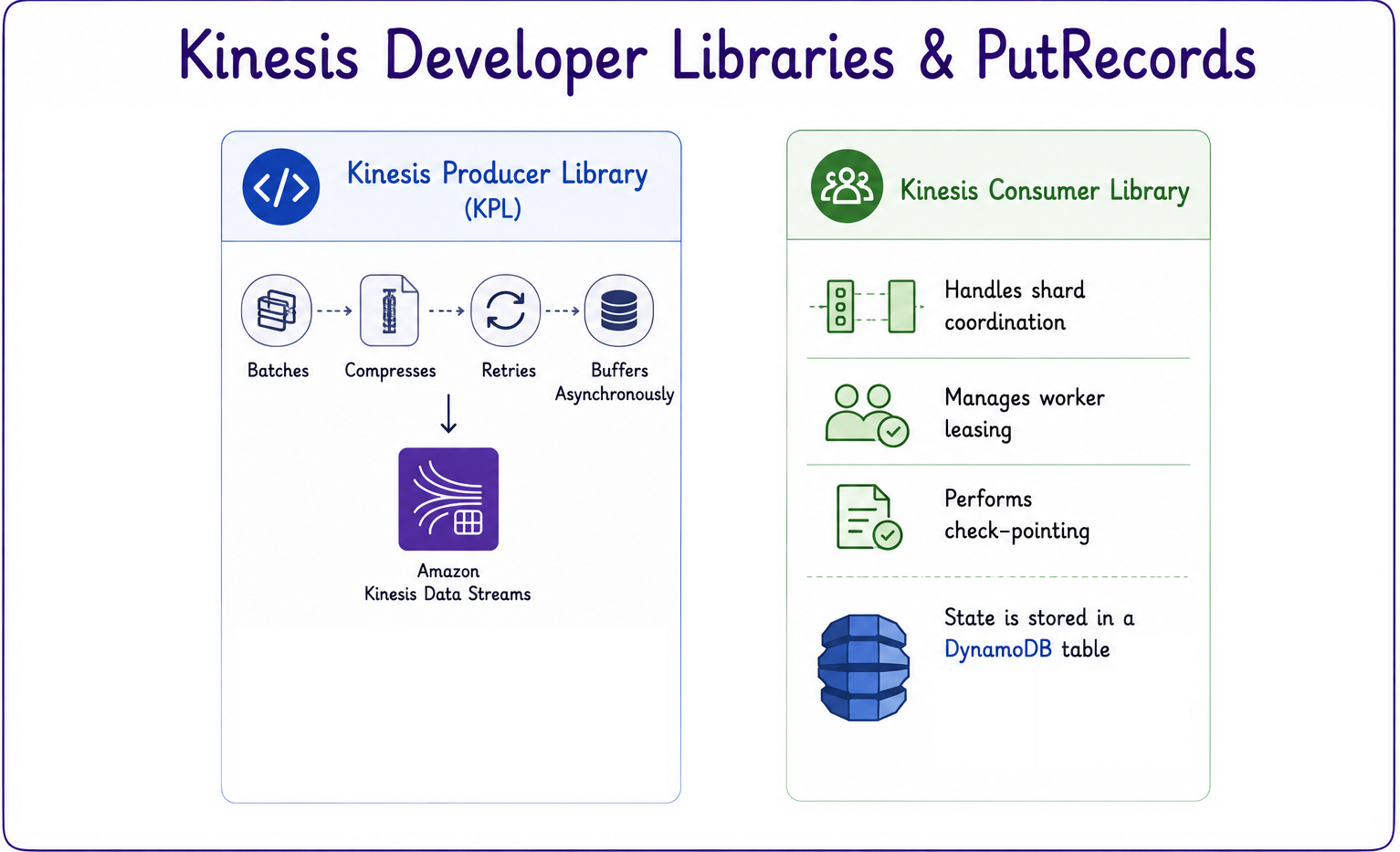
Kinesis Producer Library (KPL)

  • AWS libraries simplify building scalable producers and consumers.
  • The Kinesis Producer Library (KPL) batches and aggregates records.
  • It also compresses records and retries on failure.
  • Buffers asynchronously to maximize producer throughput.


client libraries

Developing applications on AWS

Kinesis Consumer Library (KCL)


client libraries


  • The Kinesis Consumer Library (KCL) handles shard coordination.
  • It manages worker leasing and check-pointing.
  • State is stored in a DynamoDB table.
  • Consumers use that state to look up where to resume.
Developing applications on AWS

Failure handling: idempotency


handling failures


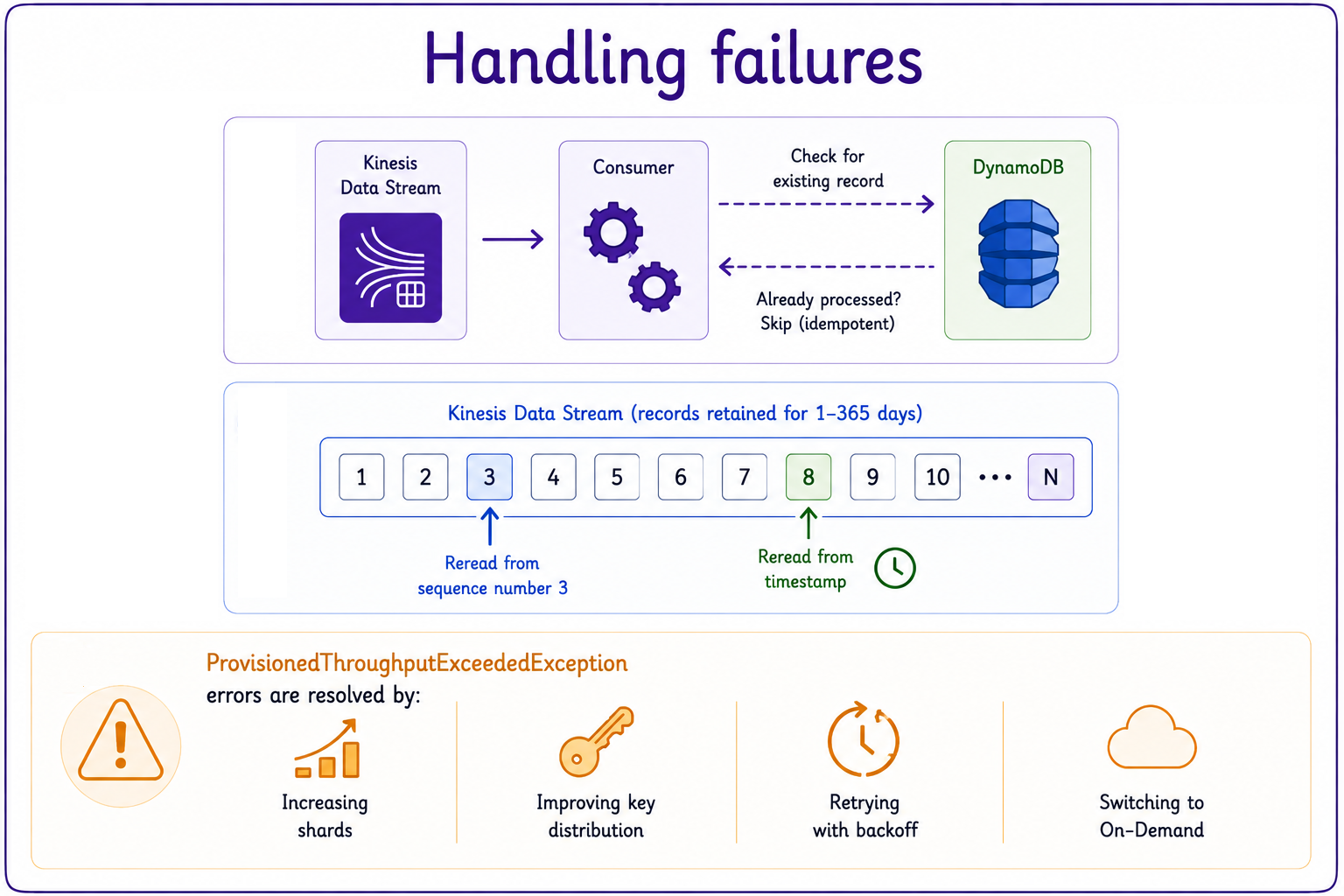
  • Kinesis delivery is at-least-once, so duplicates are possible.
  • Design consumers to be idempotent.
  • Deduplicate using the sequence number or a business key in DynamoDB.
  • Consumers can reread retained records from a sequence number or timestamp.
Developing applications on AWS

Failure handling: throughput errors


handling failures


  • ProvisionedThroughputExceededException signals throttling.
  • Resolve it by increasing the shard count.
  • Improve partition key distribution.
  • Retry with backoff.
  • Switch capacity mode.
Developing applications on AWS
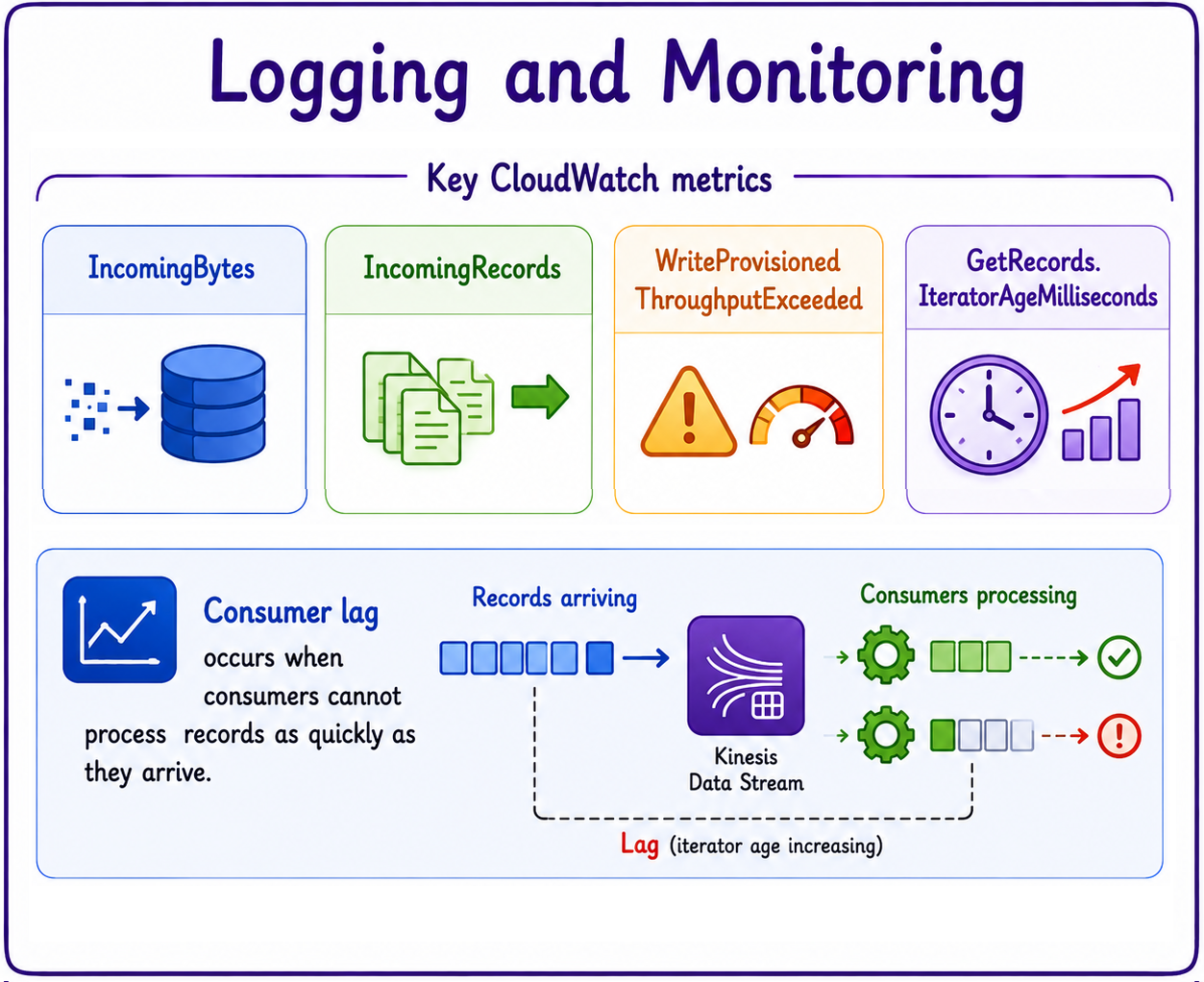
  • Track IncomingBytes and IncomingRecords in CloudWatch.
  • Watch WriteProvisionedThroughputExceeded for throttling.
  • Consumer lag occurs when consuming slower than producing.
  • Track GetRecords.IteratorAgeMilliseconds: high age indicates lag.


monitoring

Developing applications on AWS

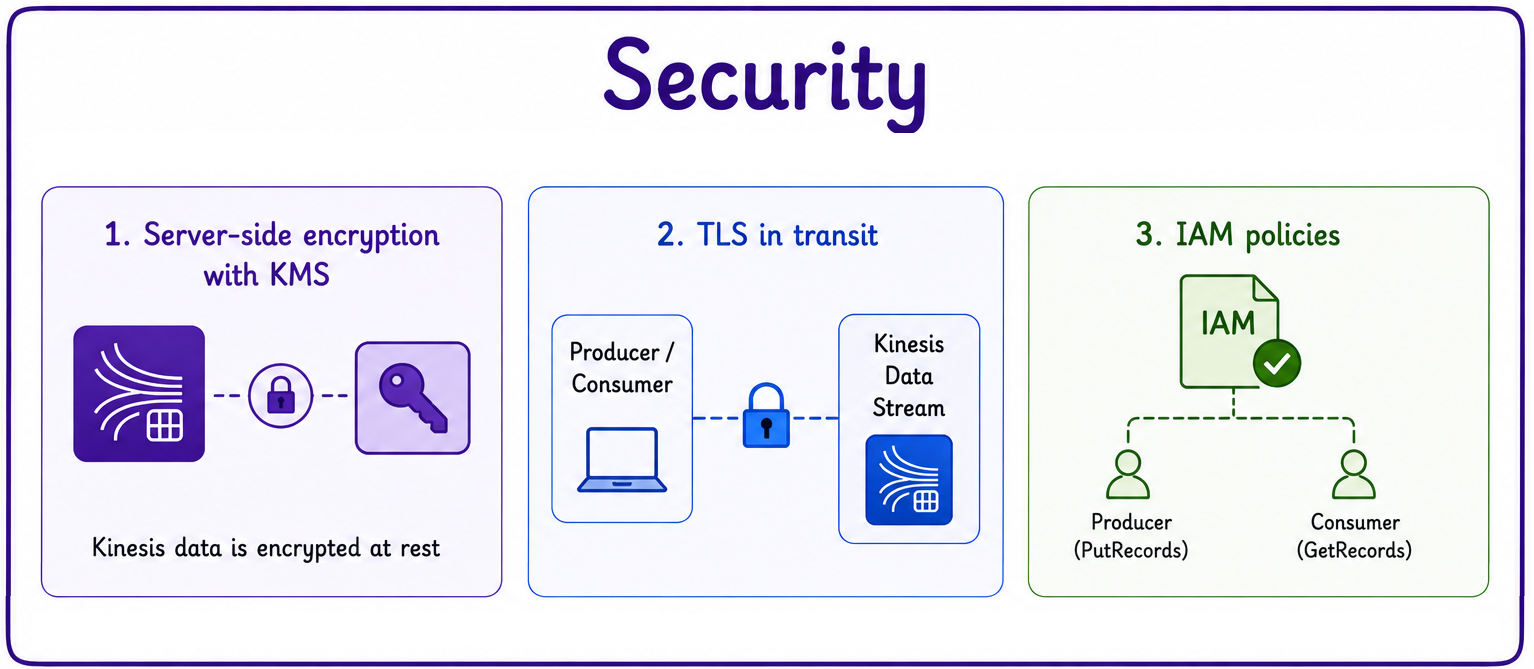
Security

  • Server-side encryption at rest using AWS KMS.
  • Encryption in transit using TLS.
  • IAM policies control access.


security

Developing applications on AWS

Let's practice!

Developing applications on AWS

Preparing Video For Download...