Designing APIs on AWS

Developing applications on AWS

Ricardo Sueiras

Principal Technologist

API Gateway
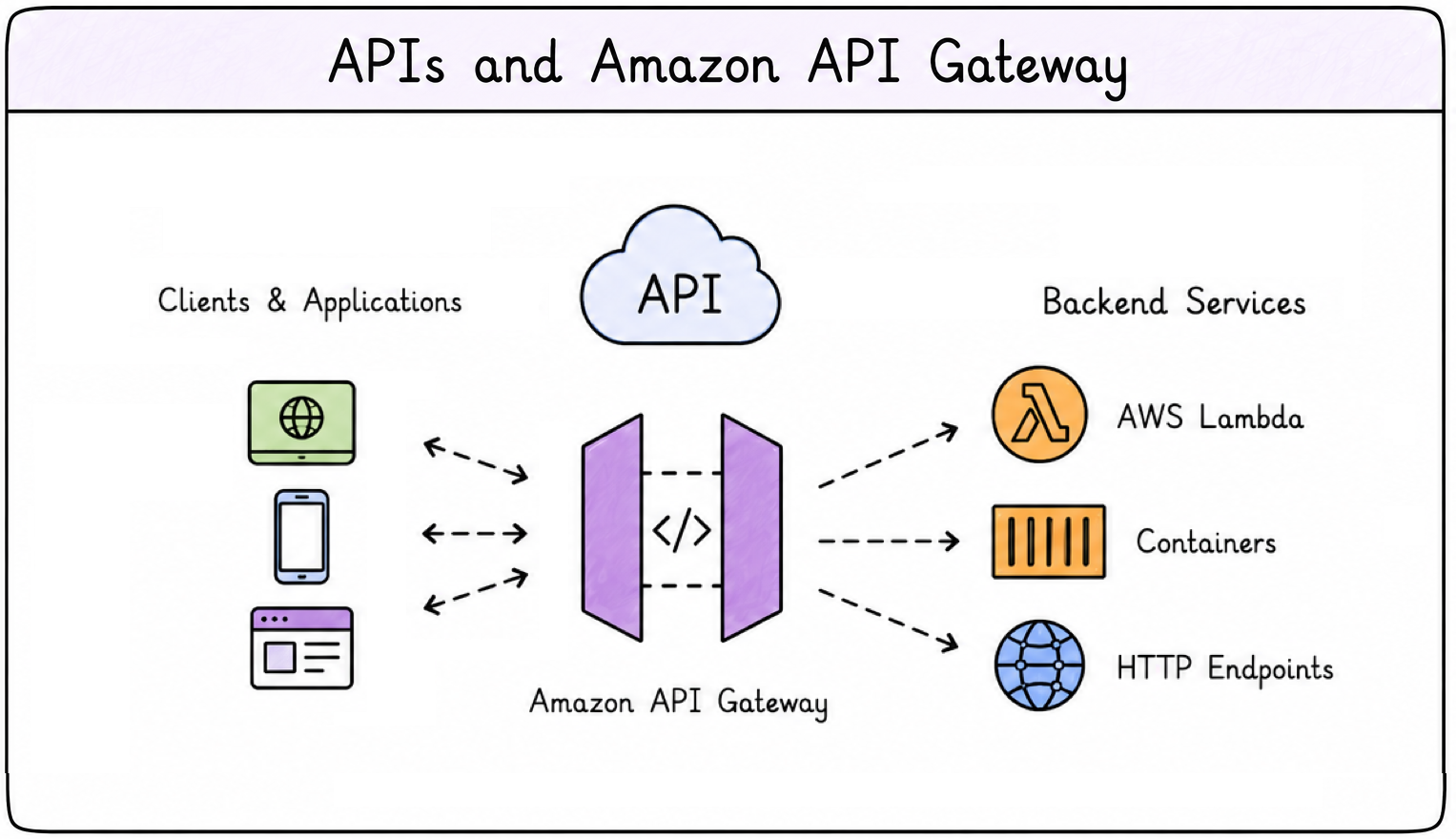
 

What are APIs


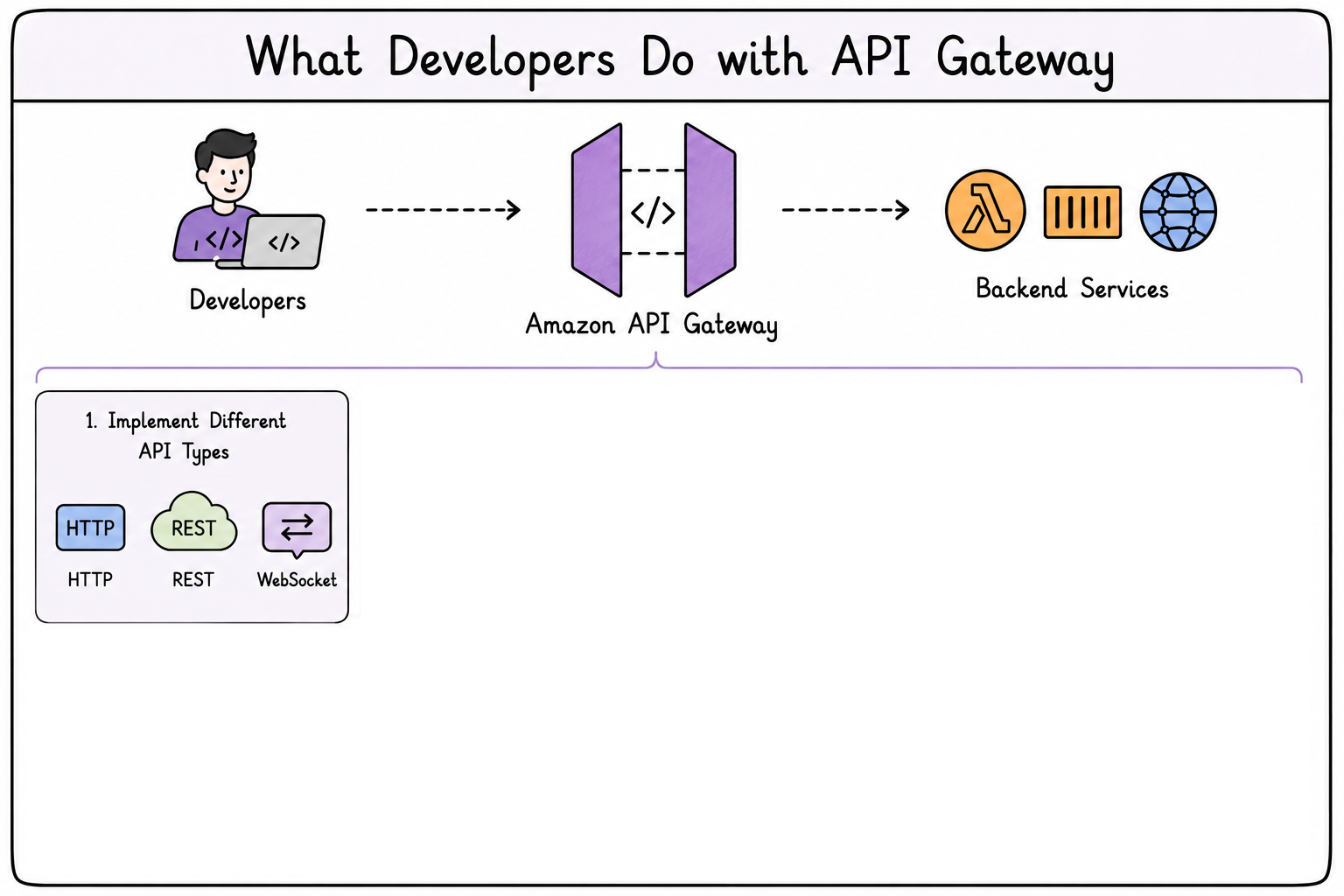
  • Amazon API Gateway: a managed service for building APIs.
  • Design, deploy, manage, and secure your APIs.
Developing applications on AWS

Amazon API Gateway capabilities


API capabilities

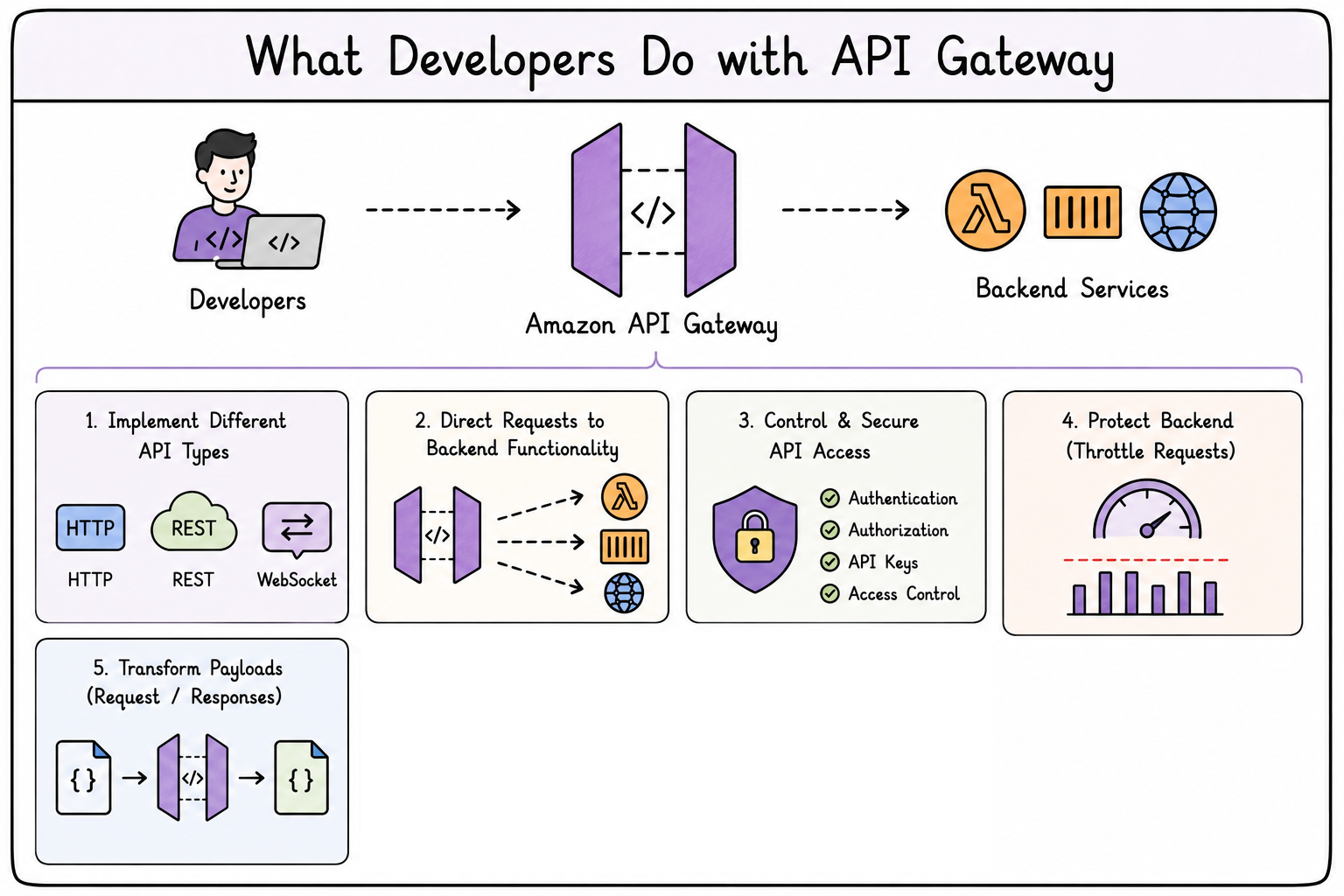
  • Implement different types of API.
Developing applications on AWS

Amazon API Gateway capabilities


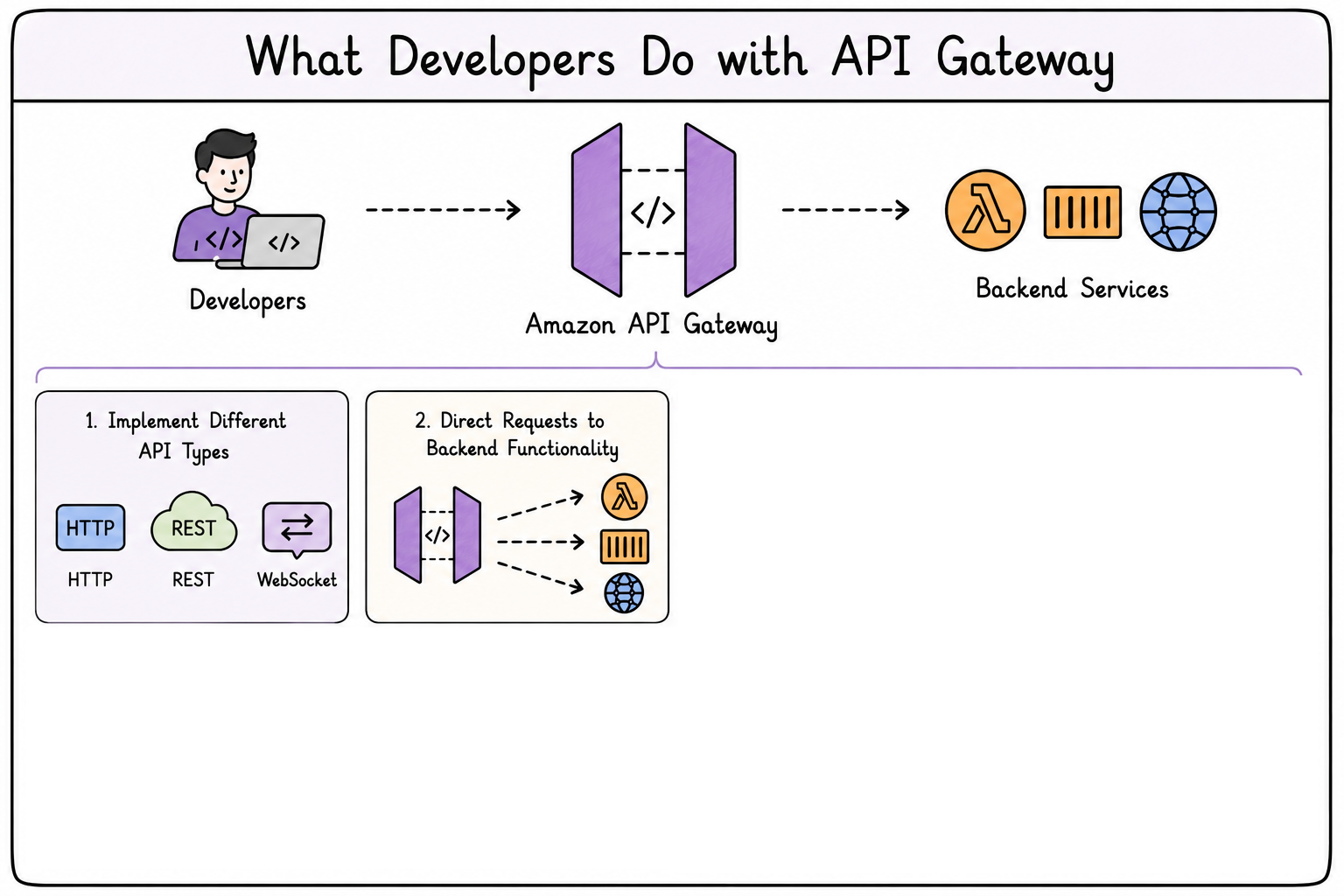
API Capabilities

  • Implement different types of API.
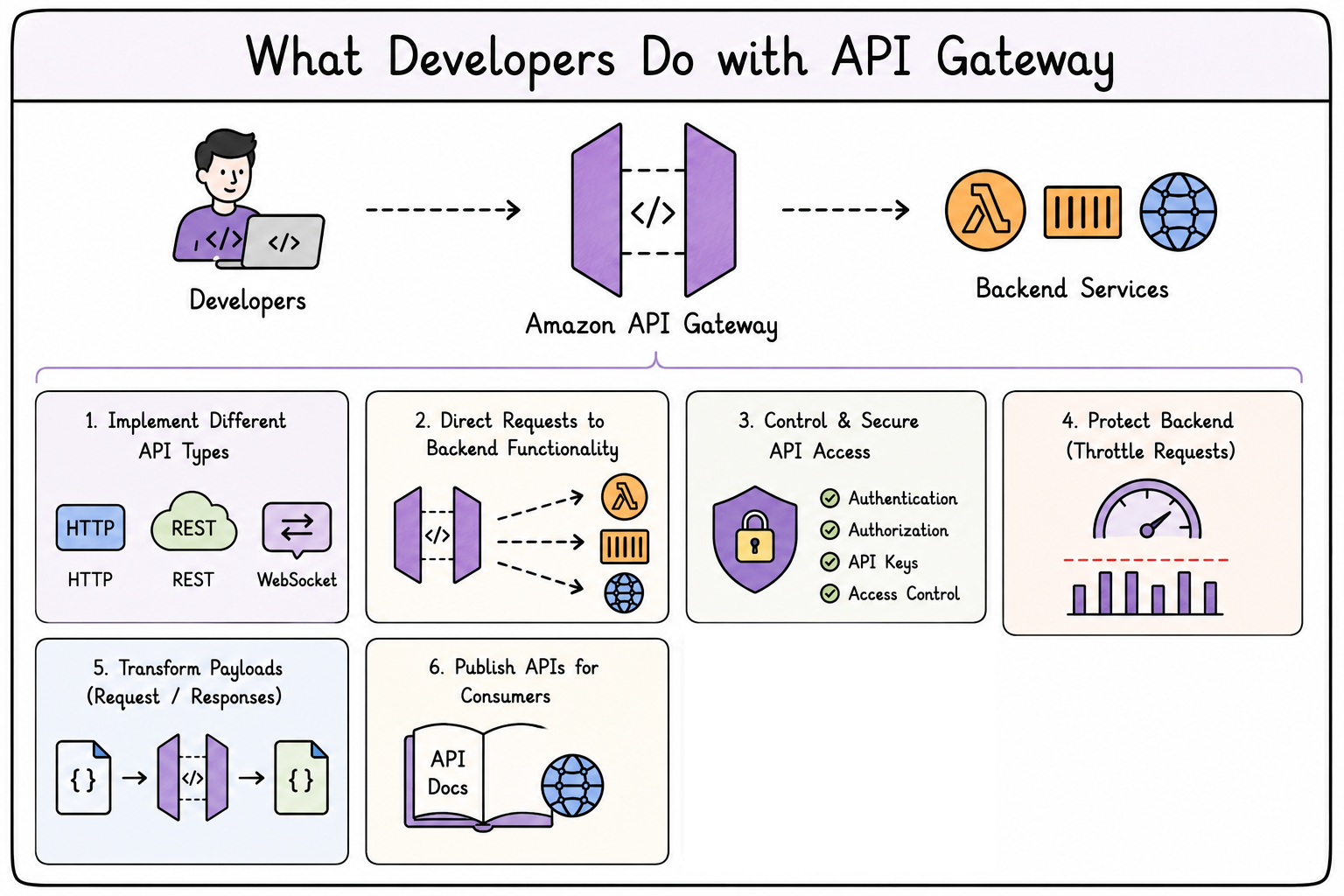
  • Integrate with backend services.
Developing applications on AWS

Amazon API Gateway capabilities


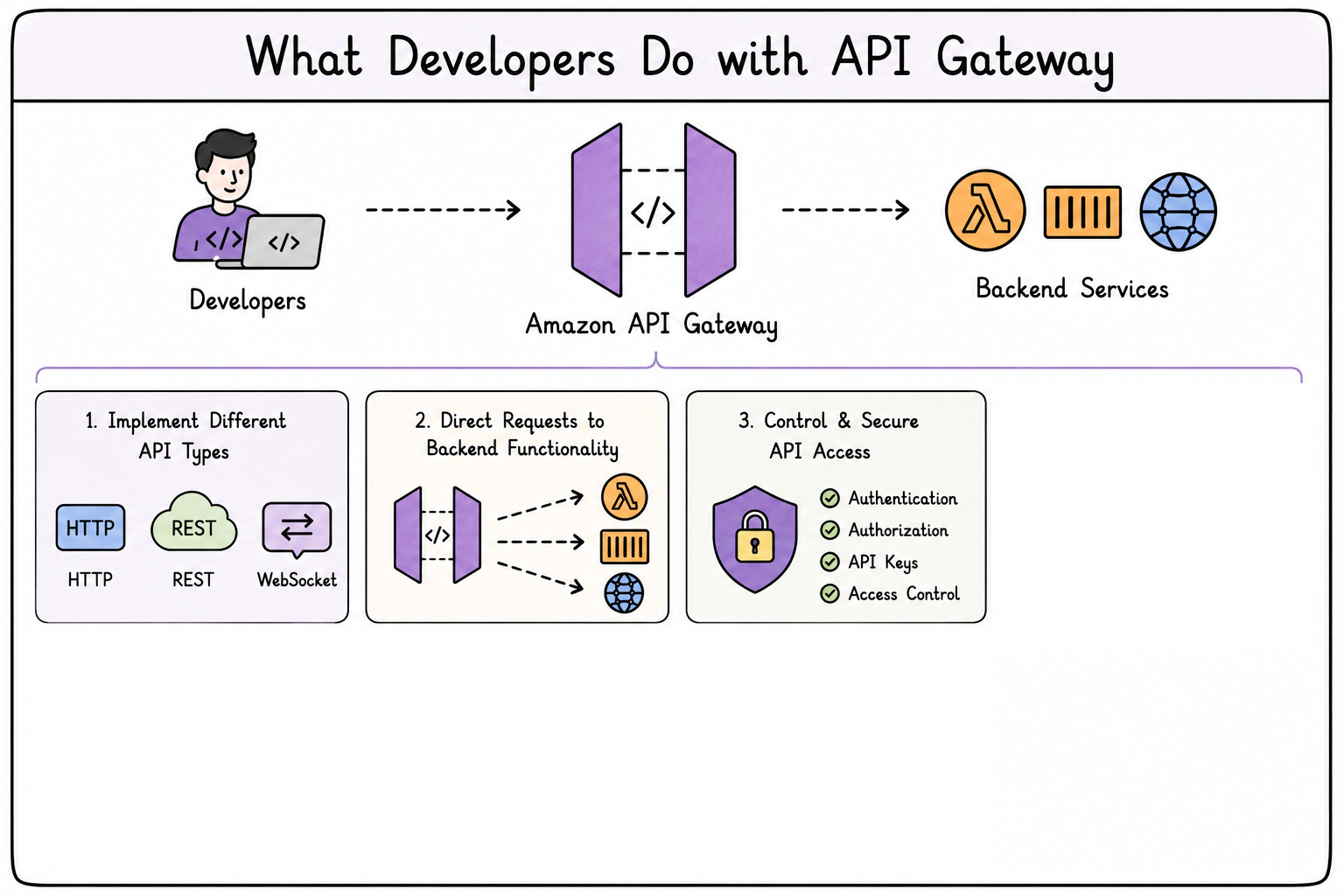
API Gateway capabilities

  • Implement different types of API.
  • Integrate with backend services.
  • Secure access to APIs.
Developing applications on AWS

Amazon API Gateway capabilities


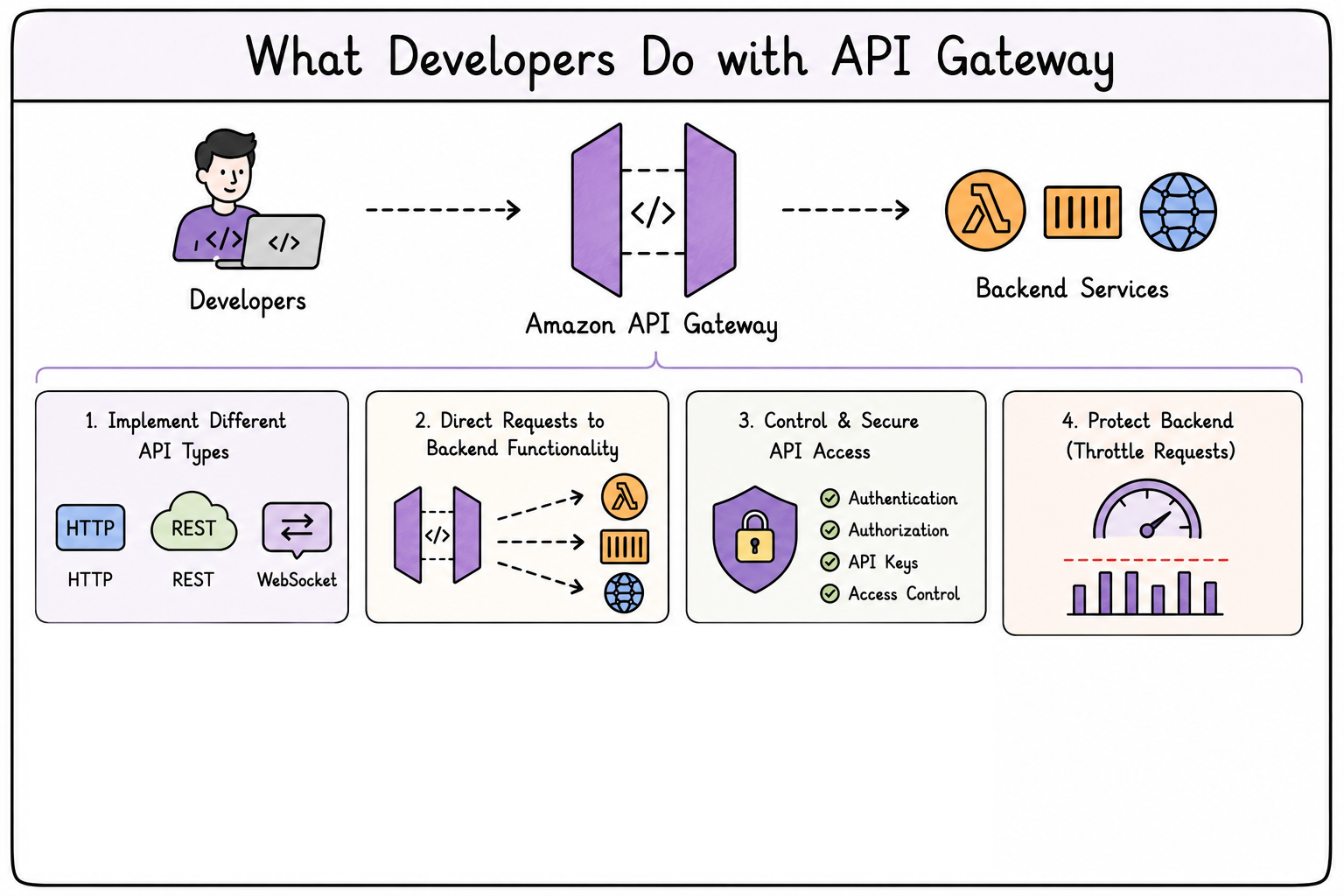
API Gateway capabilities

  • Implement different types of API.
  • Integrate with backend services.
  • Secure access to APIs.
  • Throttle requests to protect backends.
Developing applications on AWS

Amazon API Gateway capabilities


API Gateway capabilities

  • Implement different types of API.
  • Integrate with backend services.
  • Secure access to APIs.
  • Throttle requests to protect backends.
  • Transform request and response payloads.
Developing applications on AWS

Amazon API Gateway capabilities


API Gateway capabilities

  • Implement different types of API.
  • Integrate with backend services.
  • Secure access to APIs.
  • Throttle requests to protect backends.
  • Transform request and response payloads.
  • Publish APIs for consumers.
Developing applications on AWS

Amazon API Gateway capabilities


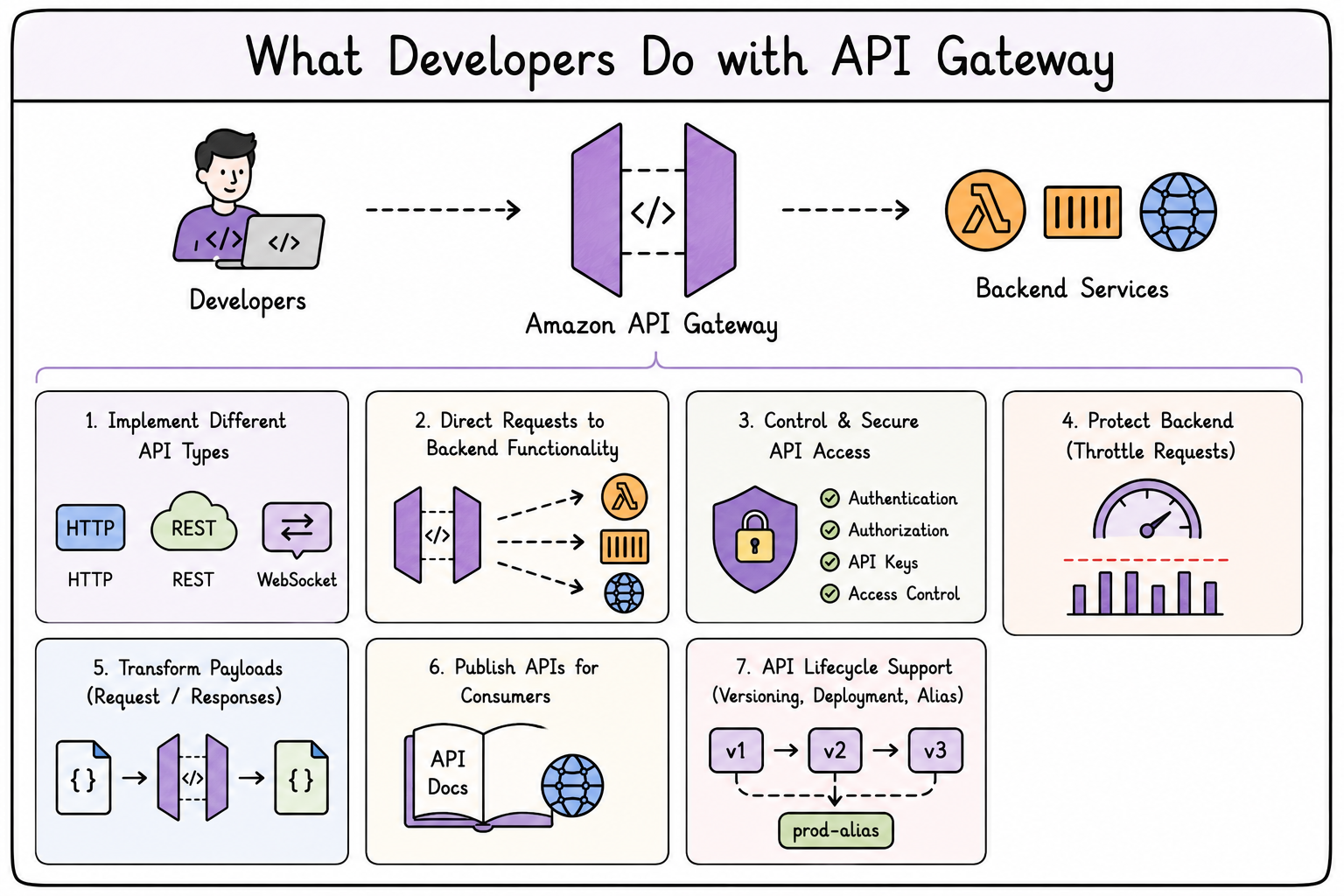
API Gateway capabilities

  • Implement different types of API.
  • Integrate with backend services.
  • Secure access to APIs.
  • Throttle requests to protect backends.
  • Transform request and response payloads.
  • Publish APIs for consumers.
  • Manage the API lifecycle: versioning, deployment, aliases.
Developing applications on AWS

API types

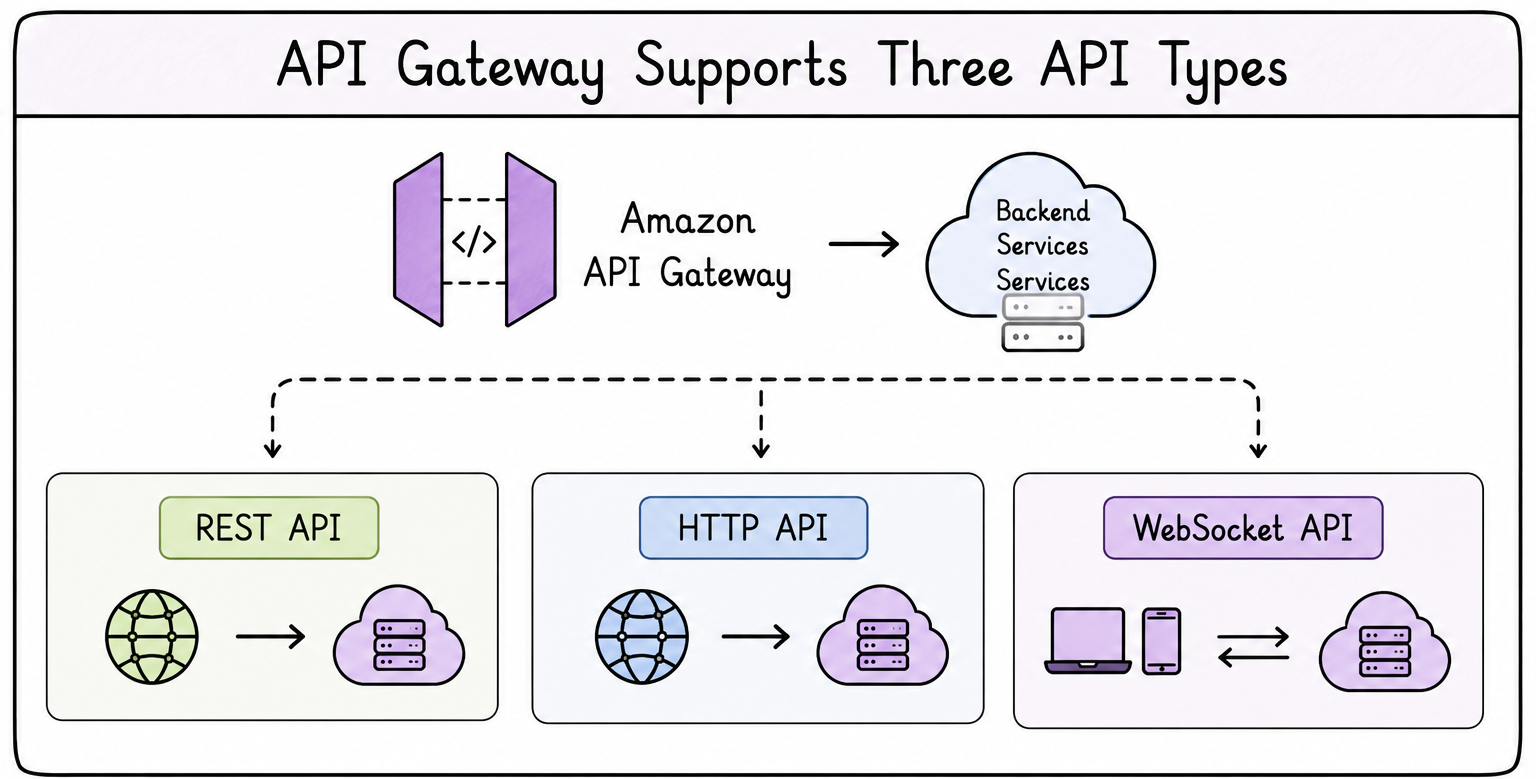
  • API Gateway supports three API types:
    • REST APIs
    • HTTP APIs
    • WebSocket APIs


API Types

Developing applications on AWS

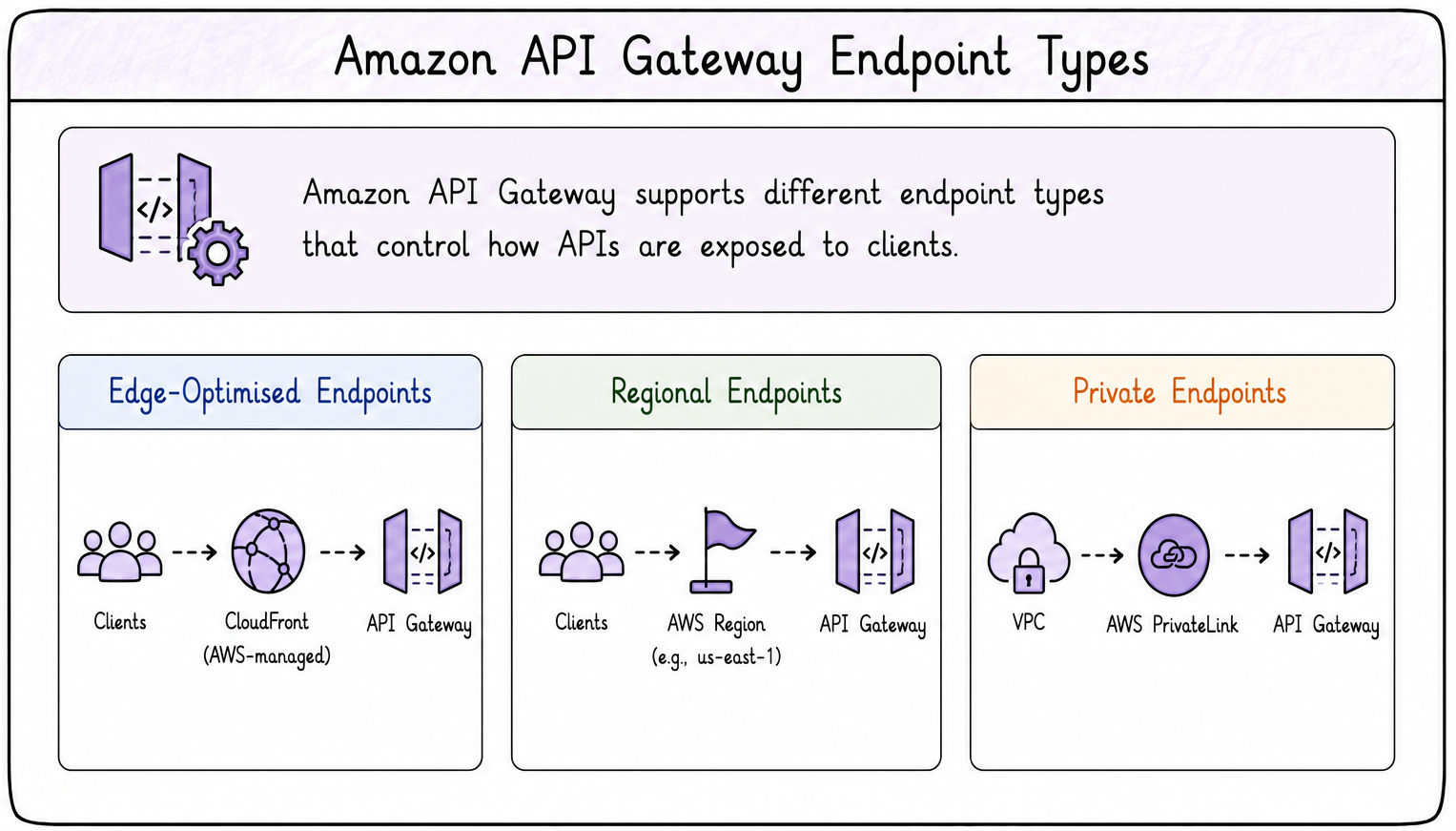
API Gateway endpoints

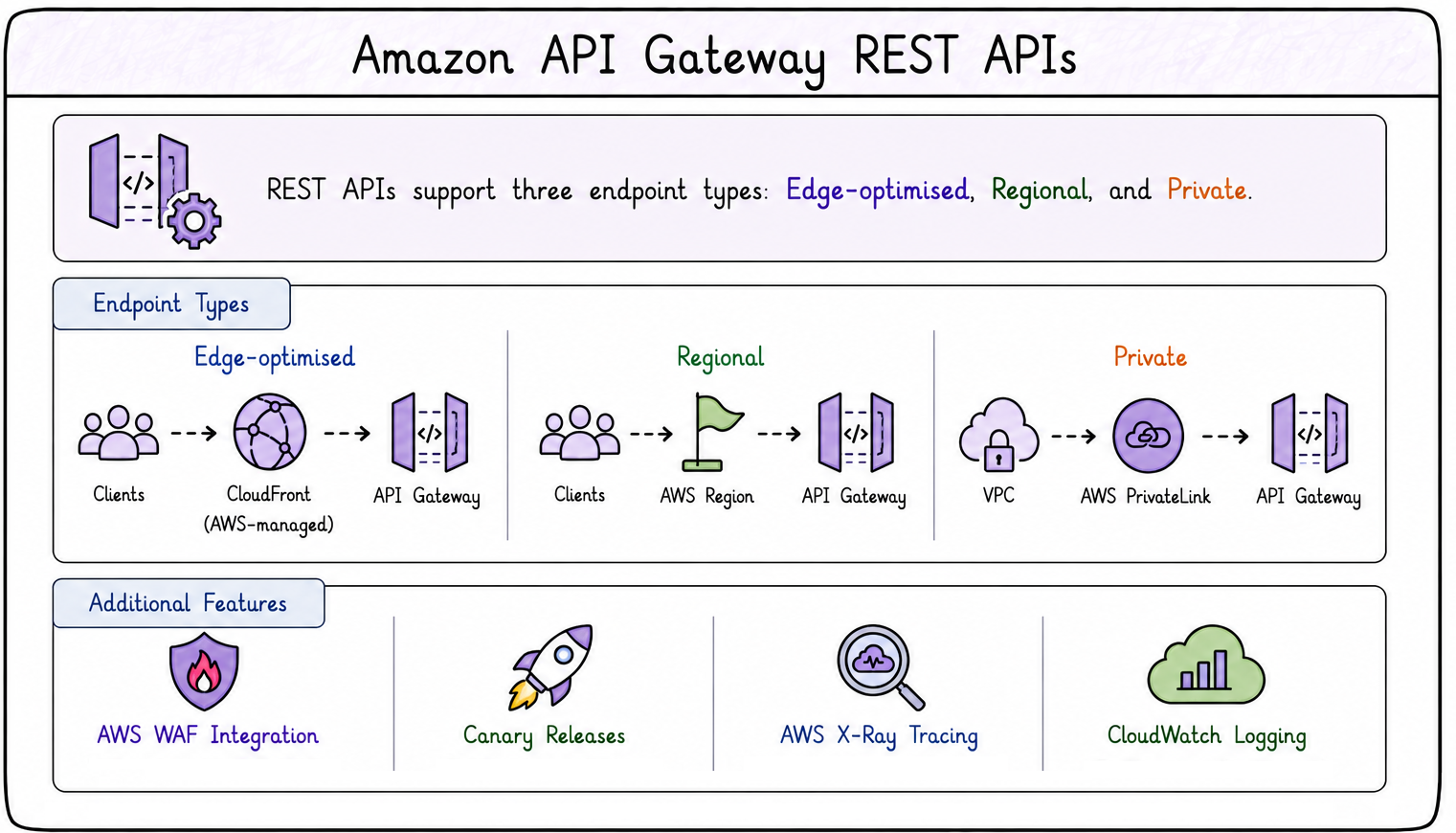
  • Endpoints control how clients reach your API.
  • Edge-optimized: AWS-managed CloudFront for global low latency.
  • Regional: deployed into a specific AWS Region.
  • Private: reachable only via AWS PrivateLink.
  • Private endpoints stay off the public internet.


Endpoints

Developing applications on AWS

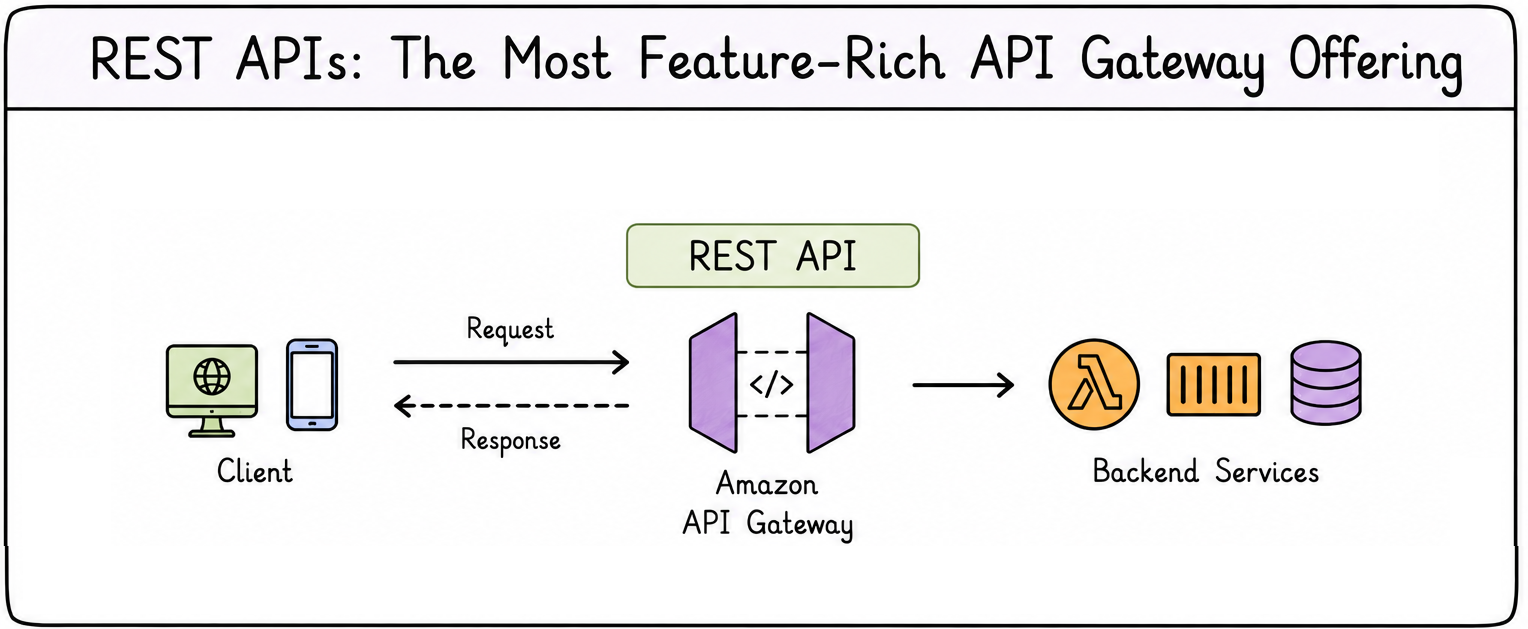
REST APIs

  • Most feature-rich API Gateway offering.
  • Built on a synchronous request/response model.


REST APIs

Developing applications on AWS

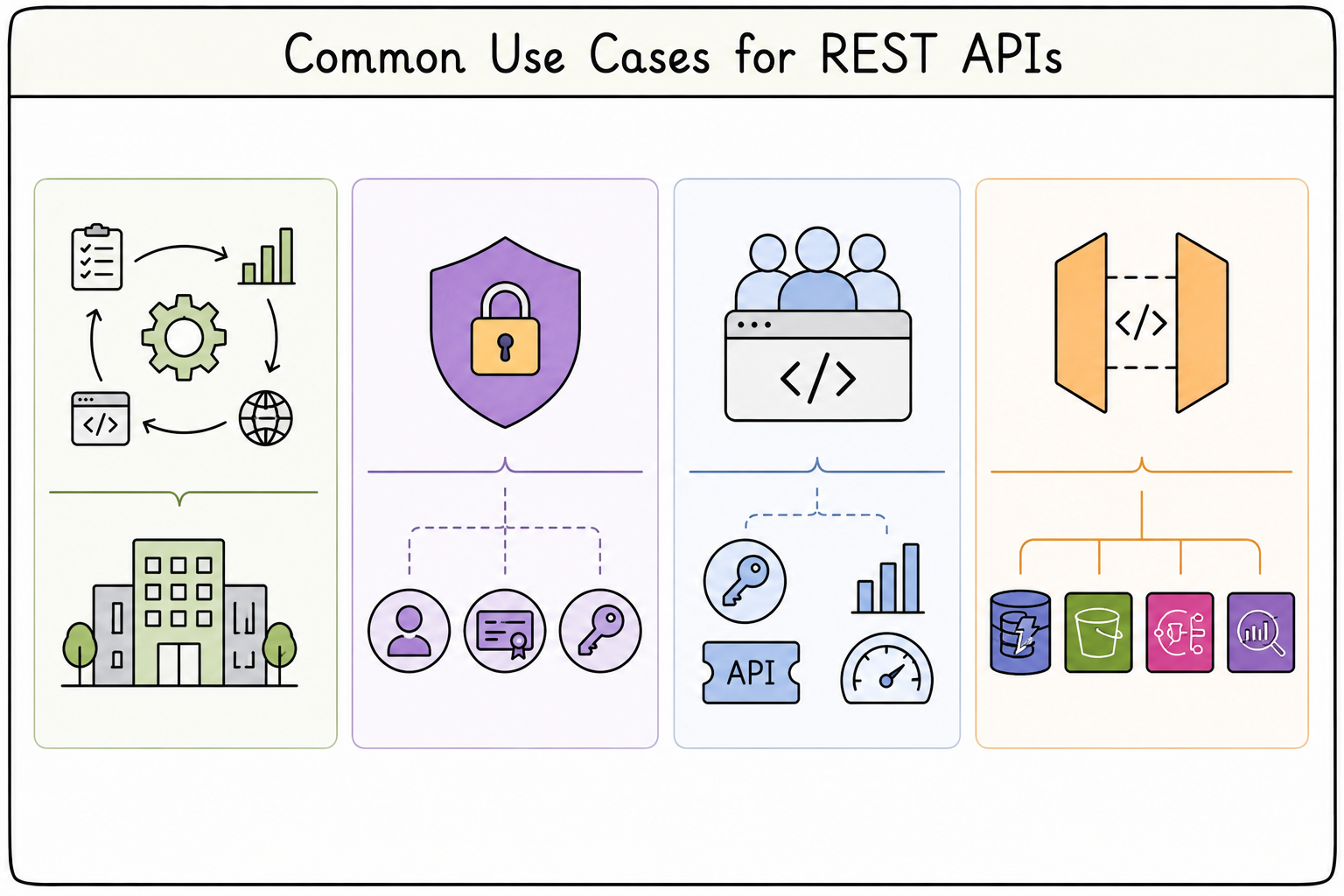
REST API use cases


API REST use cases

  • Enterprise APIs needing full life-cycle management.
  • APIs requiring advanced security controls.
  • Third-party developer ecosystems with API keys and usage plans.
  • Direct AWS service integrations without Lambda.
Developing applications on AWS

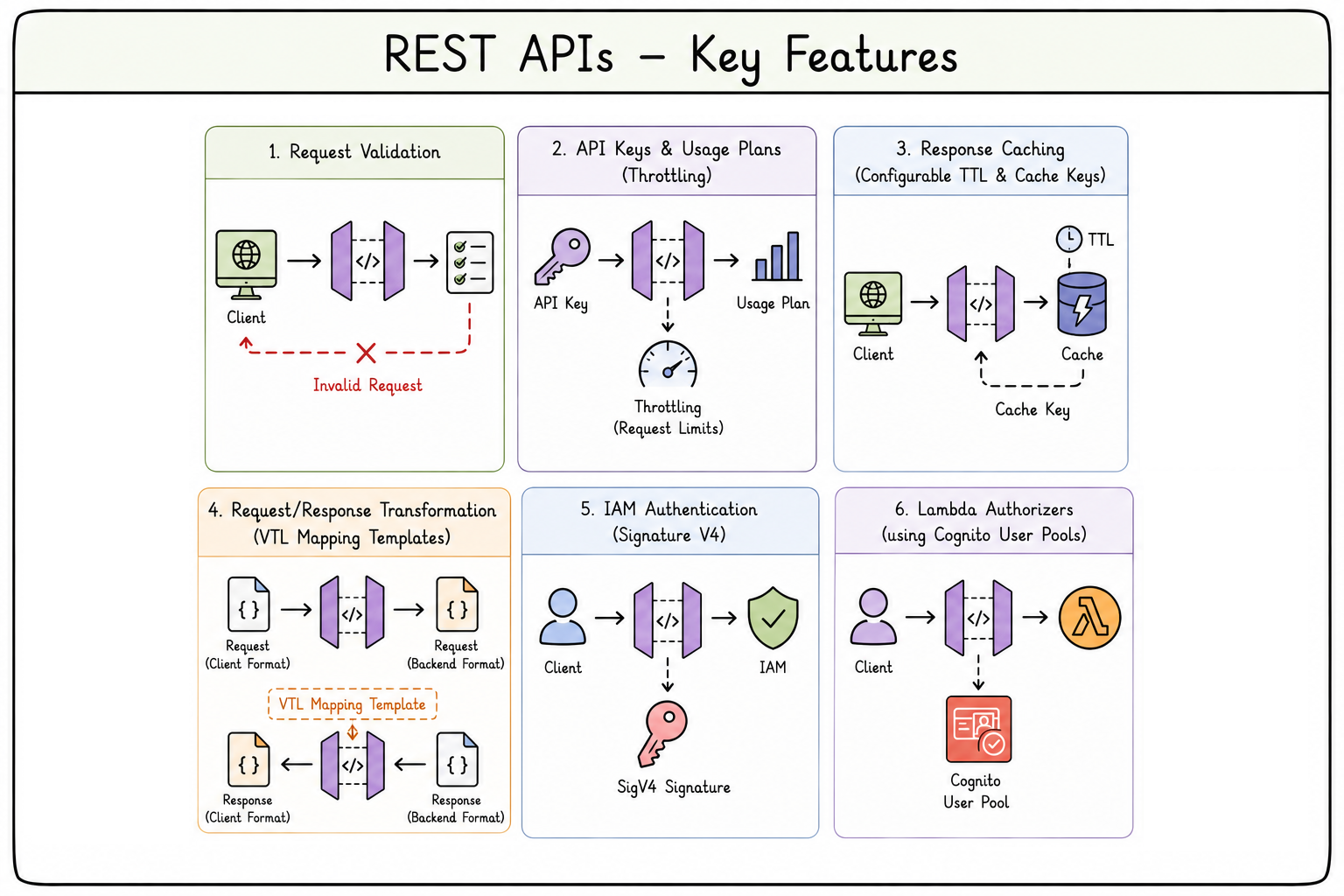
API Gateway REST API support


REST API support

  • Request validation.
  • API keys.
  • Usage plans and throttling.
  • Response caching with configurable TTL.
  • Request/response transformation via VTL templates.
  • IAM authentication (Signature V4).
  • Lambda authorizers, Cognito user pools.
Developing applications on AWS

API Gateway REST API support


REST API support

  • Three endpoint types supported:
    • Edge-optimized
    • Regional
    • Private
  • Web exploit protection with AWS WAF.
  • Canary release deployments.
  • Observability via AWS X-Ray and CloudWatch logging.
Developing applications on AWS

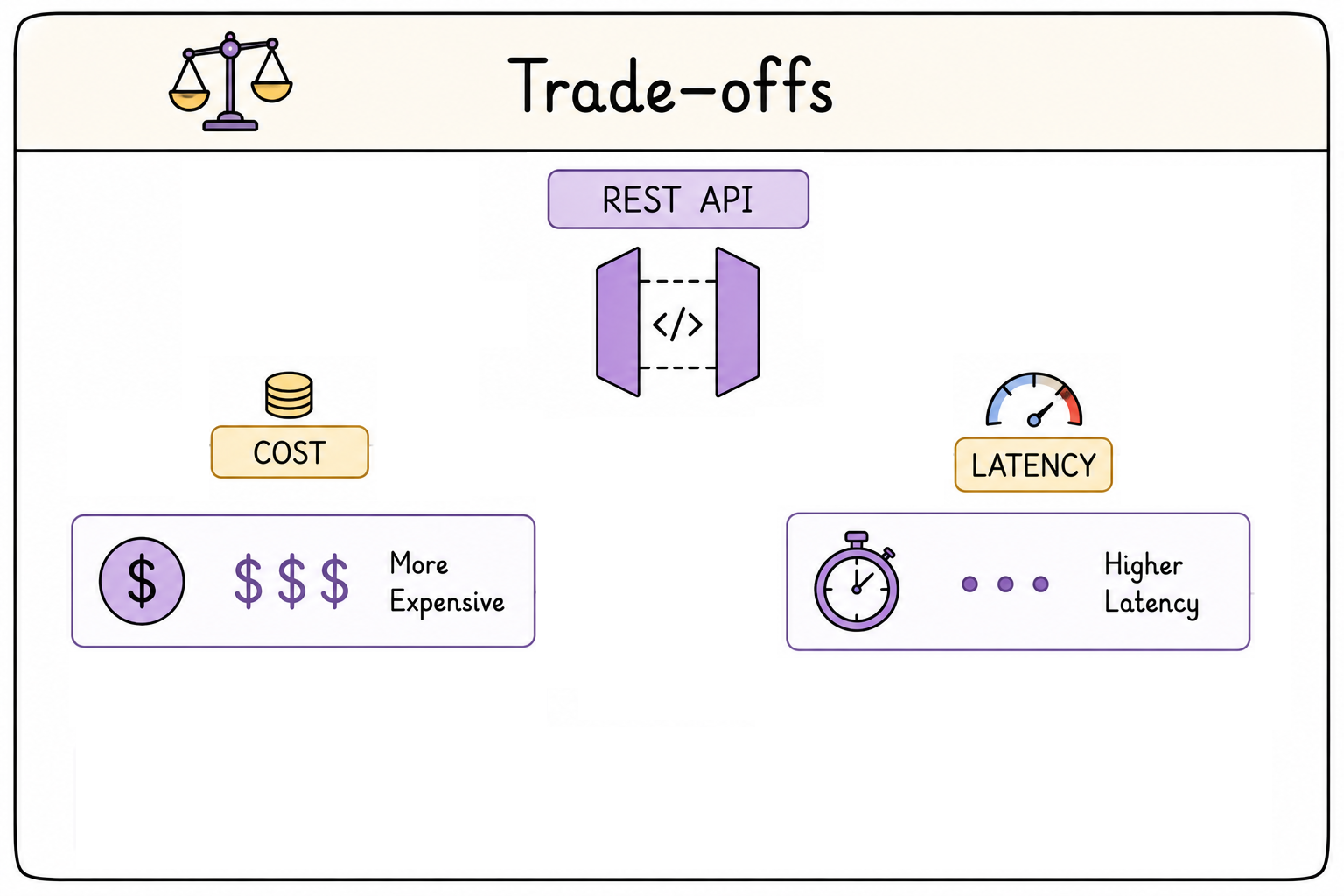
REST APIs trade-offs

  • More expensive than HTTP APIs.
  • Slightly higher latency.


REST trade-offs

Developing applications on AWS

HTTP APIs

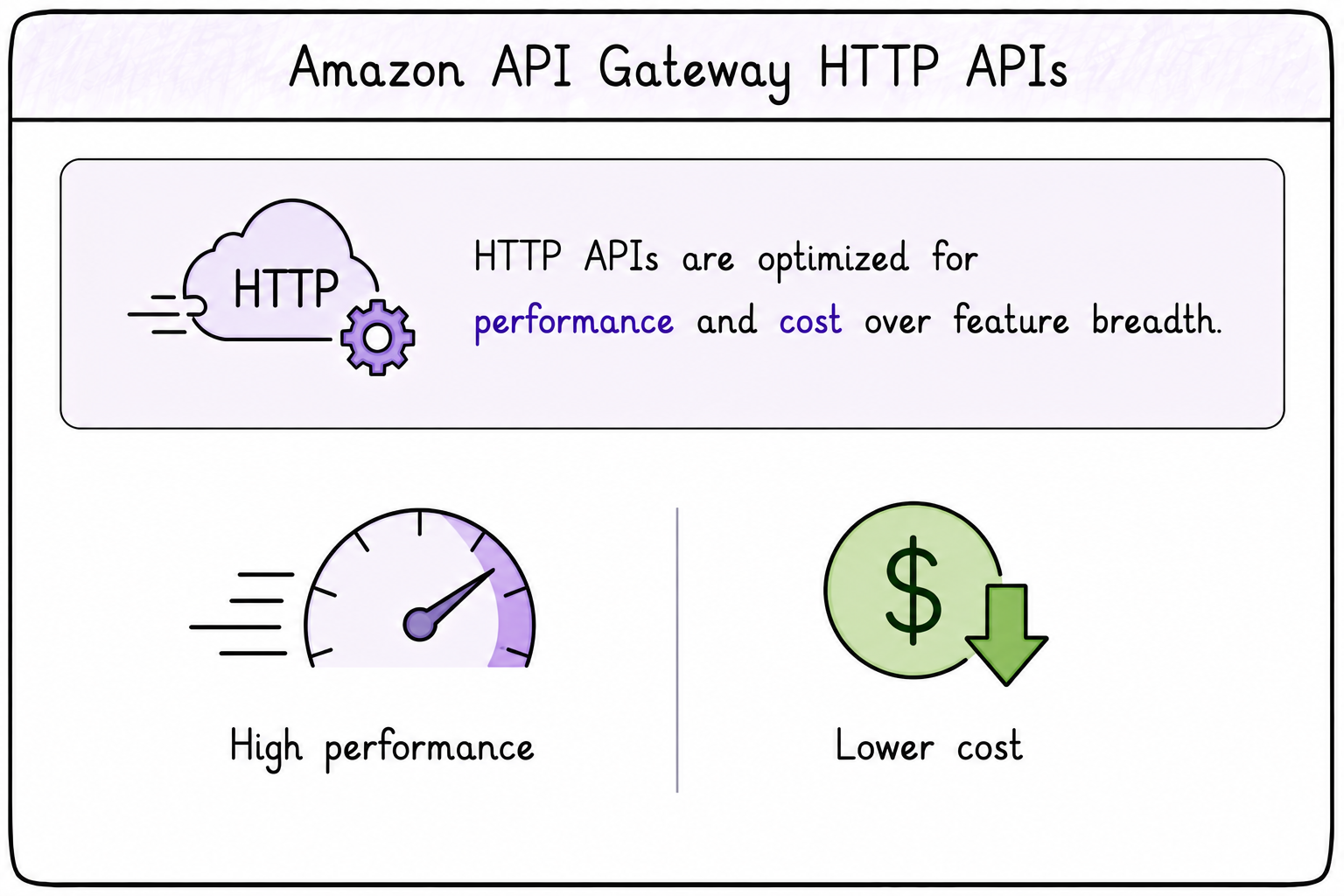
  • Optimized for performance and cost over feature breadth:
    • Performance
    • Cost


HTTP APIs

Developing applications on AWS

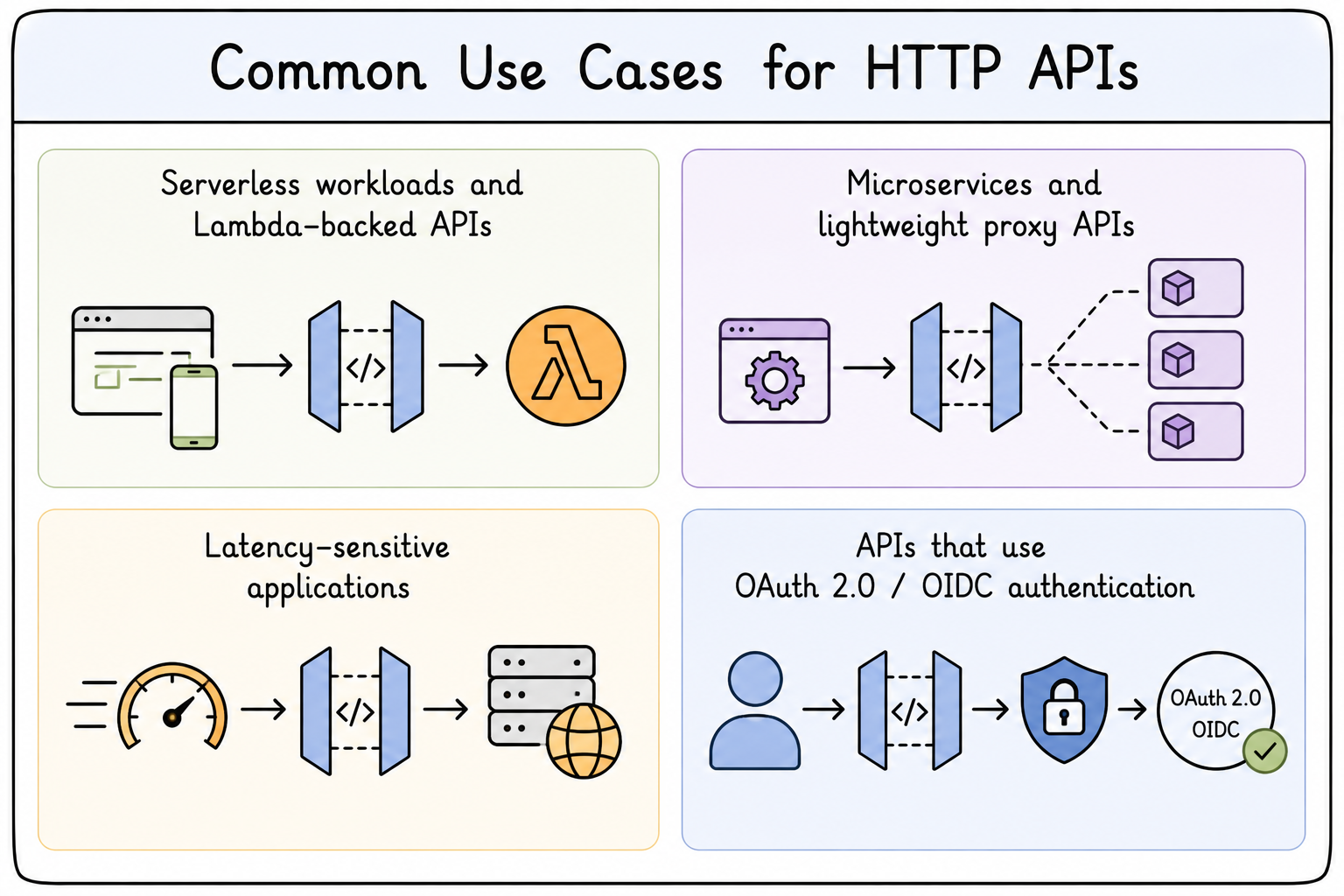
HTTP API use cases

  • Serverless workloads and Lambda-backed APIs.
  • Microservices and lightweight proxy APIs.
  • Latency-sensitive applications.
  • APIs using OAuth 2.0 / OIDC authentication.


HTTP APIs use cases

Developing applications on AWS

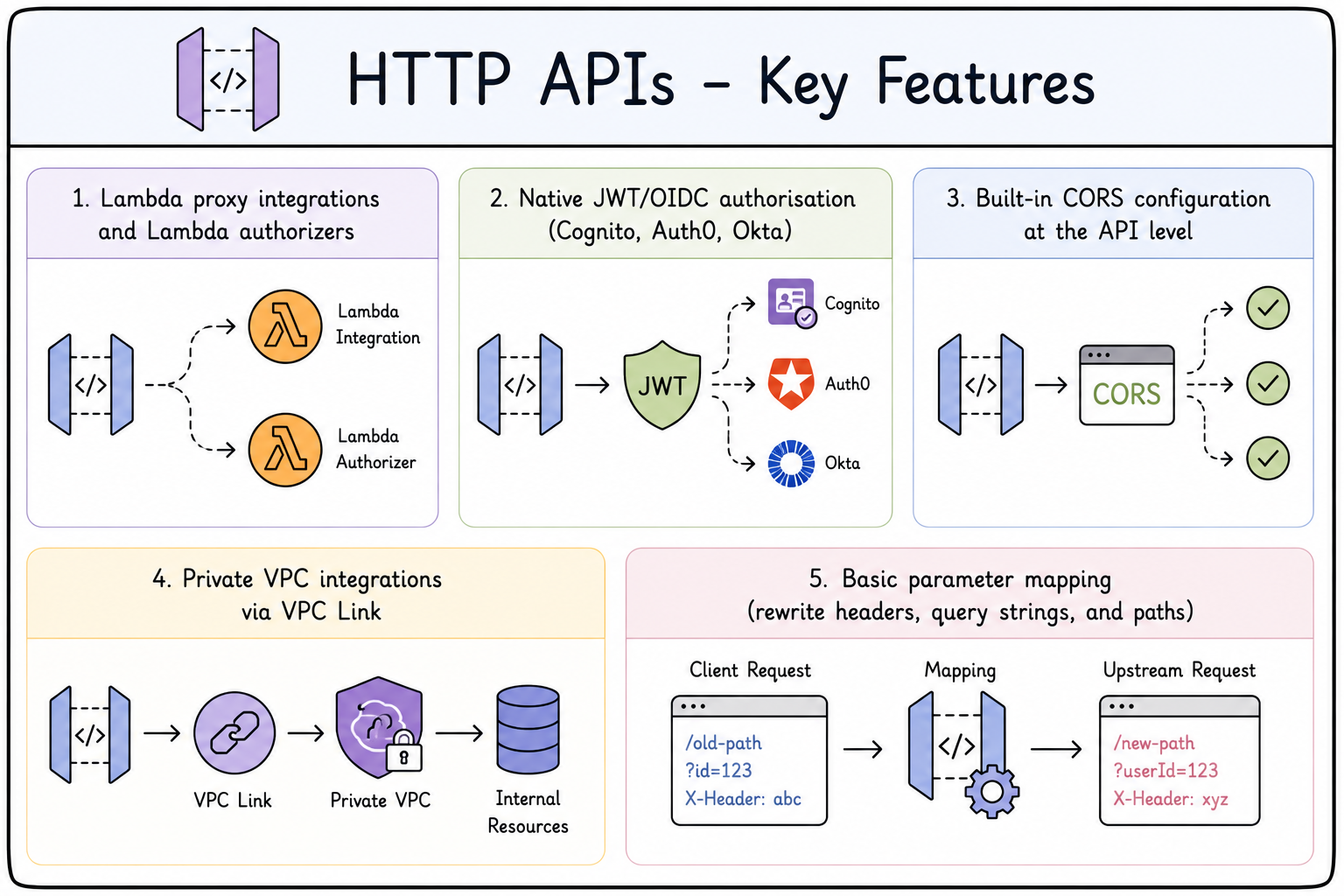
API Gateway HTTP API support


HTTP API features

  • Lambda proxy integrations and authorizers.
  • Native JWT/OIDC authorization (Cognito, Auth0, Okta).
  • Built-in CORS configuration at the API level.
  • Private VPC integrations via VPC Link.
  • Basic parameter mapping for headers, query strings, and paths.
Developing applications on AWS

HTTP API trade-offs


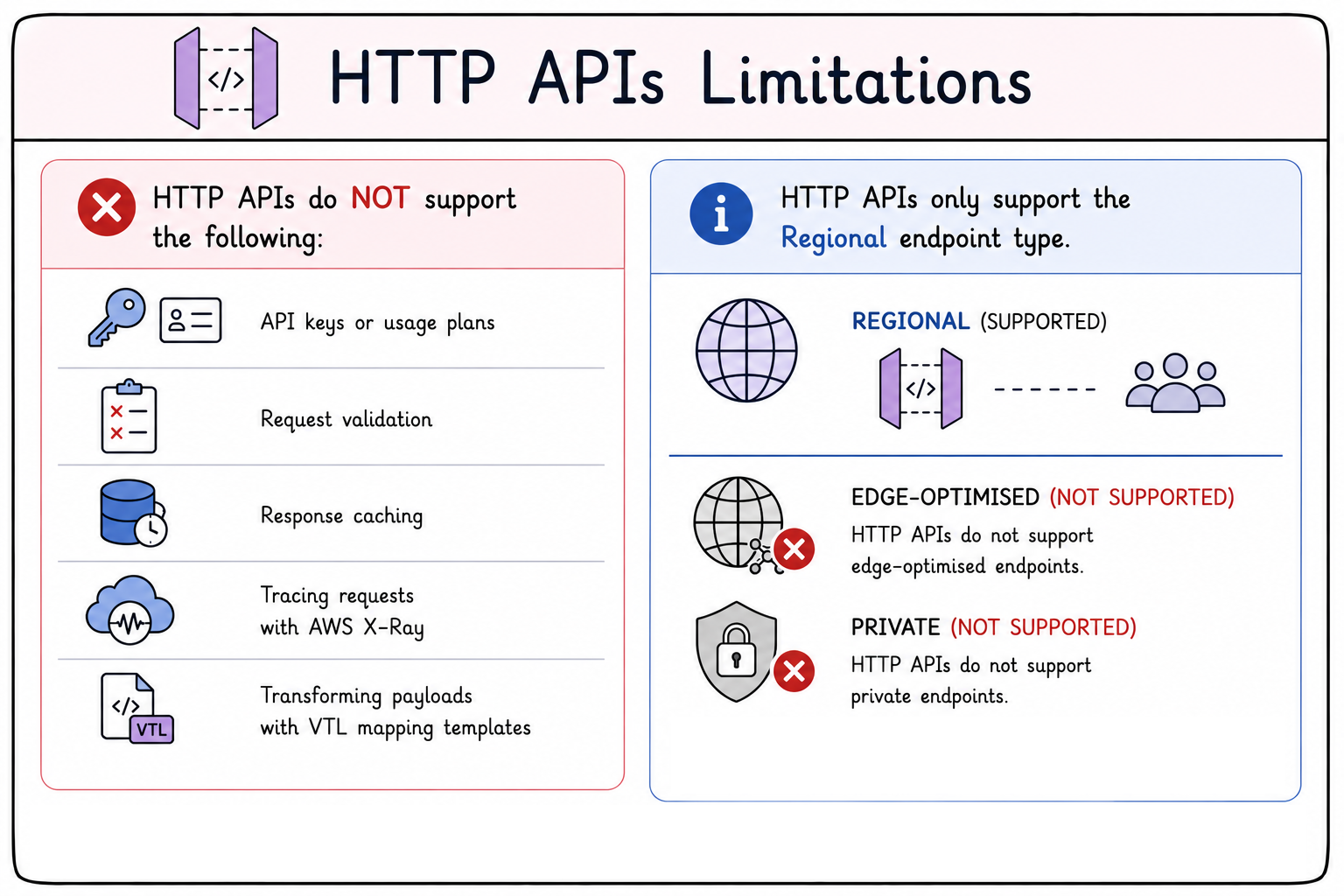
HTTP API limitations

  • HTTP APIs do NOT support:

    • API keys
    • Usage plans
    • Request validation
    • Response caching
    • Tracing with AWS X-Ray
    • VTL payload transformation

    • Only support:

      • Edge or private endpoints (regional only)
Developing applications on AWS

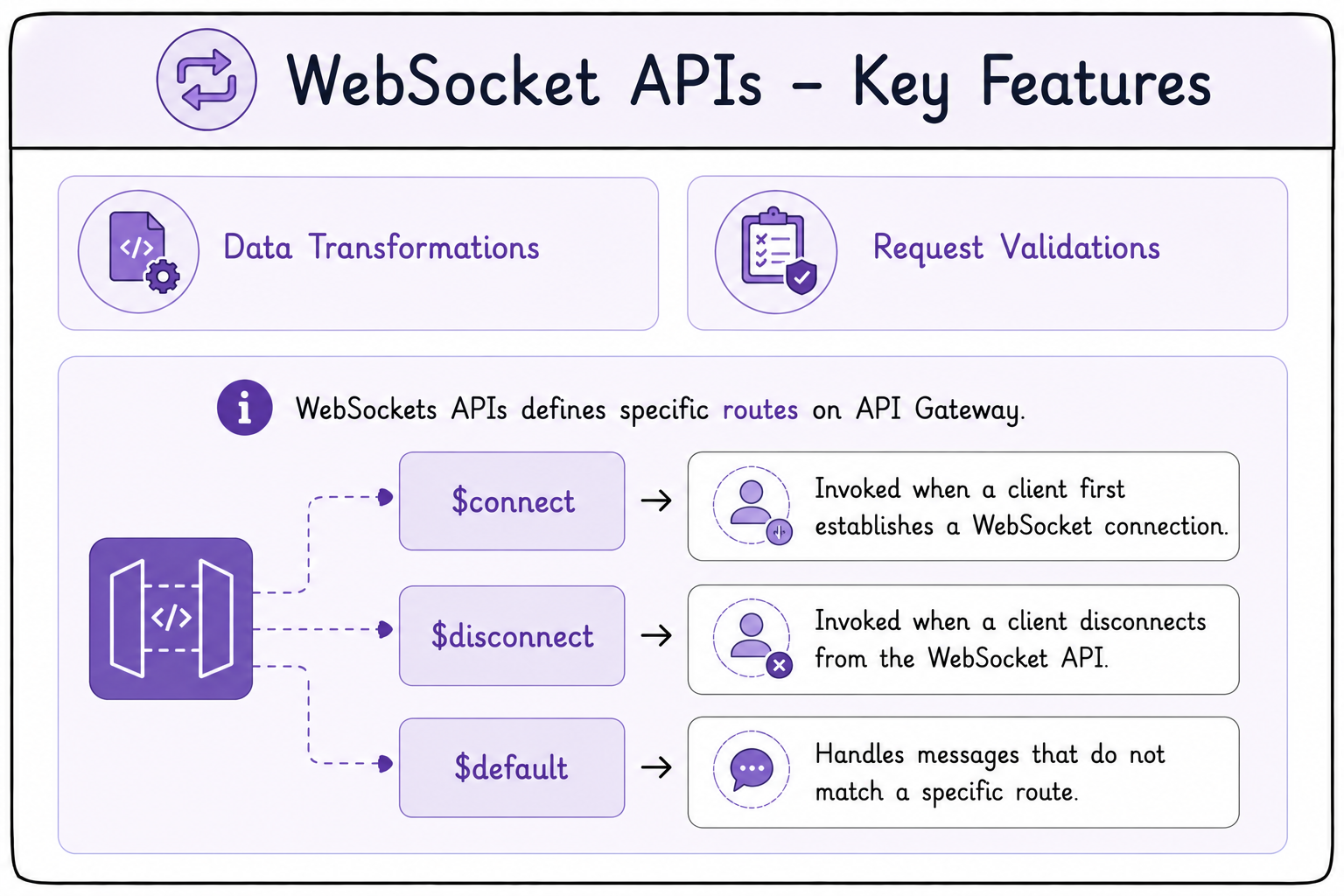
WebSocket APIs


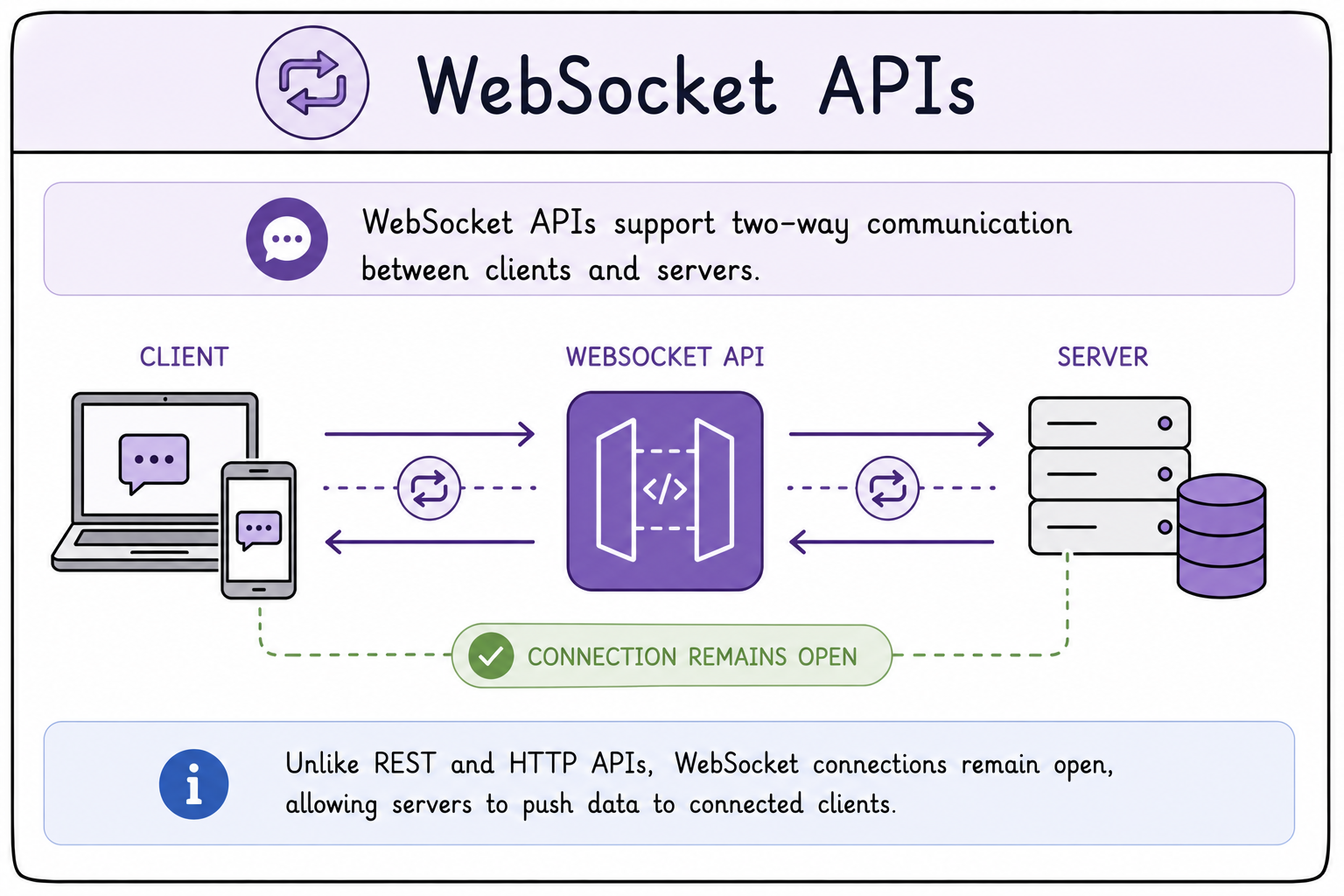
WebSocket APIs

  • Two-way communication between clients and servers.
  • Connection stays open, unlike REST and HTTP APIs.
  • Servers can push data to connected clients.
Developing applications on AWS

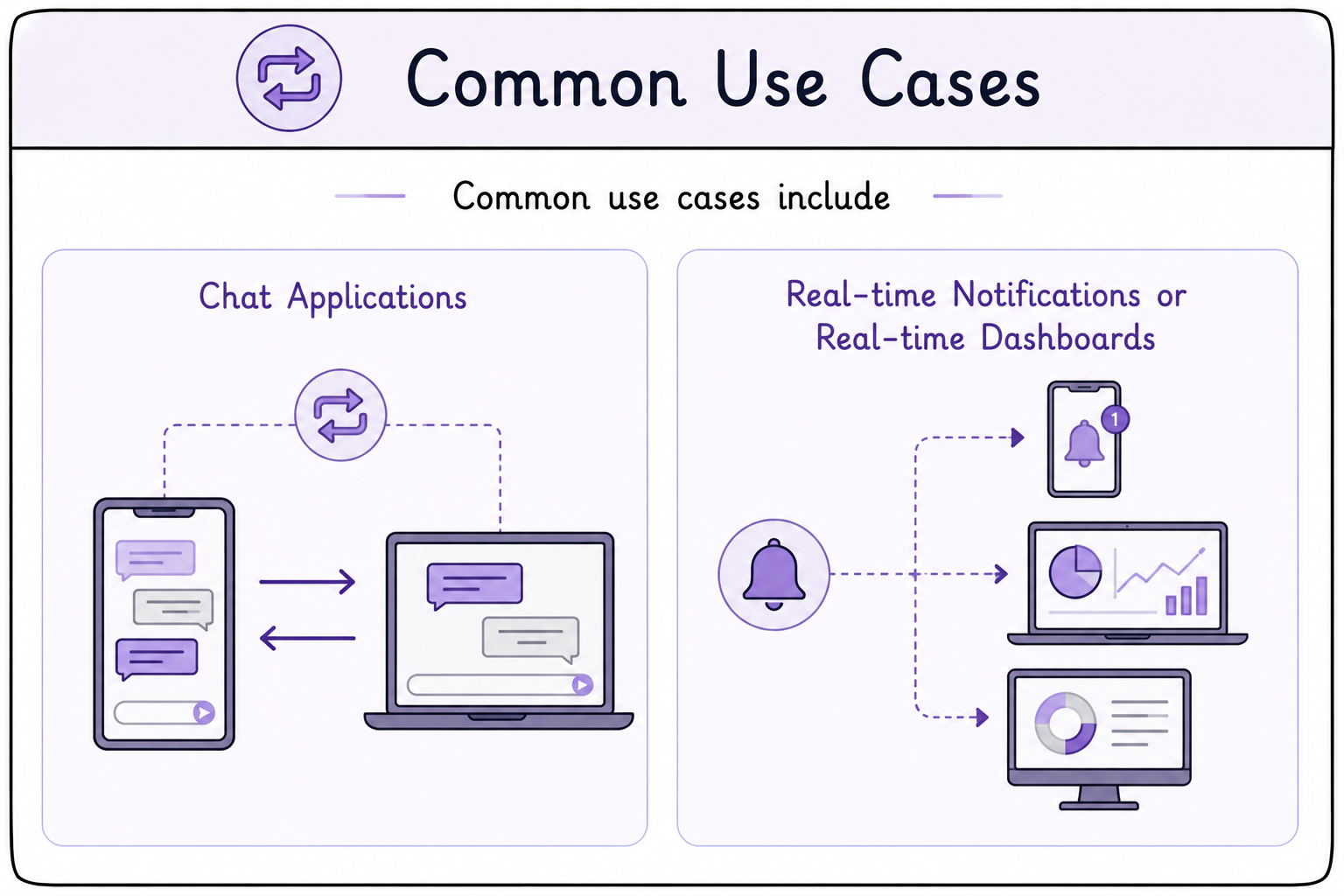
WebSocket API use cases

  • Chat applications.
  • Real-time notifications.
  • Real-time dashboards.


use cases

Developing applications on AWS

API Gateway WebSocket API support

  • Payload data transformations.
  • Request validation.
  • Special built-in routes:
    • $connect: client establishes a connection
    • $disconnect: client disconnects
    • $default: no matching route found


WebSocket API features

Developing applications on AWS

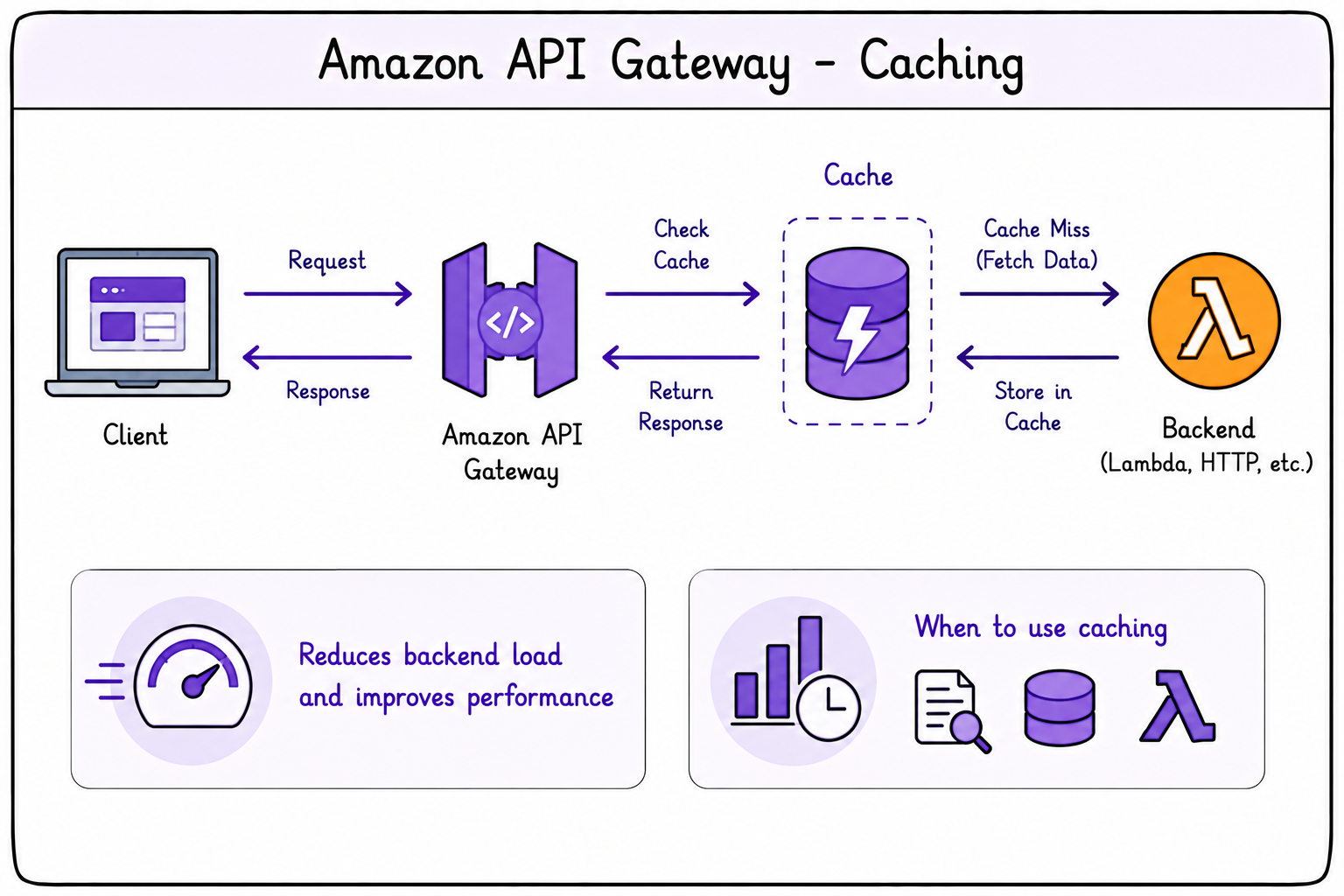
API caching

  • Caching responses reduces backend load.
  • Improves API performance.
  • Typical use cases:
    • Frequently requested data
    • Read-heavy APIs
    • Reducing Lambda invocations


API caching

Developing applications on AWS

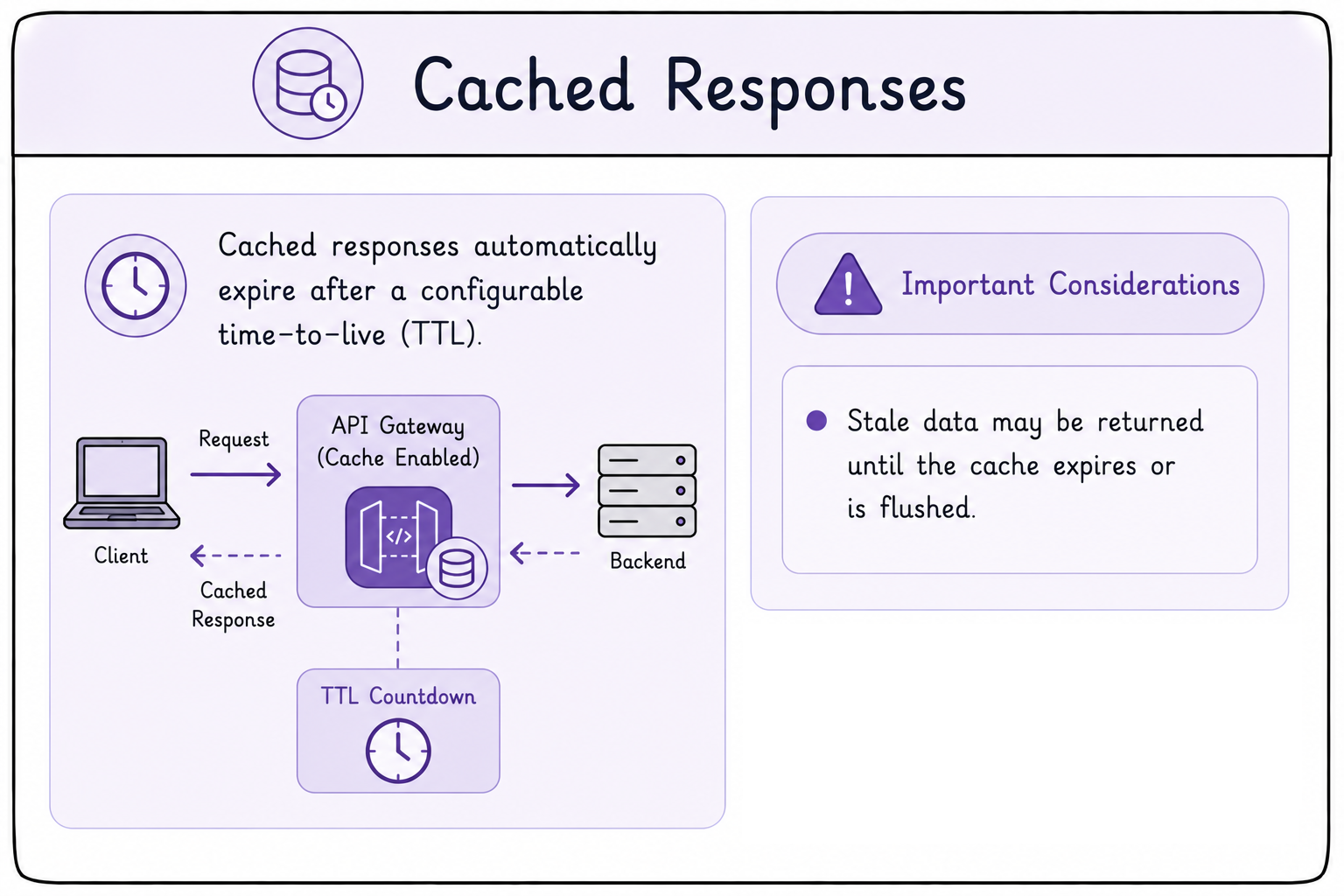
API caching


API cached response

  • Cached responses expire after a configurable TTL.
  • Manage stale data by:
    • Setting the cache to expire
    • Flushing the cache
Developing applications on AWS

API design best practices: use clear resource naming
 

API design - nouns

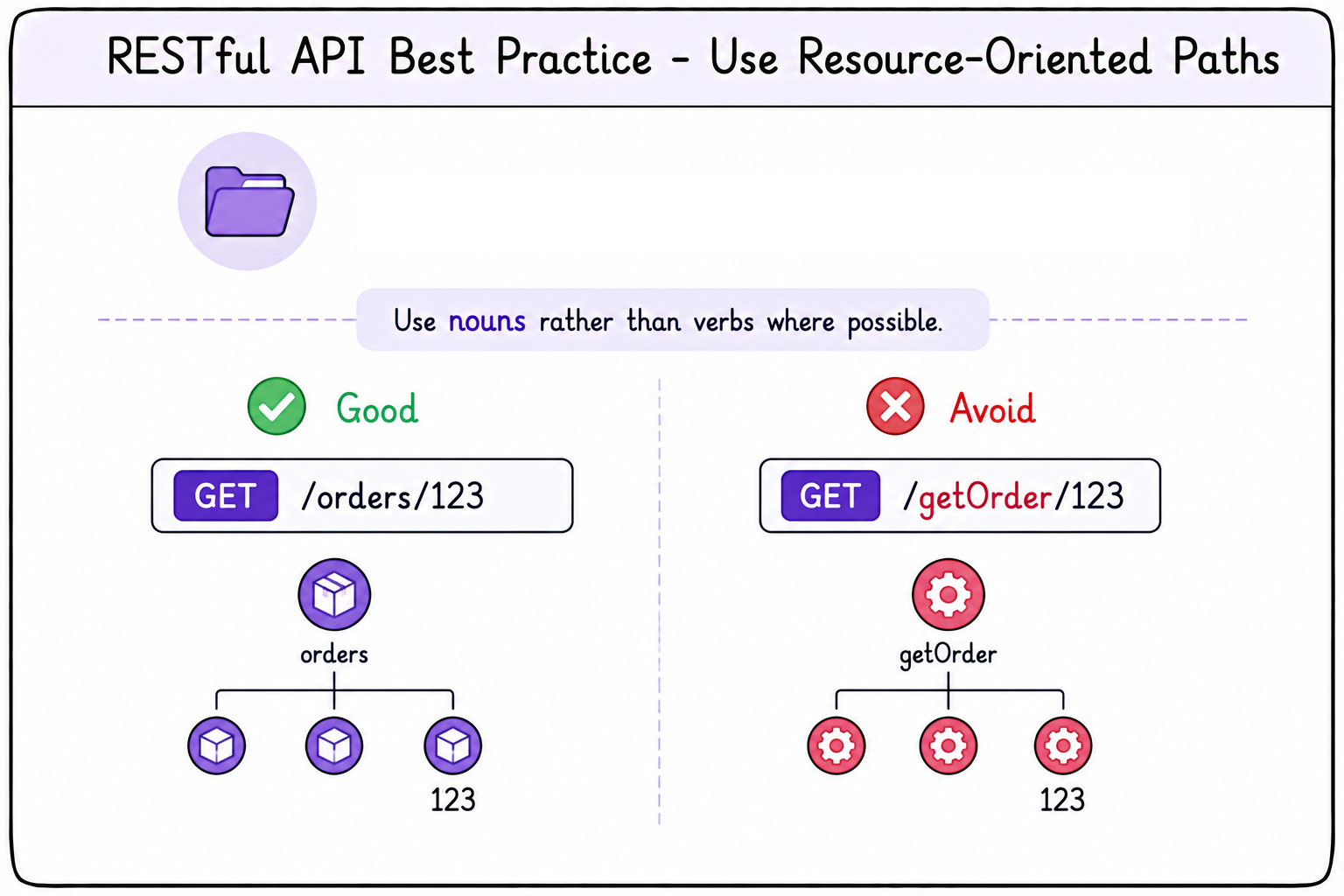
  • Paths should represent resources, not actions.
  • Use nouns, not verbs.
  • Good:
    • GET /orders/123
  • Avoid:
    • GET /getOrder/123
Developing applications on AWS

API design best practices: version APIs
 

Versioning APIs

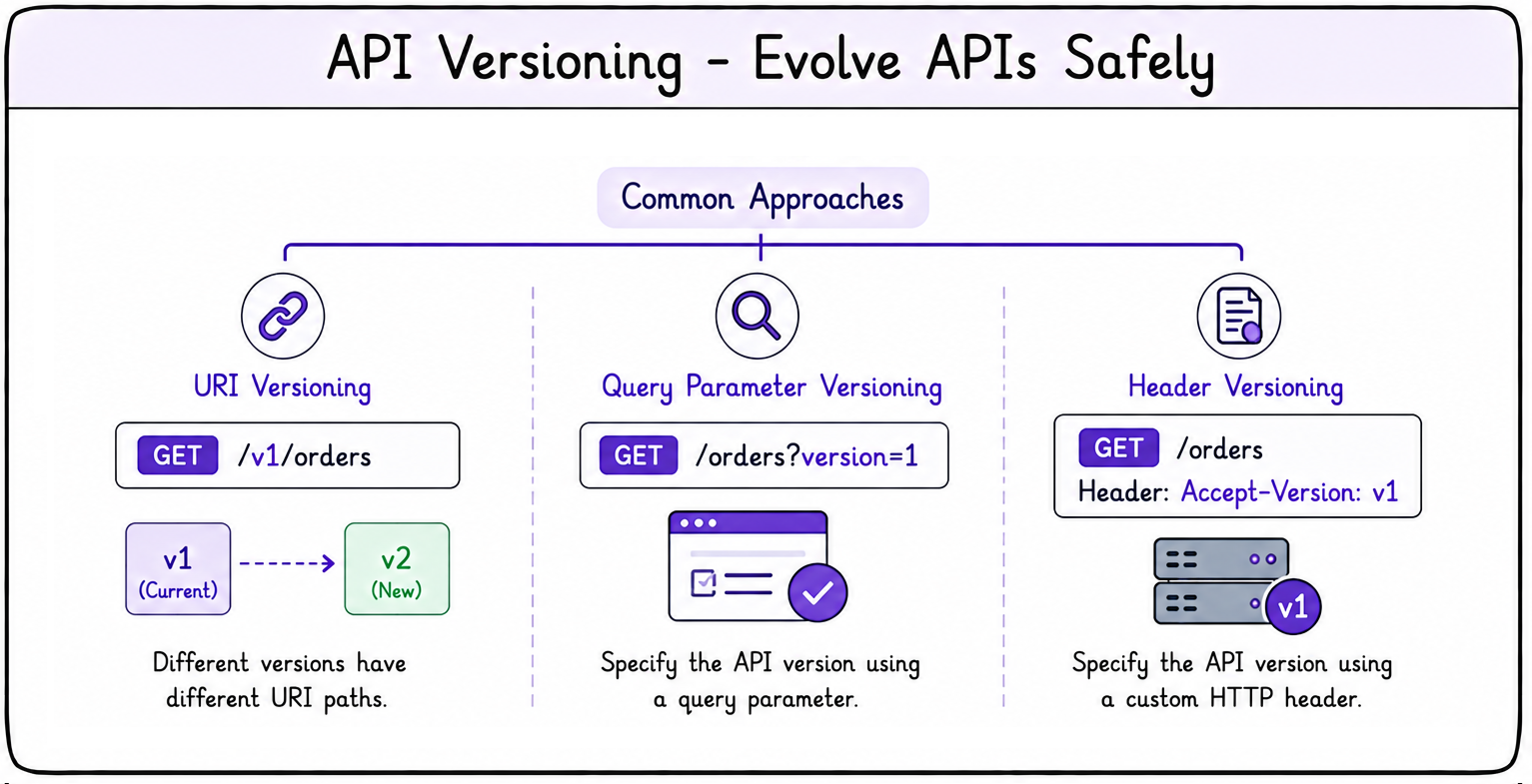
  • Version APIs to evolve them safely over time.
  • Avoid breaking existing clients.
  • Common approaches:
    • URI versioning: GET /v1/orders
    • Query parameter: GET /orders?version=1
    • HTTP header: Accept-Version: v1
Developing applications on AWS

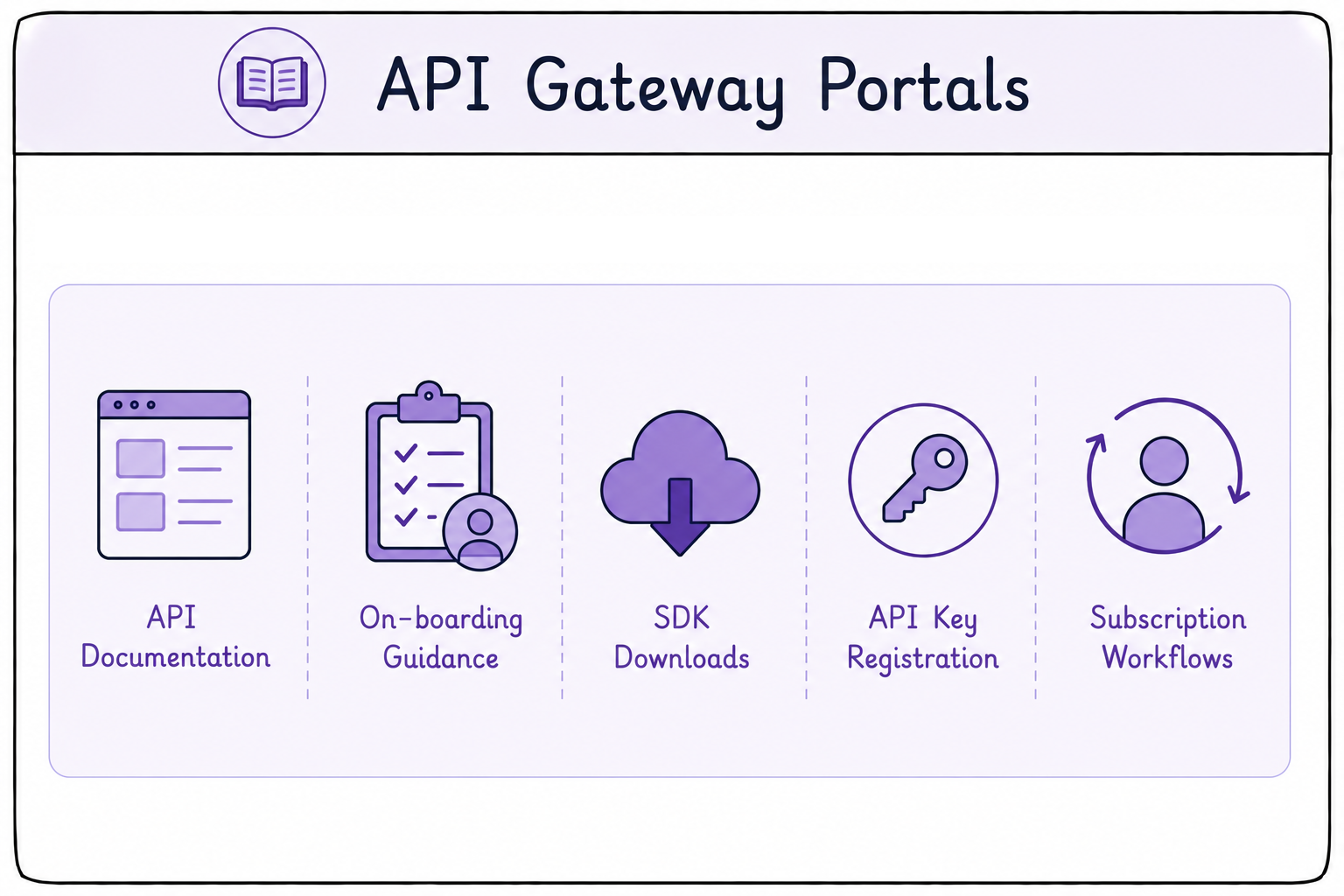
API developer portals

  • Publish and share REST APIs via a web portal.
  • Provide documentation to API consumers.
  • Key features:
    • API documentation (Swagger files)
    • Consumer onboarding
    • SDK downloads
    • API key registration and subscription flows


api gateway portal

Developing applications on AWS

OpenAPI specifications

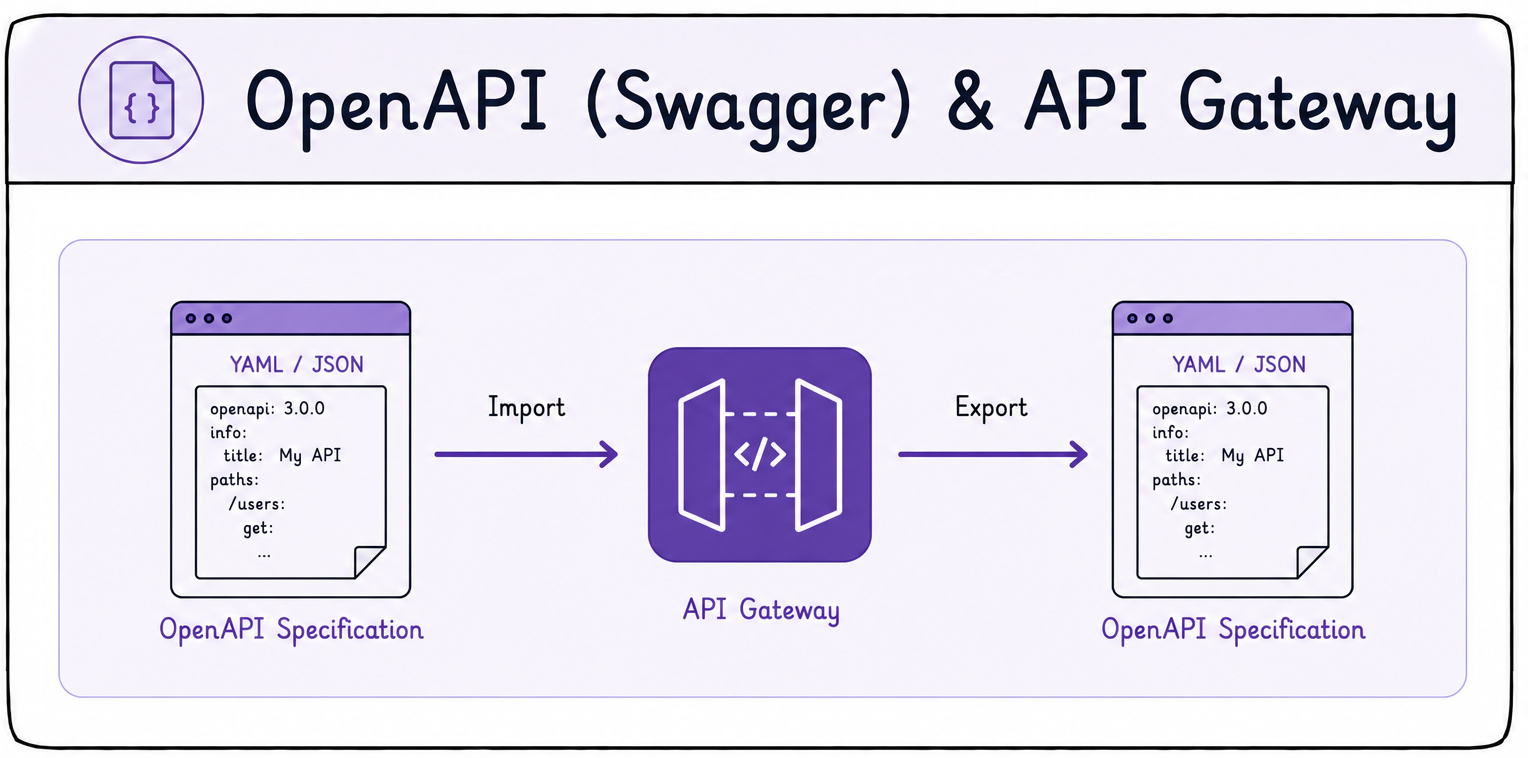
  • OpenAPI (Swagger): the standard way to describe REST APIs.
  • API Gateway can import and export OpenAPI specs.


Swagger support in API Gateway

Developing applications on AWS

Let's practice!

Developing applications on AWS

Preparing Video For Download...