Decoupling using AWS Messaging Services

Developing applications on AWS

Ricardo Sueiras

Principal Technologist

Amazon SQS fundamentals
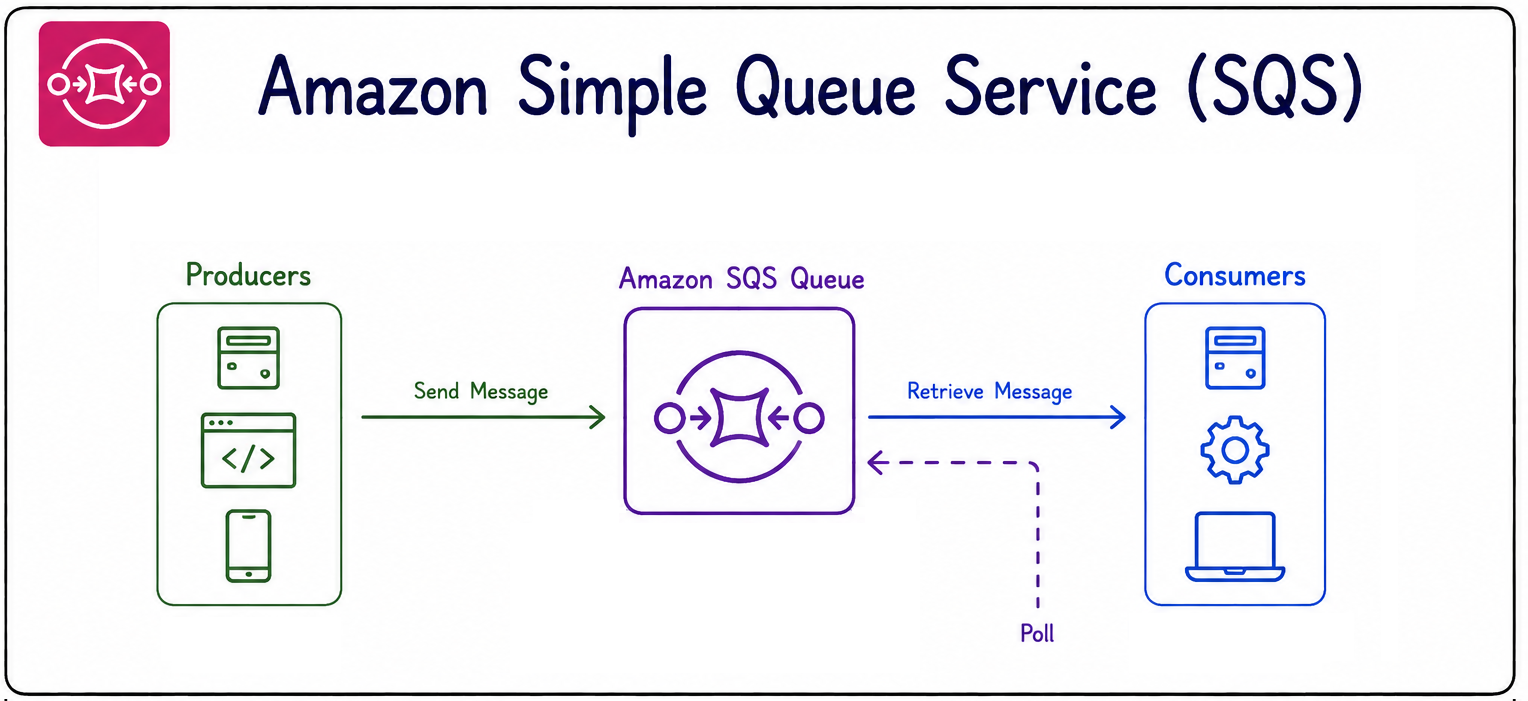
 

sqs overview

  • Handles traffic bursts independently of producers.
  • Managed message queue for asynchronous messaging.
  • Producers send messages into a queue.
  • Consumers retrieve messages from the queue.
  • Messages retained until a consumer picks them up.
  • Retention: 4 days by default, 14 days maximum.
  • Consumers poll the queue and process at their own rate.
Developing applications on AWS

Message visibility

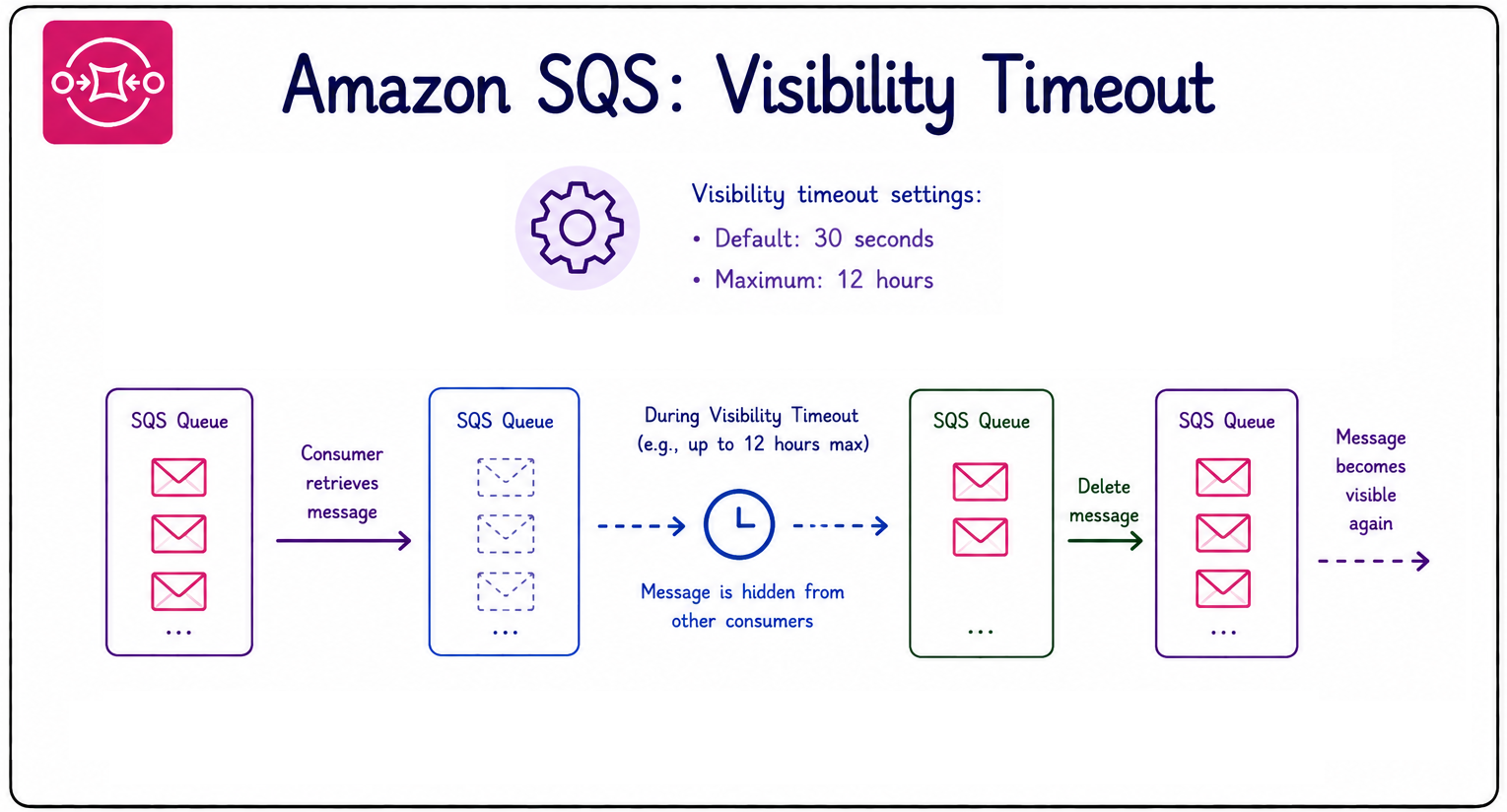
  • A message becomes invisible once a consumer reads it.
  • Visibility timeout controls how long it stays hidden.
  • If processing fails and the message is not deleted:
    • It becomes visible again.
    • It can be reprocessed.
  • Visibility timeout: 30 seconds by default.
  • Maximum visibility timeout is 12 hours.


message visibility

Developing applications on AWS

Message size


image size

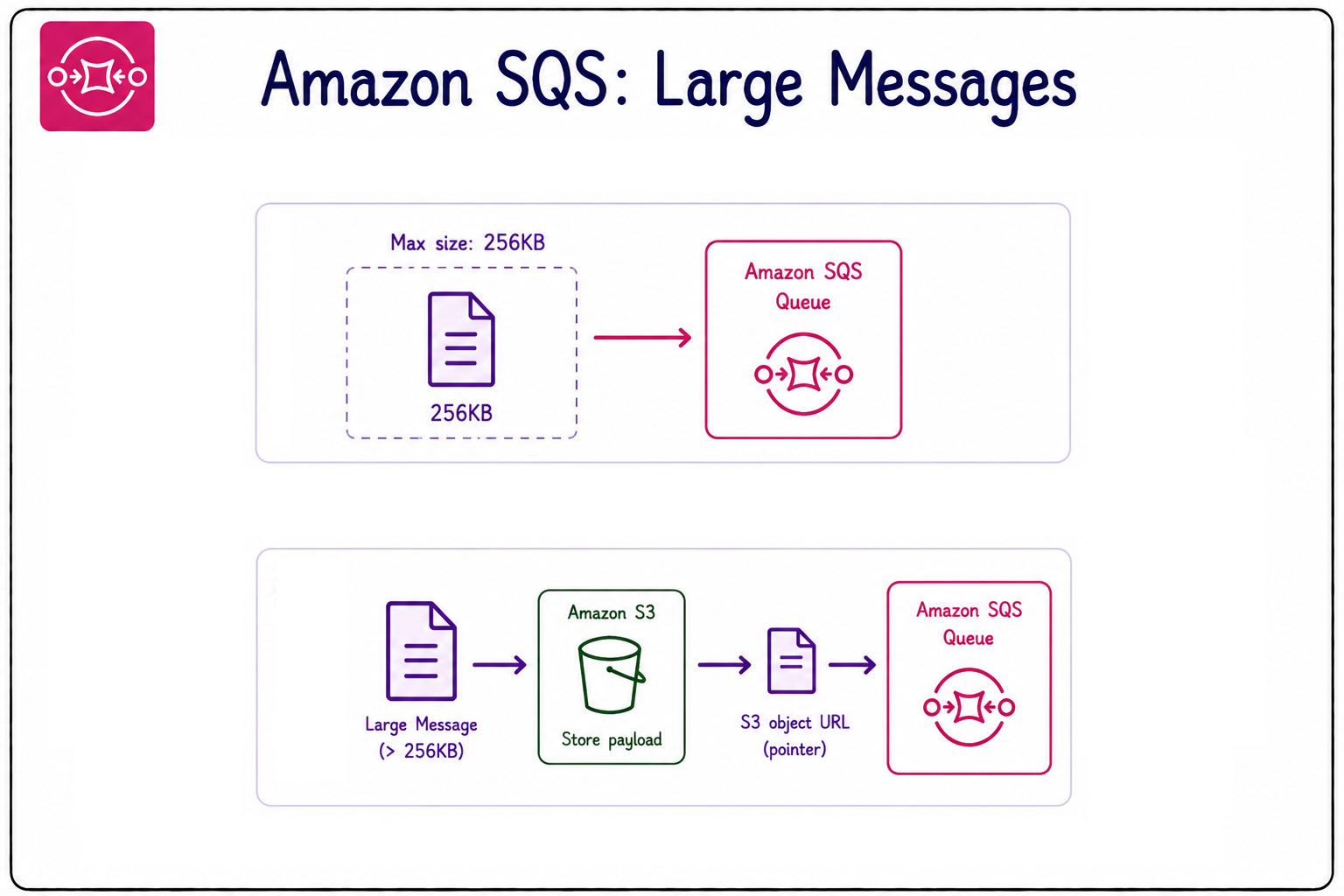
  • Messages can be up to 256KB in size.
  • SQS Extended Client library enables larger messages.
  • Stores the large payload in Amazon S3.
  • Sends a pointer to S3 in the message payload.
Developing applications on AWS

Short polling

  • Polling strategy affects cost and efficiency.
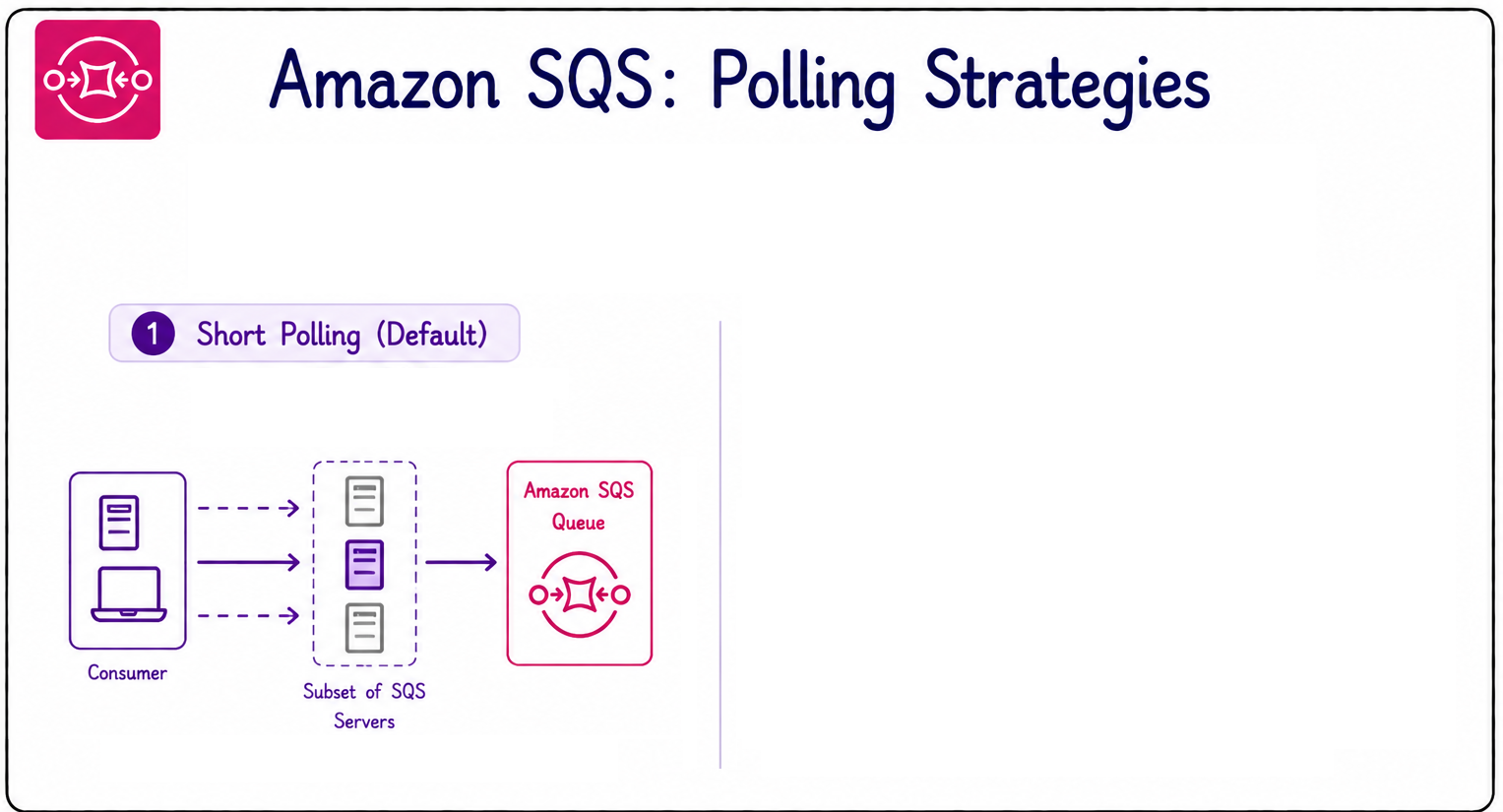
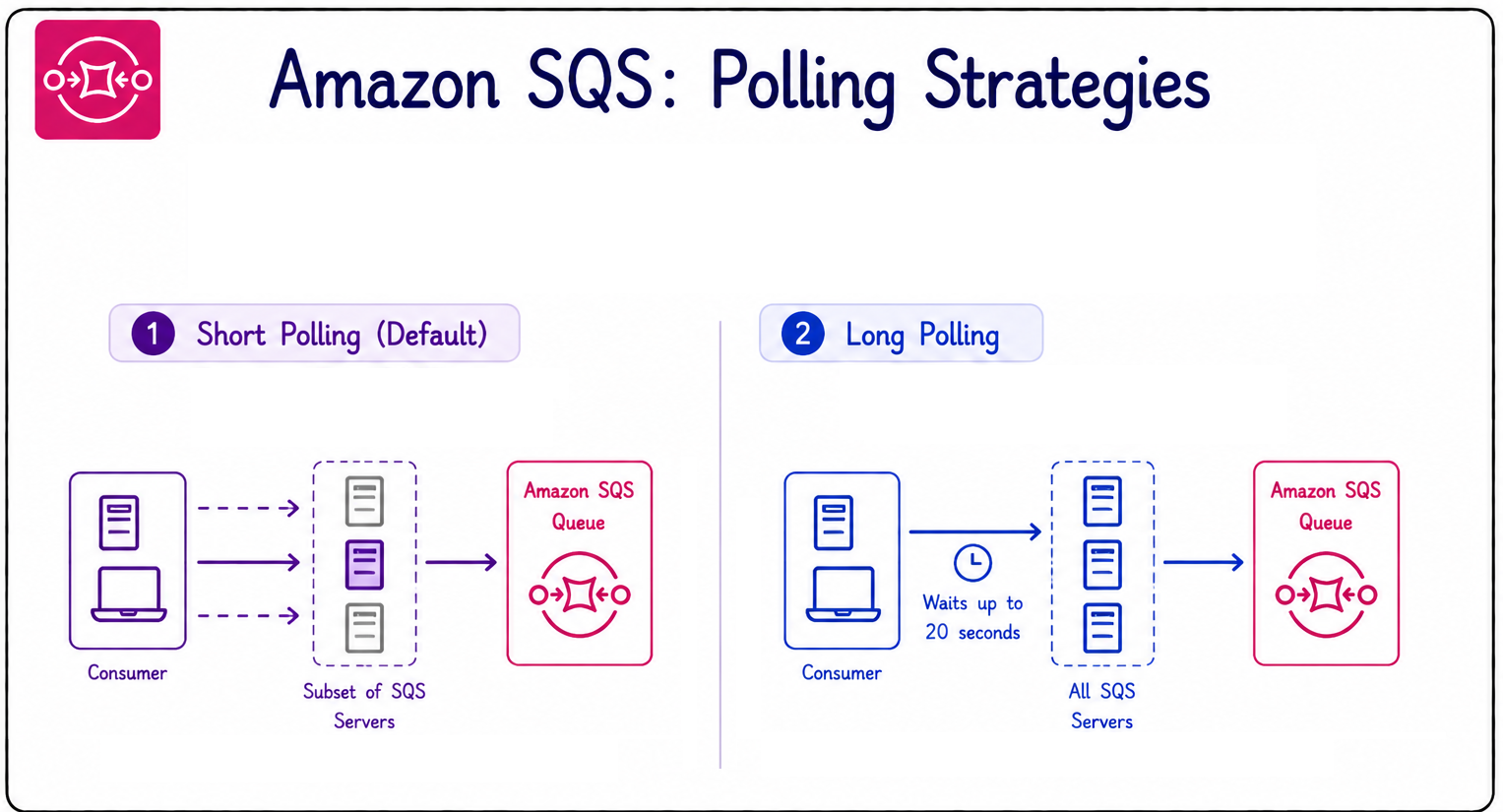
  • Short polling is the default.
  • Queries a subset of SQS servers, returns immediately.
  • May return empty, even when messages are available.
  • Results in more API calls and higher cost.


polling

Developing applications on AWS

Long polling

  • Long polling queries all SQS servers.
  • Waits up to 20 seconds for a message.
  • Eliminates unnecessary empty responses.
  • Reduces API calls and lowers cost.


polling

Developing applications on AWS

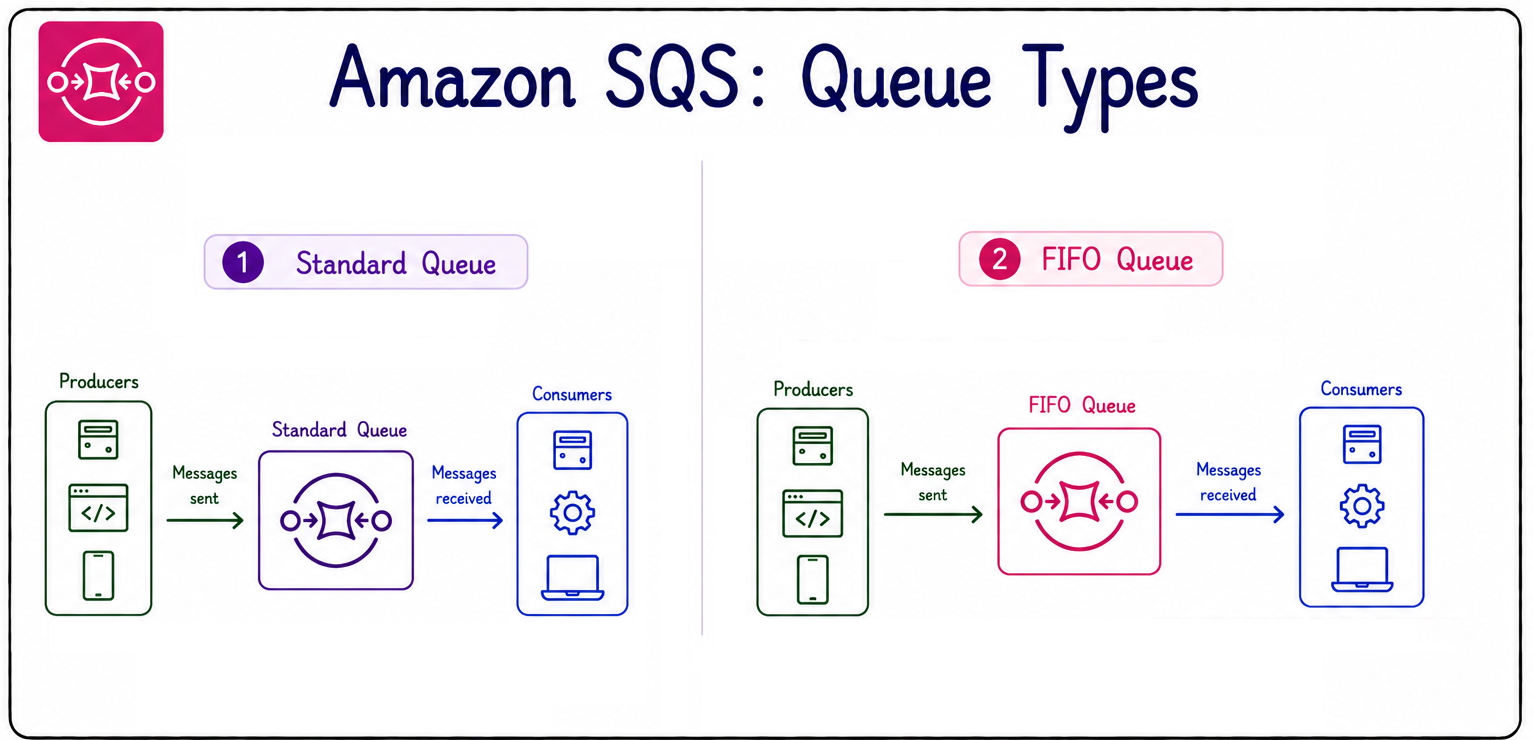
Standard queues

  • SQS offers two types of queues.
  • Standard queues:
    • At-least-once delivery.
    • Best-effort ordering.
    • Nearly unlimited throughput.


queue types

Developing applications on AWS

FIFO queues


queue types

  • FIFO queues:
    • Exactly-once processing.
    • Strict message ordering.
    • Built-in message de-duplication.
  • Default 300 TPS
    • Increase to 3,000 with batching or more with high-throughput mode.
  • Choose the queue type by use case:
    • Standard for scale and throughput.
    • FIFO for ordering and de-duping.
Developing applications on AWS

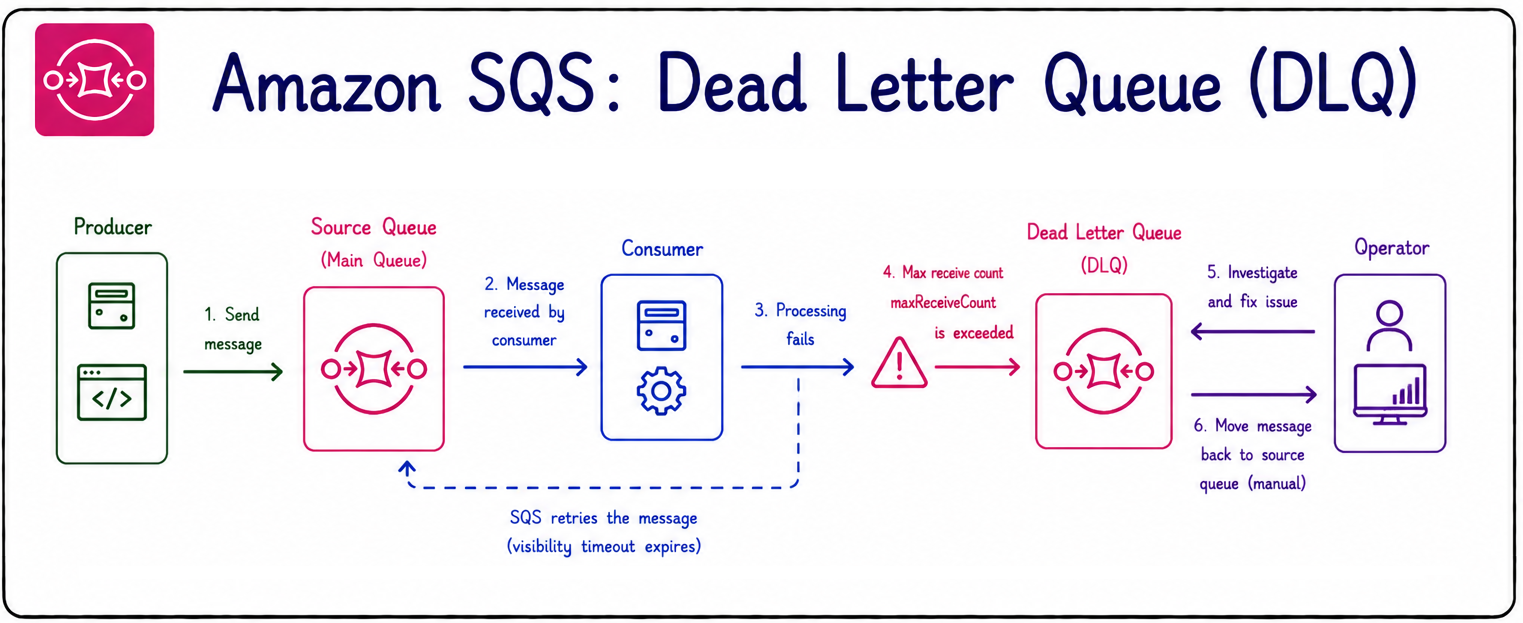
Handling poison messages


dlq

  • Dead letter queues (DLQ) store messages that fail processing.
  • A message moves to the DLQ once it exceeds maxReceiveCount.
  • This avoids retrying a poison message indefinitely.
  • The DLQ must be the same queue type as the source.
  • Move messages back to the source queue to reprocess.
Developing applications on AWS

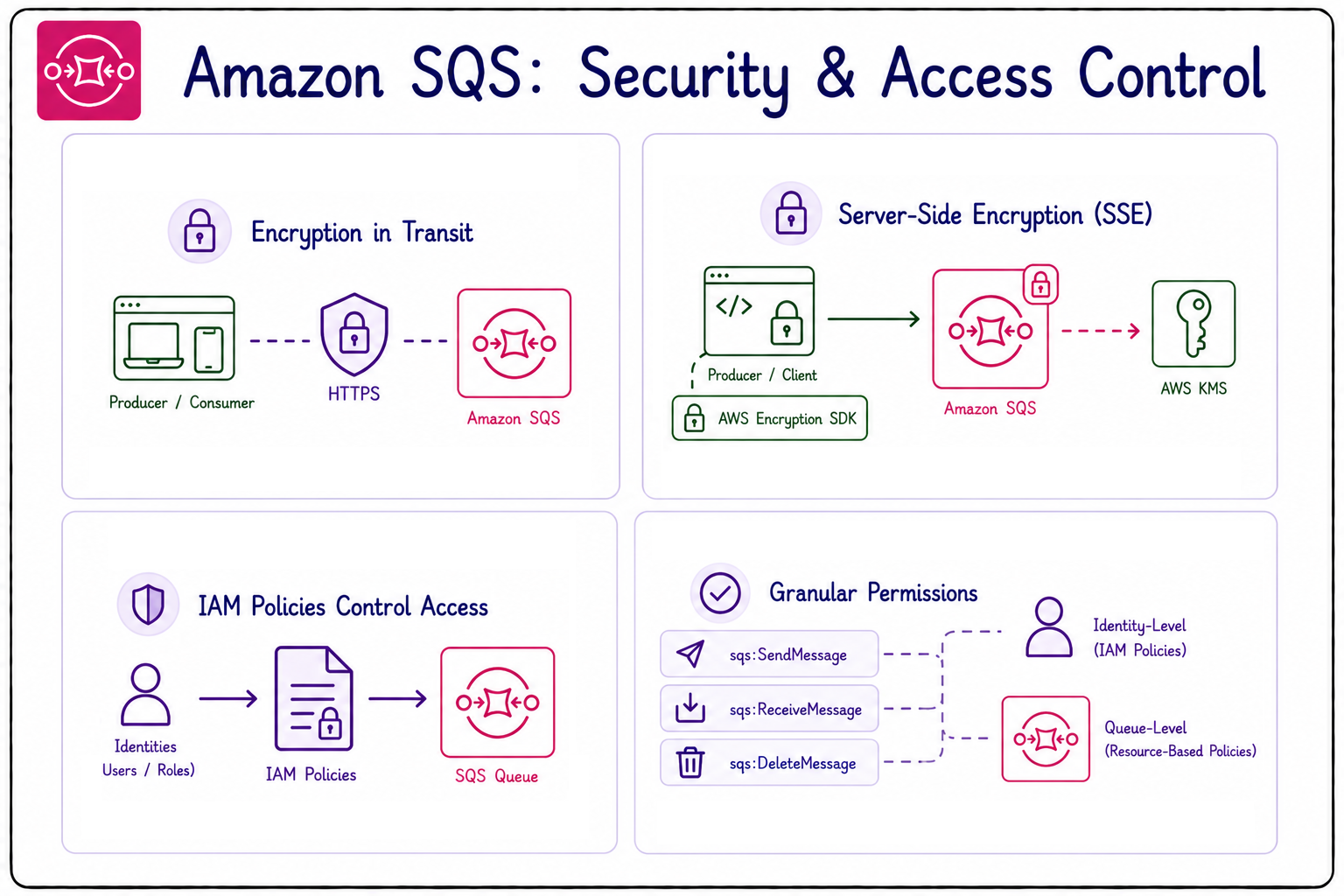
Securing queues


securing SQS

  • Encrypts in transit using HTTPS by default.
  • Server-side encryption at rest using AWS KMS.
  • Encrypt the payload client-side with the AWS Encryption SDK.
  • IAM policies govern who can access SQS queues.
  • Resource-based policies give granular, queue-level control.
Developing applications on AWS

Amazon SNS fundamentals

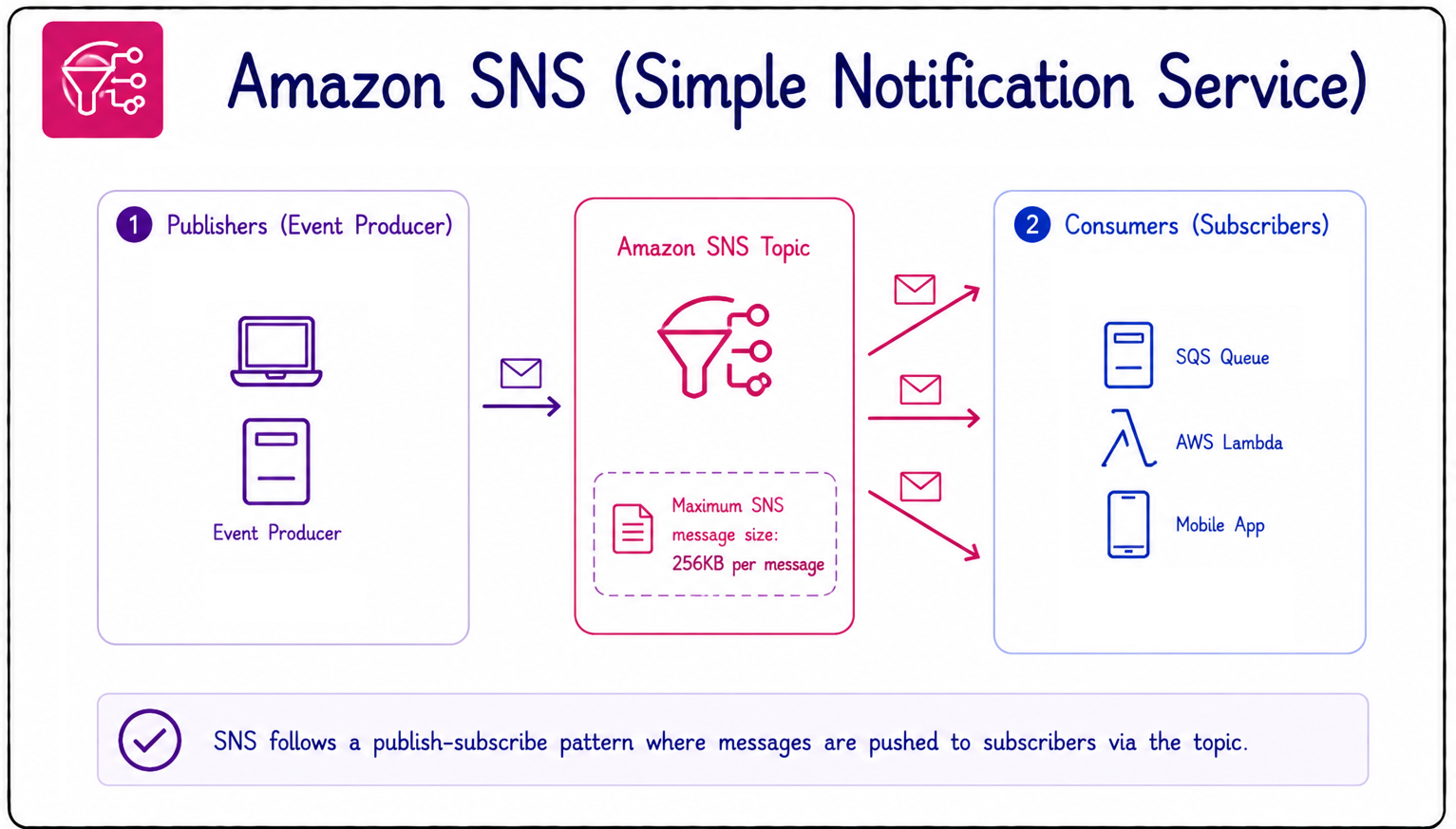
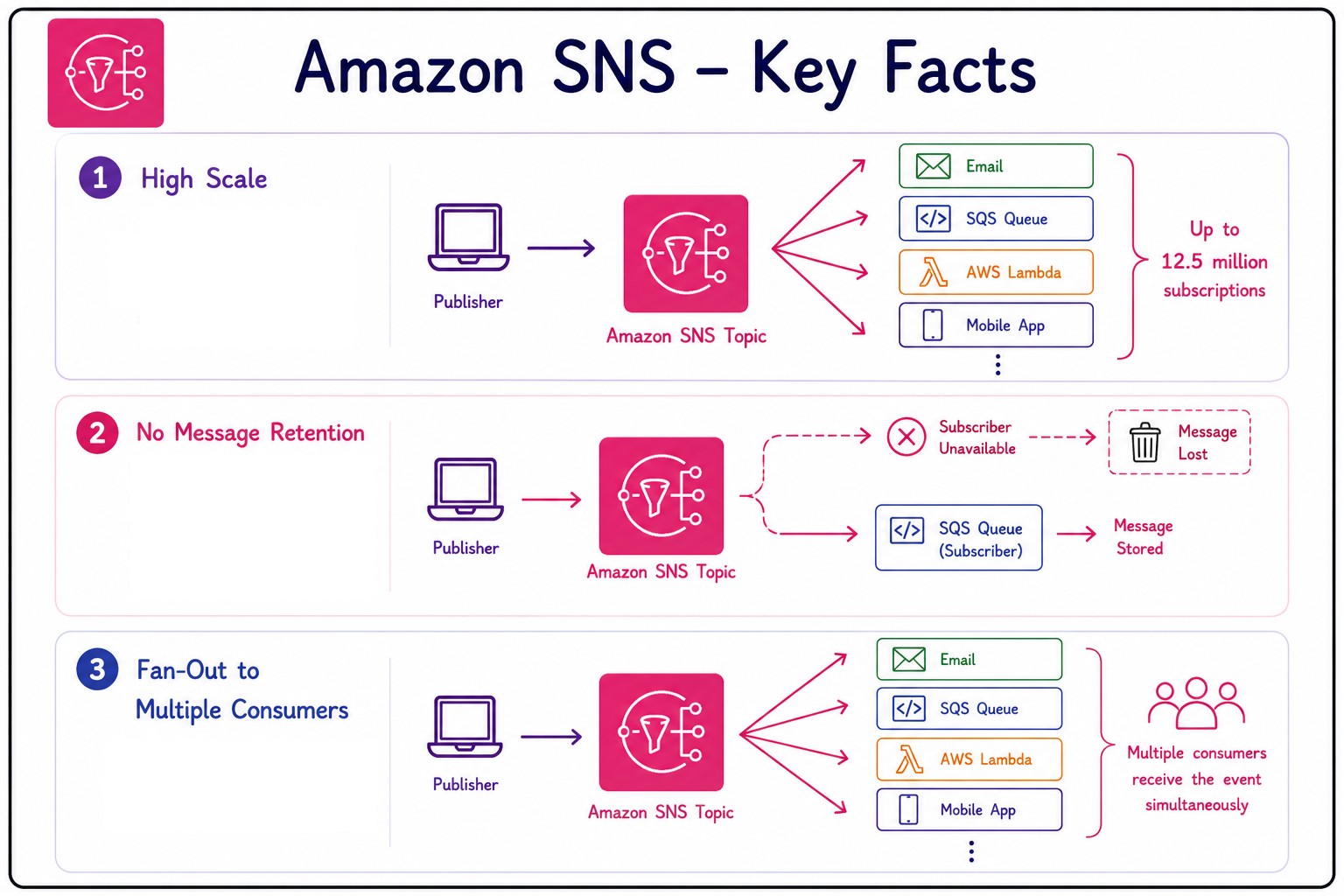
  • Managed publish-subscribe (pub/sub) service.
  • Uses a push model.
  • Publishers send messages to a topic.
    • Maximum message size is 256KB.
  • Consumers subscribe to topics.
  • Subscribers receive messages passively.


sns overview

Developing applications on AWS

Scale

  • Supports up to 12.5 million subscriptions per topic.
  • No message retention:
    • Messages are lost if a subscriber is unavailable.
    • Use DLQ or durable subscriber (SQS queue) to avoid losing messages.
  • Distributes a single event to many consumers (fan-out).


scaling sns

Developing applications on AWS

Message filtering

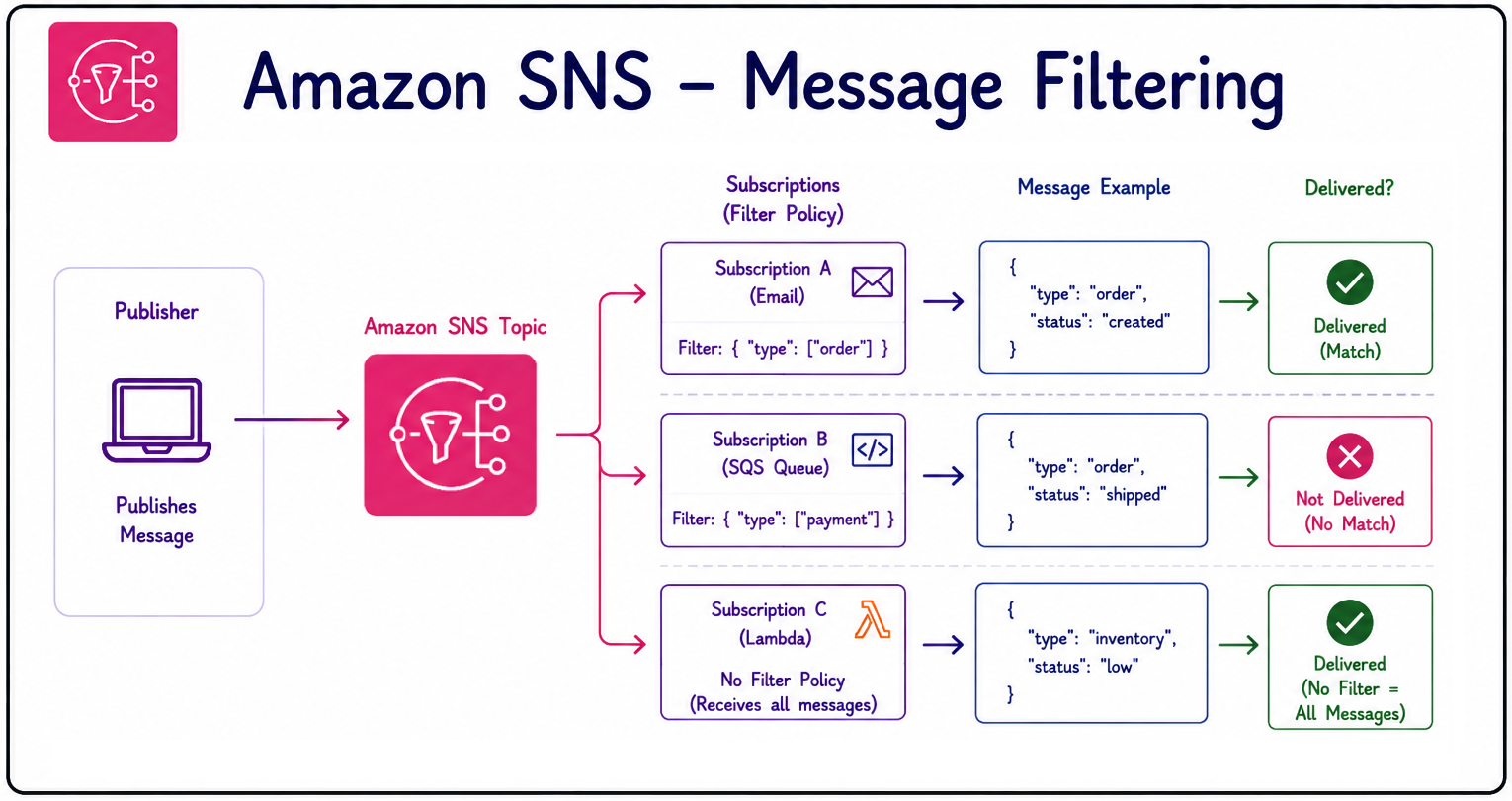
  • SNS supports message filtering policies.
  • Subscriptions receive only the messages they care about.
  • Without a filter, a subscription receives every message.
  • Filter policies apply at the subscription level, not the topic.


filter

Developing applications on AWS

Filter logic and evaluation


filter polices

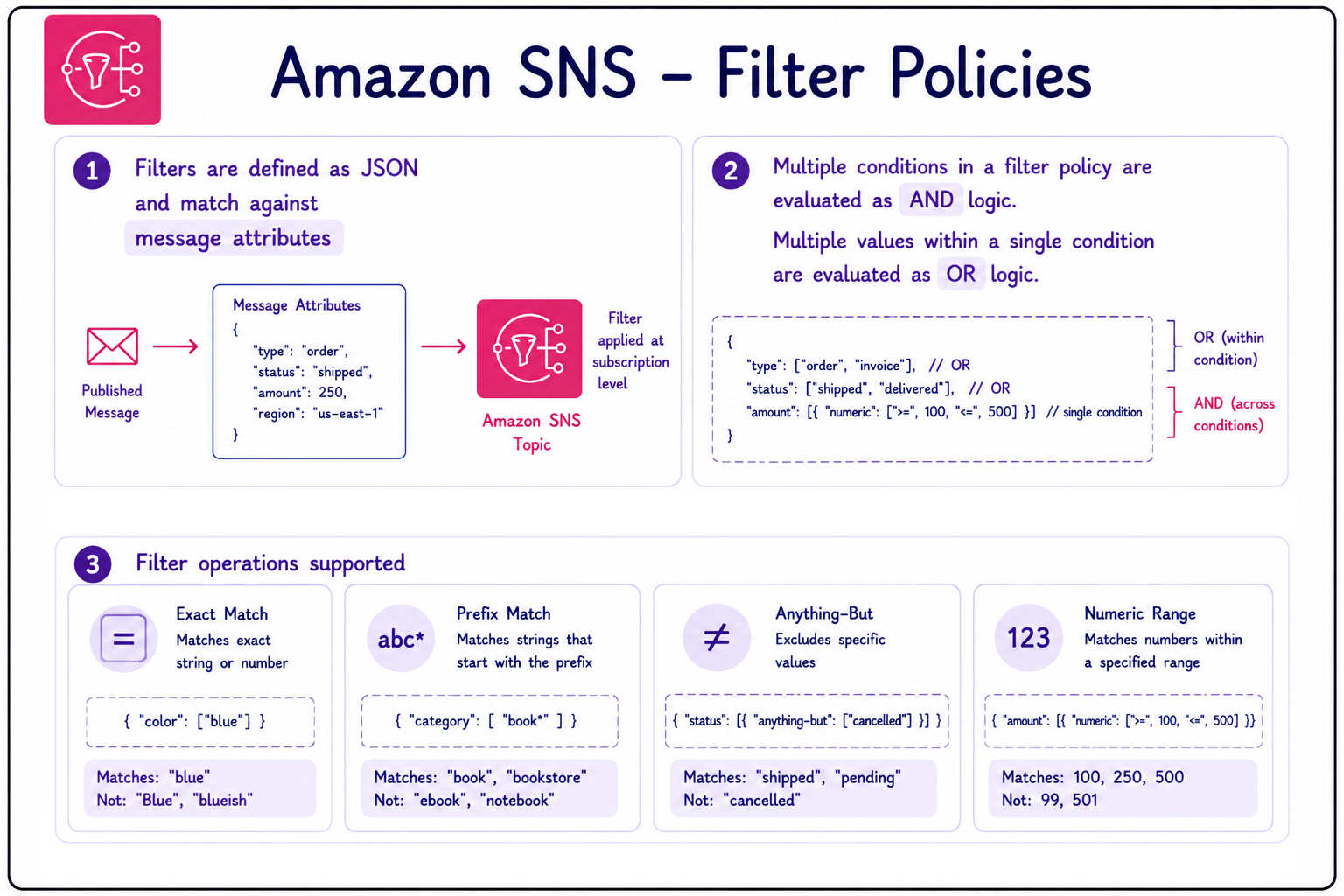
  • Filters are defined in JSON.
  • Matched against message attributes.
  • Multiple conditions are evaluated as AND.
  • Multiple values within a condition are evaluated as OR.
  • Many filter operations are supported:
    • Exact string, numeric, prefix, exclusion, and range matching.
Developing applications on AWS

SNS security


sns security

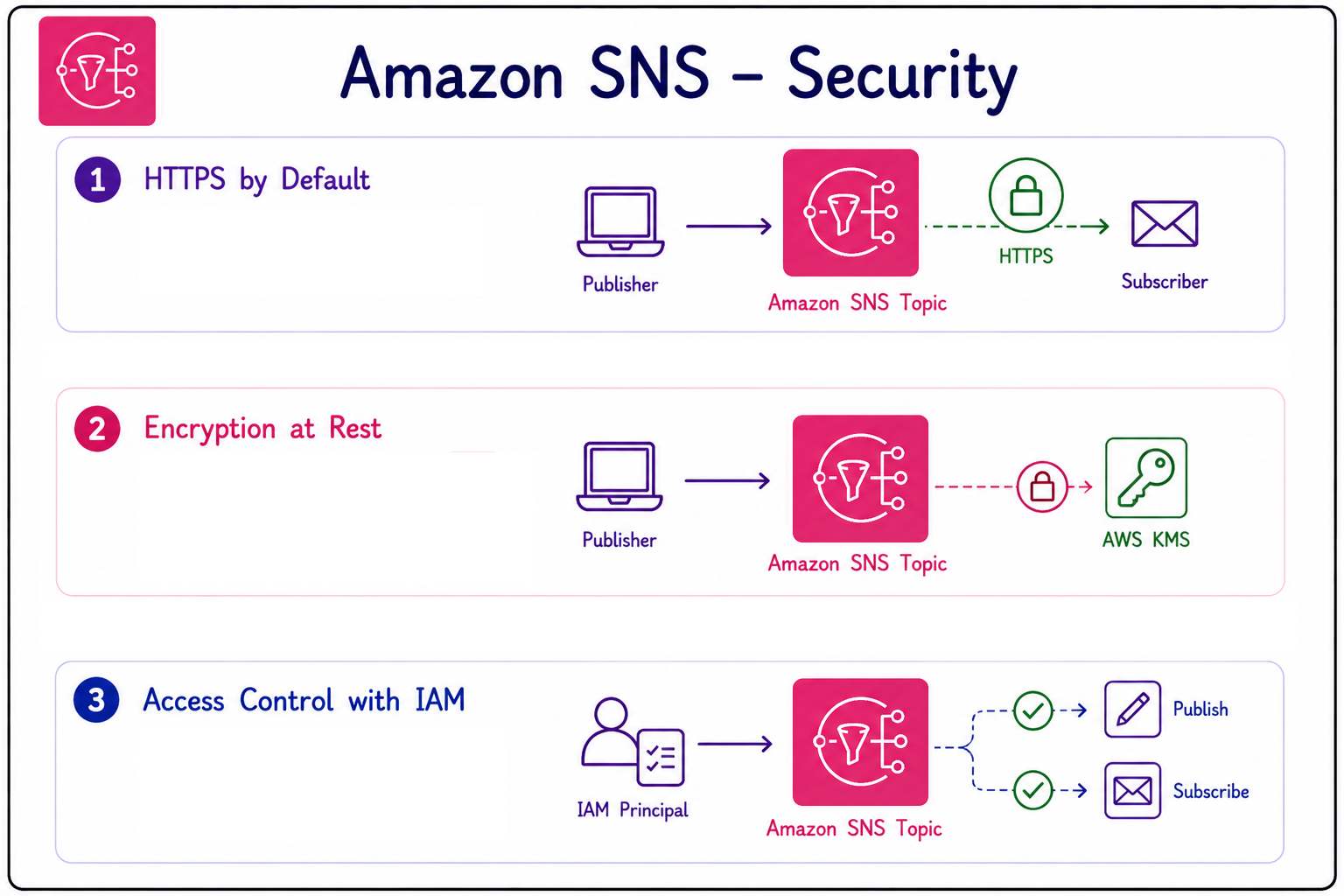
  • Encrypts data in transit with HTTPS by default.
  • Server-side encryption at rest using AWS KMS.
    • Grant SNS permission to use the KMS key.
  • IAM policies provide access control.
    • Govern who can publish to or subscribe from a topic.
Developing applications on AWS

Let's practice!

Developing applications on AWS

Preparing Video For Download...