Python で学ぶ Machine Learning のための特徴量エンジニアリング
Robert O'Callaghan
Director of Data Science, Ordergroove
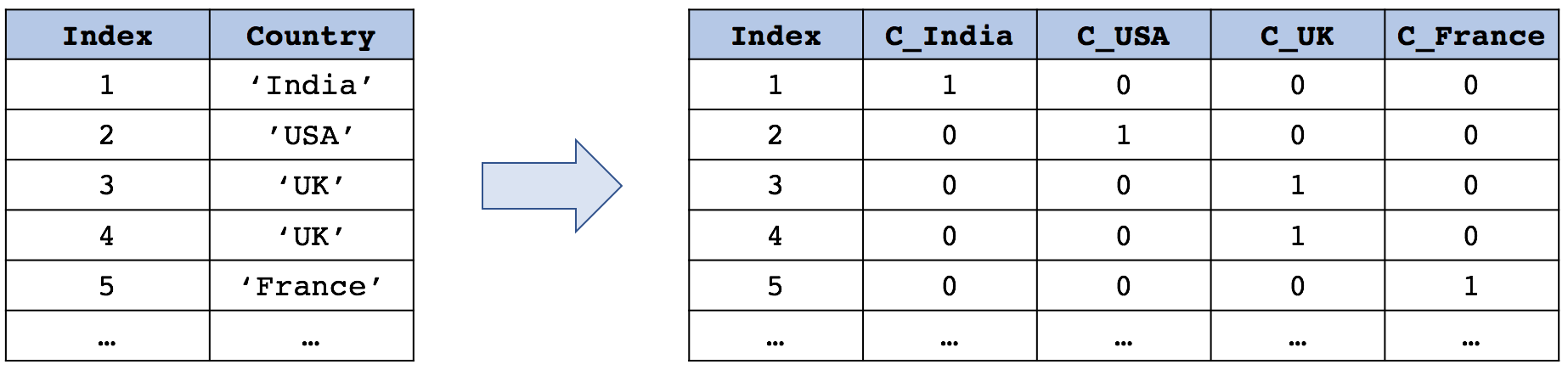
pd.get_dummies(df, columns=['Country'],
               prefix='C')
    C_France    C_India    C_UK    C_USA
0          0          1       0        0
1          0          0       0        1
2          0          0       1        0
3          0          0       1        0
4          1          0       0        0
pd.get_dummies(df, columns=['Country'],
               drop_first=True, prefix='C')
     C_India    C_UK    C_USA
0          1       0        0
1          0       0        1
2          0       1        0
3          0       1        0
4          0       0        0
counts = df['Country'].value_counts()
print(counts)
'USA'      8
'UK'       6
'India'    2
'France'   1
Name: Country, dtype: object
mask = df['Country'].isin(counts[counts < 5].index)

df['Country'][mask] = 'Other'

print(pd.value_counts(colors))
mask = df['Country'].isin(counts[counts < 5].index)
df['Country'][mask] = 'Other'
print(pd.value_counts(colors))
'USA'      8
'UK'       6
'Other'    3
Name: Country, dtype: object