パイプライン

Machine Learning with PySpark

Andrew Collier

Data Scientist, Fathom Data

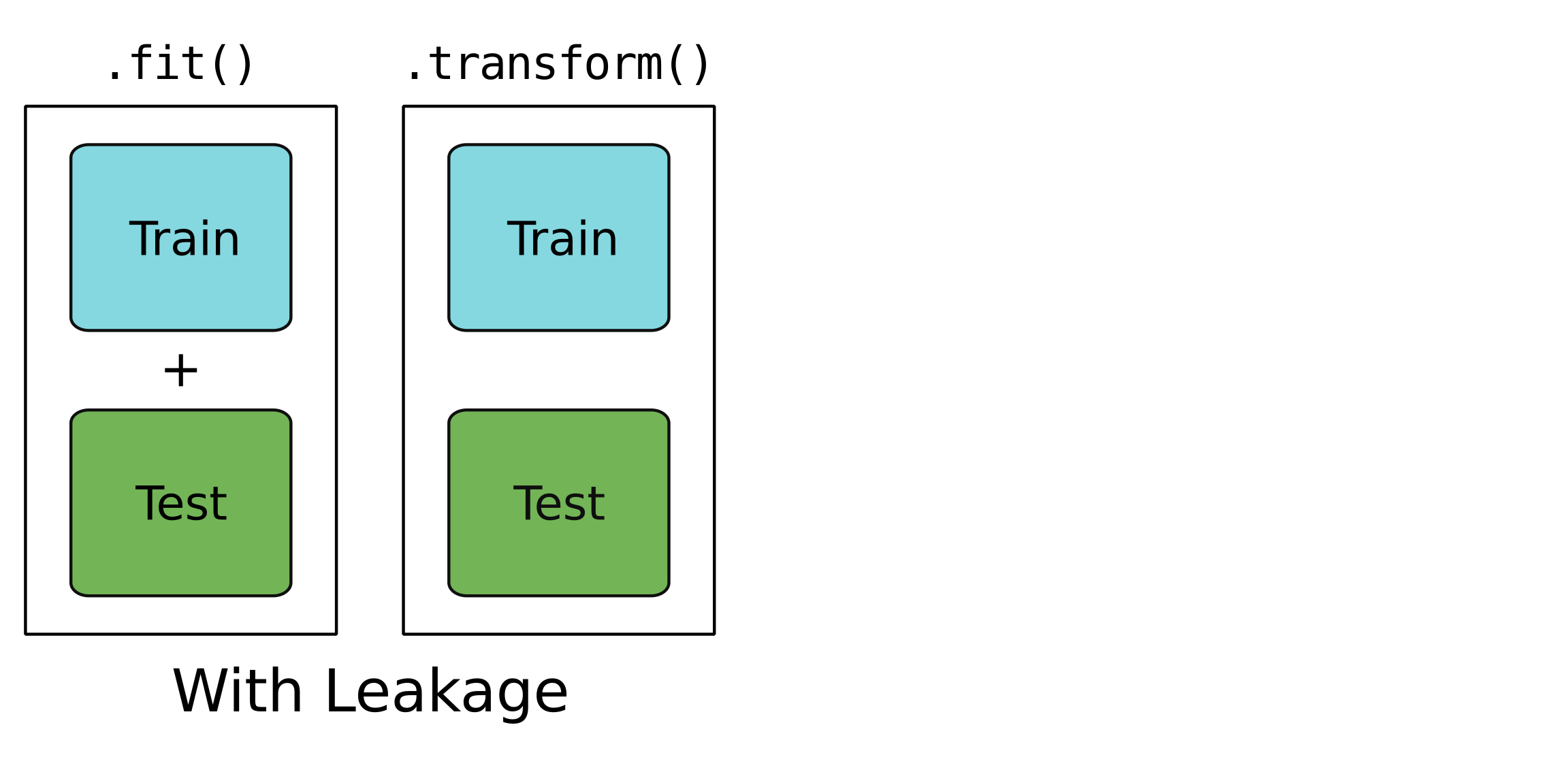
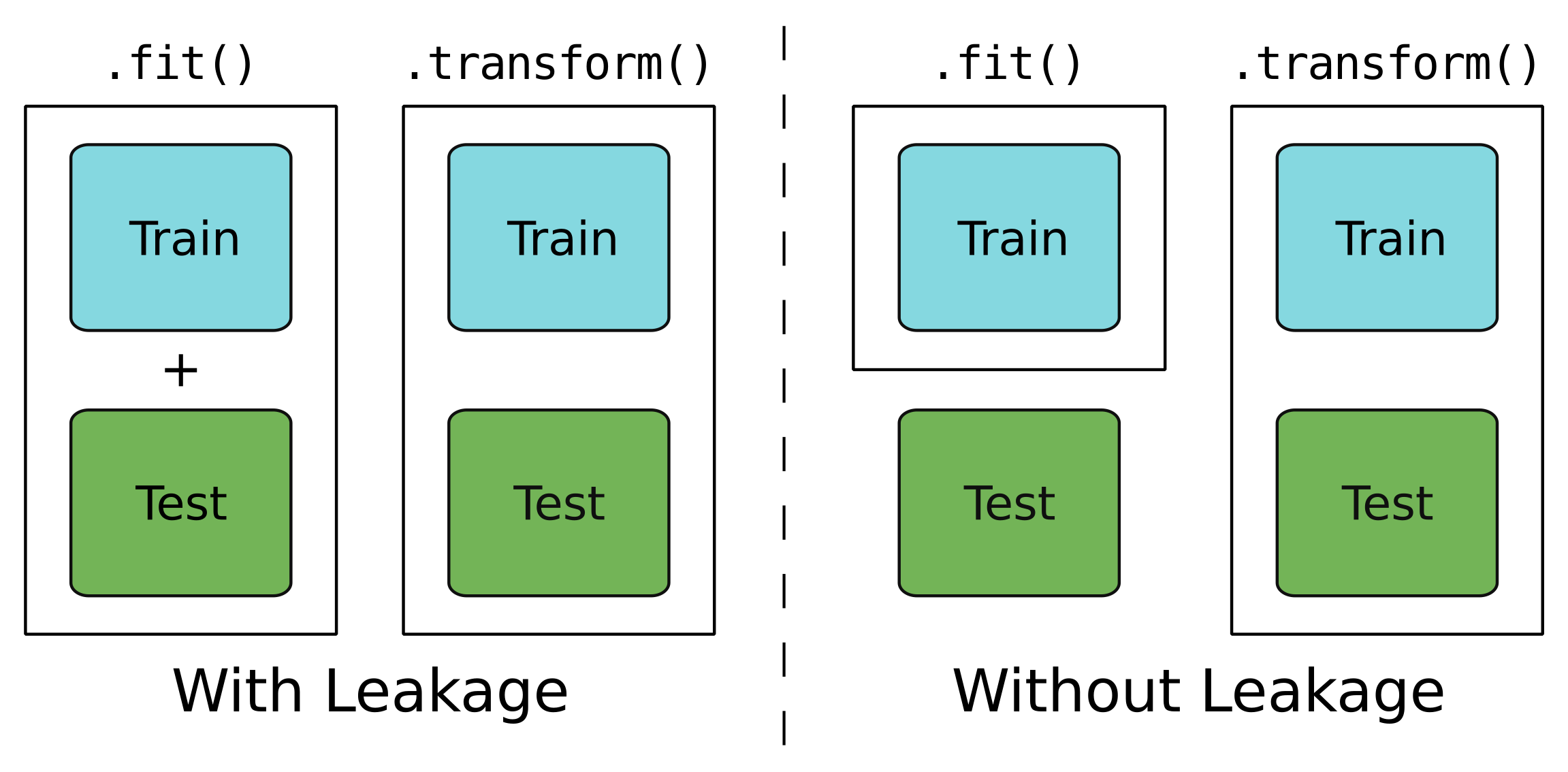
リーケージ?

fit() メソッド

学習データのみ。

transform() メソッド

学習・テスト両方に使用。

Machine Learning with PySpark

リーキーなモデル

テストデータを学習に使用しているモデル

Machine Learning with PySpark

水漏れのないモデル

学習データのみで学習しているモデル

Machine Learning with PySpark

パイプライン

パイプラインは一連の処理から成ります。

複数ステージのパイプライン

各処理を個別に適用してもよいですが、パイプラインなら一括で適用できます。

Machine Learning with PySpark

車モデル:手順

indexer = StringIndexer(inputCol='type', outputCol='type_idx')

onehot = OneHotEncoder(inputCols=['type_idx'], outputCols=['type_dummy'])
assemble = VectorAssembler( inputCols=['mass', 'cyl', 'type_dummy'], outputCol='features' )
regression = LinearRegression(labelCol='consumption')
Machine Learning with PySpark

車モデル:手順の適用

学習データ

indexer = indexer.fit(cars_train)
cars_train = indexer.transform(cars_train)
onehot = onehot.fit(cars_train)
cars_train = onehot.transform(cars_train)
cars_train = assemble.transform(cars_train)
# 学習データでモデルを学習
regression = regression.fit(cars_train)

テストデータ

cars_test  = indexer.transform(cars_test)
cars_test  = onehot.transform(cars_test)
cars_test  = assemble.transform(cars_test)
# テストデータで予測
predictions = regression.transform(cars_test)
Machine Learning with PySpark

車モデル:パイプライン

手順をパイプラインに統合します。

from pyspark.ml import Pipeline

pipeline = Pipeline(stages=[indexer, onehot, assemble, regression])

学習データ

pipeline = pipeline.fit(cars_train)

テストデータ

predictions = pipeline.transform(cars_test)
Machine Learning with PySpark

車モデル:ステージ

.stages 属性で各ステージにアクセスします。

# 線形回帰オブジェクト(第4ステージ → インデックス3)
pipeline.stages[3]

print(pipeline.stages[3].intercept)
4.19433571782916
print(pipeline.stages[3].coefficients)
DenseVector([0.0028, 0.2705, -1.1813, -1.3696, -1.1751, -1.1553, -1.8894])
Machine Learning with PySpark

パイプラインで作業効率化!

Machine Learning with PySpark

Preparing Video For Download...