Rで学ぶTree-Based ModelsによるMachine Learning
Sandro Raabe
Data Scientist
parsnip の決定木のハイパーパラメータ:
min_n: ノード分割に必要な最小サンプル数tree_depth: 木の最大深さcost_complexity: 複雑さへのペナルティparsnip のデフォルト値:
decision_tree(min_n = 20, tree_depth = 30, cost_complexity = 0.01)
チューニングの目的は、最適なハイパーパラメータの組合せを見つけることです。


spec_untuned <- decision_tree(min_n = tune(), tree_depth = tune()) %>% set_engine("rpart") %>% set_mode("classification")
Decision Tree Model Specification (classification)Main Arguments: tree_depth = tune() min_n = tune()
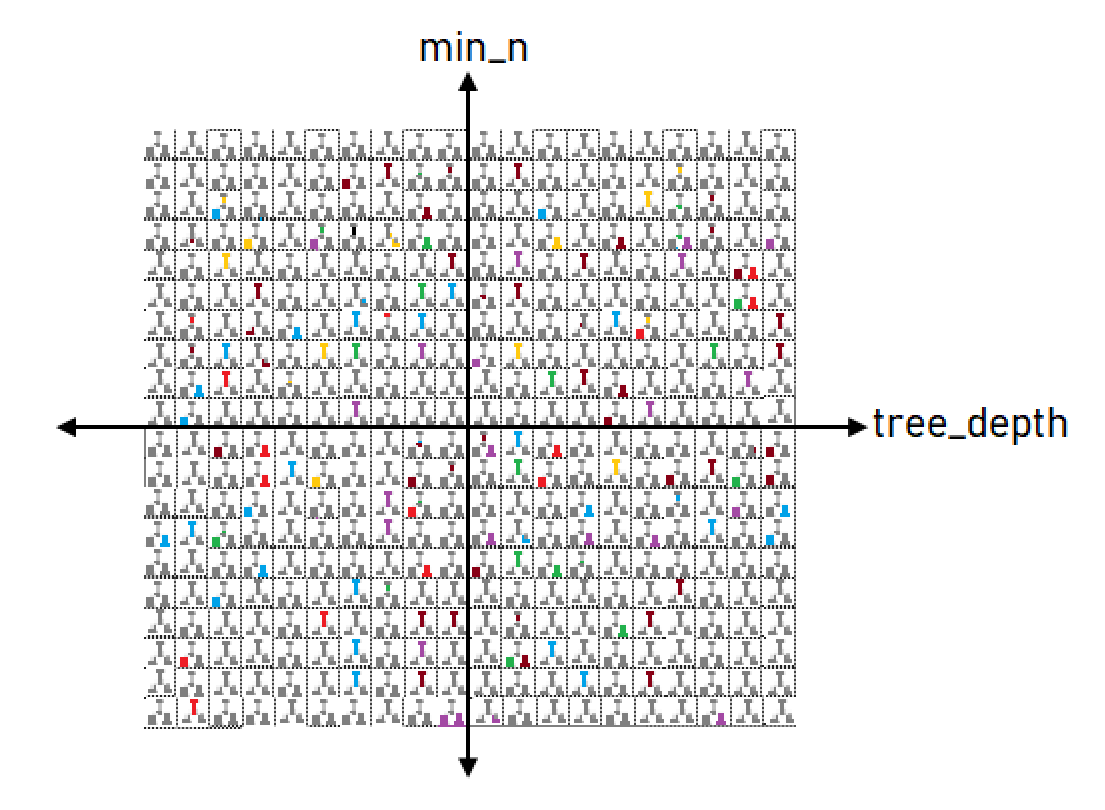
tune() はチューニング対象のパラメータを指定tree_grid <- grid_regular(parameters(spec_untuned),levels = 3 )
# A tibble: 9 x 2
min_n tree_depth
1 2 1
2 21 1
3 40 1
4 2 8
5 21 8
6 40 8
7 2 15
8 21 15
9 40 15
parameters()levels: 各ハイパーパラメータのグリッド点数
使い方と引数:
metric_set() で包んだ指標リストtune_results <- tune_grid(spec_untuned,outcome ~ .,resamples = my_folds,grid = tree_grid,metrics = metric_set(accuracy))
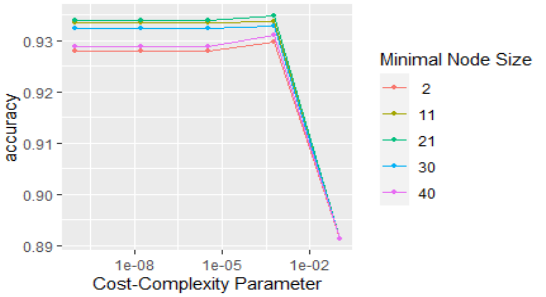
autoplot(tune_results)

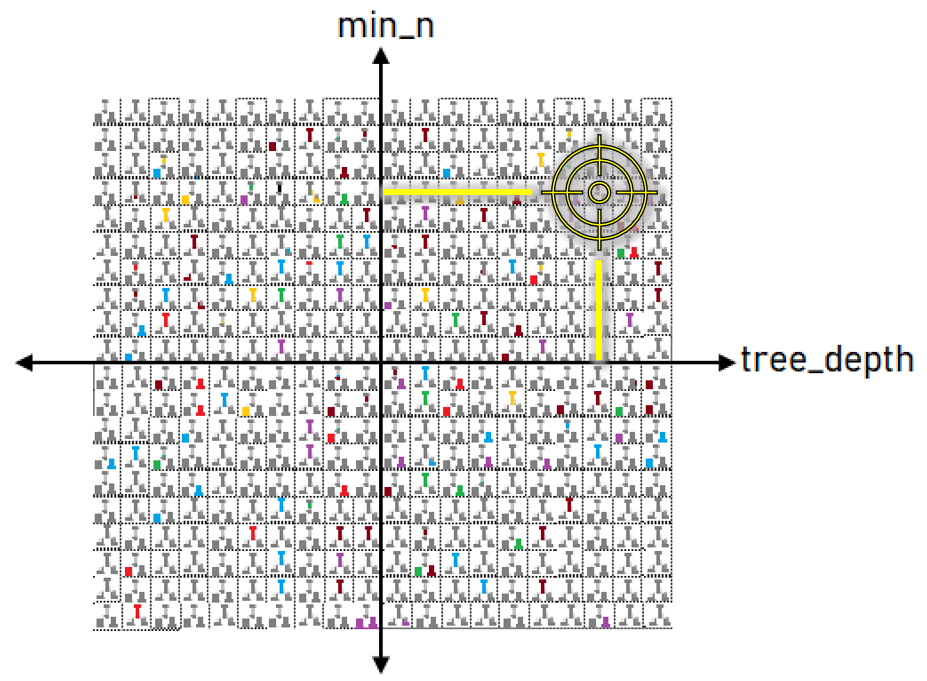
# 最良のパラメータを選択 final_params <- select_best(tune_results)final_params
# A tibble: 1 x 3
min_n tree_depth .config
<int> <int> <chr>
1 2 8 Model4
# 仕様に反映 best_spec <- finalize_model(spec_untuned, final_params)best_spec
Decision Tree Model Specification
(classification)
Main Arguments:
tree_depth = 8
min_n = 2
Computational engine: rpart
Rで学ぶTree-Based ModelsによるMachine Learning