# Acessing the first layer of a Keras model
first_layer = model.layers[0]

# Printing the layer, and its input, output and weights
print(first_layer.input)
print(first_layer.output)
print(first_layer.weights)
# Import Keras backend
import tensorflow.keras.backend as K

# Get the input and output tensors of a model layer
inp = model.layers[0].input
out = model.layers[0].output

# Function that maps layer inputs to outputs
inp_to_out = K.function([inp], [out])

# We pass and input and get the output we'd get in that first layer
print(inp_to_out([X_train])
# Outputs of the first layer per sample in X_train
[array([[0.7, 0],...,[0.1, 0.3]])]
Autoencodery!
Autoencodery!
Případy použití autoencoderů
Redukce dimenzionality:
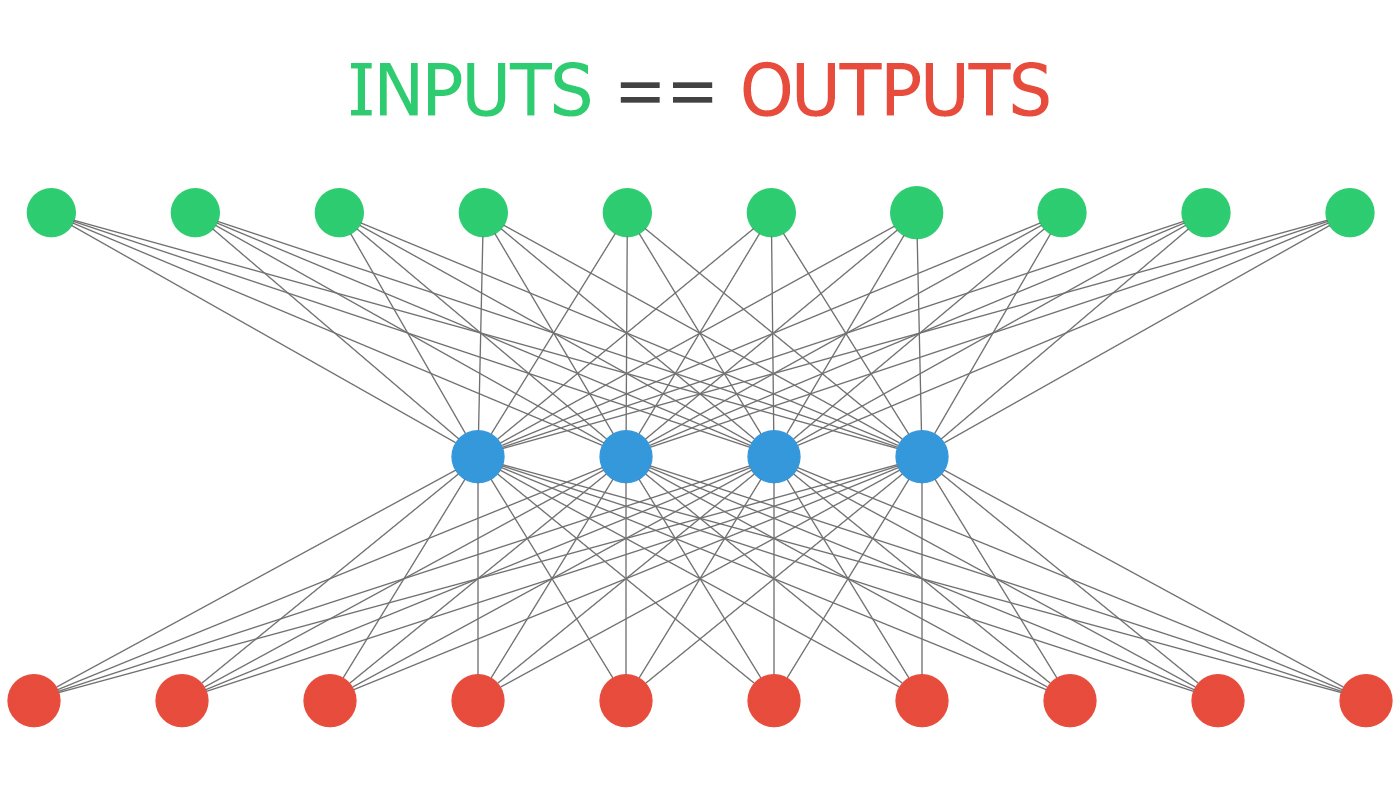
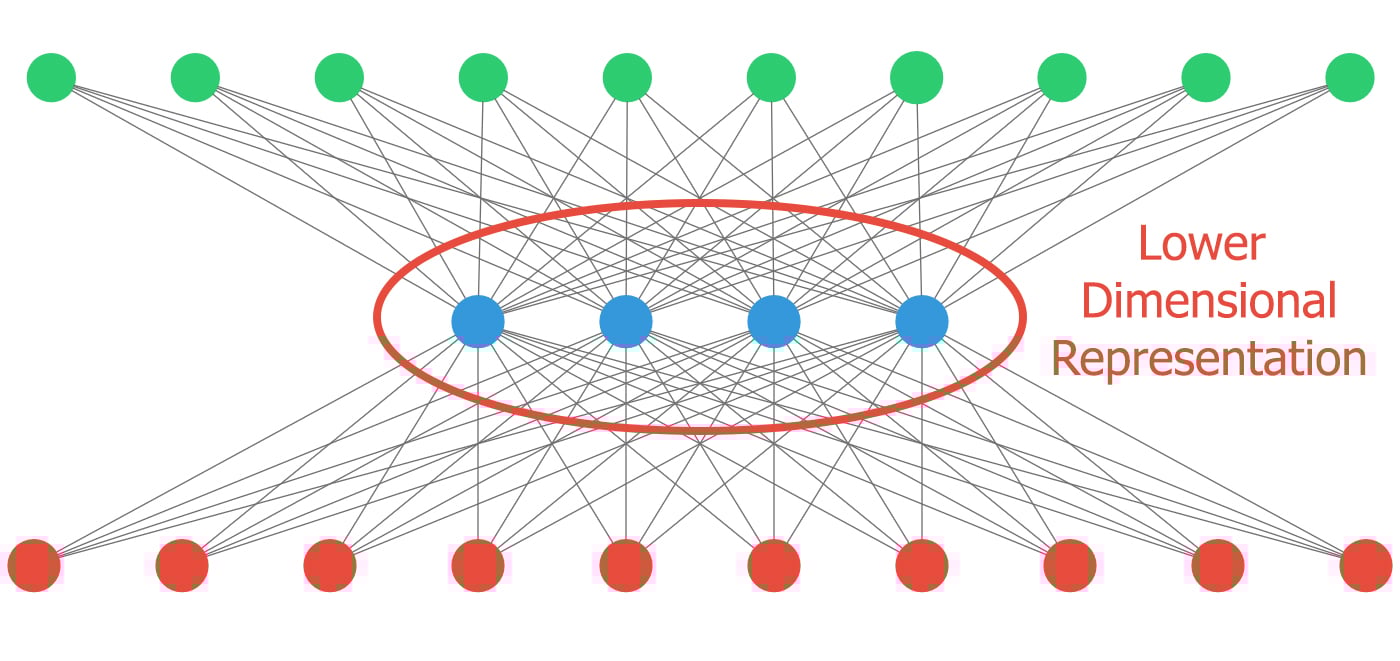
Reprezentace vstupů v prostoru nižší dimenze.
Odšumování dat:
Při tréninku s čistými daty bude nepodstatný šum při rekonstrukci odfiltrován.
Detekce anomálií:
Při zadání neviděných vstupů bude rekonstrukce nekvalitní.
...
Sestavení jednoduchého autoencoderu
# Instantiate a sequential model
autoencoder = Sequential()

# Add a hidden layer of 4 neurons and an input layer of 100
autoencoder.add(Dense(4, input_shape=(100,), activation='relu'))

# Add an output layer of 100 neurons
autoencoder.add(Dense(100, activation='sigmoid'))

# Compile your model with the appropiate loss
autoencoder.compile(optimizer='adam', loss='binary_crossentropy')
Extrakce encoderu
# Building a separate model to encode inputs
encoder = Sequential()
encoder.add(autoencoder.layers[0])

# Predicting returns the four hidden layer neuron outputs
encoder.predict(X_test)
# Four numbers for each observation in X_test
array([10.0234375, 5.833543, 18.90444, 9.20348],...)