Grid Search se Scikit-Learn
Hyperparameter Tuning in Python

Alex Scriven
Data Scientist
Objekt GridSearchCV
Objekt GridSearchCV:
sklearn.model_selection.GridSearchCV(
    estimator,
    param_grid, scoring=None, fit_params=None,
    n_jobs=None, refit=True, cv='warn',
    verbose=0, pre_dispatch='2*n_jobs',
    error_score='raise-deprecating',
    return_train_score='warn')
Kroky Grid Search
Kroky Grid Search:
- Algoritmus pro ladění hyperparametrů (někdy nazývaný „estimátor")
- Určení hyperparametrů, které budeme ladit
- Definování rozsahu hodnot pro každý hyperparametr
- Nastavení schématu křížové validace a
- Definování skórovací funkce pro určení nejlepšího bodu na mřížce.
- Doplnění dalších užitečných informací nebo funkcí
Vstupy objektu GridSearchCV
Důležité vstupy jsou:
estimatorparam_gridcvscoringrefitn_jobsreturn_train_score
GridSearchCV 'estimator'
Vstup estimator:
- V podstatě náš algoritmus
- Již jste pracovali s KNN, Random Forest, GBM a logistickou regresí
Pozor:
- Na jeden objekt GridSearchCV připadá pouze jeden estimátor
GridSearchCV 'param_grid'
Vstup param_grid:
- Určuje, které hyperparametry a hodnoty se mají testovat
Místo seznamů:
max_depth_list = [2, 4, 6, 8]
min_samples_leaf_list = [1, 2, 4, 6]
Použijte:
param_grid = {'max_depth': [2, 4, 6, 8],
              'min_samples_leaf': [1, 2, 4, 6]}
GridSearchCV 'param_grid'
Vstup param_grid:
Pozor: Klíče ve slovníku param_grid musí být platné hyperparametry.
Například pro estimátor logistické regrese:
# Incorrect
param_grid = {'C': [0.1,0.2,0.5],
              'best_choice': [10,20,50]}
ValueError: Invalid parameter best_choice for estimator LogisticRegression
GridSearchCV 'cv'
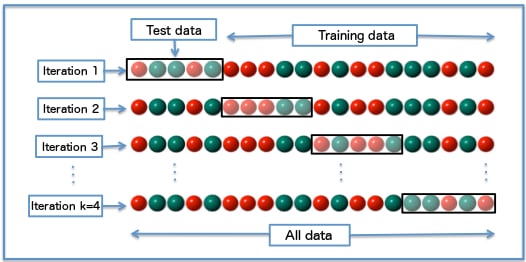
Vstup cv:
- Způsob provedení křížové validace
- Celé číslo provede k-fold křížovou validaci; standardně se používá 5 nebo 10
GridSearchCV 'scoring'
Vstup scoring:
- Metrika pro výběr nejlepšího modelu
- Použijte vlastní metriku nebo modul
metricsze Scikit-Learn
Všechny vestavěné funkce pro hodnocení lze zobrazit takto:
from sklearn import metrics
sorted(metrics.SCORERS.keys())
GridSearchCV 'refit'
Vstup refit:
- Přizpůsobí nejlepší hyperparametry trénovacím datům
- Umožňuje použít objekt
GridSearchCVjako estimátor (pro predikci) - Velmi užitečná volba!
GridSearchCV 'n_jobs'
Vstup n_jobs:
- Umožňuje paralelní zpracování
- Více modelů lze trénovat současně, nikoli postupně
Užitečný kód:
import os
print(os.cpu_count())
Pozor: pokud potřebujete počítač i pro jinou práci, nevyužívejte všechna jádra pro trénování!
GridSearchCV 'return_train_score'
Vstup return_train_score:
- Zaznamenává statistiky o provedených tréninkových bězích
- Užitečné pro analýzu kompromisu mezi biasem a variancí, ale zvyšuje výpočetní náklady.
- Nepomáhá při výběru nejlepšího modelu, slouží pouze k analýze
Vytvoření objektu GridSearchCV
Vytvoření vlastního objektu GridSearchCV:
# Create the grid param_grid = {'max_depth': [2, 4, 6, 8], 'min_samples_leaf': [1, 2, 4, 6]}#Get a base classifier with some set parameters. rf_class = RandomForestClassifier(criterion='entropy', max_features='auto')
Vytvoření objektu GridSearchCV
Složení dílů dohromady:
grid_rf_class = GridSearchCV(
    estimator = rf_class,
    param_grid = parameter_grid,
    scoring='accuracy',
    n_jobs=4,
    cv = 10,
    refit=True,
    return_train_score=True)
Použití objektu GridSearchCV
Protože jsme nastavili refit na True, můžeme objekt přímo použít:
#Fit the object to our data
grid_rf_class.fit(X_train, y_train)

# Make predictions
grid_rf_class.predict(X_test)
Pojďme si to procvičit!
Hyperparameter Tuning in Python

